Ravintola-alan haasteet ja ratkaisut: Näin hallitset henkilöstövaihtuvuutta ja parannat katetta
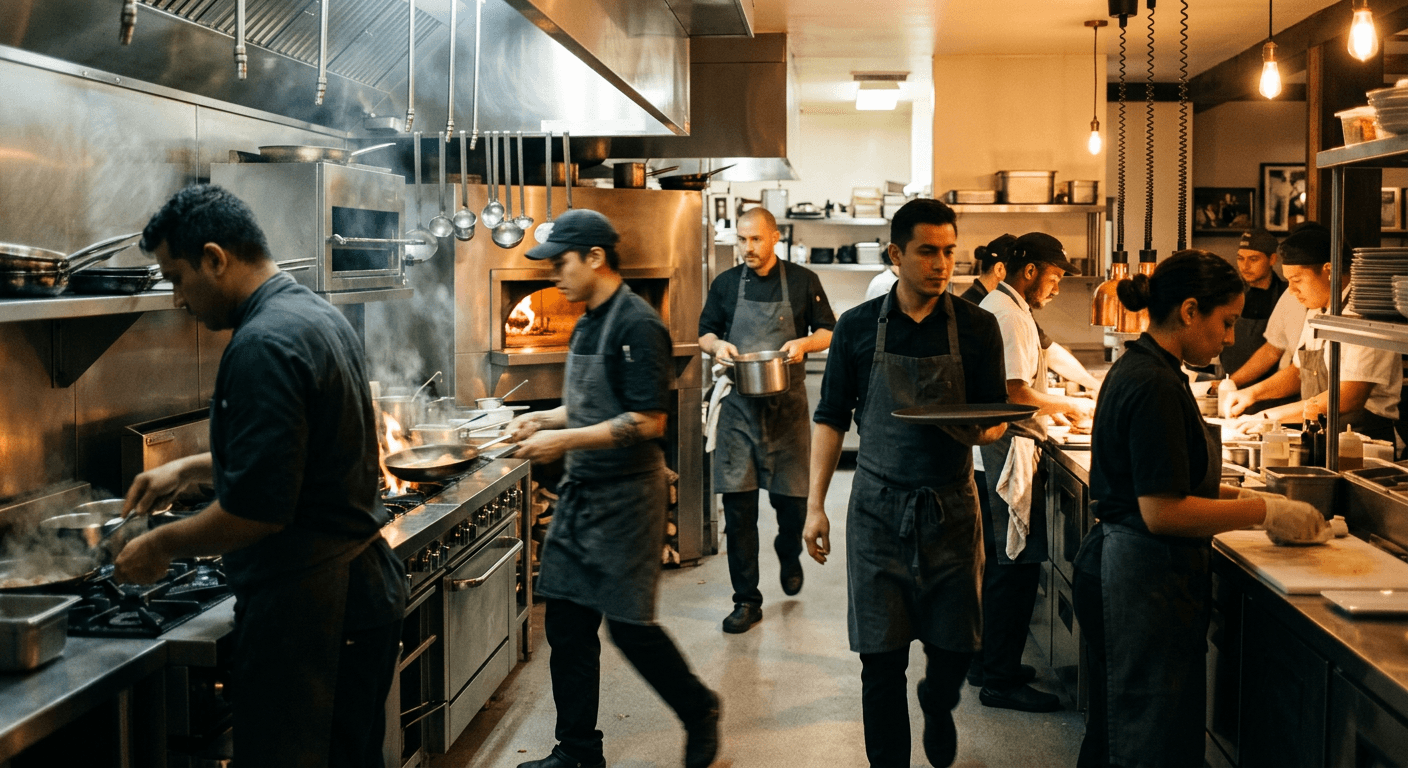
Ravintola-alalla työntekijän keskimääräinen työsuhde kestää vain 110 päivää. Kun alan henkilöstövaihtuvuus on peräti 79,6 %, ravintolat eivät kilpaile enää pelkästään asiakkaista – ne taistelevat pitääkseen tiiminsä koossa.
Henkilöstövaihtuvuuden kova hinta
Rekrytointi ei ole enää pelkkä hallinnollinen päänvaiva, vaan se on merkittävä taloudellinen rasite. Yhden tuntipalkkaisen työntekijän korvaaminen maksaa keskimäärin 5 000 dollaria, kun huomioidaan rekrytointiprosessi, perehdytys ja menetetty tuottavuus. Koska 70 % ravintoloitsijoista kamppailee avoimien paikkojen täyttämisen kanssa, lisätyö valuu usein nykyisen henkilöstön harteille. Tämä luo uupumuskierteen, joka johtaa väistämättä uusiin irtisanoutumisiin.
Henkilöstön vakauttamiseksi ja kierteen katkaisemiseksi kannattaa harkita seuraavia taktisia muutoksia:
- Ennakoiva työvuorosuunnittelu: Varmista, että miehitys vastaa todellista kysyntää. Oikein mitoitettu resursointi voi pienentää työvoimakustannuksia jopa 15 %.
- Selkeät urapolut: Työntekijät sitoutuvat paremmin, kun he näkevät mahdollisuuden kehittyä ammatillisesti. Esimerkiksi Chipotlen mallissa 90 % esimiehistä nousee omista riveistä, mikä luo vahvaa sitoutumista pitkällä aikavälillä.
- Hyvinvointiin panostaminen: Alan korkea uupumusaste (burnout-indeksi 98/100) vaatii tekoja. Joustavat työajat ja kunnolliset taukotilat ovat usein työntekijöille arvokkaampia kuin pienet palkankorotukset.
Katteiden hallinta kustannuspaineiden keskellä
Inflaatio on nostanut raaka-aine- ja työvoimakustannuksia peräti 35 % pandemiaa edeltävään aikaan verrattuna. Kun ravintoloiden keskimääräiset voittomarginaalit liikkuvat vain 3–9 prosentin välillä, toiminnalliseen hukkaan ei ole varaa. Alan nyrkkisääntönä pidetty prime cost eli raaka-aine- ja henkilöstökustannusten yhteissumma tulisi pitää 60–65 prosentissa liikevaihdosta kannattavuuden varmistamiseksi.
Voit suojata marginaaleja seuraavilla keinoilla:
- Ruokalistan optimointi (menu engineering): Yksinkertaistaminen selkeyttää keittiön työtä. Eräs bistro kavensi listansa 32 annoksesta 18:aan, mikä puolitti uusien kokkien perehdytysajan neljästä viikosta kahteen.
- Vakioreseptit ja varastonhallinta: Tarkat reseptit auttavat hallitsemaan hävikkiä, joka on tyypillisesti 3–5 % ruokakustannuksista.
- Omat tilauskanavat: Ohjaamalla asiakkaat käyttämään ravintolan omia tilauskanavia, vältät ulkopuolisten palveluiden 15–30 prosentin välityspalkkiot ja parannat suoraan katettasi.
Eroon laiteviidakosta ja turhasta kitkasta
Pirstaleinen ja vanhentunut teknologia on hiljainen motivaation tappaja. Jos työntekijät joutuvat hallitsemaan useita eri laitteita ja sovelluksia samanaikaisesti, virheiden riski kasvaa ja sali- ja keittiöhenkilökunnan välinen jännite lisääntyy. Tekninen kankeus hidastaa palvelua ja turhauttaa sekä tiimiä että asiakkaita.
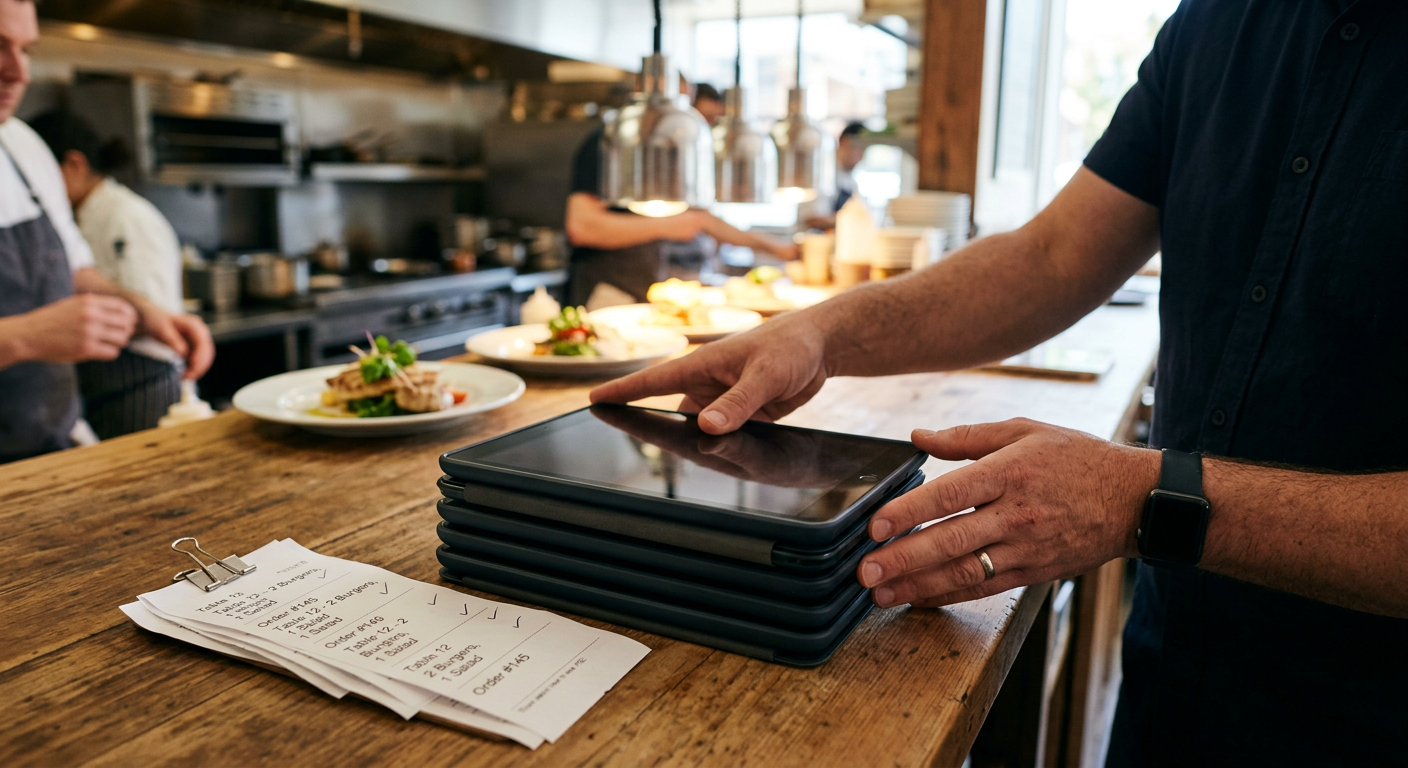
Siirtyminen integroituun hallintajärjestelmään selkeyttää operatiivista toimintaa merkittävästi. Kun kuljetustilaukset, kassa (POS) ja analytiikka toimivat yhdellä alustalla, työstä tulee intuitiivista. Esimerkiksi itsepalvelukioskien käyttöönotto voi kasvattaa keskiostoa jopa 25 % ja vapauttaa henkilökunnan manuaalisesta kirjanpidosta aitoon asiakaspalveluun.
Asiakkaiden odotuksiin vastaaminen
Nykypäivän ruokailijat odottavat sujuvuutta. Tutkimusten mukaan 42 % asiakkaista jättää palaamatta, jos he joutuvat odottamaan pöytää yli puoli tuntia. Kilpailukyky säilytetään optimoimalla nopeus ilman, että tinkitään inhimillisestä kohtaamisesta, joka rakentaa asiakasuskollisuutta.
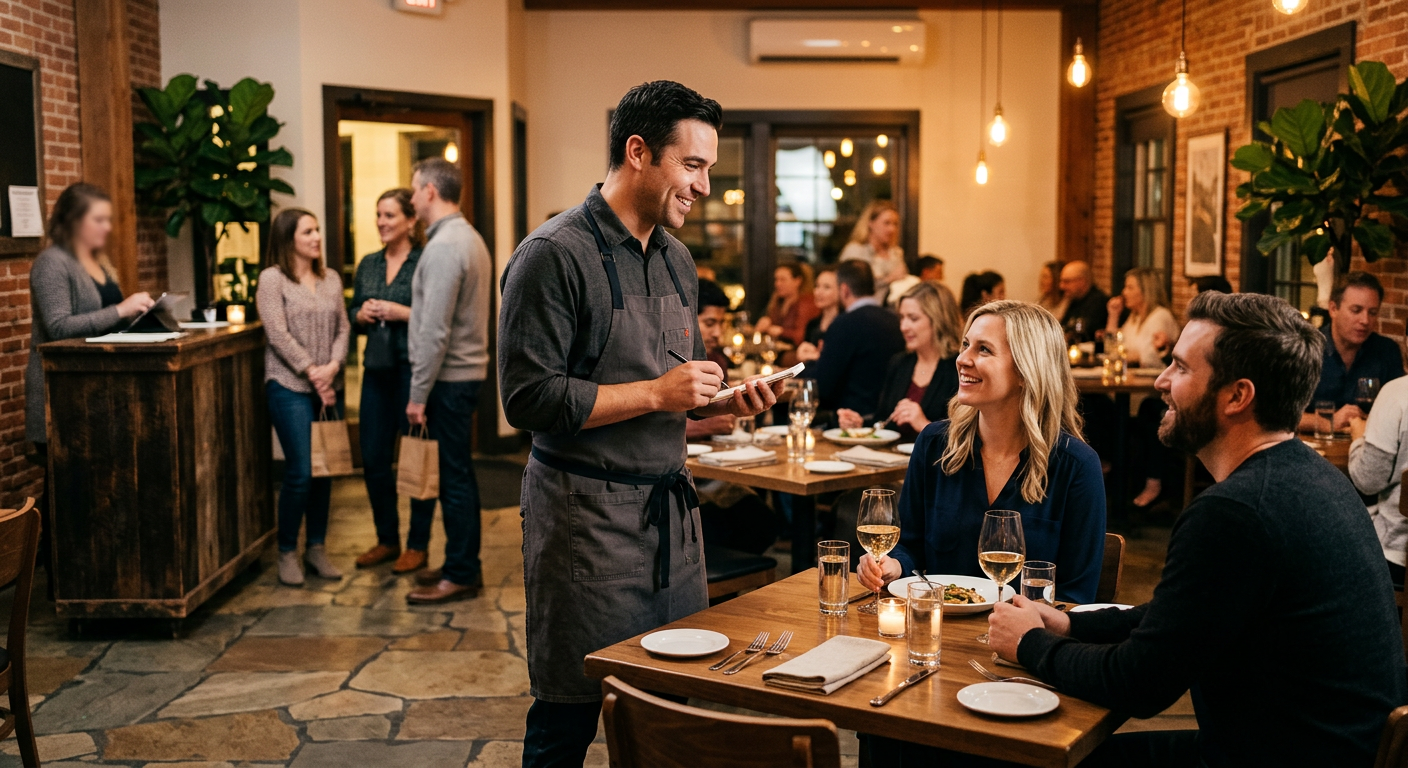
Palvelustandardien parantaminen edellyttää selkeitä raameja:
- Aseta tavoiteajat: Esimerkiksi juomat pöytään 3 minuutissa, alkupalat 8 minuutissa ja pääruoat 15 minuutissa.
- Valtuuta henkilöstö: Anna tarjoilijoille valta ratkaista asiakasreklamaatiot välittömästi. Nopea hyvitys on maineen kannalta parempi kuin pitkä odottelu esimiehen lupaa varten.
- Hyödynnä dataa: Seuraa reaaliaikaista dataa pullonkaulojen tunnistamiseksi. Jos et tunne perjantai-illan keskimääräistä pöydän kiertoaikaa, et voi korjata asiakkaita turhauttavia viiveitä.
Vuonna 2025 menestyvät ne ravintolat, jotka johtavat toimintaansa analyyttisesti. Investoimalla nykyaikaiseen teknologiaan ja henkilöstön viihtyvyyteen, kaoottiset työvuorot muuttuvat sujuvaksi ja kannattavaksi liiketoiminnaksi. Tutustu, miten Spindl-alusta voi korvata perinteiset kassajärjestelmät ja helpottaa ravintolasi arkea.