Cut restaurant wait times to stop losing 75% of guests
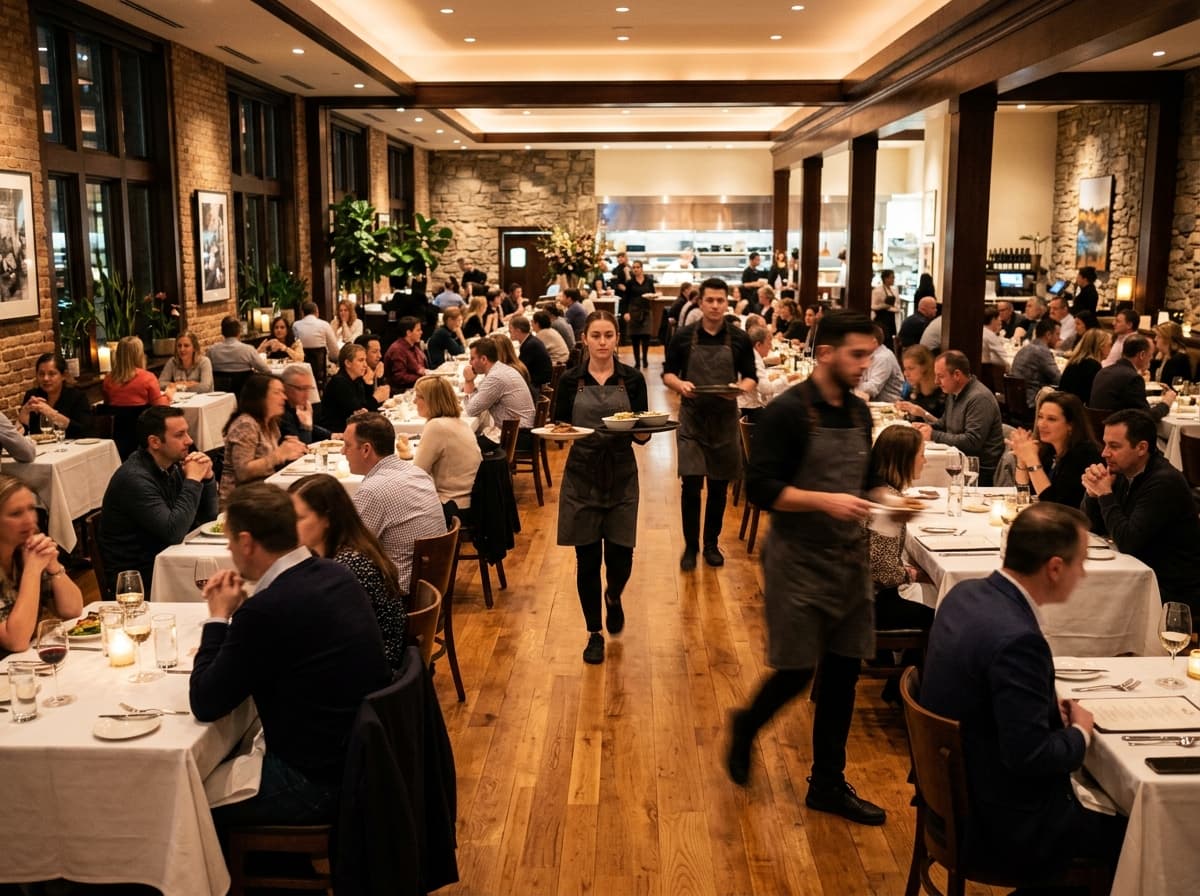
Did you know that 75% of first-time restaurant visitors who experience excessive wait times never return? Long lines don't just annoy hungry guests – they directly destroy your customer retention and leak revenue. Here is how to optimize your front-of-house workflows and tech stack to keep tables turning.
The true cost of the wait
Wait times are the make-or-break metric of hospitality. A peer-reviewed study on dining experiences confirms that a perceived increase in waiting has a heavily detrimental impact on overall dining experiences and satisfaction scores.
But the financial damage is worse than most operators realize. Retained customers are worth $1,560 in lifetime value, compared to just $555 for churned first-timers. When you systematically focus on ways to improve customer satisfaction in dining, managing front-of-door bottlenecks must be your first priority.
Set accurate wait time expectations
Your guests’ satisfaction with waiting depends on the gap between expectation and actual wait time. The same objective wait time can yield entirely different satisfaction levels depending on whether it is perceived as longer or shorter than expected.
- Add a buffer: Train hosts to communicate wait times accurately based on current table turn data, adding a 5–10 minute buffer.
- Log every detail: Log each party in the system with their name, size, special requests, and check-in time.
- Automate updates: Use digital tools to automate waitlist management. These systems calculate wait times dynamically based on real-time flow and send automated SMS updates when tables are nearly ready, preventing crowding at the host stand.
Optimize floor layout and front-of-house training
Your front-of-house operations encompass everything guests see – the dining space, service interactions, cleanliness, and the transition from greeting to payment. Before the doors even open, use a pre-shift front-of-house checklist to verify POS terminal functionality and payment processing so service runs flawlessly.
FOH training is vital. Train hosts to greet guests promptly, make eye contact, and offer immediate assistance at arrival. To back up your staff, design a floor plan optimized for speed:
- Group similar-sized tables to improve seating efficiency.
- Create clear pathways for servers and guests to avoid collisions.
- Position the host stand for full dining-room visibility.
- Create a designated waiting area that does not interfere with server traffic or seated diners.
Speed up order taking and kitchen communication
Handwritten notes and verbal orders introduce human error and slow down your kitchen. Modern restaurant POS software connects front-of-house terminals, mobile ordering, and kitchen display systems (KDS) so orders sync instantly to the kitchen or prep stations.
This tableside-to-KDS flow boosts efficiency. By bypassing manual order entry, you prevent misheard items and wrong modifiers. This dramatically improves order accuracy.
- Streamline your menu: Offer a mix of quick-prep dishes or a simplified peak-hours menu to reduce kitchen bottlenecks.
- Guide the meal pacing: Train servers to suggest starters early, anticipate drink refills, and pre-bus plates promptly to keep the dining experience moving without making guests feel rushed.
- Go mobile: Implement mobile POS devices to allow servers to take orders and send them directly to the kitchen from the table, reducing turn times.
Accelerate checkouts and payment processing
The final friction point in the customer journey is the checkout process. Traditional card-handling steps waste up to 10 minutes per table turn.
Implementing contactless payment for restaurants enables guests to settle up via QR codes or handheld mobile terminals instantly.
- Guests pay on their own terms without waiting for a server to walk back and forth to a stationary terminal.
- Integrating your payment processor with your POS eliminates data-entry errors and manager overrides.
- This tableside payment flow shortens end-of-meal times by 5 to 10 minutes, immediately freeing up tables for waiting parties.
Manage takeout and delivery without disrupting dine-in
Delivery app chaos can quickly derail your dine-in service quality if it is not managed cleanly. Consolidating delivery apps and POS into a single source of truth protects margins and reduces operational chaos.
- Create dedicated space: Separate pickup and prep areas so delivery drivers don't crowd the host stand or block your seated diners.
- Consolidate tablets: Implement delivery app integration to consolidate DoorDash, Uber Eats, and other platforms into a single interface, eliminating multi-tablet chaos.
- Throttle channels: Protect the dine-in guest experience by auto-throttling delivery channels during peak hours when the kitchen is slammed.
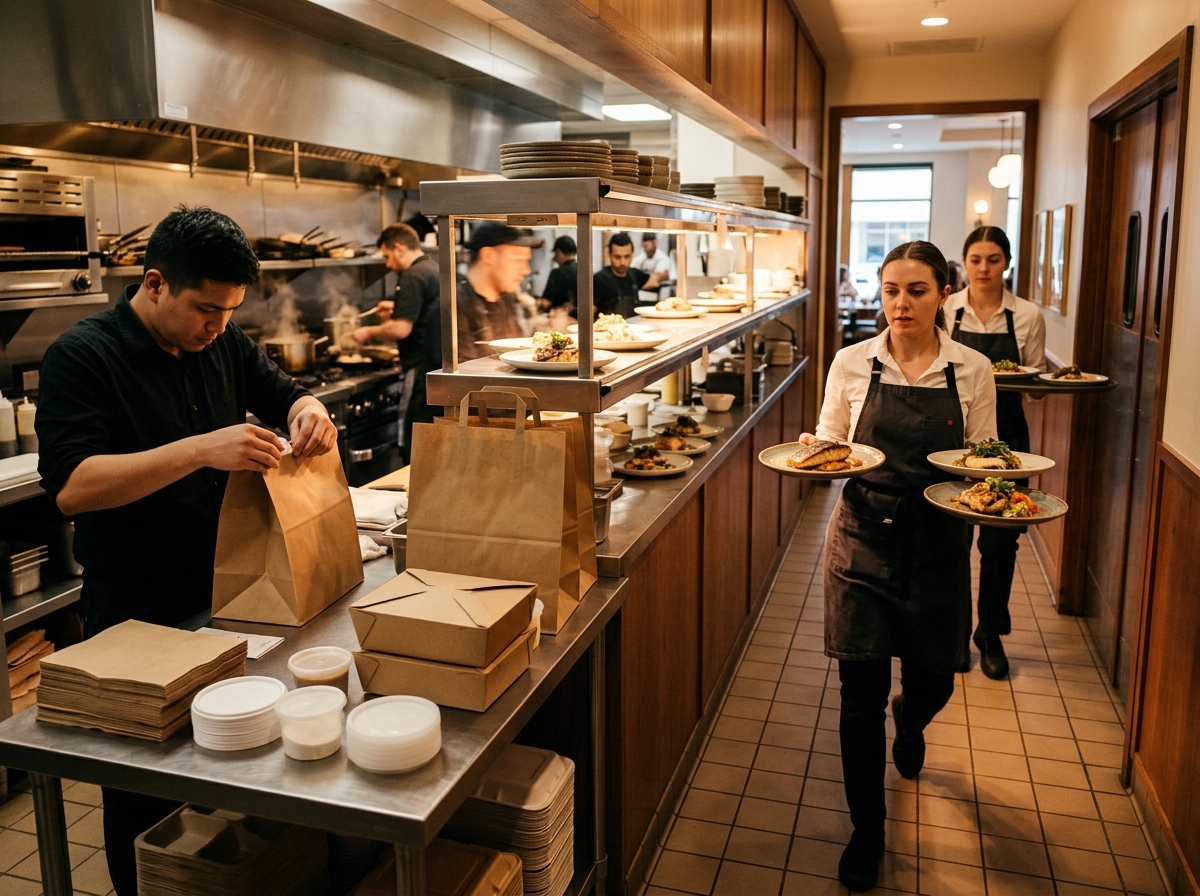
The integration imperative: Orchestrate your entire tech stack
To truly master throughput, you need your systems to speak to each other. Relying on disconnected software forces manual reconciliation and leaks revenue.
By pursuing deep POS system integration, you connect your primary transaction hub to inventory, delivery, and table management tools.
When you run integrated POS and real-time analytics, you gain unprecedented visibility into table turn times, staff performance, and peak traffic patterns.
However, the biggest hurdle of a new tech rollout is often user adoption. Proper POS training ensures your front-of-house team can navigate the system flawlessly in 1–2 shifts, turning technology into a helper rather than a headache. This entire operational shift is what drives a positive digital transformation on restaurant customer experience, ensuring speed, consistency, and guest retention.
Track wait-time metrics weekly
You can't manage what you don't track. To systematically identify and fix bottlenecks, set aside time to review key metrics weekly:
- Average wait time from arrival to seating
- Kitchen ticket preparation times
- Checkout processing and table-turn latency
How Spindl and AgenticPOS solve the wait-time equation
If you are tired of juggling five delivery tablets and struggling with slow checkout systems, you need a unified operating system.
This is where Spindl comes in. Spindl is an all-in-one restaurant operating system that combines point-of-sale, delivery aggregation, tableside ordering, and deep analytics into a single, intuitive device.
And if you aren't ready to replace your entire technology stack on day one?
You can start free with AgenticPOS. AgenticPOS provides an MCP server that lets AI agents control your existing POS system. Instead of clicking through complex dashboards, operators and managers can run shifts, update menus, manage pricing, and query real-time analytics through ChatGPT, Claude, or Slack bots.
Start for free on the POS you already have. Scale to Pro when multi-location management gets painful. Transition to the full Spindl OS when you're ready to retire your old, fragmented tech stack once and for all. Check out Spindl pricing to find the ideal fit for your operation.