Overcoming the restaurant labor and margin squeeze in 2026
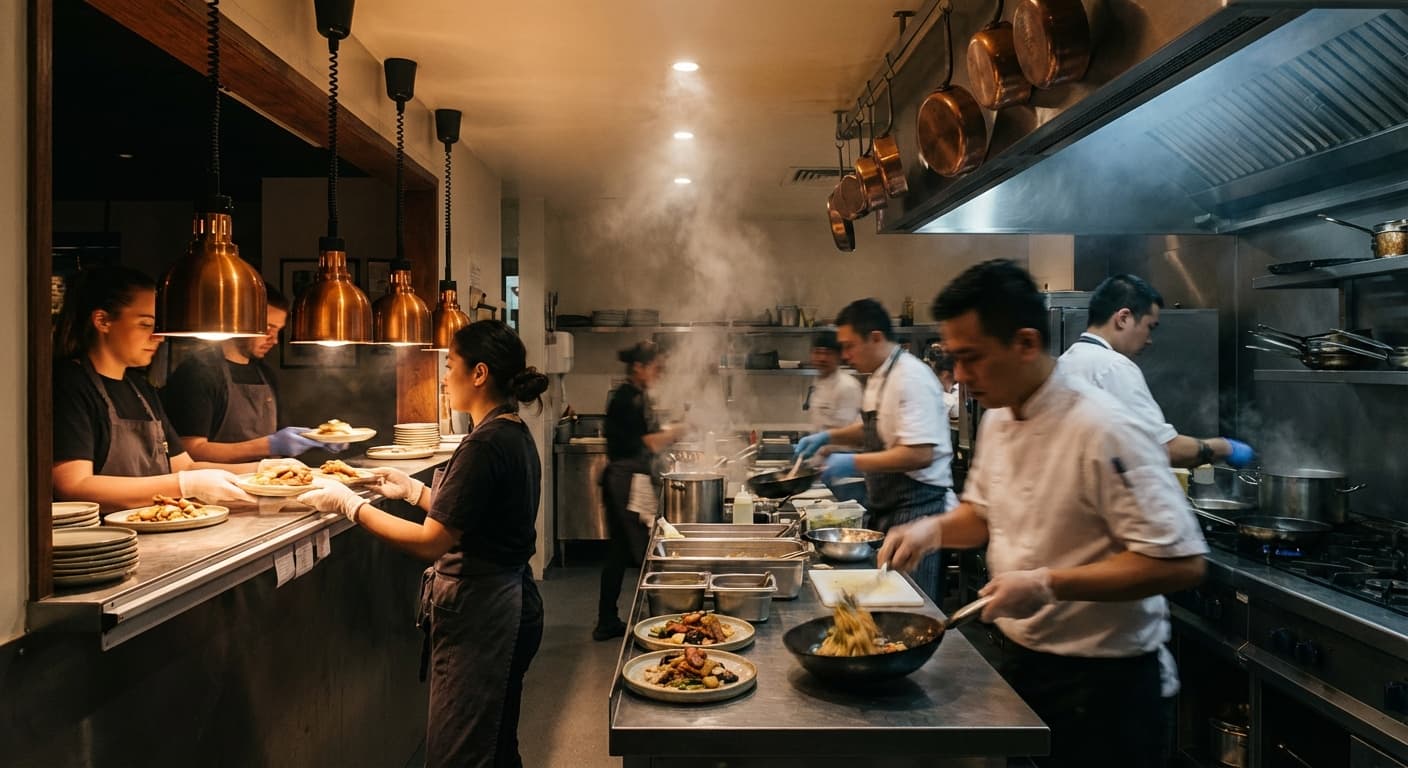
Did you know that 42% of restaurant operators reported their business was not profitable last year? With food and labor costs spiking 35% over five years, maintaining margins requires more than just longer hours – it demands a total shift in how you manage daily operations.
Key challenges squeezing modern operators
Running a restaurant has always been a high-wire act, but today's operators face a compounding mix of economic hurdles. The industry is evolving rapidly, forcing owners and managers to adapt or watch their margins completely dissolve.
Labor shortages and workforce fatigue
Finding and keeping good staff remains a persistent bottleneck. While the National Restaurant Association’s 2026 State of the Restaurant Industry report forecasts restaurant and foodservice employment to reach 15.8 million jobs, staffing levels have barely moved past pre-pandemic baselines.
The recovery is highly uneven. As of March 2026, U.S. fullservice restaurant employment remained 193,000 jobs below its pre-pandemic level. This ongoing shortage is why so many restaurants are understaffed today. When veteran staff leave, a massive knowledge gap remains, leaving remaining team members exhausted and driving a destructive cycle of turnover. Replacing a single line cook can cost between $1,800 and $3,500 in recruiting fees and lost productivity, making employee retention a critical financial priority.
Rising operational costs
Financial pressures are mounting from multiple directions. Food and labor costs are a restaurant's two most significant line items, each consuming roughly 33 cents of every dollar in sales. Over the last five years, both of these expenses have spiked by an average of 35%.
According to recent surveys, more than 9 in 10 operators cite food, labor, insurance, energy, and card swipe fees as significant challenges. Consumer prices for eating out also rose faster than grocery prices, climbing about 6% from January 2024 to September 2025. This creates a difficult balancing act: absorb the expenses and watch your business become not profitable, or pass them on to customers and risk losing their business.
Economic uncertainty and cautious spending
Even though total restaurant sales are projected to reach $1.55 trillion in 2026, consumers are spending cautiously. Pent-up demand for restaurant experiences is high – more than 7 in 10 consumers say they would use restaurants more frequently if they had more disposable income.
However, inflation has made diners highly selective. They are reducing the frequency of their visits, ordering fewer appetizers and desserts, and looking for strong value. This makes disciplined restaurant budgeting and strategic menu choices essential to surviving a softer market.
High-impact opportunities to regain control
Despite these challenges, innovative operators are discovering major opportunities by leaning into operational efficiency and digital tools.
Streamlining front and back of house efficiency
To offset rising expenses, successful restaurants are focused on optimizing their prime cost (food and labor combined). Your prime cost is your operational North Star; keeping this number below 60% of your total revenue is critical to staying in the black.
You can uncover hidden margins by implementing practical restaurant operational efficiency strategies:
- Dynamic prep sheets: Standardizing prep based on historical POS sales data helps prevent waste. Food waste typically accounts for 3% to 5% of food costs.
- Ergonomic kitchen setup: Shaving even 5 to 10 seconds off the prep time of a plate adds up to hours saved during a busy weekend rush.
- Tableside ordering: Equipping staff to take orders directly at the table reduces errors, accelerates table turns, and allows servers to handle more guests with less stress.
Mitigating supply chain volatility
Supply chain disruptions are no longer occasional headaches – they are a regular business constraint. Successful operators are taking control of their inventory through data-driven restaurant supply chain management practices.
Instead of ordering stock based on gut feelings, target 4 to 8 inventory turns per month. Track your inventory weekly and compare your theoretical food cost against your actual food cost. Any variance of more than 2% is a warning sign of over-portioning, waste, or inventory shrinkage that needs immediate correction.
Embracing off-premises and digital channels
The shift toward off-premises dining is permanent. Digital channels are projected to drive 70% of restaurant sales by 2025. Modern consumers expect seamless digital interactions:
- Direct website ordering: 84% of off-premises customers prefer to order directly through a restaurant's website.
- Third-party delivery: 71% of consumers are likely to order through third-party delivery services.
- Digital payments: 79% of consumers prefer contactless or mobile payments, and 73% prefer digital wallet options.
While delivery helps expand your customer base, third-party commissions can easily reach 15% to 30%. Successful operators mitigate this by using direct ordering incentives to convert delivery users into direct customers, and pricing delivery menus slightly higher to protect margins.
Driving success through technology integration
Solving these modern restaurant industry challenges requires a change in how you use technology.
The cost of tablet chaos
Many restaurants handle digital expansion by adding a different tablet for every delivery partner, plus separate software for inventory, scheduling, and POS. This "tablet farm" splinters your operational data, increases training time, and leads to costly order errors.
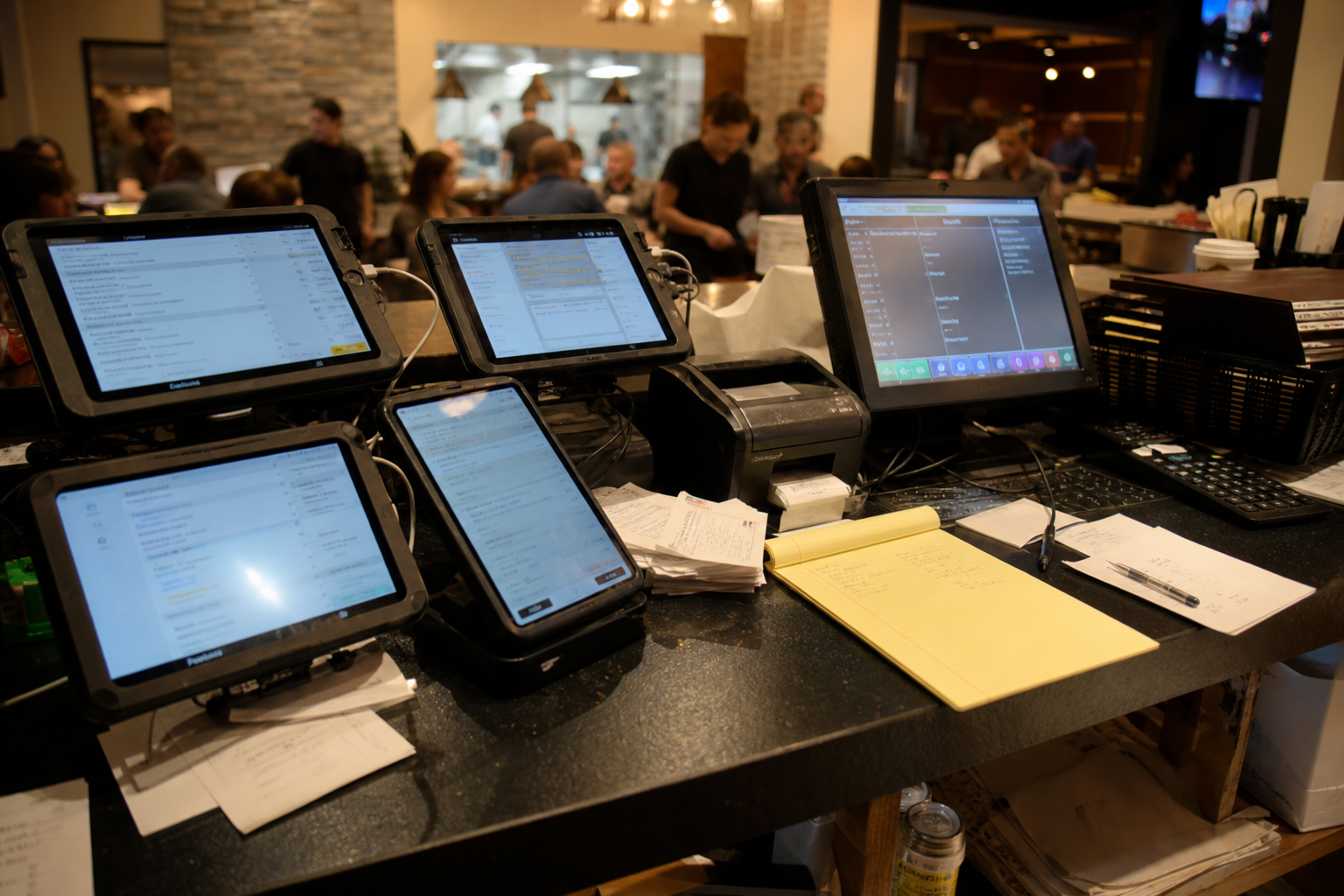
Managing multiple independent systems also drains valuable management hours. Consolidating your technology into a single integrated platform can reduce administrative tasks by 30%, saving a typical operator roughly 12 hours every week.
Unifying operations under one system
Whether you are managing a single neighborhood spot or handling complex multi-location restaurant management, having a single "source of truth" is game-changing.
A comprehensive platform like Spindl unifies order management, delivery aggregation, point of sale, loyalty systems, and real-time analytics on a single device. By bringing your channels together, you eliminate manual data entry, reduce order errors, and shorten staff training times.
If you are not ready to completely replace your existing POS hardware, you can still automate your daily management with artificial intelligence. A Deloitte study on restaurant AI shows that 82% of restaurant executives plan to increase their AI investments to improve customer experiences and restaurant operations.
Through AgenticPOS, the Spindl team offers an open MCP server that allows AI agents to control your existing POS via simple chat. This lets you manage daily operations, pull reports, or update menus and pricing across multiple locations using Claude, ChatGPT, or Slack instead of clicking through complex back-office dashboards.
This approach lets you grow at your own pace:
- Start free with AgenticPOS on the POS hardware you already have.
- Scale into Pro when multi-location administrative work begins to bottleneck your growth.
- Transition to the complete Spindl OS when you are ready to retire your old technology stack completely.
The restaurant industry has always rewarded resilience and operational discipline. The operators who thrive in 2026 won't be those who wait for labor pressures or food costs to drop. They will be the ones who adapt their systems, eliminate manual waste, and leverage smart integration to protect their margins.
Ready to reclaim your time and supercharge your profitability? Discover how unifying your systems can transform your bottom line. Explore Spindl's features or get started with a free demo today.