Why average restaurant profit margins hover at just 3% to 6%
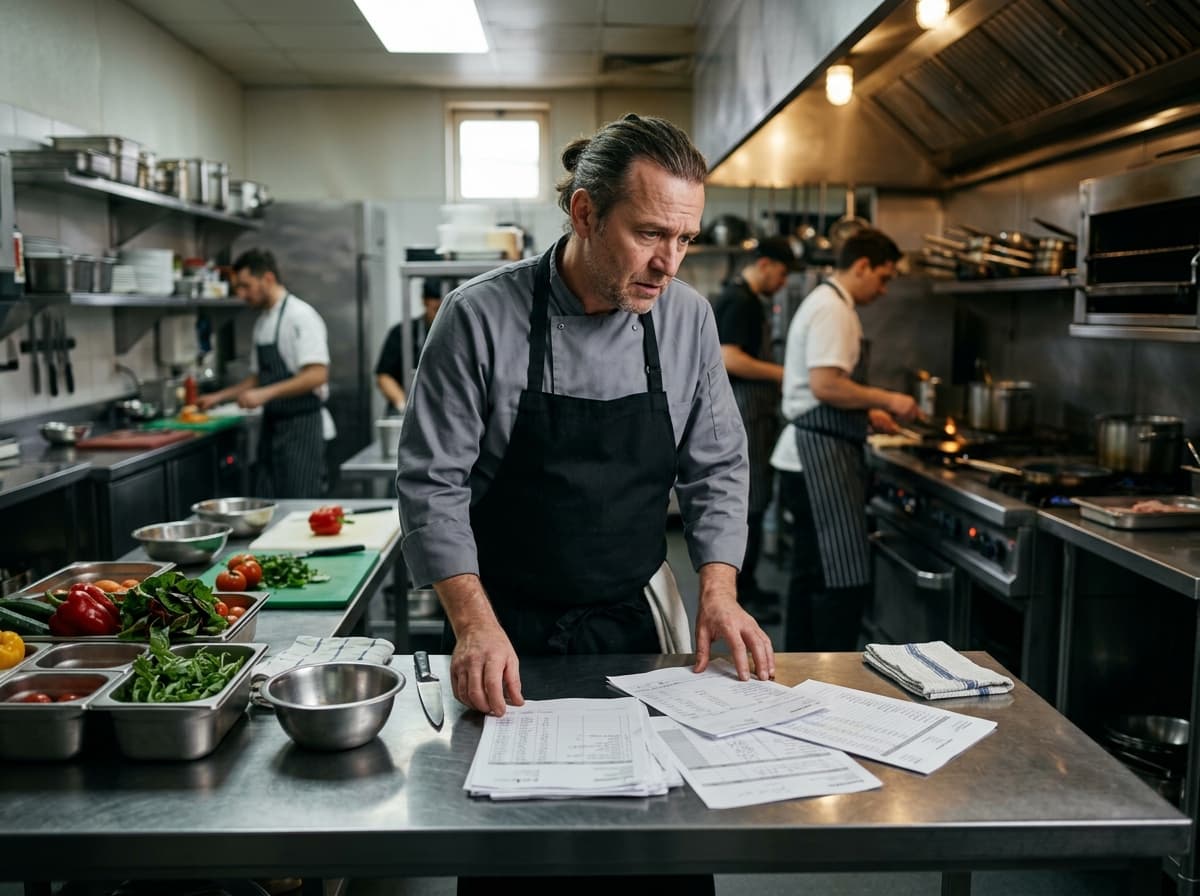
Why does running a restaurant feel like working 80 hours a week just to break even? With average restaurant profit margins hovering between 3% and 6%, the line between survival and bankruptcy is razor-thin.
The economic reality of prime costs
Your prime cost – the sum of your Cost of Goods Sold (COGS) and total labor – is the most predictive metric of your restaurant's health. The National Restaurant Association reports that food and labor each account for about 33% of sales, while other operating expenses take up about 29%. This leaves a typical pre-tax profit margin of roughly 5% for a standard restaurant.
The financial squeeze varies dramatically by your service model:
- Full-service and casual dining restaurants operate on the thinnest margins, typically 2% to 5%, due to higher labor and operational costs.
- Limited-service and fast-food concepts fare slightly better, reporting net margins in the 6% to 9% range, driven by simpler menus and higher order volume.
To master these dynamics, you need a firm grasp of restaurant financial management. Over the last five years, food and labor costs have both surged by 35%. According to industry data, if operators had not raised prices over the past five years, the average pre-tax margin would have shifted from a 5% profit to a nearly 24% loss. Understanding how to build a resilient budget is covered in detail in our guide on restaurant budgeting tips.
Labor expenses: The rising burden
Labor is the largest controllable expense for restaurants, but keeping it in check is an uphill battle. Tight labor markets have significantly raised payroll expenses. The Kansas City Fed notes that ongoing labor shortages and rapid wage growth have continually pushed food service prices higher.
This operational pressure is visible across the industry:
- According to a 7shifts workforce report, only 36% of restaurants hit their labor cost targets, while 44% spent more than planned.
- Approximately 40% of restaurants keep labor costs at 20% to 25% of revenue, 26% hover at 26% to 30%, and 15% exceed 30%.
- Staffing and workforce management were cited as the primary operational challenge by 32% of operators entering the year.
High employee turnover is the silent killer of restaurant budgets. The industry’s average annual turnover rate stands at a staggering 75%. For hourly employees, the numbers are even worse: Black Box Intelligence reports a 135% turnover rate in limited-service brands and 96% in full-service concepts. Replacing a single line cook can cost between $1,800 and $3,500 in recruitment, onboarding, and lost productivity. Balancing these numbers requires strict restaurant labor cost control strategies to align staffing with real-time customer demand.
Food inflation and inventory leaks
Wholesale food prices have sustained severe upward pressure. Ingredients are 35% more expensive than their pre-pandemic levels, though the pain depends on your menu mix. Prices for beef, seafood, and fresh vegetables have driven recent increases, while commodities like eggs and butter have seen year-over-year declines.
Even if you negotiate great supplier rates, waste in the kitchen can quietly destroy your bottom line. Food waste typically accounts for 4% to 10% of purchased inventory. To stop throwing money into the dumpster, operators must implement aggressive measures to reduce restaurant food waste, such as tracking the exact variance between theoretical and actual food costs.
The operational friction of delivery apps and fragmented tech
Post-pandemic shifts have made off-premises dining essential. More than half of operators report that takeout and delivery represent a larger share of revenue than in 2019. However, expanding these channels creates massive operational complexity.
Major delivery platforms like DoorDash, Uber Eats, and Grubhub charge commission fees ranging from 15% to 30%. When you add in payment processing, marketing fees, and customer service comps, the true cost of third-party delivery can reach 30% to 48% of the restaurant’s delivery revenue.
Because normal profit margins are already so low, a 30% commission can completely eliminate the profit on an order. To survive, many restaurants price their delivery menus 10% to 20% higher. This protects margins but risks driving away value-conscious guests who notice the markup.
Furthermore, managing a "tablet farm" of independent delivery screens causes administrative delays, order entry errors, and missed tickets. If your POS, inventory, and delivery apps do not talk to each other, you are losing precious hours to manual labor. This is one of the most common reasons why is my restaurant not making money.
Occupancy costs and fixed overhead
Even before food is prepped or staff is scheduled, fixed overhead eats into potential profits. Industry benchmarks state that rent and total occupancy costs – including CAM fees, property taxes, and insurance – should equal 6% to 10% of your gross sales. Nationally, the median restaurant rent hovers around $5,000 per month, making fixed overhead a heavy baseline burden to clear every single month.
How to reclaim your profit margins
Surviving these restaurant industry challenges requires shifting from defense to offense. You cannot easily control food inflation or national wage trends, but you can control your operational efficiency.
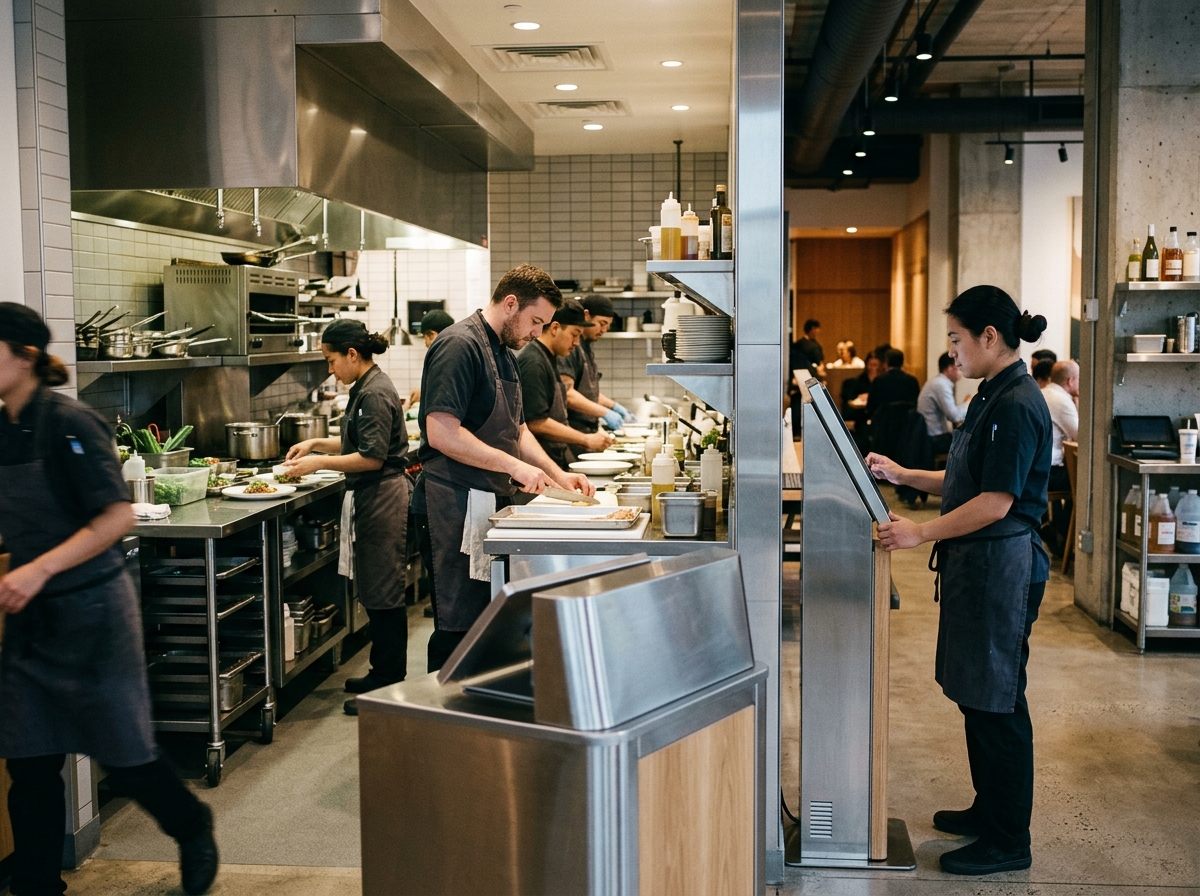
- Apply restaurant operational efficiency tips like tableside ordering, QR codes, or self-service kiosks. These tools can increase average ticket sizes by 15% to 30% while reducing front-of-house labor strain.
- Regularly review your menu performance. Analyze food costs, adjust portion sizes, and focus on high-margin "Stars" by updating your restaurant menu.
- Compare the best restaurant POS systems for 2026 to find a system that connects front-of-house sales with back-of-house inventory in real time.
- Consult our comprehensive restaurant profit margin guide to implement a phased, data-driven strategy for cost control.
Simplify operations and protect your bottom line
Managing daily restaurant operations shouldn't require clicking through a dozen disconnected dashboards. You can start optimizing your workflow today without replacing your entire infrastructure.
With AgenticPOS, you get an MCP server that lets AI agents control your existing POS system directly through chat interfaces like Claude, ChatGPT, or Slack. You can manage menus, update pricing, and run real-time analytics reports simply by asking, keeping your operations fast and agile.
When you are ready to completely retire your old technology stack, transition to the full Spindl platform. Spindl unifies order taking, POS, delivery aggregation, self-service, and loyalty systems into a single sleek device. By eliminating the administrative waste of fragmented technology, Spindl helps you lower food costs, reduce staff stress, and reclaim the profits your restaurant deserves.