Fem store udfordringer i restaurantledelse – og hvordan du løser dem
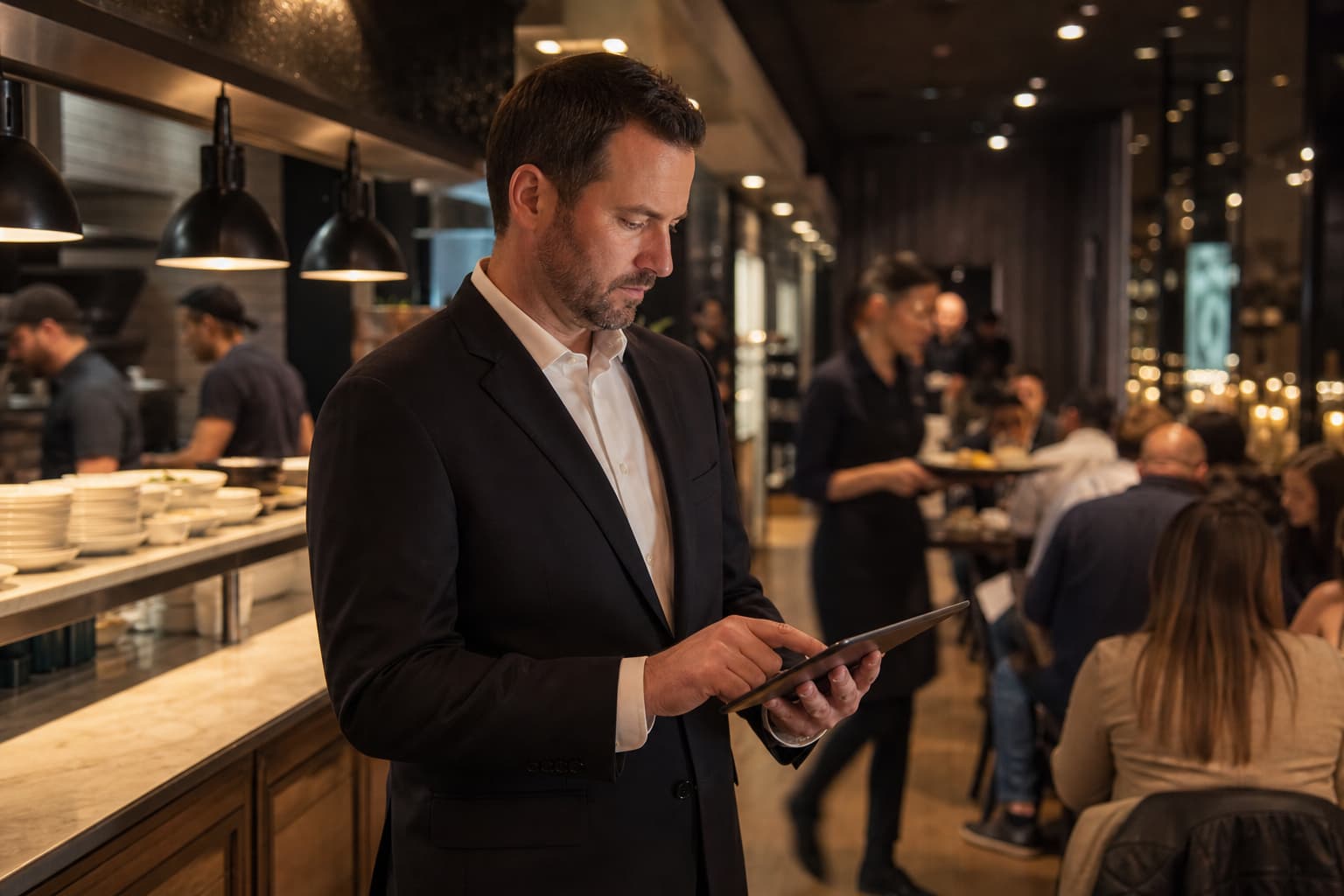
Styrer du din restaurant, eller er det i virkeligheden restauranten, der styrer dig? Med en gennemsnitlig overskudsgrad på beskedne 3-5 % skal der ikke meget til, før uventede driftsforstyrrelser spiser ugens overskud. At vende skuden kræver, at du rykker væk fra mavefornemmelser og i stedet baserer dine beslutninger på data.
Håndtering af personalemangel og høj personaleudskiftning
Bemanding er fortsat en af branchens absolut største udfordringer. Historisk set slås restaurationsbranchen med en personaleudskiftning på næsten 75 %. Det koster dyrt i både tid og ressourcer at erstatte en enkelt kok – typisk mellem 1.800 og 3.500 dollars, når man medregner rekruttering og onboarding.
For at bryde den onde cirkel skal du prioritere forudsigelighed og professionel udvikling. Du kan skabe langt mere stabilitet på holdet ved at implementere strategiske metoder til at reducere personaleudskiftningen. Overvej disse tiltag for at holde på dine gode folk:
- Offentliggør vagtplanen mindst 14 dage i forvejen. Det viser respekt for medarbejdernes privatliv og giver dem mulighed for at planlægge deres fritid.
- Etabler faste hold til henholdsvis frokost- og aftenvagter, og opbyg et fleksibelt korps af tilkaldevagter ("flyvere"), der kan træde til ved pludselig travlhed.
- Brug mobilvenlige værktøjer, der gør det nemt at bytte vagter indbyrdes og automatisk sikrer, at overarbejdsreglerne overholdes.
- Skab klare, strukturerede karriereveje, og sørg for sidemandsoplæring på tværs af funktioner. Det gør personalet mere fleksibelt og i stand til at hjælpe til i både restauranten (front-of-house) og køkkenet (back-of-house).
Med automatiseret vagtplanlægning kan du spare op til 15 timers administration om ugen og samtidig forebygge den udbrændthed, der ofte fører til opsigelser. Ved at bruge datadreven vagtplanlægning sikrer du, at du hverken er under- eller overbemandet, hvilket holder lønomkostningerne i ave.
Få styr på svingende råvarepriser og lagerspild
Udgifterne til både råvarer og arbejdskraft er steget med omkring 35 % sammenlignet med niveauet før pandemien. Det gør den økonomiske styring af en restaurant til en daglig overlevelseskamp. Manuelle optællingsfejl, uhensigtsmæssig opbevaring og mangel på standardiserede opskrifter fører ofte til unødigt spild.
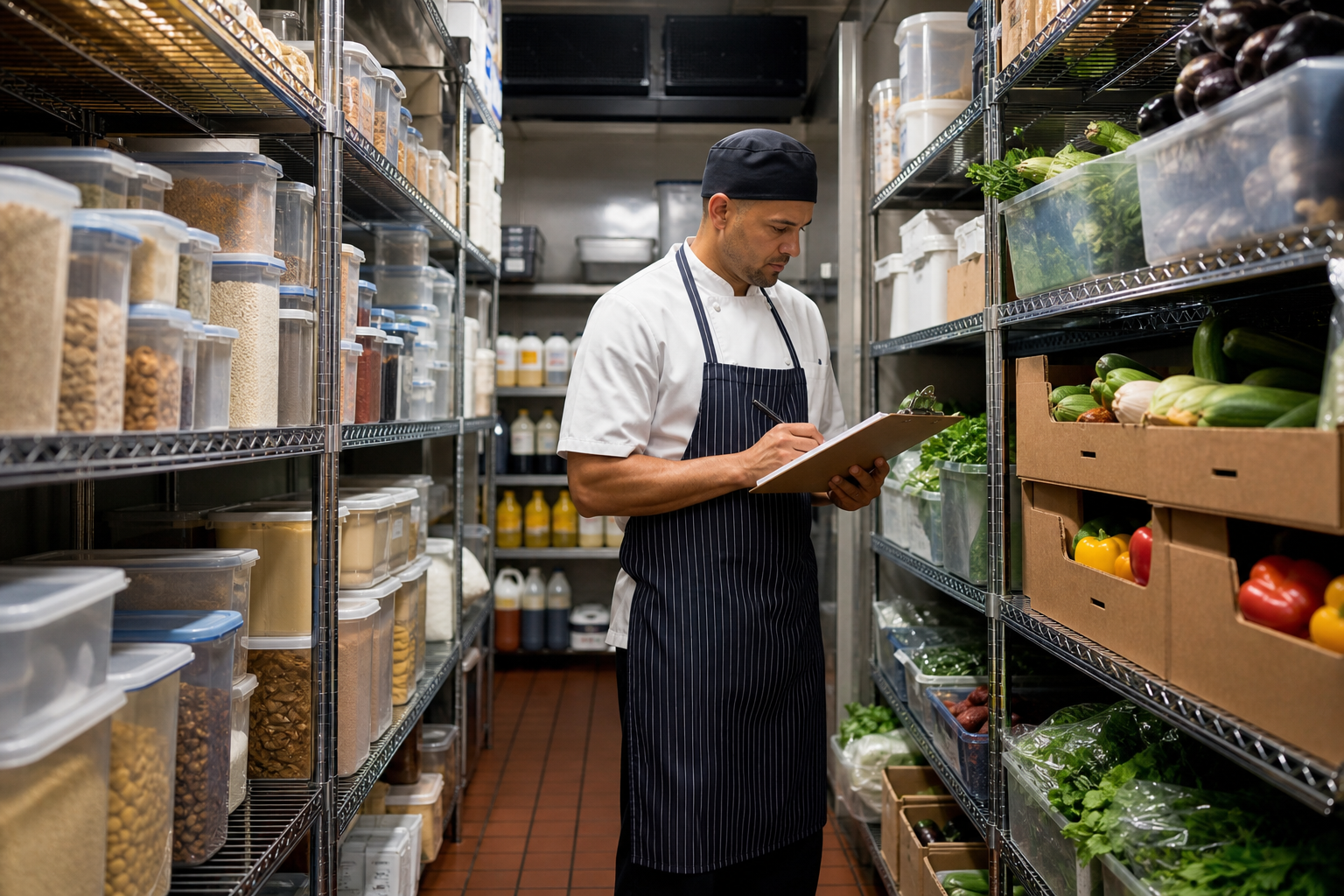
For at beskytte dine marginer skal du optimere din lagerstyring i restauranten. Stram op på kontrollen i køkkenet med følgende tiltag:
- Implementer et konsekvent FIFO-princip (først ind, først ud) med tydelig datomærkning.
- Indfør en fast ugentlig statusoptælling (helst efter lukketid), og lad to personer foretage den sammen for at minimere tællefejl.
- Hold skarpt øje med portionsstørrelserne ved hjælp af målebægre, køkkenvægte og præcise standardopskrifter.
- Overvåg afvigelsen mellem dine teoretiske og faktiske råvareomkostninger for hurtigt at opdage, hvor svindet sker.
Beregningen af de faktiske råvareomkostninger sker efter en simpel formel: Primolager + indkøb - ultimolager. Når du sammenholder dette tal med salgsdata fra dit kassesystem (POS), bliver det let at afsløre problemer med overportionering, svind eller rent madspild. Vil du have mere dybdegående råd til omkostningsstyring, kan du læse disse praktiske budgetteringstips til restauranter for at finde de steder, hvor pengene fosser ud.
Få bugt med tablet-kaos og fragmenteret teknologi
Mange moderne restauranter lider under et sandt "digitalt kaos". Disken flyder med separate tablets til de forskellige leveringstjenester. Denne fragmentering fører uundgåeligt til tastefejl, glemte bestillinger og unødig stress i køkkenet.
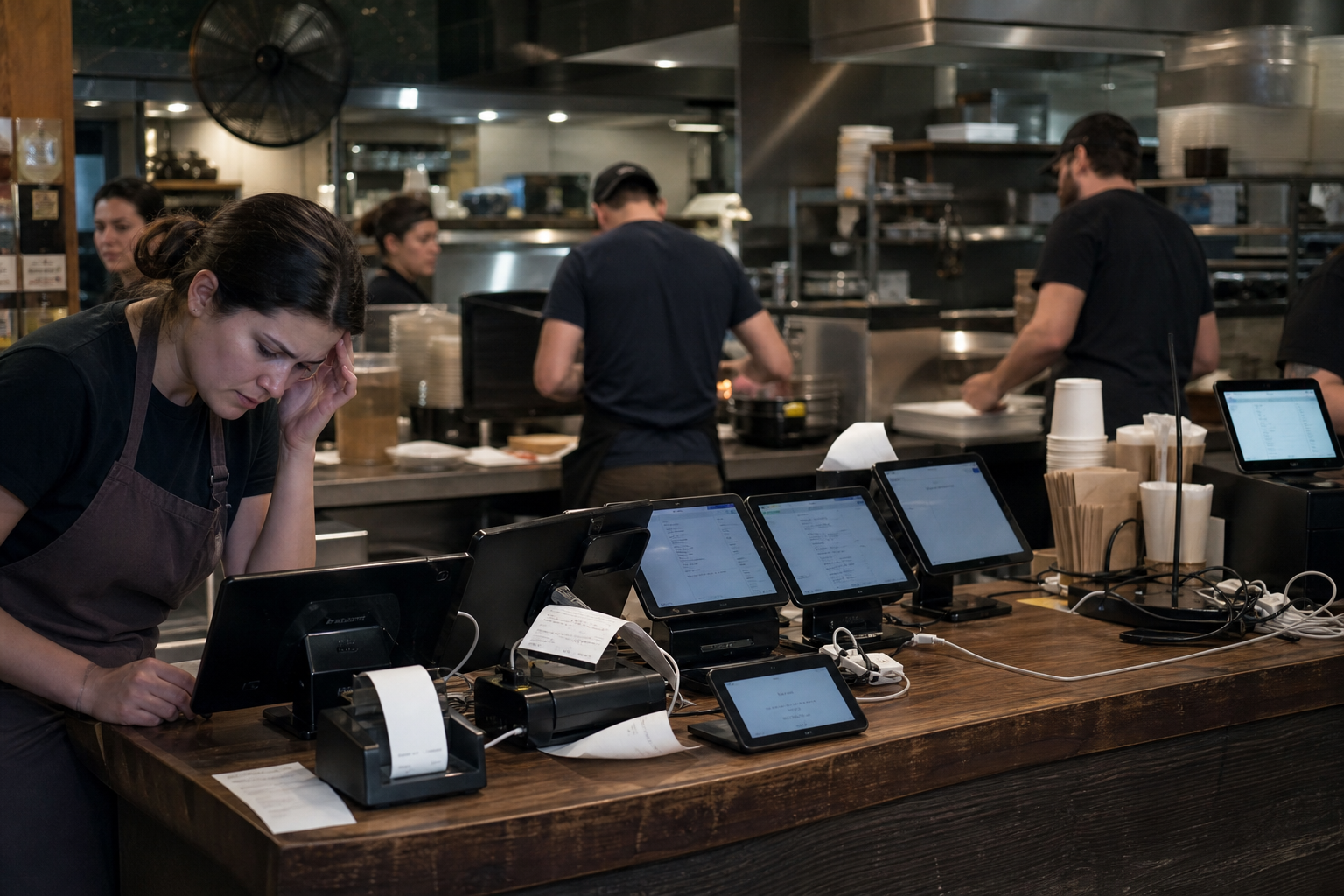
Forældet teknologi og systemer, som ikke taler sammen, skaber blinde vinkler i driften og dræner bundlinjen. Løsningen er at samle dine systemer i én integreret platform. Når leveringsapps, menukort og onlinebestillinger kører via samme system, slipper du helt for de manuelle indtastninger.
At tackle de mange udfordringer og muligheder i restaurationsbranchen kræver, at man tager automatisering til sig. Ifølge nyere undersøgelser planlægger 82 % af alle restaurantchefer at skrue op for de teknologiske investeringer for at strømline driften og give gæsterne en bedre oplevelse. Når systemerne taler sammen, frigøres der dyrebar tid, som lederne kan bruge ude på gulvet hos gæsterne i stedet for på teknisk fejlfinding.
Fjern flaskehalse i servicen for at øge bordomsætningen
Ventetid er den lydløse dræber af kundeloyalitet. Omkring 42 % af gæsterne kommer aldrig igen, hvis de må vente mere end en halv time på et bord – og hele 75 % af førstegangsbesøgende falder fra ved mærkbare forsinkelser. I en hektisk hverdag kan langsom betaling eller en tabt bon i køkkenet hurtigt lamme hele maskineriet.
Du kan sætte markant mere fart på serveringen ved at bruge målrettede greb til at reducere ventetiden i restauranten:
- Få et digitalt køkkendisplay (KDS) til at sende bestillinger direkte ud til kokkene, så I helt slipper for fysiske papirboner.
- Udstyr tjenerne med mobile kasseterminaler (POS) til betaling ved bordet – det kan barbere op til 40 % af ekspeditionstiden.
- Spred bordreservationerne med 15 minutters intervaller, så køkkenet ikke bliver lagt ned på én gang.
- Placer selskaber strategisk, og ryd løbende af, så bordene hurtigt kan gøres klar til næste ryk.
Når du minimerer ventetid ved betaling og flaskehalse i køkkenet, kan du øge bordomsætningen med op til 20 % i de travleste timer. Det kan mærkes direkte på bundlinjen hver evig eneste aften. En glidende og effektiv servering er fundamentet for god kundeservice i restaurantledelsen.
Skab en ensartet gæsteoplevelse og stabiliser kundestrømmen
En ujævn kundestrøm og svingende servicekvalitet på tværs av vagthold gør det svært at opretholde et sundt og forudsigeligt cashflow. Hvis oplæringen er overladt til tilfældighederne eller den enkelte vagtchef, vil gæsterne opleve store udsving i madens kvalitet og serviceniveauet. Den manglende konsistens spænder ben for at gøre strøgkunder til loyale stamgæster.
Vil du stabilisere din omsætning og forstå, hvorfor din restaurant måske ikke er rentabel, skal du opbygge faste, strukturerede arbejdsgange:
- Standardiser onboarding-processen med et fast træningsprogram, der udstikker præcise retningslinjer for serviceniveauet.
- Optimer din tilstedeværelse på de vigtigste anmeldelsesportaler med opdaterede åbningstider, adresse og skarpe billeder for at forbedre din lokale søgerangering.
- Sæt gang i målrettede hverdagsaktiviteter, som fx happy hour eller temaaftener, for at trække folk til på de ellers stille dage.
- Brug data fra dit loyalitetsprogram til at identificere dine stamgæster og forkæle dem med skræddersyede, personlige tilbud.
Ved at indsamle løbende feedback og sætte driften i system sikrer du, at hver eneste gæst får den samme gode oplevelse – uanset hvem der er på vagt.
En velsmurt restaurantdrift handler i bund og grund om små, bevidste forbedringer af de daglige rutiner. Og med den rette teknologi ved hånden bliver den omstilling langt nemmere.
Du kan starte helt gratis med at koble AgenticPOS på dit nuværende kassesystem (POS). Med systemets MCP-server kan AI-agenter overtage backoffice-opgaver som menustyring, vagtplanlægning og realtidsrapportering via velkendte chatværktøjer som Claude, ChatGPT eller Slack. Og når du er klar til at vinke farvel til det digitale kaos og de mange enkeltstående systemer, kan du skifte til det altomfattende Spindl OS og styre hele din restaurantdrift fra én samlet platform.