How to master restaurant inventory management and cut waste
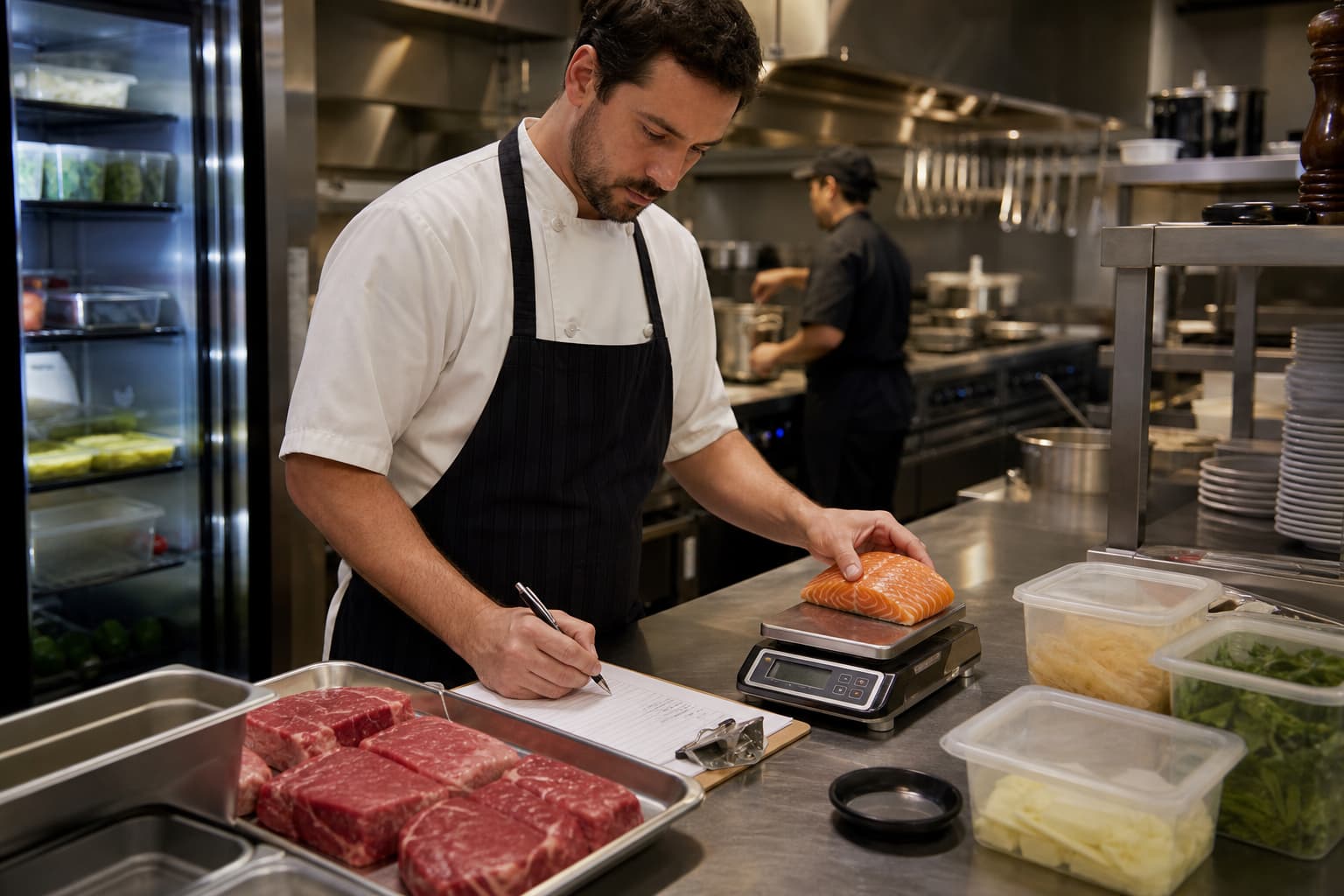
Is your profit margin disappearing into your kitchen trash can? Food waste typically accounts for 4% to 10% of all inventory purchased by a restaurant. Managing your stock effectively protects your bottom line, stabilizes food costs, and stops daily operational leaks.
Core inventory systems for restaurants
Every foodservice operation relies on an inventory method to track ingredients, beverages, and supplies. Restaurants typically choose among four primary approaches:
- Perpetual inventory systems: Track stock levels continuously in real time through POS integration and software updates.
- Periodic inventory systems: Rely on physical stock counts performed on a scheduled weekly or monthly basis.
- Barcode systems: Speed up counts by scanning item barcodes directly into digital stock sheets.
- RFID systems: Use radio frequency tags for automated tracking of high-value proteins and alcohol.
Connecting a perpetual system to your POS features provides the highest accuracy. Real-time ingredient deductions remove guessing games and make it easier to choose the best restaurant inventory management software for your business model.
Daily practices that prevent inventory loss
Consistent daily habits keep prep lines organized and keep ingredients from spoiling on the shelf.
Monitor perishables and high-cost items daily
Weigh high-cost proteins at closing and reconcile actual usage against expected sales. Checking daily vital metrics – like fresh seafood, meat, dairy, and prepped items – reveals portion creep and inventory shrinkage before costs spiral.
Maintain strict FDA date-marking standards
Under the FDA Food Code, ready-to-eat TCS (time/temperature control for safety) foods prepared on-site and held longer than 24 hours must be clearly marked. Hold them at 41°F (5°C) or lower for a maximum of 7 days, counting the day of preparation as Day 1.
Keep these date-marking rules in mind:
- Combined ingredients: When mixing prepped foods, label the batch with the earliest discard date among all ingredients used.
- Freezing rules: Freezing pauses the 7-day clock but does not reset it. Once thawed, the product must be used within its remaining original time window.
Practice FIFO and smart storage organization
Always organize storage using First In, First Out (FIFO) discipline so older ingredients are used before newer deliveries. Label containers with clear use-by dates, create dedicated shelf zones, and position high-turnover prep for quick access.
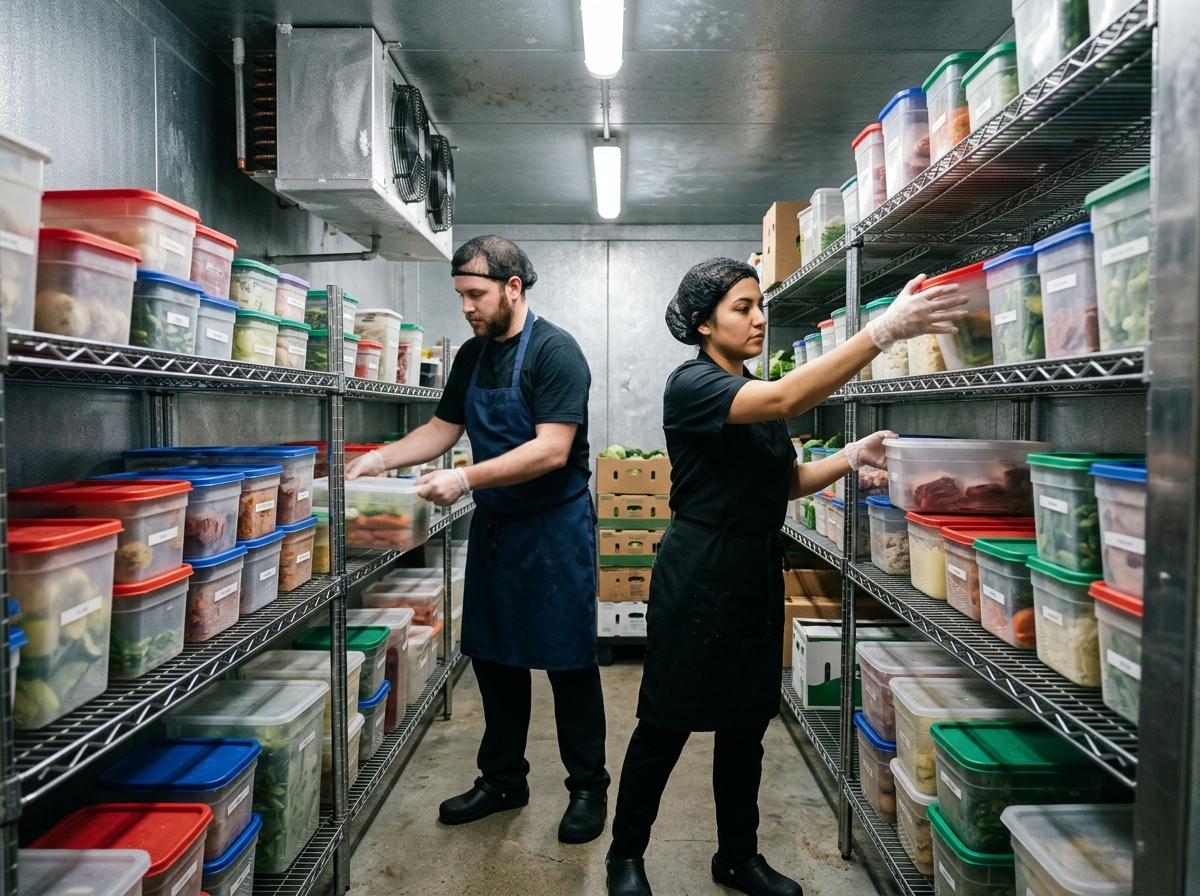
Logging discarded food at the POS or on a kitchen waste board creates instant staff accountability. For more proven methods to lower loss, explore strategies to reduce restaurant food waste.
Key inventory metrics to track
Data-driven kitchen management relies on three fundamental metrics:
Inventory turnover rate
This metric measures how fast you burn through and replace your total inventory.
- Formula: Cost of Goods Sold (COGS) ÷ Average Inventory Value
- Target: A healthy restaurant should aim for 4 to 8 turns per month, replacing its entire stock every 4 to 8 days.
Variance (Theoretical vs. Actual COGS)
Variance highlights the gap between ideal recipe usage and actual ingredient consumption.
- Target: Aim to keep variance below 2%. A variance above 5% signals severe portioning issues, untracked waste, or theft.
Sell-through rate
Sell-through indicates how quickly purchased items convert into sales. Low sell-through on short-shelf-life items warns you to adjust ordering pars or apply restaurant budgeting tips to protect margins.
Unifying POS, supply chain, and modern tools
Manual spreadsheets consume hours and invite counting errors. Modern software connects receiving, prep sheets, and sales into a single self-correcting loop.
When a guest orders a dish, an integrated system instantly decrements the exact recipe weight – down to ounces of protein or tablespoons of sauce. To streamline supplier orders and delivery receiving, combine restaurant supply chain management with best practices for integrating POS with inventory management systems.
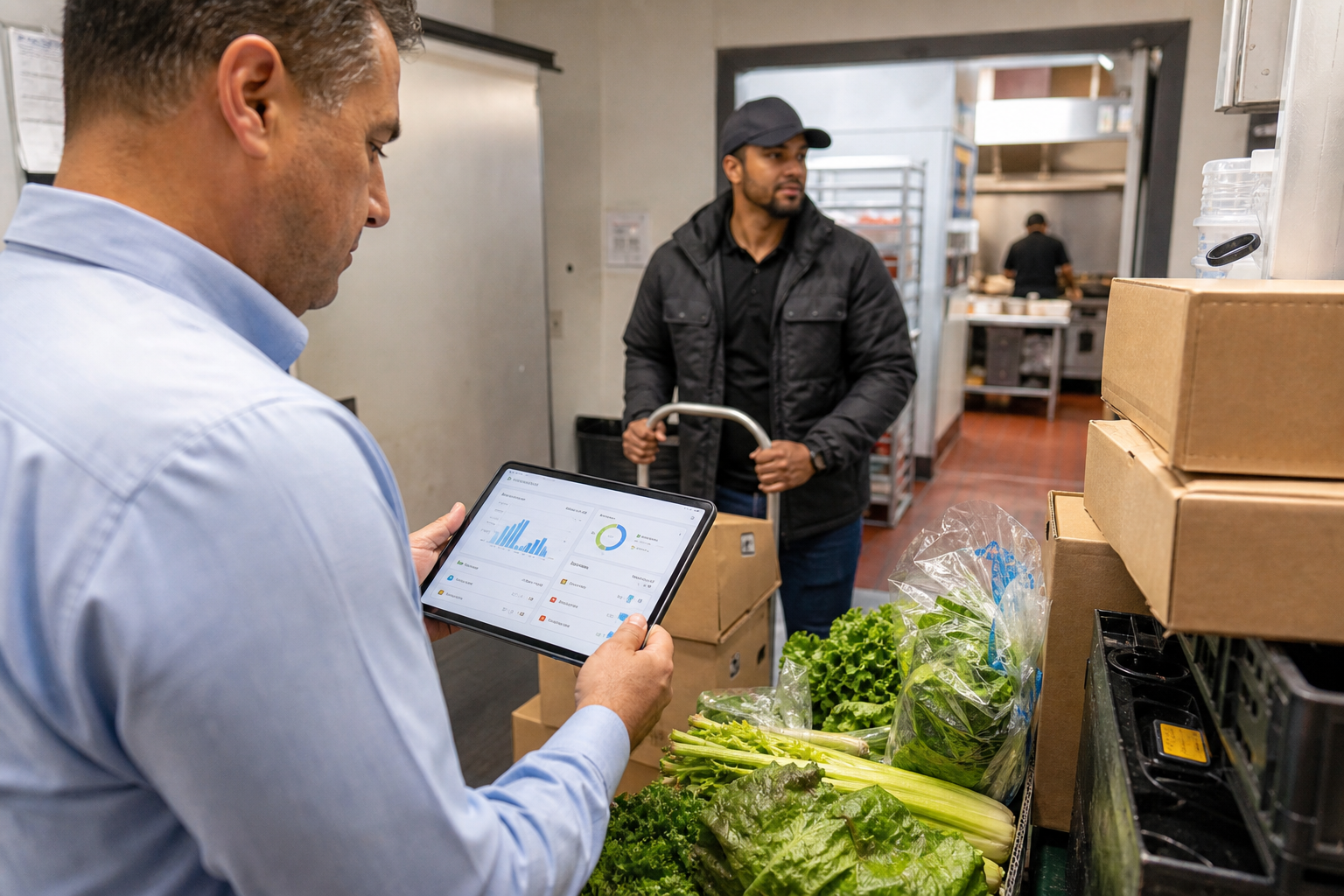
Explore Spindl's software integrations and built-in inventory management features to track stock live, receive low-balance alerts, and automate reordering from one screen.
If you prefer managing operations without navigating complex software dashboards, AgenticPOS provides an AI-driven MCP server. It lets operators, chefs, and managers control POS back-office operations – including stock checks, menu updates, and reporting – using natural language through AI tools like ChatGPT, Claude, or internal Slack bots.
For wider workplace improvements, review our top restaurant operational efficiency tips.
Taking control of your bottom line
Effective inventory control turns raw stock into consistent profit margins. Enforcing FIFO rotation, auditing waste daily, and automating counts with integrated software keeps your kitchen efficient and profitable.
Ready to cut food costs and streamline your back-of-house operations? Try Spindl today to automate ingredient tracking, receive real-time reorder alerts, and take full control of your kitchen's profitability.