How the 4Ps of marketing can increase restaurant profit
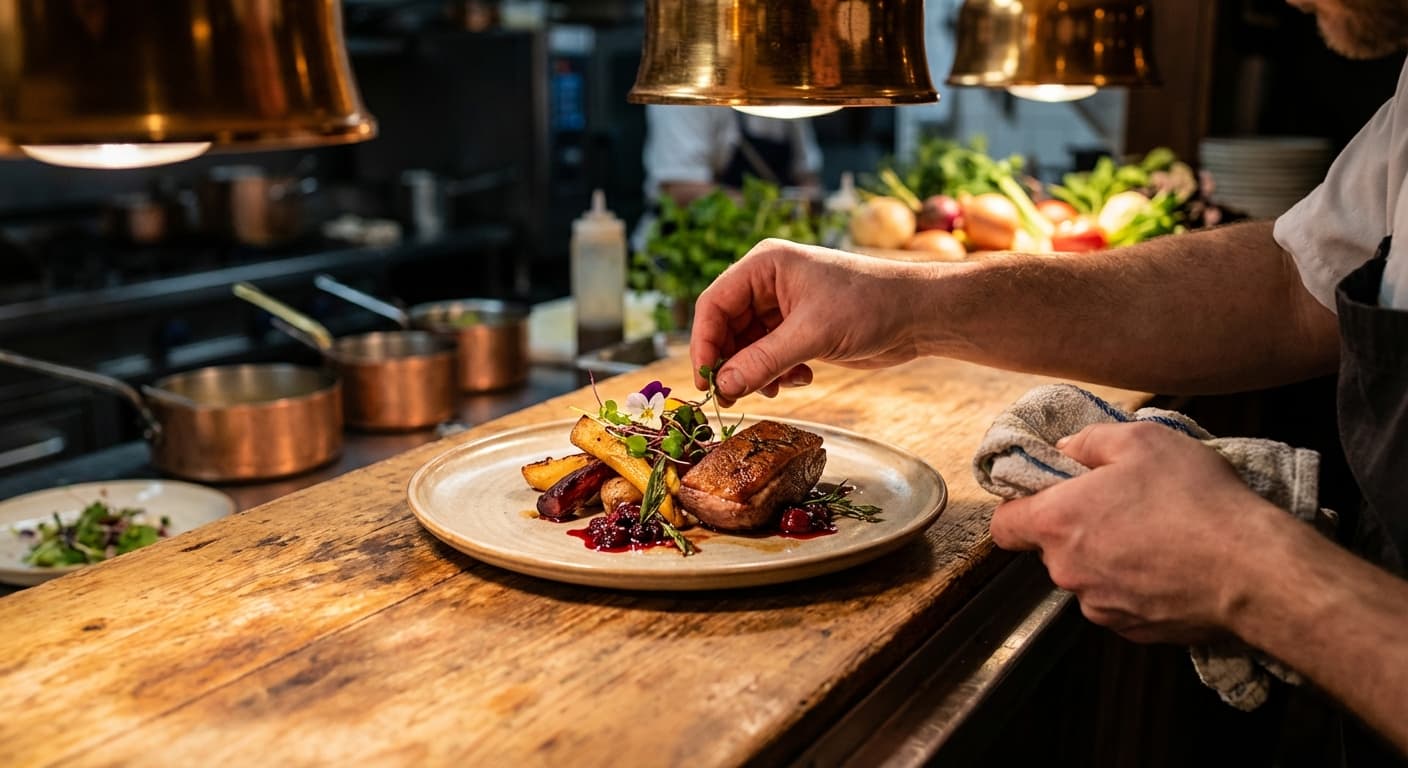
Why do some restaurants consistently pack their dining rooms while others struggle with declining foot traffic? Turning guessing into repeatable growth requires a structured framework: the 4Ps of marketing.
What are the 4Ps of marketing for restaurants?
The four Ps of marketing – product, price, place, and promotion – summarize the key factors of any successful business strategy.
In April 2026, U.S. eating and drinking places recorded a massive $101.0 billion in monthly sales. Despite this massive industry-wide volume, 49% of restaurant operators reported lower customer traffic compared to the prior year. Compounding this challenge, food and labor remain the largest expenses for operators, with overall food prices increasing by 28% from 2019 to 2024.
Running a profitable restaurant in this climate means you cannot rely on gut feeling. You must optimize every element of your marketing mix to protect your margins.
Product: Designing a high-performance menu
In the restaurant industry, your product is the entire guest experience. However, the operational core of this pillar remains your menu.
Executing strategic restaurant menu changes can boost your profits by 10% to 15% without raising your base prices. Operational efficiency begins with simplifying your offerings. Streamlining your menu reduces kitchen chaos, limits inventory waste, and lowers labor overhead.
Focus your menu on your "Stars" – the items that boast both high popularity and high profit margins. At the same time, systematically eliminate "Dogs" that slow down ticket times and drain your resources.
To make your products resonate, align your menu with a clear branding strategy for your restaurant. For example, highlighting locally sourced ingredients appeals directly to the 78% of consumers who prefer supporting local producers.
To transition your menu from a basic list of dishes into a high-performance sales tool, read our guide on how to write a restaurant menu to turn customer data into deliberate design.
Price: The psychology of value architecture
Pricing is a psychological exercise, not just a mathematical formula to cover your cost of goods sold.
Research shows that strategic menu layout can increase the sales of profitable items by up to 27%. Items placed in the upper right corner of your physical or digital menu receive the most consumer attention. Boxing specific high-margin dishes also draws the eye immediately. Omitting currency symbols is another proven tactic that reduces the "pain of paying" and encourages higher check sizes.
To build a resilient price architecture, utilize these techniques:
- Use bundling to combine high-margin items with popular entrees, increasing the average order value.
- Apply the "sandwich technique" by placing a high-margin item directly between two premium-priced items to make the middle option appear as the best value.
- Implement time-based pricing, such as happy hour or early-bird specials, to drive traffic during slow periods. Some casual-dining chains experience average check increases of 30% during happy hour.
You should adopt best practices for using POS analytics in restaurants to monitor food cost percentages, spot ingredient waste, and adjust your pricing structure dynamically before your bottom line suffers.
Place: Mastering distribution in a digital world
"Place" is no longer restricted to your physical real estate. Today, your distribution channels dictate your survival. Digital ordering channels are reshaped, and online food ordering has grown 300% faster than dine-in since 2014.
Your distribution strategy for your restaurant must balance third-party delivery platforms with your own direct ordering options.
While third-party aggregators offer massive customer reach, their 15% to 30% commission fees severely eat into your profits. A $45 order might net a strong 38% contribution margin when placed directly through your website, but that same order yields only a 6% contribution margin through a third-party app.
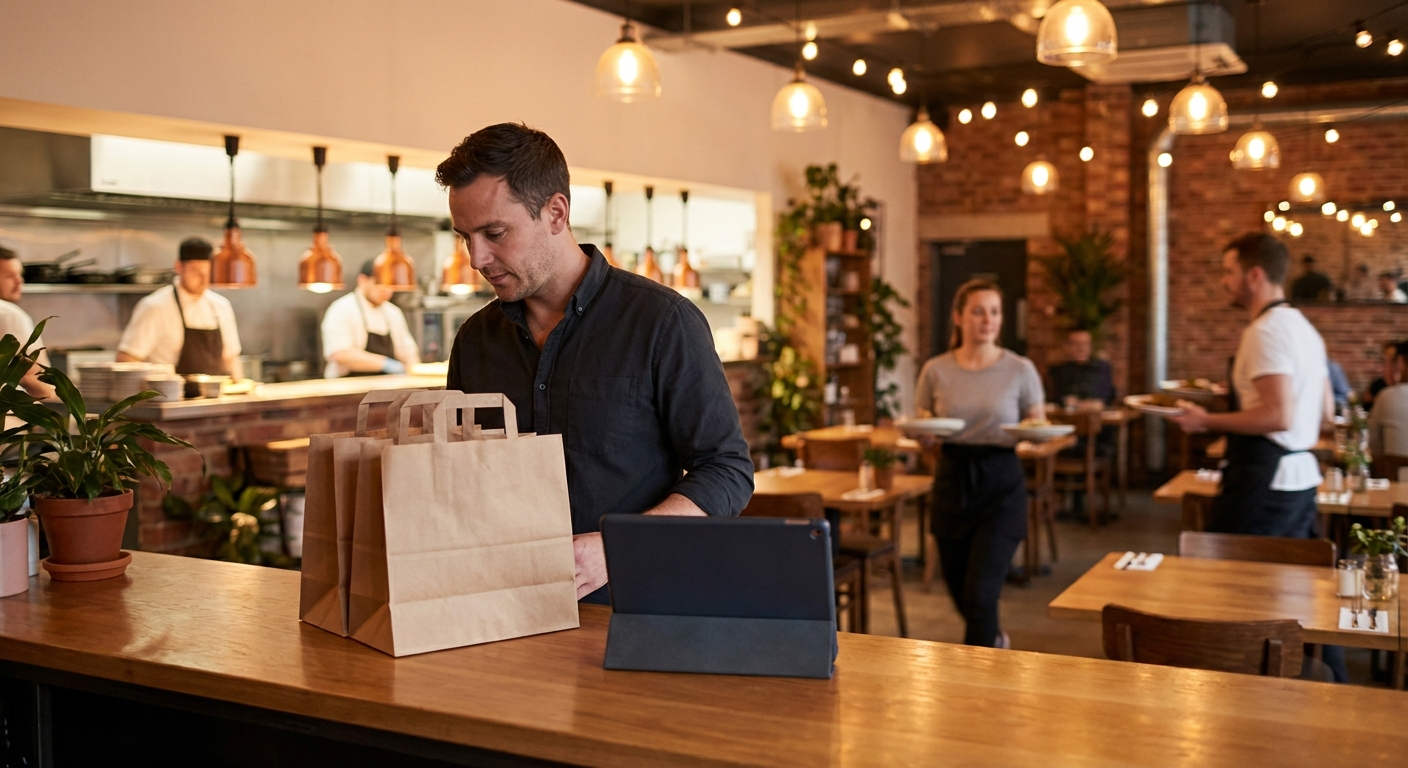
To capture digital sales without losing your margins, you must drive guests to your own digital storefront and consolidate your incoming order flows to reduce labor stress.
Promotion: Driving measurable and profitable action
Promotion is how you communicate your value. Social media plays a massive role in digital discovery, with 90% of diners researching online before visiting a restaurant. In fact, U.S. restaurants attribute an average 9.9% increase in business-to-consumer revenue directly to their social media strategies.
However, your highest-return promotional channels are those you own. Develop a structured restaurant marketing plan that builds direct, long-term relationships through targeted email campaigns and data-driven loyalty programs.
Instead of slashing your prices with random discounts that erode your brand value, leverage seasonal limited-time offers and experiential perks. Check out these restaurant promo ideas to target slow shifts and convert idle kitchen capacity into gross profit.
You can also study successful marketing strategy examples for food to learn how to personalize promotions based on purchase history and guest preferences.
Unifying your marketing mix with modern POS technology
The 4Ps only work when they are completely integrated. If your product is premium but your digital ordering experience is slow and clunky, your marketing mix falls apart.
To run a streamlined operation, you need a tech stack that unifies every channel.
This is where Spindl excels. Spindl is an all-in-one restaurant operating system that consolidates point-of-sale, online ordering, delivery apps, loyalty programs, and real-time analytics into a single device. It eliminates the chaos of managing multiple screens, allowing you to monitor your product mix, control your distribution, and track your promotional ROI in real time.
For operators who want to step into the future of management, Spindl is built to work hand-in-hand with AgenticPOS.
AgenticPOS provides an MCP server that lets AI agents control your restaurant's POS system through simple chat. Instead of clicking through complex back-office dashboards, you can update menus, adjust prices, manage delivery channels, and pull real-time sales reports using Claude, ChatGPT, or Slack bots.
Start for free with AgenticPOS on your current POS system to manage daily operations through AI-driven chat. When your business grows and multi-location operations require deeper integration, scale seamlessly into the full Spindl platform to unify your entire stack.