How to build a restaurant branding strategy that drives revenue

Is your dining room half-empty despite your food tasting incredible? You don't have a traffic problem – you have a positioning problem. Building a clear restaurant branding strategy turns one-time diners into loyal regulars and gives customers a compelling reason to choose you over nearby competitors.
What restaurant branding actually means
Branding is not just a logo or a color scheme. It is the sum total of every touchpoint a guest experiences with your restaurant, from scrolling through your social feeds to opening a takeout container. Marketing brings guests through the door once; branding keeps them coming back.
Strategic brand building directly impacts your bottom line. According to academic research on taste perception, consumers perceive food as tasting subjectively better when it comes from a brand viewed as warm and competent. Furthermore, a published study on restaurant brand attitudes revealed that positive brand perceptions directly spark word-of-mouth recommendations and return visits. Meanwhile, research shows physical dining ambience drives brand trust and loyalty.
Core pillars of restaurant branding strategy
Strategic positioning
Your positioning defines why a customer should pick your venue over competing options nearby. To establish a defensible position, gather hard market data. The U.S. Small Business Administration market research guidelines recommend evaluating local market size, customer demand, economic indicators, and competitor saturation to identify distinct market opportunities.
Use this straightforward template to articulate your position:
For [target audience] who [have a specific need], [your restaurant name] is a [category] that [unique benefit] because [reason to believe].
Test your positioning statement against these quick audit questions:
- Can a guest explain your differentiator in one simple sentence?
- Does your positioning solve a genuine guest pain point or desire?
- Can your operational team execute this promise consistently every day?
- Would your marketing materials look identical to competitors if your logo were removed?
If you answer no to any of these, refine your core differentiator before spending on marketing campaigns.
Brand messaging and voice architecture
Once your positioning is clear, codify your brand architecture to ensure consistent communication across all channels. Your messaging framework needs four core components:
- Core message: The foundation of your brand identity distilled into one sentence.
- Supporting pillars: Three or four distinct themes that reinforce your primary message.
- Proof points: Verifiable facts, such as sourcing standards or preparation methods, that substantiate your claims.
- Brand voice: A distinct personality reflected in every written word.
Defining clear tone guidelines allows staff to apply ways to personalize the guest experience across direct customer interactions, email copy, and social media.
Visual identity
Visual elements communicate your positioning instantly. Select colors, typography, and photography styles that match your concept. Red and orange evoke warmth and appetite, while green conveys freshness and health.
Visual standards matter online. Up to 90% of diners review social media accounts before selecting a venue. Establishing a defined photo style boosts engagement across platforms. For fresh inspiration, explore proven Instagram content ideas for restaurants and align your visuals with a broader social media strategy for restaurants.
Customer experience alignment
A brand promise falls flat if real-world operations do not deliver. Map out every step of the guest journey across dine-in, takeout, and delivery:
- Pre-visit: Digital discovery, online menu clarity, and booking ease.
- Arrival: Storefront presentation, lighting, music, greeting, and wait management.
- Service: Menu presentation, staff friendliness, order accuracy, and pacing.
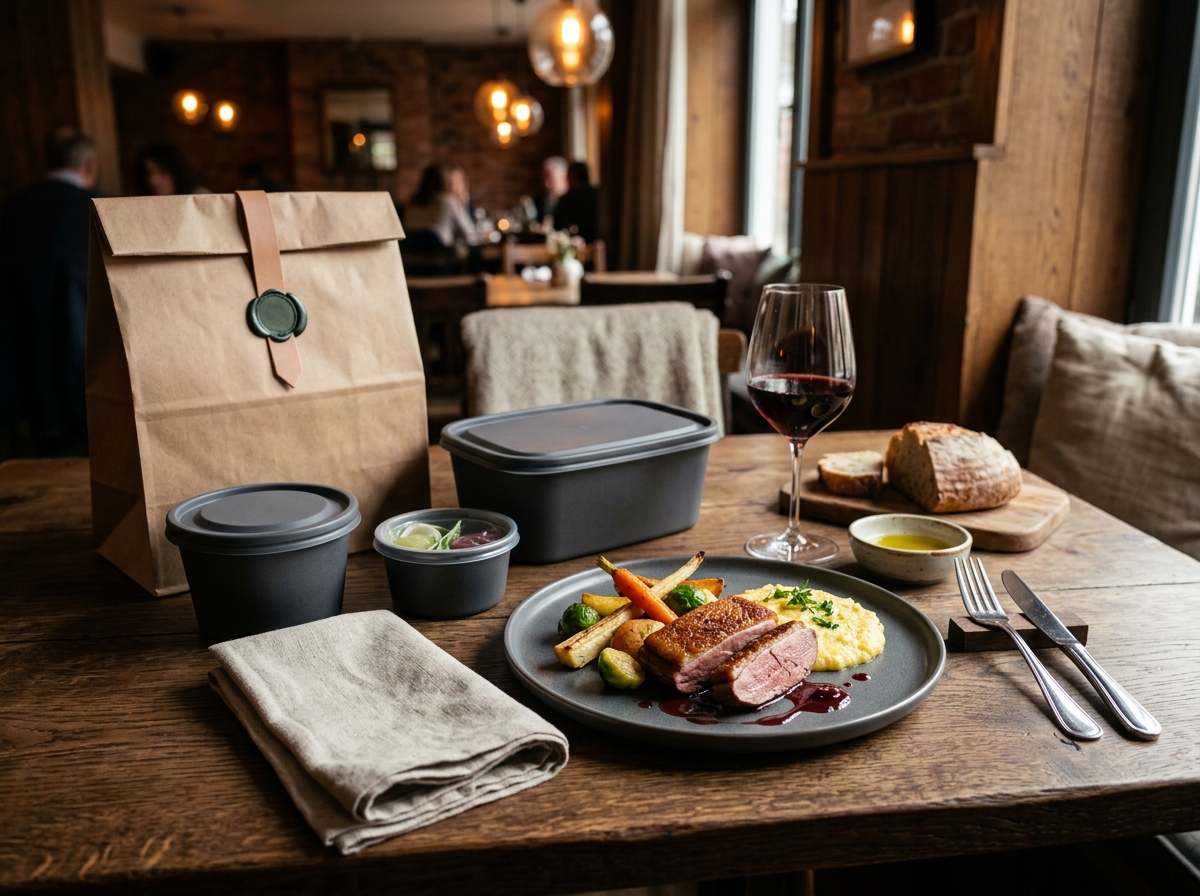
- Departure: Payment speed, farewell, and takeout packaging durability.
- Post-visit: Automated receipts, review requests, and loyalty rewards.
Inconsistencies erode guest trust. If you market high-end dining, using cheap plastic containers for takeout undermines your brand value. Protect your brand reputation by establishing proactive systems for effective online review management and quick protocols for handling customer complaints.
Operational brand integration and technology
Branding fails when technology stack friction gets in the way of smooth service. Disconnected systems lead to order errors, menu price mismatches, and missed loyalty tracking. Digital channels are projected to drive 70% of restaurant sales by 2025, making operational integration essential.
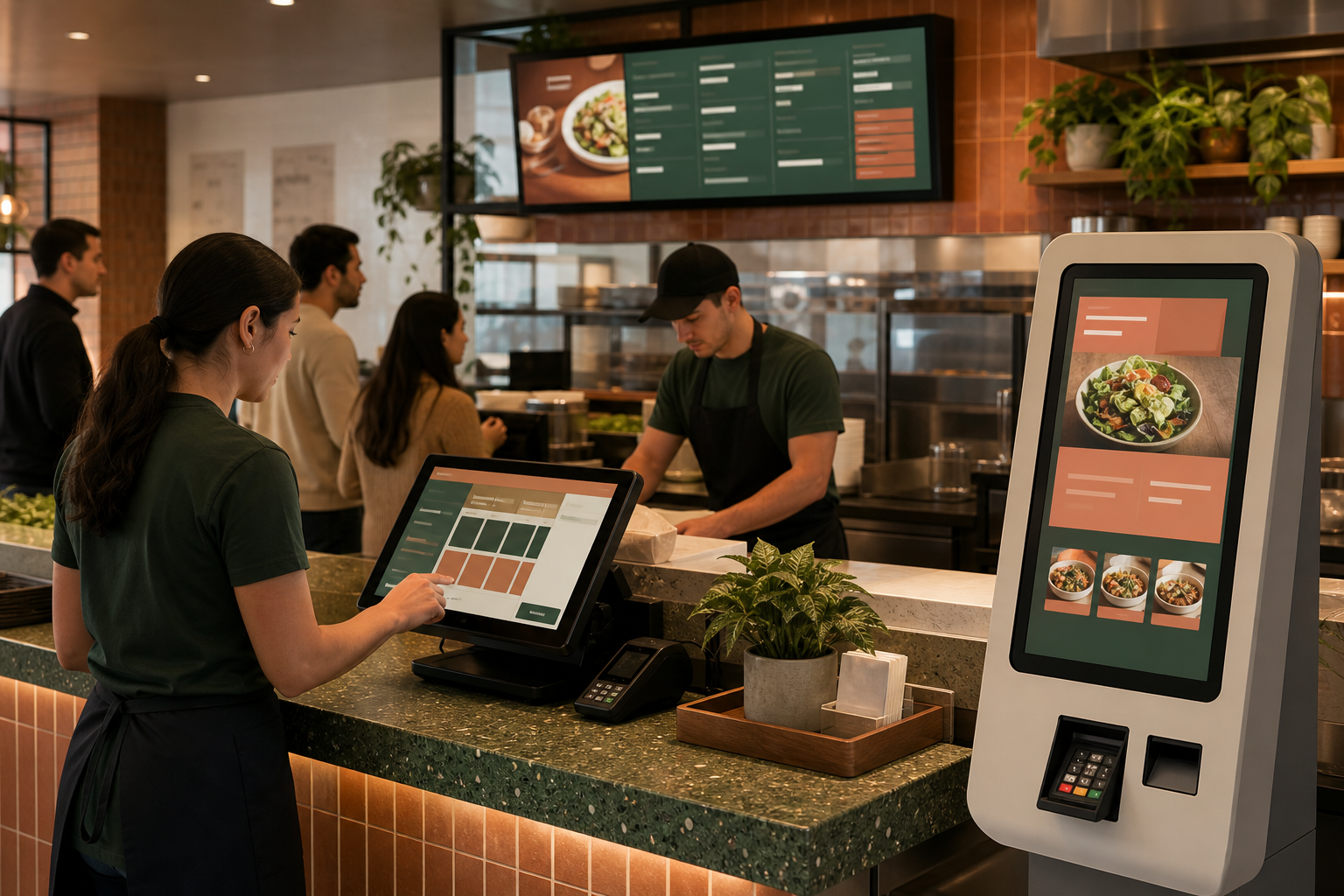
Modern technology reinforces brand consistency:
- Unified storefronts: Customizing your digital touchpoints using tools like Spindl Studio ensures your ordering site and self-service kiosks mirror your exact brand aesthetic.
- Direct ordering: Offering direct, commission-free online ordering keeps guests on your branded domain rather than third-party marketplaces.
- Automated loyalty: Integrating an integrated restaurant loyalty program lets regulars earn and redeem rewards seamlessly across POS, kiosk, and web channels.
- AI-driven management: Using tools like AgenticPOS allows managers to manage daily POS tasks, menu updates, pricing, and multi-location changes directly through natural AI chat interfaces.
Streamlining your infrastructure improves guest satisfaction. Read more on how digital transformation in restaurant customer experience elevates operations and review our multi-location restaurant management frameworks for scaling brands.
A step-by-step restaurant branding framework
Research and discovery
- Survey 50 to 100 active guests regarding their decision drivers.
- Interview 10 to 15 inactive or lost customers to identify operational friction points.
- Conduct competitive audits on direct market rivals.
- Analyze recurring feedback patterns across online customer reviews.
- Gather market trends and demographic data following SBA guidance on target markets.
Strategic foundation
- Draft your core positioning statement using primary market insights.
- Build detailed customer personas reflecting dining habits, pain points, and channel preferences.
- Define three to four non-negotiable brand pillars.
Visual and verbal identity
- Design logo variations, color palettes, and typography rules.
- Produce brand voice documentation with example responses for social media and guest reviews.
- Build standardized templates for menus, local signage, and digital graphics.
Customer experience design
- Audit digital storefronts and complete your Google Business Profile optimization.
- Reorganize physical menus using strategic pricing and typography layout.
- Train front-of-house staff on brand communication and hospitality standards.
- Upgrade takeout packaging to reflect your brand positioning.
Marketing integration
- Implement targeted digital marketing strategies for food businesses across search and social channels.
- Roll out campaigns showcasing your core brand pillars, leveraging creative marketing strategies for food businesses.
- Launch automated SMS and email campaigns tailored to customer ordering histories.
Ongoing measurement and optimization
- Monitor branded search traffic, social engagement, and direct website visits.
- Track review sentiment, Net Promoter Scores, and customer feedback trends.
- Review financial metrics including average check size, return frequency, and customer lifetime value.
Real-world restaurant branding examples
Fast-casual Mediterranean repositioning
A three-location fast-casual chain struggled with flat sales because guests viewed them as a generic alternative to larger fast-casual brands. They shifted positioning from "fresh Mediterranean food" to "grandmother's Mediterranean recipes, served fast."
They updated menu descriptions to highlight traditional family recipes, redesigned store interiors with warm residential decor, and featured authentic family cooking videos across social channels. Within six months, average check size rose 12% and guest return frequency increased 18%.
Neighborhood pizza and brewpub concept
An independent pizzeria faced stiff price competition despite using premium local ingredients. Rather than discounting, they leaned into a neighborhood brewpub identity.
They renamed pizzas after local landmarks, hosted weekly community gatherings, displayed artwork from local creators, and adjusted loyalty perks to reward event attendance. Same-store sales grew 31% year-over-year, allowing them to raise menu prices without losing guest loyalty.
Turn your brand into an operational reality
Building an effective restaurant brand requires matching a compelling positioning promise with smooth operational execution. When your visual identity, menu, staff hospitality, and tech stack align, customer acquisition costs drop while repeat visits rise.
Start streamlining your restaurant operations today with Spindl's all-in-one POS platform, or begin managing menu updates, pricing, and multi-location settings via AI chat using AgenticPOS.