How to build a profitable restaurant channel mix
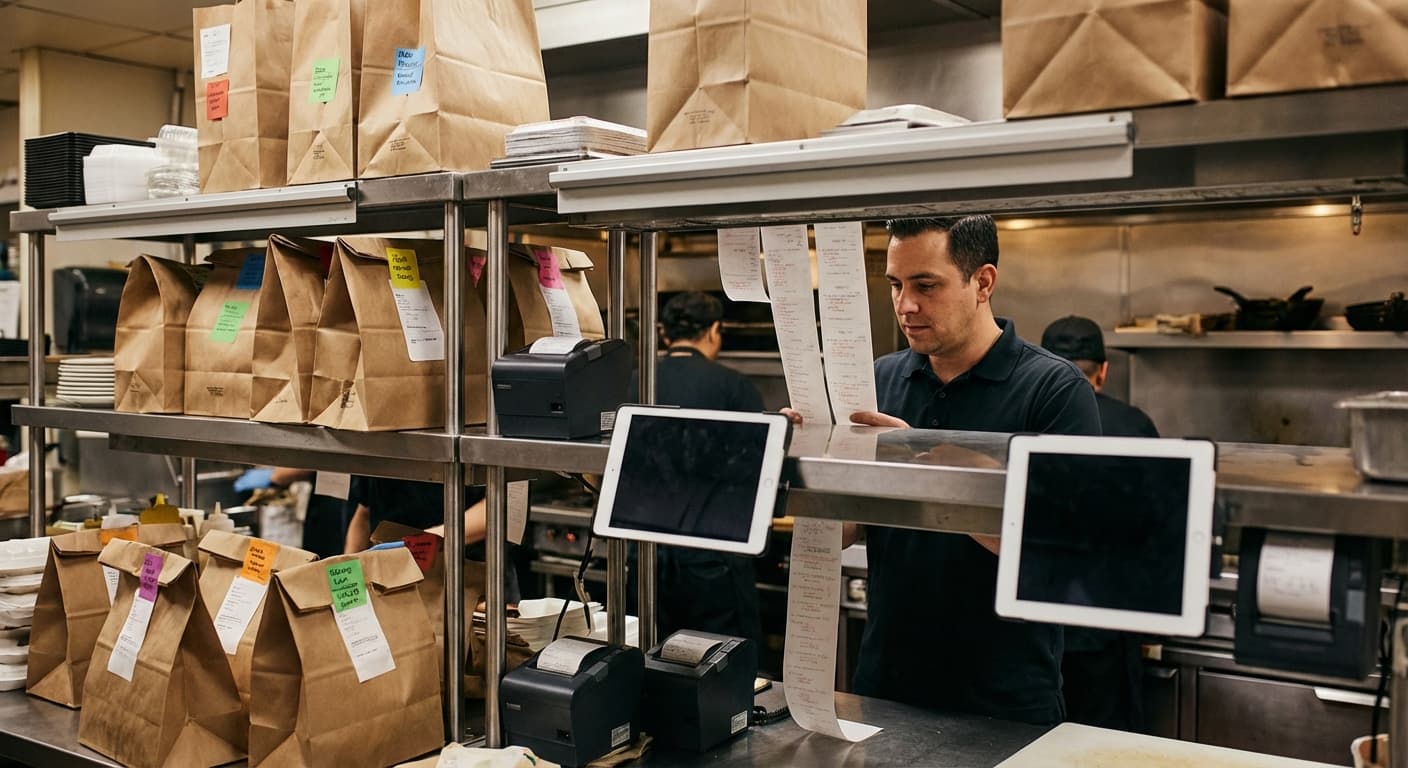
Did you know that 75% of U.S. restaurant traffic now happens off-premises? Juggling delivery apps, dine-in, and catering can easily destroy your margins if you don't track your channel economics. Here is how to build a distribution strategy that actually protects your bottom line.
What is a restaurant distribution strategy?
Your distribution strategy determines how your food travels from your kitchen to your customer. It is the "Place" element of your marketing mix. Many operators fall into channels reactively. You sign up for DoorDash because they called, or you scramble to fulfill a corporate catering order because a regular customer asked.
A strategic approach flips this script. A typical U.S. restaurant operates on a pre-tax profit margin of just 5% of sales, according to National Restaurant Association analysis. Food and labor costs each swallow about 33% of every dollar earned. If you want to keep your doors open, you must master your channel economics and integrate them into your overall restaurant budgeting tips. Setting up a cohesive marketing strategy for online food business starts with selecting the channels that actually yield a profit.
The five primary distribution channels for restaurants
- Direct channels (Dine-in and owned online ordering): Customers order in person, over the phone, or via your website. This channel yields your highest margins because there is no middleman taking a cut. Data from William Blair research shows that consumers prefer ordering takeout (32%) and delivery (30%) directly from a restaurant's own website or app, compared to just 22% who prefer third-party marketplaces for delivery. Setting up a dedicated restaurant online ordering system setup allows you to capture customer data and protect your profits. You can also implement self-service QR codes to reduce front-of-house labor.
- Third-party delivery platforms: DoorDash, Uber Eats, and Grubhub expose your brand to massive local audiences, but they come at a cost. Commission fees typically range from 15% to 30% of the order total. DoorDash and Uber Eats charge 15%, 25%, or 30% depending on your plan, while Grubhub fees span 10% to 30%. If you do not have a robust plan for restaurant delivery app integration, manual order entry errors can drain another 3% to 5% of your revenue.
- Catering and events: Corporate events and private parties offer high-volume, highly predictable revenue. The U.S. catering services market was estimated at $60.4 billion in 2022 and is projected to reach $109.4 billion by 2030, growing at a 7.7% compound annual growth rate, according to Grand View Research. Event catering represented the largest segment, driving 61.74% of that revenue in 2022. The market is highly fragmented, with no single player holding more than 5% market share, leaving a massive opportunity for local restaurants to capture high-margin corporate business.
- Wholesale accounts (B2B): Supplying prepared items or ingredients in bulk to local corporate cafeterias, hotels, or universities. While wholesale margins are lower per unit, they offer predictable volume and help monetize excess kitchen capacity during slow weekday mornings.
- Retail and CPG distribution: Bottling your famous hot sauce or packaging signature frozen entrees for local grocery shelves. It requires strict food-safety compliance and distinct packaging but acts as marketing that pays you instead of costing you.
Calculating your true channel economics
You cannot treat all revenue equally. A $10,000 sales week where 70% of your orders came through third-party delivery apps will yield vastly different profits than a week dominated by dine-in and direct orders. Let's look at the math behind a standard $14 burger:
- Dine-in burger: Typically yields a 36% contribution margin after subtracting food and in-house labor costs.
- Direct online burger: Yields around 28% margin after factoring in packaging and payment processing fees.
- Third-party delivery burger: Shrinks to a mere 6% margin after a 30% marketplace commission is deducted.
Unless you are actively shifting off-premises diners to your direct platform using smart delivery marketing ideas, third-party delivery can act as a slow leak in your bottom line. Read through our restaurant delivery management tips to learn how to convert those marketplace users into high-margin direct loyalists. You should also work on how to increase restaurant average order value across all channels to offset rising operational costs.
Eliminating operational chaos with smart technology
Juggling multiple delivery tablets, manual entry workflows, and disjointed inventory tracking creates operational friction. It burns out your staff and leads to order errors.

To build a profitable channel mix, you must unify your systems. This is where modern restaurant technology makes a difference.
If you are tired of clicking through legacy dashboards, start free with AgenticPOS. It provides an MCP server that lets AI agents control your existing POS through chat using Claude, ChatGPT, or Slack. You can manage menus, adjust prices, edit channels, and run multi-location updates entirely through simple conversation.
Once you are ready to retire your old technology stack, transition to the full Spindl OS. Spindl acts as an all-in-one, delivery-native restaurant operating system that consolidates POS, online ordering, delivery apps, and inventory into one sleek device. While legacy competitors feel like a Nokia 3310, Spindl is the iPhone of restaurant management.
By using an integrated platform, you can:
- Eliminate the tablet farm by routing all third-party and direct orders to a single kitchen display.
- Synchronize your menu in real-time, meaning that 86'ing an item on your POS instantly removes it from your website and every delivery app.
- Automate your inventory deductions down to the raw ingredients, reducing overall food costs by up to 5% in 90 days.
- Analyze real-time performance across all channels to see which platforms drive actual profitability.
For more on how to set this up, read our POS system integration guide for restaurants.
Building a sustainable multi-channel roadmap
Do not launch five new channels at once. Your kitchen will implode, ticket times will spike, and your customer experience will suffer. Instead, roll out your channels in phases:
- Phase 1: Master your core channel: Perfect your dine-in or direct online ordering operations first. Standardize your recipes and understand your baseline prime costs.
- Phase 2: Add one secondary channel: Choose based on your kitchen's capacity. If you have slow morning hours, launch catering or B2B wholesale. If you need brand exposure, partner with one or two delivery apps.
- Phase 3: Optimize and shift: Use analytics to monitor your margins. Run targeted promotions on your direct ordering site to pull delivery app users into your first-party ecosystem.
Winning in the modern restaurant industry is not about being everywhere. It is about being in the right channels with the right economics.
Ready to take control of your distribution channels and reclaim your margins? Book a demo with Spindl today to see how our unified restaurant operating system can streamline your business.