Restaurant complaint handling strategies: turning detractors into regulars

Did you know that only 25% of guests actually report issues that impact their experience? For every guest complaining about cold fries, three others are quietly deciding never to return. Silence is a churn risk that demands a systematic approach to customer service in restaurant management.
The cost of a mishandled complaint
A single negative experience does more than lose you one check; it erodes your digital footprint. Research shows that 87% of customers feel more emotionally connected to a brand when service effectively solves a problem. Conversely, 71% of guests who communicate a service miscue consider the problem severe.
When you handle a complaint poorly – or ignore it – you are actively funding your competitor's marketing. According to Harvard Business School analysis, a one-star increase in your Yelp rating can correlate to a 5–9% lift in revenue. Resolution isn't just about politeness; it is a financial imperative.
A six-step framework for in-house resolution
To ensure consistency across shifts, your team needs a repeatable process for dealing with customer complaints. This workflow ensures that every guest receives the same high standard of attention, regardless of which manager is on duty.

- Listen actively: Give the guest 30 seconds of uninterrupted time to vent without jumping to conclusions.
- Express empathy: Acknowledge their feelings immediately with phrases like, "I understand why that would be frustrating."
- Investigate: Ask clarifying questions to find the root cause without sounding accusatory.
- Provide a solution: Offer a specific fix, such as remaking a dish or moving the party to a quieter table.
- Compensate appropriately: Use your restaurant quality control measures to decide if a free dessert or a full meal comp is the right call for the situation.
- Follow up: Check back within five minutes to ensure the guest is genuinely satisfied with the resolution.
Scripts for common restaurant service issues
Confidence at the table comes from preparation. Equip your staff with specific scripts to handle common restaurant service issues before they escalate into permanent digital stains.
Scenario: Long wait times
If your kitchen falls behind, be proactive. Acknowledge the delay by saying, "I apologize for the wait. We want to ensure every dish is perfect, but we’ve fallen behind tonight. While the kitchen finishes your entrées, please enjoy these appetizers on the house." Beyond the script, managers should implement strategies to reduce wait times, such as real-time table management, to prevent these bottlenecks from recurring.
Scenario: Food quality concerns
When a dish doesn't meet expectations, use a direct approach: "I’m so sorry that steak isn't cooked to your preference. I’m going to have the chef prepare a fresh one for you right now, and I’ll make sure it’s prioritized." It is helpful to track this feedback in a restaurant customer satisfaction survey to identify if specific menu items require a recipe or prep adjustment.
Scenario: Order inaccuracy
Accuracy is the baseline of good service. If a mistake happens, own it: "That is completely my mistake. I’ll get the correct order out to you immediately and remove the original item from your bill." To stop these errors at the source, many operators are adopting digital ordering tools to eliminate handwriting errors and transcription mistakes.
Managing the digital front: online review strategies
Since 83% of US consumers use Google to find restaurants, your online response is just as vital as your tableside manner. You are not just responding to one critic; you are writing for every future guest who reads that review.
- Respond fast: Aim for a 24-hour turnaround on negative reviews to show you are attentive.
- Move it private: Acknowledge the issue publicly to show transparency, then invite the reviewer to email or call a manager to resolve the matter offline.
- Identify patterns: If multiple reviews mention "cold food" or "slow service," it is time to audit your operational workflows.
Training your team for complaint excellence
You cannot expect staff to handle high-stress situations without practice. Incorporate role-playing into your training program for restaurant staff to build muscle memory.

High-volume shifts naturally lead to staff stress and burnout. Training managers to spot irritability helps them step in before a staff member reaches a breaking point with a guest. To keep resolution times low, give servers the authority to comp up to a certain dollar amount without manager approval. This empowerment quickly solves the guest's problem and improves employee morale by showing you trust your team. For multi-unit operators, using online training for restaurant staff ensures that every location follows the same service standards.
How Spindl turns friction into five-star moments
Legacy POS systems are the fragmented dinosaurs of the restaurant world. Spindl is the iPhone: a sleek, all-in-one platform that handles everything from delivery aggregation to guest loyalty on a single device. By personalizing the customer experience, Spindl helps you get ahead of complaints before they happen. If a guest has a specific allergy or a preferred table, that data surfaces instantly in their unified guest profile.
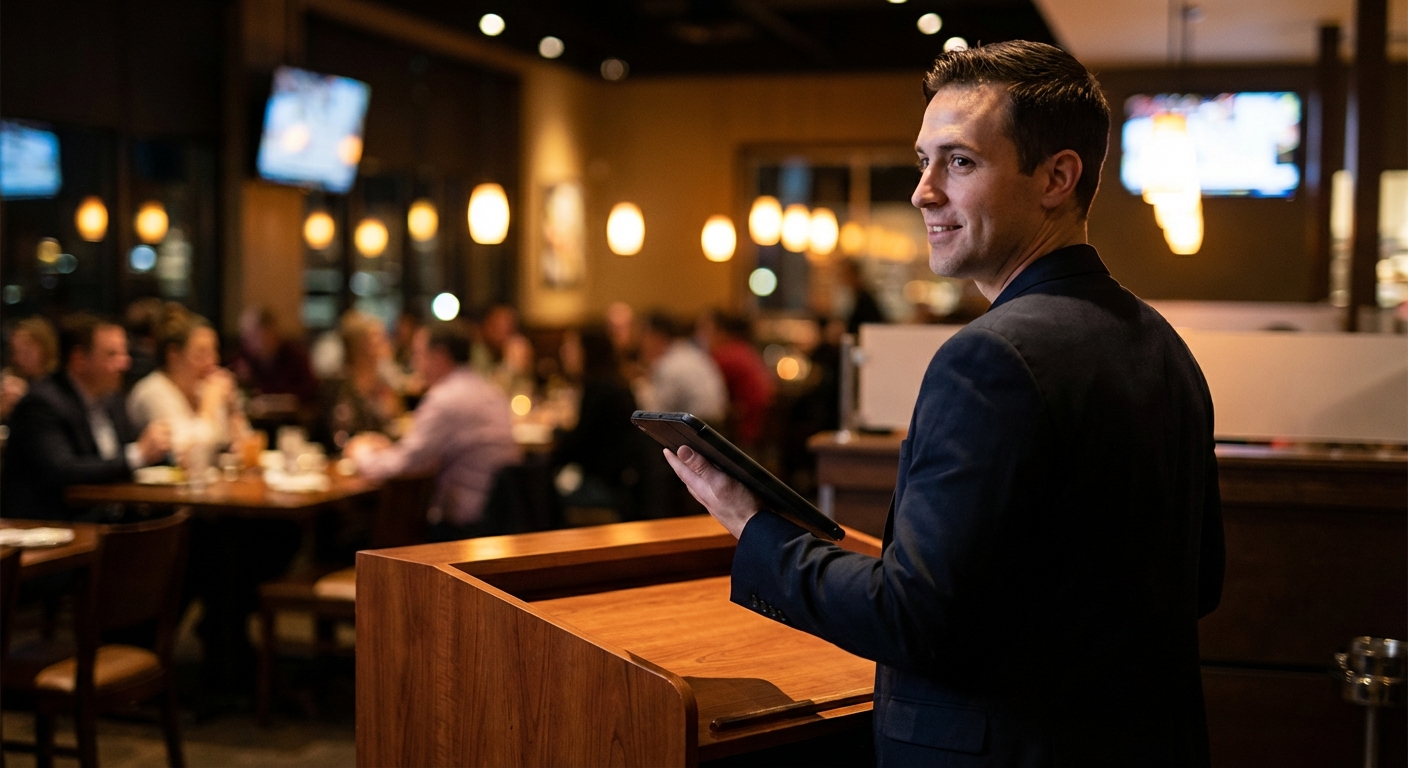
When issues do arise, Spindl’s integrated feedback tools allow you to capture sentiment while the guest is still in the building. Automated alerts notify managers of negative feedback in real-time, allowing for "table-side recovery" that prevents a bad experience from ever reaching social media.
Stop letting fragmented tech and slow response times eat your margins. Schedule a personalized demo to see how Spindl can help you resolve issues faster and keep your guests coming back.