Restaurant quality control measures: practical systems for consistent FOH operations
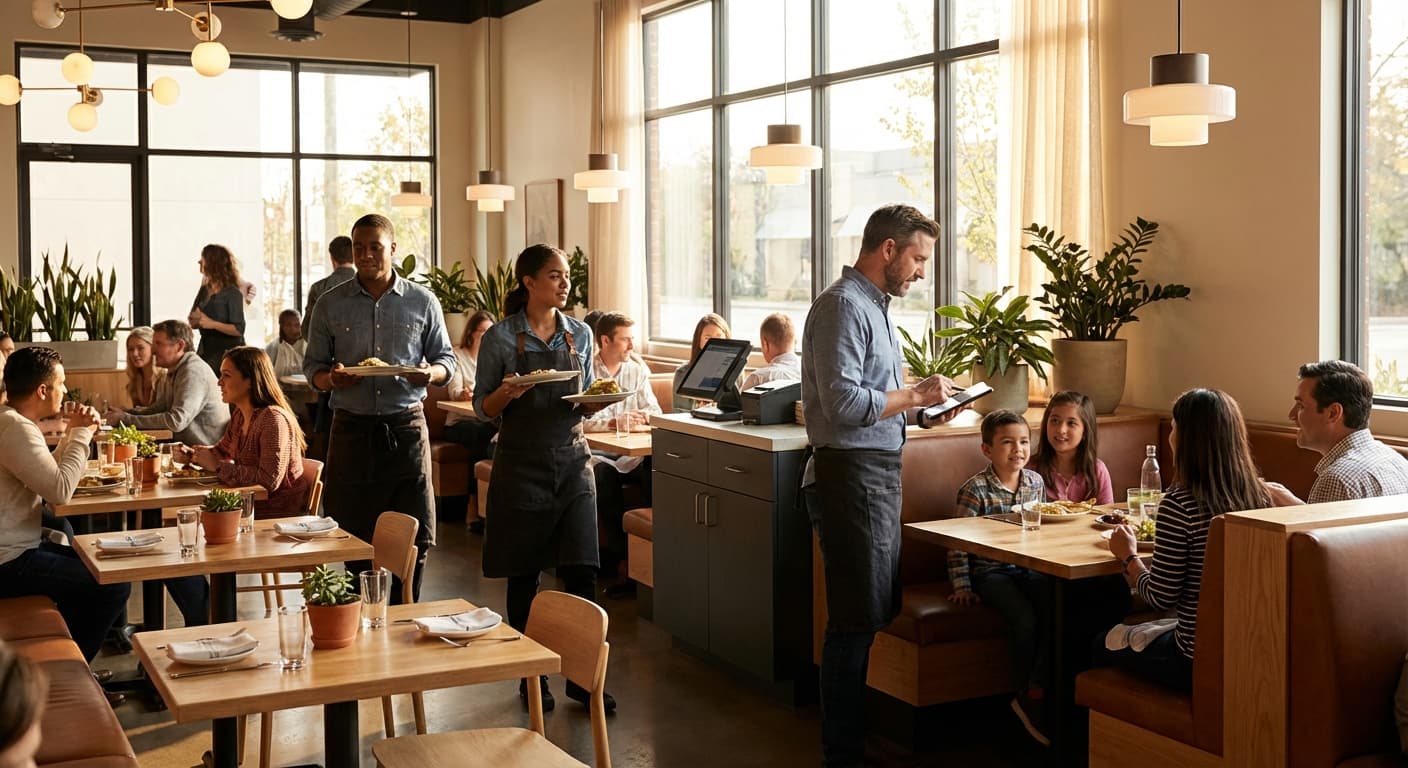
Your hostess just seated a four-top in a section that should be closed. The POS shows one server's comp rate at 8% while others hover at 2%. A health inspector walks in at peak lunch service.
Quality control in restaurant operations isn't optional – it's the difference between a scalable system and daily firefighting.
What front-of-house quality control actually means
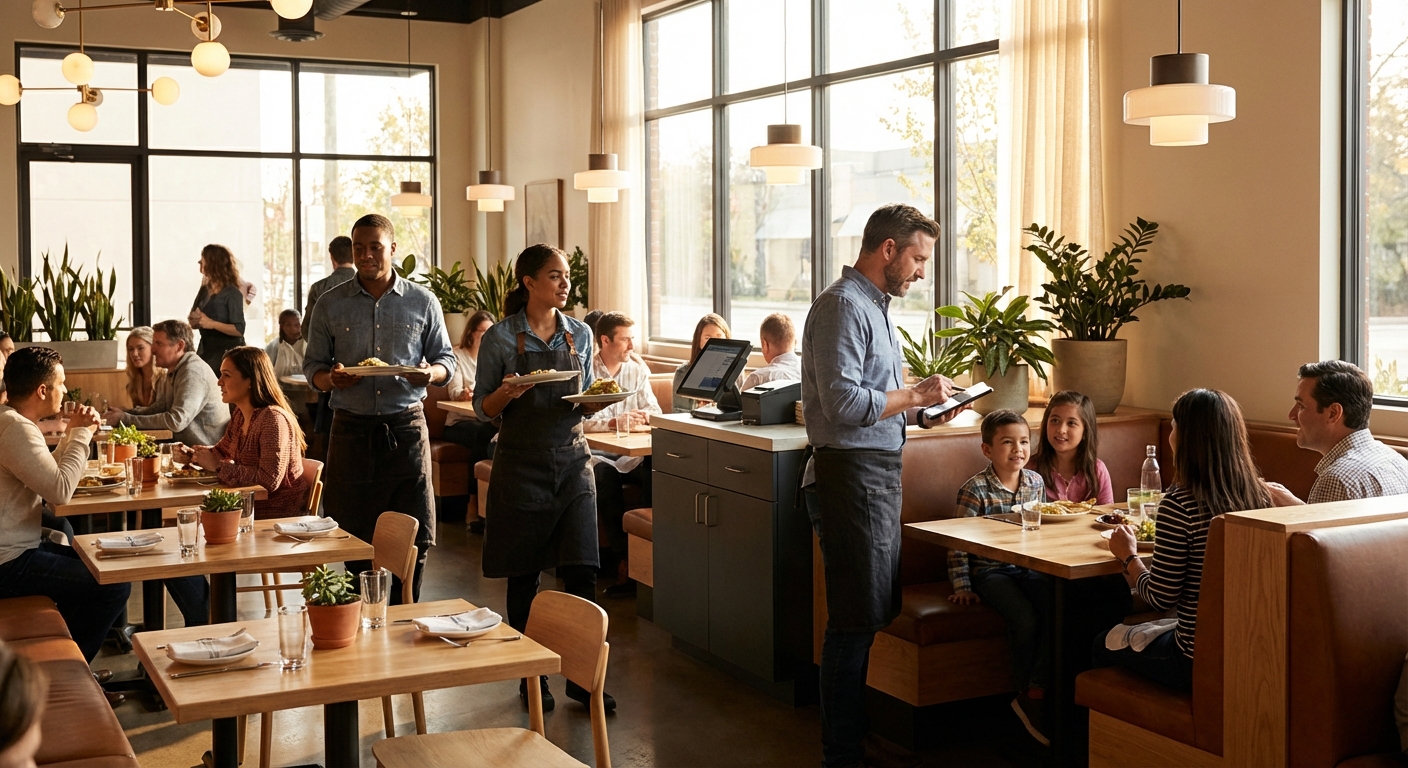
Front-of-house operations encompass everything your guests see: the dining space, service interactions, cleanliness, and the overall experience from greeting to payment. Quality control means establishing measurable standards, systematically monitoring compliance, and closing gaps before they become customer complaints or regulatory violations.
The distinction matters. Quality assurance prevents issues through standardized processes. Quality control catches problems in real time through audits, checks, and corrective action.
The compliance baseline you can't ignore:
- ADA requires accessible seating and service counters per ADA Standards for Accessible Design
- OSHA mandates slip-resistant flooring and clear emergency exits under the General Duty Clause
- PCI DSS requires encrypted payment terminals and restricted card data storage for all POS systems
- FDA Food Code mandates allergen training and real-time disclosure of the top nine allergens upon guest request
Failing any of these brings immediate financial and reputational consequences. Quality control starts with regulatory compliance, not guest satisfaction surveys.
The FOH quality control framework
Effective quality control rests on three components: standards, monitoring, and correction.
1. Written service standards
Documented standards create clarity and reduce mistakes. Your standards should cover:
Greeting protocols: Target greeting time of 30-60 seconds for seated guests is the industry benchmark among top chains.
Service timing: Drinks within three minutes, appetizers within eight minutes, entrées within fifteen minutes. Monitoring these standards via kitchen display systems reduces complaint escalations by 40%.
Table maintenance: Check-backs after first bite and mid-meal, with visible crumbs cleared within ninety seconds of guest departure.
Order accuracy targets: Order accuracy exceeding 95% is a critical FOH metric tracked by 87% of multi-unit operators.
Payment processing: Maximum three-minute checkout time to improve table turnover rates.
Complaint resolution: Define who can comp what, documentation requirements, and follow-up protocol.
Every standard needs a number. "Greet guests quickly" becomes "greet within sixty seconds." "Keep tables clean" becomes "visible crumbs cleared within ninety seconds of guest departure."
2. Systematic monitoring methods
Standards without verification are suggestions. Build monitoring into your operation:
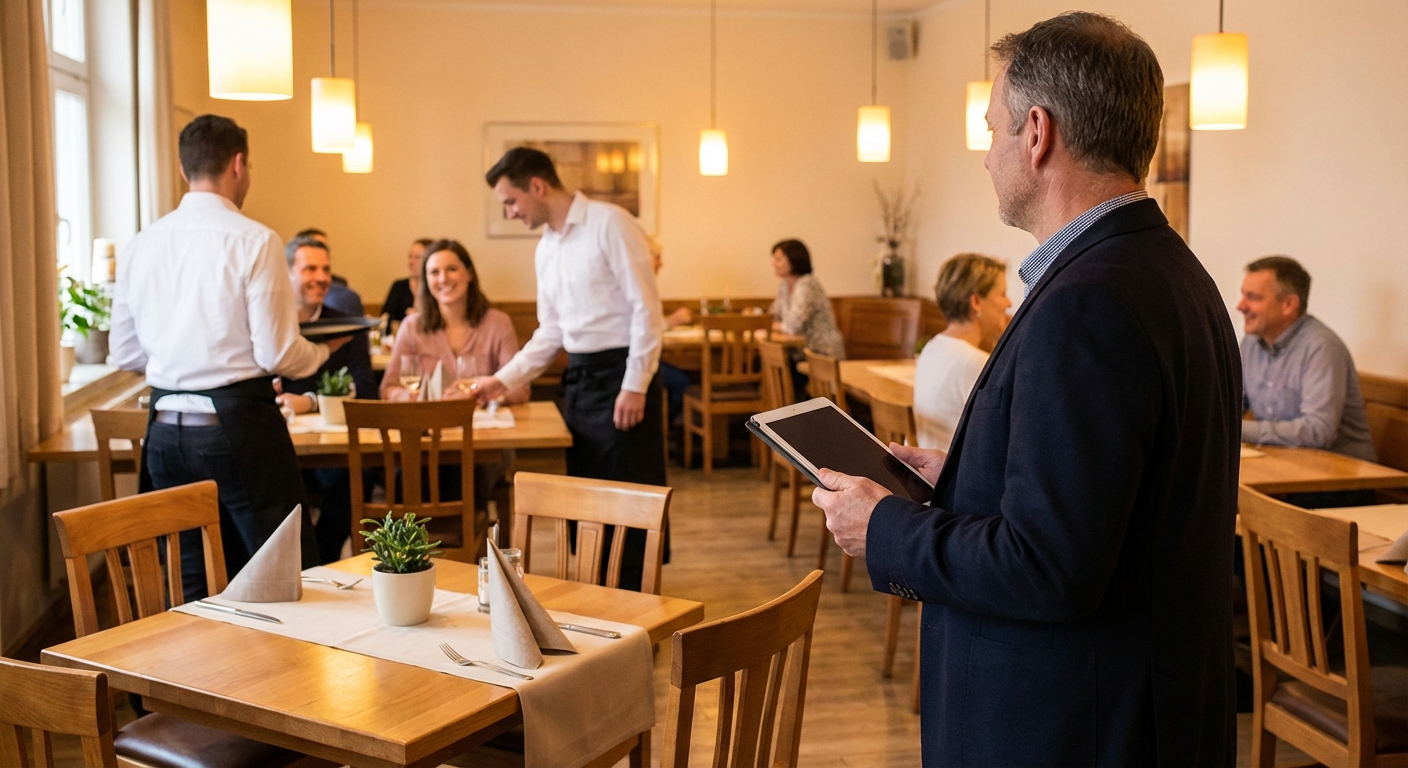
Pre-shift checklists cover the essentials before guests arrive: dining room walkthrough (lighting, temperature, music volume), table settings (silverware alignment, glass spotting, condiment levels), POS terminal functionality and payment processing test, staff appearance and uniform compliance, and menu availability with 86'd items communicated to all servers.
Mid-shift quality checks conducted by the manager on duty include table timing audits comparing actual service times to standards, restroom inspections every sixty to ninety minutes, server station organization, and POS comp/void rate monitoring. Flag anything over the 3% threshold to prevent revenue leakage.
Post-shift documentation captures what happened: service incidents and resolution, guest feedback (positive and negative), standard violations observed, and equipment issues or maintenance needs.
3. Corrective action workflows
Finding problems means nothing without fixing them. Your workflow should include immediate correction (server retakes order, manager comps dessert, host resets table), root cause analysis (training gap? system failure? staffing shortage?), process adjustment (update checklist, revise standard, add verification step), and follow-up verification to confirm the fix worked through subsequent audits.
One Chicago bistro reduced service complaints by 30% in three months by holding fifteen-minute weekly reviews of error logs and implementing one targeted fix each week.
Essential FOH quality control checklists
Checklists are forcing functions. They eliminate reliance on memory during busy service.
Opening checklist (FOH manager)
Dining area (10 minutes):
- All tables set to standard, glasses spot-free
- Condiments full, salt/pepper shakers clean
- Lighting at correct levels for daypart
- Temperature 68-72°F
- Music volume set, playlist appropriate
- Floors swept and mopped, no sticky spots
- Windows and mirrors clean
- Signage visible and accurate (specials, hours)
Service stations (5 minutes):
- Coffee and tea stations stocked
- Ice bins full, backup ice accessible
- Silverware rolled and stocked to par
- Napkins, straws, to-go supplies at par
- Cleaning supplies accessible and MSDS sheets posted
Technology and systems (5 minutes):
- POS terminals powered on and tested
- Payment processing functional (run test transaction)
- Reservation system synced and updated
- Kitchen display system operational
- Wi-Fi network functional for guest and staff use
Compliance (5 minutes):
- Health permit posted and current
- Emergency exits clear and illuminated
- Fire extinguishers accessible and inspected
- First aid kit stocked
- Allergen information accessible at host stand
Mid-shift service quality audit
Guest experience observation (15 minutes):
- Greeting time measured on three tables (target: under sixty seconds)
- Order accuracy check: review last ten tickets for modifications and voids
- Service timing: measure drink delivery on sample table
- Table turnover rate: calculate average for past hour versus target
- Server attentiveness: observe check-back timing
Cleanliness inspection (10 minutes):
- Restrooms inspected (soap, towels, cleanliness, no odors)
- Dining room tables and floors spot-checked
- Trash receptacles emptied before visible overflow
- Bus station organized and sanitized
- High-touch surfaces (door handles, menus) wiped
Operations check (5 minutes):
- POS terminal performance (no slowdowns or errors)
- Staff hydration and break rotation on schedule
- 86'd items communicated across all channels
- Delivery orders managed without disrupting dine-in
- Staff stress levels assessed (address red flags immediately)
Closing checklist (shift lead)
Guest-facing areas (15 minutes):
- All tables cleared, cleaned, and reset to standard
- Floors swept and mopped thoroughly
- Condiments consolidated and dated
- Trash removed from dining area and restrooms
- Restrooms fully stocked and cleaned
- Windows and glass doors cleaned
Service area breakdown (10 minutes):
- Coffee makers cleaned and left empty
- Ice bins emptied and cleaned
- Silverware rolled and organized for tomorrow
- Service stations wiped down and restocked
- Cleaning supplies stored properly
Systems and security (10 minutes):
- All cash drawers balanced and secured
- POS terminals shut down properly
- Tips reconciled and distributed
- Security system armed
- All doors and windows locked
Documentation (5 minutes):
- Shift report completed (covers, revenue, incidents)
- Maintenance needs logged
- 86'd items communicated to opening manager
- Staff feedback captured
- Tomorrow's prep notes documented
Standard operating procedures for critical FOH functions
Checklists tell you what to do. SOPs tell you how to do it.
Greeting and seating SOP
Objective: Seat guests within sixty seconds of arrival with accurate wait time communication.
Procedure:
- Acknowledge within ten seconds – Eye contact, smile, greeting even if unable to approach immediately
- Assess party size and special needs – High chairs, accessibility requirements, seating preferences
- Check table availability – Use reservation system and visual floor check
- Communicate wait time accurately – Base estimate on current table turn data, add five- to ten-minute buffer
- Log party in system – Name, party size, special requests, time logged
- Seat at appropriate table – Match party size to table, avoid over-seating sections
- Deliver menus and water service – Place menus open, pour water, state server name and arrival time
Quality check: Manager spot-checks greeting time on five random parties per shift. Target: 80% within sixty seconds, 100% within ninety seconds.
Order taking accuracy SOP
Objective: Achieve 98% order accuracy from guest request to kitchen preparation.
Procedure:
- Approach table prepared – POS device charged, working pen if using paper backup
- Greet and take beverage order first – Allows kitchen prep time for entrées
- Record modifications precisely – Use exact POS modifier buttons, never abbreviate
- Confirm allergens and dietary restrictions – Ask explicitly, flag in POS with alert for kitchen
- Read back order to guest – State each item and key modifications
- Verify special instructions – Temperature, cooking method, sauces on side
- Send to kitchen immediately – No batch-sending orders
- Verify order on Kitchen Display System – Ensure all modifications transferred correctly
Quality check: Track void/comp rate by server. Investigate any server over 3% weekly. Review error patterns (specific menu items, modification types) monthly.
Complaint resolution SOP
Objective: Resolve 90% of guest complaints at first contact without manager escalation.
Procedure:
- Listen actively without interruption – The first thirty seconds of listening set the tone
- Empathize and apologize – "I'm sorry this happened" regardless of fault determination
- Investigate immediately – Check ticket, talk to kitchen/bar, examine food if present
- Offer solution – Remake dish, comp item, discount check (follow authority limits)
- Execute solution promptly – Priority fire for remake, immediate comp entry in POS
- Follow up at table – Verify satisfaction with resolution before guest departs
- Document in POS notes – Date, time, issue, resolution, compensation given
- Manager review – All comps over $25 reviewed same day
Escalation triggers:
- Guest requests manager specifically
- Food safety concern (illness, foreign object, allergen exposure)
- Compensation beyond server authority ($25+ value)
- Guest recording video or taking photos
Payment processing SOP
Objective: Complete payment transaction within three minutes of guest readiness.
Procedure:
- Present check promptly – Within two minutes of request or immediately after dessert cleared
- Verify check accuracy – Scan for duplicate items, correct modifications, applied discounts
- Return with payment – Never leave check at empty table
- Process payment immediately – Run card or process cash within sixty seconds
- Return with receipt and card – Thank guest, invite return, no upselling at this stage
- Clear payment – Close check in POS to free table for turnover reporting
Quality check: Track payment processing time via POS timestamps. Flag servers averaging over four minutes. Review POS workflow for bottlenecks.
Audit workflows that catch issues before guests do
Reactive quality control means handling complaints. Proactive quality control means preventing them.
Daily manager shift audit (30 minutes)
Service standards compliance (10 minutes):
- Observe greeting protocol on five arrivals
- Measure drink delivery time on three tables
- Check table maintenance (water refills, bread replenishment) on sample tables
- Review order accuracy: pull last twenty tickets, calculate modification/void rate
Cleanliness and safety (10 minutes):
- Full restroom inspection (use smartphone photos for documentation)
- High-traffic area spot check (entry, bar area, server stations)
- Trip hazard scan (loose floor mats, spills, clutter)
- Temperature check in dining area (should be 68-72°F)
Technology and systems (10 minutes):
- POS performance check (any slowdowns, login issues, printer jams)
- Payment terminal test transaction
- Review POS error log for system issues
- Verify delivery aggregation working properly (if applicable)
Document findings: Use standardized form or digital audit tool to track issues and completion of corrective actions. Digital audit tools implement automated FOH checklists with 92% reduction in compliance gaps versus paper systems.
Weekly deep audit (60-90 minutes, off-peak)
Comprehensive service standards review:
- Pull week's data: average greeting time, order accuracy percentage, table turn rate, comp/void rate by server
- Identify outliers and patterns (Friday night errors spike? One server accounts for 40% of voids?)
- Review guest feedback from surveys and online reviews
Mystery shop your own operation:
- Have manager or trusted colleague visit as guest during peak service
- Evaluate: greeting speed, server knowledge, order accuracy, food quality, cleanliness, payment processing
- Document experience with notes and timestamps
Staff performance analysis:
- Review individual server metrics (sales per hour, average check, order accuracy, tips as percentage of sales)
- Identify top performers for recognition and coaching opportunities
- Flag underperformers for targeted training
Compliance verification:
- Health permit current and posted
- Required posters displayed (labor law, allergen info, no-smoking)
- Staff certifications current (all customer-facing staff require food safety certification)
- Emergency contact list updated
- Incident log reviewed for patterns
Monthly operational excellence audit (2-3 hours)
Systems and process effectiveness:
- Calculate key metrics: prime cost percentage (target: 60-65%), labor cost percentage (25-35%), order accuracy rate (target: at least 95%)
- Review training effectiveness: time-to-competency for new hires, 30/60/90 day retention
- Assess technology performance: POS uptime, payment processing success rate, system integration issues
Guest experience deep dive:
- Compile and analyze month's guest feedback across all channels
- Calculate Net Promoter Score and month-over-month trend
- Review social media mentions and response quality
- Analyze customer retention rate and identify churn patterns
Standard operating procedure review:
- Test one SOP by following it precisely; identify gaps or outdated steps
- Update based on learnings from incident reports
- Verify all staff trained on current procedures
Technology that supports (not replaces) quality control
Paper checklists work until they don't. When managing multiple locations or high staff turnover, digital tools create accountability and visibility.
What to look for in QC technology
Structured digital checklists eliminate "I forgot to check the restrooms." Software should require photo documentation for critical items (cleanliness issues, equipment malfunctions), timestamp each completion to verify compliance, route tasks to specific roles (manager versus server versus busser), and flag missed tasks automatically.
POS-integrated quality tracking captures critical quality signals your POS already sees: order accuracy through void/comp/modification rates, service speed through ticket timestamps, and server performance through individual metrics.
POS-integrated analytics for comp/void rates prevent revenue leakage in 78% of high-volume locations by flagging transactions over the 3% threshold.
Real-time reporting dashboards surface quality control metrics during service, not after. Look for systems that show service timing by table (which tables approaching critical thresholds), order accuracy trends (error spike on specific menu items), staff performance benchmarks (who's crushing it, who needs coaching), and cleanliness task completion status (was the 2pm restroom check done?).
Incident and corrective action tracking drives improvement when issues occur. Documentation should capture what happened (guest complaint, health code violation, equipment failure), assign corrective action owner and deadline, track completion and verify effectiveness, and trend incidents over time to identify systemic problems.
How Spindl supports FOH quality control
Spindl's all-in-one restaurant management platform consolidates quality control into your daily workflow.
Built-in compliance tracking: Automated checklists with photo requirements ensure opening, mid-shift, and closing tasks are completed to standard every shift.
Unified order management: Consolidating POS, online ordering, delivery apps, and self-service kiosks into one device eliminates transcription errors and ensures order accuracy across all channels. One Brooklyn restaurant saved $4,000 annually by consolidating tools and reducing error-driven comps.
Real-time analytics dashboard: Spindl's analytics surface critical quality metrics mid-service – comp rates, ticket times, server performance – so managers can intervene before problems escalate.
Staff performance tracking: Individual server metrics tied to order accuracy, speed of service, and upsell rates create accountability and identify coaching opportunities.
Integrated corrective action workflow: Audit workflows with POS/HRIS integrations show 25% faster issue resolution and 18% higher guest satisfaction scores in customer case studies.
The benefit isn't the technology itself – it's the visibility and accountability it creates. When every manager can see real-time order accuracy, service timing, and cleanliness completion status, quality control becomes systematic rather than reactive.
Training staff for consistent quality execution
The best SOPs fail if your team doesn't know them or care about them.
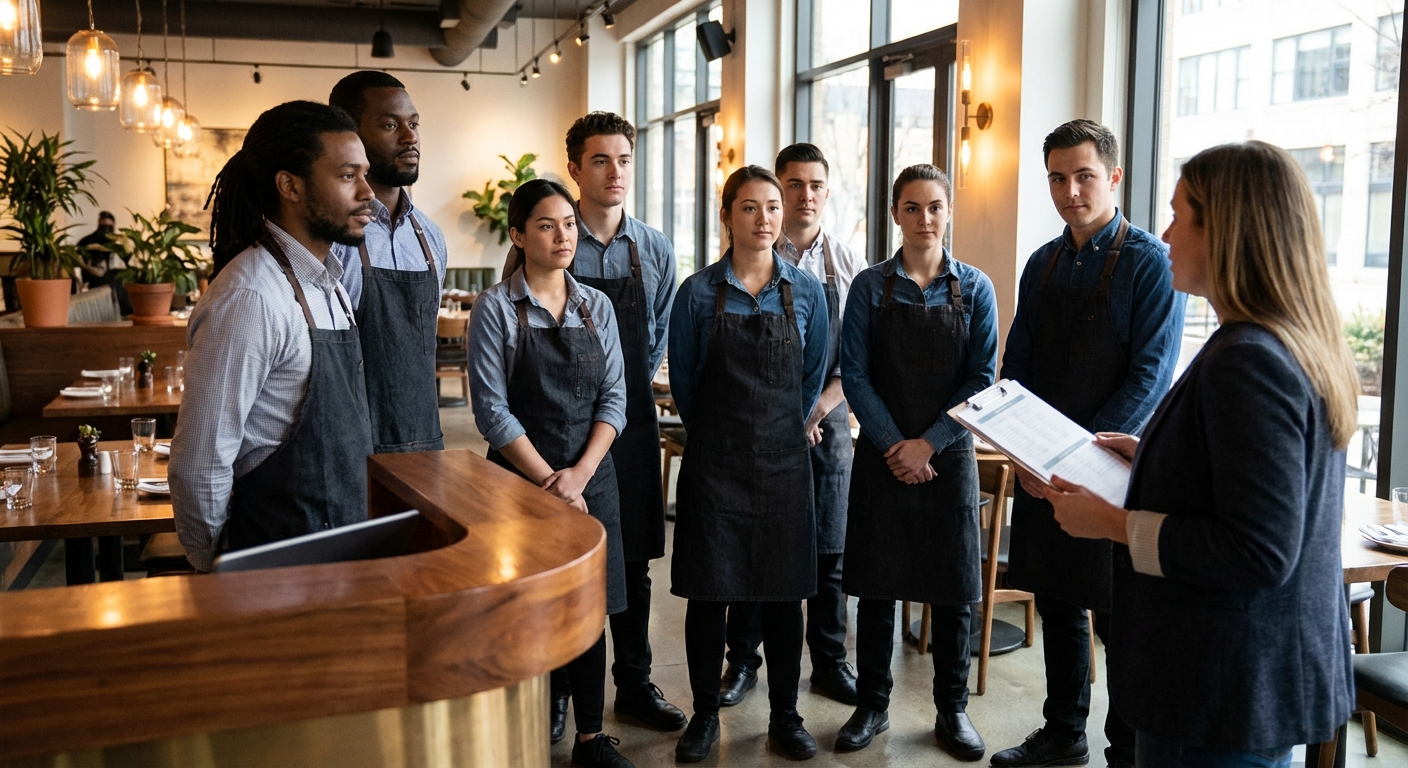
Quality-focused onboarding (first 14 days)
Days 1-3: Standards immersion
- Review written service standards document
- Shadow top performer during service
- Practice POS order entry with all modification types
- Complete allergen and food safety training
- Pass written quiz on standards (required 90%+ to advance)
Days 4-7: Supervised execution
- Take orders on three to five tables with manager oversight
- Practice complaint resolution through role-play scenarios
- Learn daily checklist requirements and documentation
- Complete technology training on POS, payment processing, reservation system
Week 2: Measured progression
- Serve ten to fifteen tables independently with manager spot-checks
- Achieve 95%+ order accuracy on all tables
- Complete opening or closing checklist under supervision
- Demonstrate correct response to three common complaints
Quality gate: New servers must achieve 98% order accuracy across ten consecutive tables and pass manager observation before working peak shifts unsupervised.
Ongoing quality reinforcement
Daily pre-shift briefings (5 minutes) review one service standard in detail (rotation schedule ensures all covered monthly), share previous shift's quality wins and misses (no names, focus on situations), highlight any menu changes, 86'd items, or special requests, and allow Q&A on any standard or procedure.
Weekly team meetings (30 minutes) review week's quality metrics (order accuracy, service timing, guest feedback), role-play challenging service scenarios, recognize top performers publicly, and address systemic issues discovered through audits.
Monthly deep training (60-90 minutes) provides refresher on one core competency area (order accuracy, allergen management, payment processing), introduces updated procedures or standards, gathers staff input on operational challenges, and includes cross-training on additional roles to build flexibility.
Performance feedback cadence includes immediate coaching for errors observed during service, weekly one-on-ones with each server reviewing individual metrics, 30/60/90 day formal evaluations for all new hires, and quarterly performance reviews for experienced staff.
One Texas steakhouse saw online service praise rise 35% after implementing a weekly thirty-minute training program focused on one service standard each session.
Common FOH quality control failures (and how to prevent them)
The "too busy to audit" trap
Problem: Quality checks only happen when convenient, which means they never happen during the times that matter most.
Solution: Schedule audits on your calendar like any other critical task. Mid-shift audits during peak service reveal the real bottlenecks. A rushed Friday night is when standards slip – that's exactly when you need eyes on the floor.
Inconsistent standard enforcement
Problem: One manager lets servers skip check-backs. Another writes up violations. Staff learn standards are negotiable.
Solution: Document every standard and the consequence for violations. Apply discipline consistently across all managers and shifts. Use digital checklists that don't allow sign-off without completion.
No corrective action follow-through
Problem: Audits reveal issues, but nothing changes. Staff see quality control as pointless paperwork.
Solution: Build corrective action into the audit workflow. Every identified gap gets an owner, deadline, and verification step. Review prior week's action items in manager meetings. Close the loop visibly so staff see that audits drive improvement.
Technology that creates more work
Problem: Complex audit software or disconnected systems add administrative burden instead of streamlining operations.
Solution: Choose integrated platforms that consolidate operations rather than adding point solutions. When quality metrics flow automatically from your POS, delivery aggregation, and reservation system into one dashboard, you spend less time collecting data and more time acting on it.
Confusing activity with outcomes
Problem: Teams complete checklists and run audits but guest satisfaction and operational metrics don't improve.
Solution: Tie quality control directly to business outcomes. Track not just "restroom cleaned" but guest feedback on cleanliness. Measure not just order accuracy rate but comp/void costs and guest return rate. If your QC activities aren't moving business metrics, you're auditing the wrong things.
Build quality control that compounds
Restaurant quality control isn't a one-time project. It's a system that improves incrementally through consistent execution and measurement.
Start with compliance and safety – the non-negotiables. Then layer in service standards, auditing workflows, and technology that surfaces issues in real time. Train every team member on standards and hold them accountable through systematic checks and corrective action.
The operations that win aren't necessarily the ones with the best food or the coolest concept. They're the ones that execute consistently across every shift, every location, every interaction.
If your current quality control involves a manager's gut feel and a clipboard that lives in a drawer, you're leaving money on the table and putting guests at risk.
See how Spindl consolidates quality control into your daily operations – or build your own system using these frameworks. Either way, your baseline for quality should be systematic verification, not hope.