Feedback tools to increase restaurant ratings and revenue
A single-star rating increase on Yelp can boost your revenue by 5–9%. But waiting for a review to hit Google is a reactive strategy. Successful operators use specialized tools to capture sentiment mid-meal, resolving issues before the guest walks out the door.
Why fragmented feedback systems are costing you revenue
Most US restaurants suffer from data silos. You likely have survey results in one app, delivery feedback in another, and Google reviews somewhere else entirely. This fragmentation makes it impossible to link a complaint about cold food or slow service to a specific shift, server, or real-time analytics for restaurant management such as ticket times.
When feedback is disconnected from your Point of Sale (POS), you lose the operational context needed to fix the root cause. A centralized system eliminates this "tablet chaos" by automating collection through several touchpoints:
- SMS and Web Prompts: These are triggered automatically after a digital payment or delivery completion to capture the guest's experience during the "memory half-life."
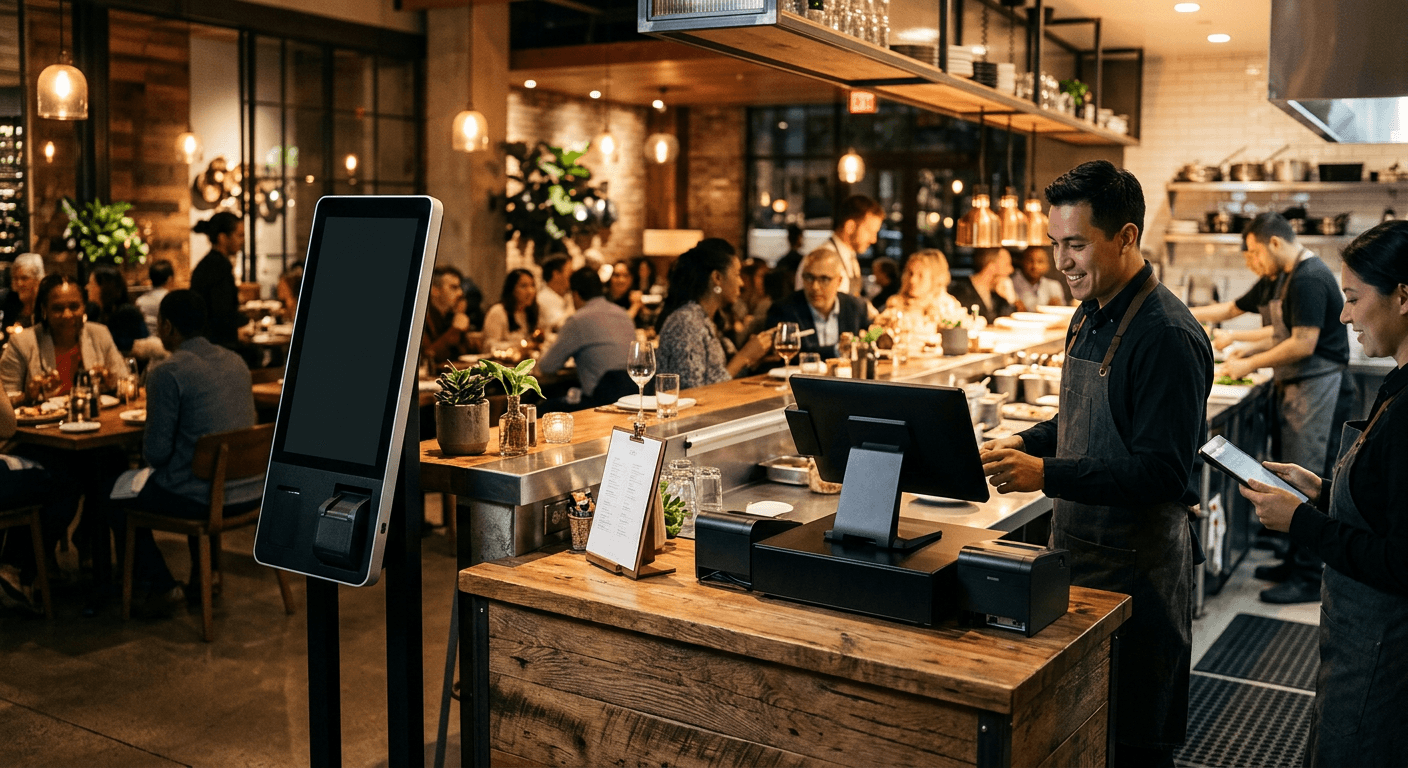
- Self-Service Kiosks: These units allow guests to provide a quick rating or feedback at the exact point of order.
- Real-Time Alerts: These notifications hit a manager’s phone the moment a low score is submitted, enabling an immediate response.
Specialized feedback tools for restaurant operators
Spindl: The all-in-one operations hub
Spindl represents a shift toward integration-first technology, acting as an integrated POS and management platform that unifies feedback with daily operations. It functions like an iPhone in a world of Nokia 3310s, removing the need for third-party survey software by embedding feedback loops into the guest journey.
The platform centralizes dine-in, kiosk, and delivery orders into one device. It uses automated review management to route satisfied guests to public platforms like Google – which 83% of US consumers use to find restaurants – while directing unhappy guests to private internal forms. This strategy serves as a reputation firewall. By consolidating these tools, one Brooklyn restaurant saved over $4,000 annually while significantly reducing order errors.
SevenRooms: The CRM specialist
Ideal for high-end full-service establishments, SevenRooms focuses on building granular guest profiles. The system allows you to tag guests with specific preferences, such as shellfish allergies or seating preferences, and automates post-visit emails to capture feedback. While it excels at building long-term relationships, it often requires a heavy integration lift to sync properly with your existing POS data.
Bloom Intelligence: The WiFi marketing approach
Bloom Intelligence leverages your restaurant’s guest WiFi to track behavior and collect feedback. When a guest logs into the WiFi, the system captures their contact information and sends a survey after they leave the premises. This is a strong tool for tracking "dwell time" and visit frequency, though its effectiveness depends entirely on guests opting to join your network.
Toast CRM and Feedback
For operators already utilizing the Toast ecosystem, their native feedback module allows guests to leave ratings directly on handheld devices or digital receipts. It serves as a solid entry-level choice for those who want simplicity. However, it may lack the multi-platform delivery aggregation and advanced AI-driven sentiment analysis found in more modern, specialized systems.
Key features to prioritize in 2025
Choosing the right tool requires looking beyond simple star ratings. You need a platform that turns sentiment into actionable data and helps you manage your reputation proactively.
Real-time manager notifications
Response time is a critical factor in guest retention. Restaurant owners who respond to reviews can see 35% more revenue, and aim to respond to all reviews within 24 hours. Your feedback tool should send a push notification or SMS to the floor manager the second a guest submits a low rating. This allows for immediate on-site recovery before the guest leaves and posts a public review.

Sentiment analysis and AI insights
Manually reading every review is no longer scalable for multi-unit groups. Modern platforms use AI-driven insights to detect patterns across hundreds of comments. If a specific keyword like "undercooked" or "loud" appears in a high percentage of reviews for a specific location or shift, the system flags it automatically. This allows you to adjust your kitchen SOPs or staffing levels based on data rather than hunches.
Behavior-triggered loyalty loops
Feedback should be the starting point of a marketing automation. If a regular guest leaves a five-star review, your system should automatically trigger a "thank you" through your loyalty program. Conversely, a two-star review should trigger an automatic reach-out from the General Manager along with a win-back offer. These personalized responses can turn a single negative experience into a long-term relationship.
Why Spindl is the smarter choice for modern operators
Most feedback tools are "parasitic" because they sit on top of your operations and require manual data exports to make sense of the numbers. Spindl acts as the central nervous system of your restaurant, connecting POS analytics directly to guest sentiment.
Because Spindl manages your self-service kiosks – which can boost average order value by 25% – and your delivery marketplace integrations, it tracks the entire guest journey. You won't just see that a guest was unhappy; you will see exactly what they ordered, which server handled the table, and how long the kitchen took to prepare the meal. Stop losing guests to preventable issues and discover how Spindl OS unifies your feedback, POS, and delivery into one device.