Ways to personalize the customer experience in restaurants: practical strategies and tools
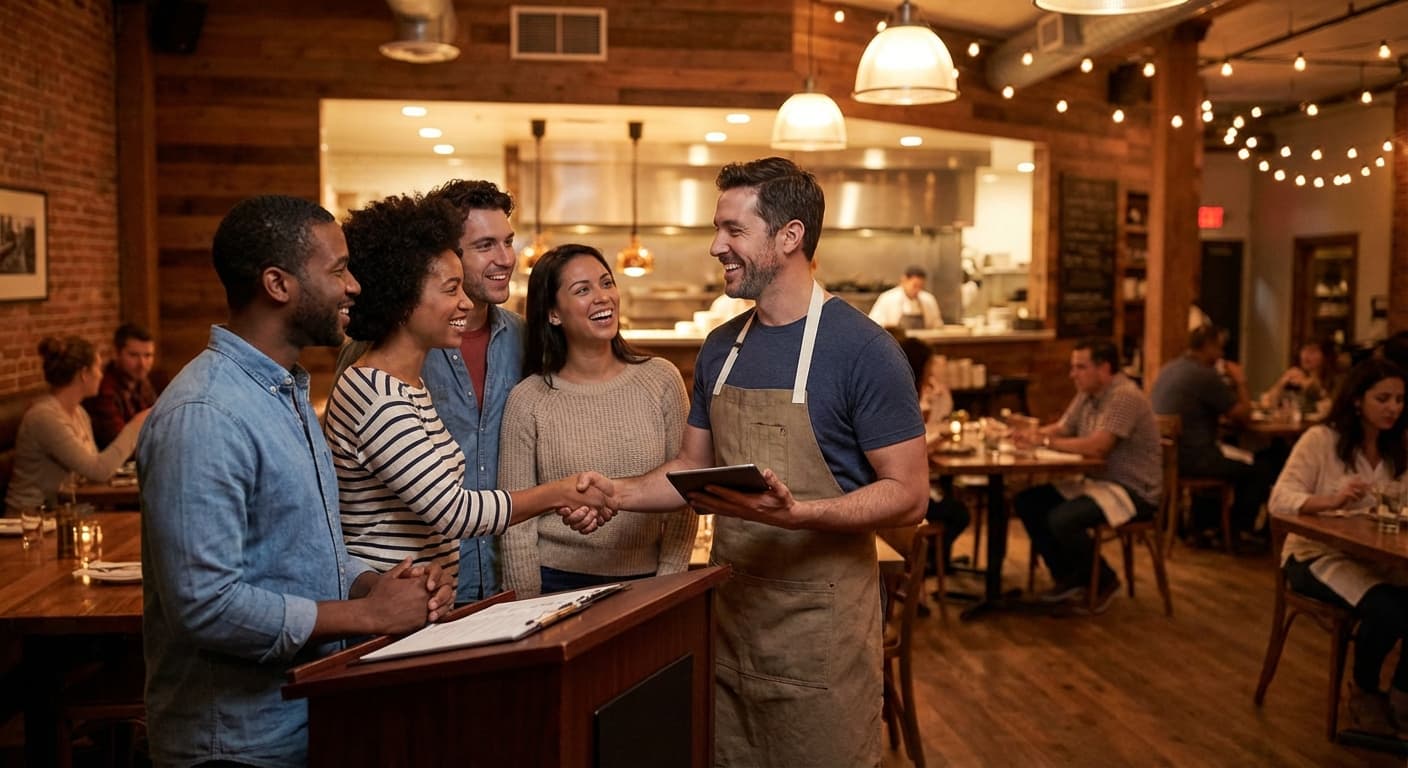
Thirty-three percent of Americans say tailored promotions increase their loyalty to specific restaurants. Yet 77% of restaurant operators face challenges implementing personalization despite 40% claiming they already personalize their marketing efforts.
The gap is real. The opportunity is bigger.
Personalization isn't a luxury anymore – it's table stakes. Restaurants leveraging data-driven personalization shift their guest mix from 69% one-time visitors to 60%, increasing regular customers from 12% to 25% and driving 15–25% revenue growth per location. When you know what your guests want and deliver it consistently, you turn transactions into relationships.
Why personalization drives measurable ROI in restaurants
The math is straightforward. Restaurants with personalized digital experiences see 20–35% higher repeat visit rates compared to competitors who treat every guest the same. Personalized offers – "Your favorite pasta is back" – convert at 25%+ versus generic promotions that hit 12%.
A 5% improvement in customer retention can increase restaurant profits by 25–95%, according to Bank of America analysis. Moving just 10% of your occasional guests to regular status increases their average annual value from $345 to $685.
The challenge? Execution. Most restaurants collect guest data in silos – POS transactions here, delivery orders there, loyalty points somewhere else. Without unified profiles, personalization becomes guesswork.
Build unified guest profiles across all channels
Start with your foundation: a single source of truth for every guest interaction.
Restaurants using integrated customer data platforms – pulling together POS, WiFi, reservations, and delivery – achieve 35–45% first-visit return rates versus the 25% industry average. That's because they can see the complete picture: a guest who orders pickup every Tuesday at lunch, always adds extra hot sauce, and last dined in three weeks ago.
Your POS should automatically capture preferences, visit frequency, average check, dietary restrictions, and favorite items. When a regular walks in, your host should see "Prefers booth, allergic to shellfish, usually orders the ribeye medium-rare." When they order delivery, the system should pre-populate "extra napkins" and remember their building entrance code.
Spindl unifies guest data across dine-in, takeout, kiosk, and third-party delivery into one platform, eliminating the guesswork and giving staff the context they need to deliver personalized service every time.
Practical step: Audit where your guest data lives today. If you're logging into three different systems to see a complete guest history, you have a personalization problem. Consolidate into a platform that treats the guest – not the channel – as the unit of analysis.
Design loyalty programs that actually change behavior
Only 18% of restaurant loyalty programs utilize personalization, while 65% rely heavily on discounts. That's a missed opportunity.
The best loyalty programs use behavioral data to nudge guests toward higher-value actions. Chipotle's loyalty members visit 2× more often and their digital checks are 35% higher than non-members. Starbucks generates 30% of U.S. transactions through its integrated mobile app and loyalty program.
The mechanics matter. Design your first reward to be reachable in 2–4 visits – programs requiring more than 10 visits for a reward see 50% lower engagement. Use real-time triggers: "You're 10 points from a free entrée" messages drive urgency. Segment by behavior: vegetarian guests get plant-based offers, high-frequency guests get VIP perks, lapsed guests get win-back incentives.
Restaurants with POS-loyalty integration that remembers preferences see profit increases of 25–95% because guests feel recognized. When your server says "Welcome back – would you like your usual booth and a sparkling water?" you've just made that guest 20% more likely to return.
For quick-service restaurants specifically, explore QSR-specific loyalty strategies that account for high-frequency, low-ticket transactions.
Personalize offers and promotions using CRM segmentation
Generic "20% off your next visit" emails get ignored. Personalized offers based on purchase history and behavior get redeemed.
Segmented email marketing delivers $42 revenue per $1 spent. The difference is relevance. If a guest orders your salmon bowl every week, send them a heads-up when you add a new seafood special. If someone always brings their kids on Sunday, offer a family meal deal. If a guest hasn't visited in 30 days, trigger a "We miss you – here's $10 off your favorite dish" message.
AI-powered personalization increases customer engagement rates by up to 20% and significantly boosts repeat visits. Predictive analytics can identify high-value segments – vegetarian guests who tend to spend more on wine, or weekday lunch regulars who respond well to coffee upsells – and target promotions accordingly.
Use RFM segmentation (Recency, Frequency, Monetary value) to prioritize your outreach. Champions – guests who visit often and spend heavily – get exclusive previews and VIP perks. At-risk guests who used to visit monthly but haven't been back in 60 days get stronger incentives. One-time visitors get a "complete your second visit" nudge with a time-limited offer.
To implement this strategy, evaluate CRM software options for restaurants and explore marketing automation tactics to scale your personalized outreach without manual effort.
Leverage SMS and push notifications for real-time engagement
Email gets read eventually. SMS gets read in minutes.
SMS campaigns achieve 98% open rates and 7.5× higher response rates than email. That makes SMS ideal for time-sensitive, personalized messages: order-ready notifications, reservation reminders, flash offers, and win-back campaigns.
Mobile app orders show 15–20% higher average order value than phone orders. Apps let you deliver hyper-personalized push notifications based on location, past orders, and real-time context. Target push notification opt-in rates at 60%+ for restaurant apps.
Example flow: A guest who orders delivery every Friday gets a Thursday evening push: "Ready for your usual? Order now and we'll throw in a free side." A guest who dined in last month but hasn't returned gets a Tuesday afternoon SMS: "Table for two tonight? Reply YES and we'll reserve your favorite booth."
Compliance matters. SMS requires prior express written consent under TCPA, and you must honor opt-outs immediately. Make your value proposition clear upfront: "Get exclusive offers and order updates – text frequency varies, reply STOP to opt out."
Train staff to deliver personalized service on-premise
Technology enables personalization. People execute it.
Your servers should know when they're greeting a first-timer versus a regular. A simple flag in your POS – "New guest" or "Visits 8 times, avg check $42, loves the pork belly" – arms your team with context. That lets them say "Welcome back" instead of "Have you been here before?" and suggest items based on past orders instead of guessing.
61% of operators reported reduced staff pressure after adopting appropriate technology. When your system surfaces the right information at the right time, staff spend less time hunting for details and more time building relationships.
Build recognition into your staff training programs. Role-play scenarios: "A loyalty member with a shellfish allergy just sat down – what do you say?" Reward servers who consistently upsell based on guest preferences. Track metrics: which servers are best at recognizing regulars? Which ones drive the highest loyalty enrollment?
Empowerment matters too. Give your team authority to comp a dessert for a birthday, upgrade a regular to a better table, or send a round of drinks to VIPs. Well-handled gestures build stronger loyalty than perfect transactions.
Use feedback loops to close the personalization gap
Personalization isn't one-way. You offer relevant experiences, guests respond, and you refine.
Embed feedback collection at every touchpoint. Post-visit surveys via SMS or email should be brief – 5-7 questions max – and personalized: "How was the Korean fried chicken you ordered?" Restaurants using integrated feedback platforms saw service times drop 15% and customer satisfaction rise 22% after acting on real-time insights.
Use Net Promoter Score to identify promoters (who get routed to review sites) versus detractors (who get routed to private resolution forms). Tag feedback by dish, server, location, and daypart so you can spot patterns: "Every complaint about slow service happens Friday at lunch" or "Guests who order the steak rave about it."
Close the loop publicly and privately. Respond to negative reviews within 24 hours with empathy and a resolution. Follow up with detractors directly: "We're sorry we missed the mark. Here's a $20 credit – we'd love another chance." One operator noted that addressing service issues systematically turned 30% of detractors into repeat customers.
Tie feedback to operations. If guests consistently say "the Brussels sprouts are too salty," that's a kitchen adjustment. If multiple reviews mention "the server didn't know the specials," that's a training gap. For quick-service concepts, adapt your approach using fast-food customer satisfaction survey questions.
Enable self-service personalization with kiosks and QR ordering
Self-service kiosks increase average order values by 15–30% by reducing the psychological pressure guests feel when ordering from a person. They also collect zero-party data: preferences, dietary restrictions, favorites.
When a loyalty member approaches a kiosk, it should greet them by name and surface their recent orders: "Welcome back, Sarah. Want to reorder your usual chicken Caesar?" For new guests, kiosks can capture email and phone during checkout – no clipboard required.
QR code adoption surged 750% during the pandemic, and 66% of U.S. restaurants now use QR ordering. QR menus let you personalize dynamically: show vegetarian guests plant-based options first, highlight new items for regulars, surface pairing suggestions based on what's in the cart.
The key is integration. If your kiosk orders don't flow into the same loyalty and CRM system as dine-in and delivery, you're creating a new silo. Spindl consolidates order taking, delivery, self-service, POS, and loyalty into one device, so every interaction – regardless of channel – builds the same unified guest profile.
Measure and optimize personalization ROI
Personalization without measurement is guesswork.
Track these metrics monthly:
- Repeat visit rate: Target +15–25% for personalized cohorts versus control groups.
- Average order value lift: Personalized offers should drive 10–20% higher AOV.
- Loyalty engagement: Active monthly users should represent 30–50% of your loyalty base.
- Redemption rate: Segmented offers should hit 15–25% redemption versus 5–10% for generic campaigns.
- Customer lifetime value: Guests receiving personalized experiences should have 20–40% higher CLV.
Run A/B tests continuously. Test subject lines ("Your favorite is back" versus "New menu alert"), offer mechanics (free appetizer versus 15% off), and timing (Tuesday morning versus Thursday evening). One fast-casual chain increased loyalty enrollment from 12% to 38% of transactions in three months by testing in-app prompts and POS workflows.
Use real-time analytics to spot patterns. If your plant-based burger sells 40% better on rainy days, schedule weather-triggered SMS offers. If loyalty members visit 3× more often but spend only 10% more per visit, target upsell prompts: "Add a side for 20 bonus points."
Calculate incrementality. If 30% of guests would have visited anyway, don't count them in your personalization ROI. Focus on the marginal lift – the guests who came back because of the personalized nudge. Learn more about leveraging POS analytics to surface actionable insights.
Bring it all together with integrated technology
The biggest obstacle to personalization isn't strategy – it's fragmentation.
When your POS, loyalty program, online ordering, and delivery management run on separate systems, you can't build unified guest profiles. You can't trigger real-time offers. You can't see that the guest ordering delivery tonight is the same person who dined in last week.
Data-integrated restaurants generate $88,000–$142,600 incremental annual revenue per location with a $1,260–$2,700 investment, yielding 52–69× ROI on retention marketing. That's because integration eliminates data silos, automates workflows, and surfaces insights that would otherwise stay hidden.
Spindl's all-in-one platform combines POS, delivery aggregation, self-service ordering, loyalty, and analytics into one device. Orders from DoorDash, Uber Eats, Grubhub, kiosks, QR codes, and in-person transactions all flow into the same system. Guest profiles update in real time. Staff see complete histories. Managers get unified dashboards.
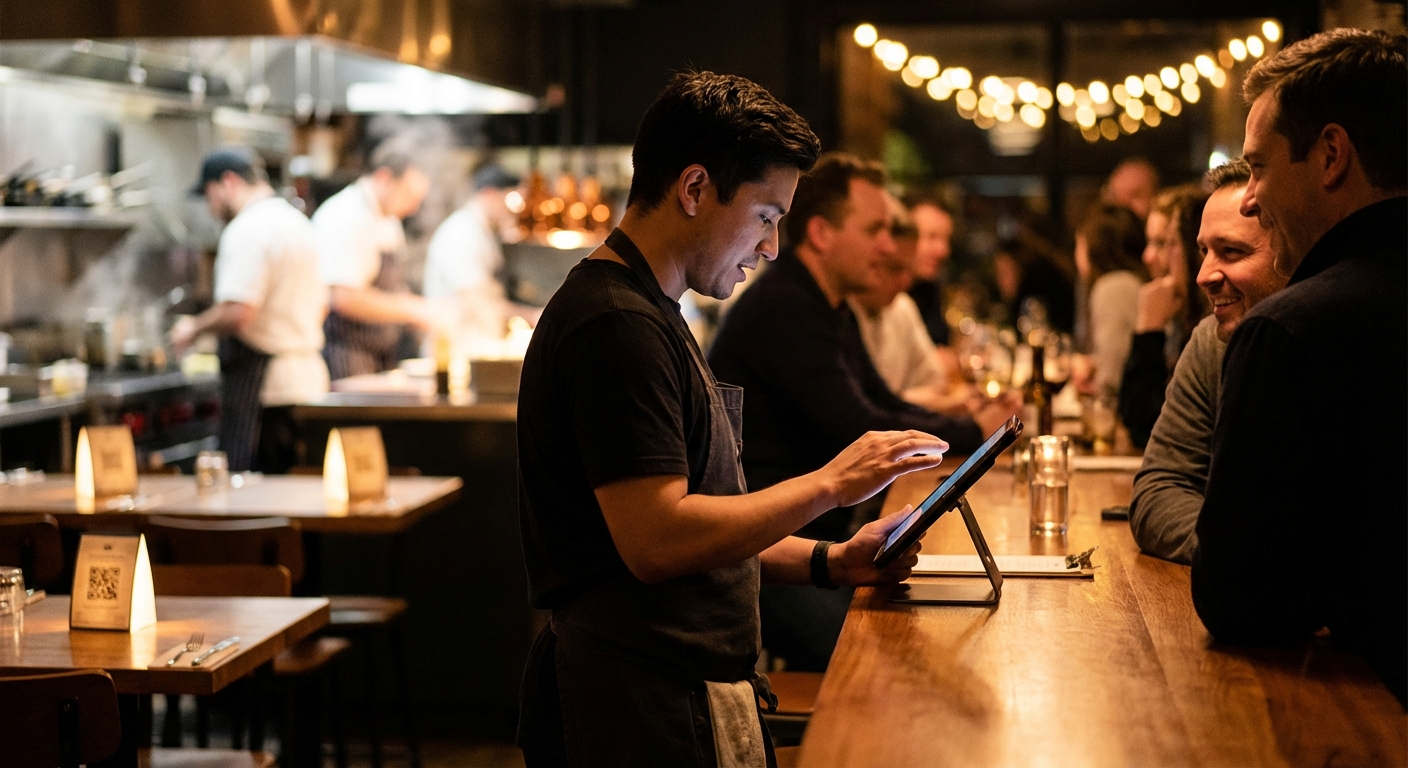
One operator saved approximately $4,000 annually by consolidating tools into Spindl. Another saw loyalty transactions jump 56% and average checks rise 12% after moving to an integrated stack. When everything connects, personalization becomes automatic instead of manual. Explore successful case studies on POS implementation to see how operators achieved similar results.
The path forward: start with one high-impact workflow
You don't need to personalize everything overnight. Start with one high-leverage workflow and expand from there.
Week 1–2: Audit your guest data. Can you see a complete history for any given guest across all channels? If not, that's your priority.
Week 3–4: Launch one personalized automation. Good first candidates: a welcome email series for new loyalty members, a win-back SMS for 30-day lapsed guests, or a birthday offer triggered automatically.
Month 2: Add segmentation to one existing campaign. Instead of sending the same promotion to everyone, send seafood offers to guests who order fish, vegetarian offers to guests who order plant-based, and family meal deals to guests who order for three or more.
Month 3: Train staff to use guest data on-premise. Surface loyalty status and preferences in your POS. Role-play recognition scenarios. Track which servers drive the highest repeat rates.
Ongoing: Measure, test, refine. Add one new personalization workflow per quarter. Expand your segments. Optimize your triggers.
Personalization isn't a project – it's how you compete in 2025. Guests expect you to know them. Technology makes it possible. The restaurants that execute consistently will own the next decade of hospitality.
Ready to unify your guest data and turn personalization into a systematic advantage? Explore Spindl's platform to see how one device can consolidate your operations and unlock personalization at scale.