Ravintola-alan loppuunpalaminen hipoo sataa prosenttia – näin ratkaistaan alan uupumuskriisi
Tuntuuko ravintolasi työntekijöistä siltä, että jokainen työvuoro on kuin maraton sprinttivauhdilla? Kun ravintola-ala saa uupumusmittauksissa hälyttävät 98 pistettä sadasta, kyse ei ole enää vain yksittäisistä kiireisistä päivistä. Kyseessä on laajempi toiminnallinen kriisi, joka kasvattaa työntekijöiden vaihtuvuutta ja nakertaa suoraan ravintolan tulosta.
Ravintolahenkilöstön stressin suurimmat syyt
Loppuunpalaminen on harvoin seurausta vain yhdestä kiireisestä illasta. Kyse on pitkäaikaisesta ja kasautuvasta kuormituksesta, jota ruokkivat jatkuva paine, pitkät työpäivät ja fyysinen väsymys. Axonifyn tekemän ravintola-alan uupumustutkimuksen mukaan krooninen aliresursointi pakottaa jäljelle jääneet tiiminjäsenet venymään ja paikkaamaan jatkuvasti puuttuvaa työvoimaa. National Restaurant Associationin tilastojen mukaan pöytiintarjoiluravintoloiden työntekijämäärä maaliskuussa 2026 oli yhä 193 000 työntekijää pienempi kuin ennen koronapandemiaa. Tämä jatkuva työvoimapula pitää ravintoloitsijat tiukoilla vuodesta toiseen.
Kun pureudutaan syihin siihen, miksi ravintolat kärsivät työvoimapulasta, huomataan nopeasti kierteeksi muodostuva ylikuormitus. Kokit pyörittävät kymmeniä tilauksia samanaikaisesti, ja tarjoilijat vastaavat kaksinkertaisesta pöytämäärästä normaaliin verrattuna. Chicagolainen linjakokki Maria kuvaili hiljattain arkeaan osuvasti: "Teen useimpina iltoina kolmen ihmisen työt."
Fyysinen rasitus on kuitenkin vasta puolet haasteesta. Työntekijöiden on luotsattava ravintolaa läpi raaka-aineiden hinnannousun, toimitusketjuhäiriöiden ja asiakkaiden entistä korkeampien odotusten. Itse asiassa Yhdysvaltain työvoimatilastokeskus ennustaa ravintola-alalle vuosittain yli 1,1 miljoonaa avointa työpaikkaa – pääasiassa siksi, että työntekijät jättävät alan kokonaan. Jatkuva työntekijöiden vaihtuvuus pitää tiimit loukussa kovassa paineessa, joka ei jätä lainkaan varaa virheille.
Työntekijöiden uupumuksen kallis hinta
Uupumus on merkittävä piilokulu ravintolan tuloslaskelmassa. Työpaikan stressi lisää suoraan henkistä väsymystä ja kyynistymistä, mikä heikentää työtyytyväisyyttä ja siten työntekijöiden pysyvyyttä, kuten Keski-Floridan yliopiston tutkimuksessa osoitetaan.
Vaikka ravintola-alan keskimääräinen vaihtuvuus on yleisesti noin 75–80 prosentin luokkaa, pikaruokaravintoloissa (QSR) se voi nousta jopa 123 prosenttiin tai vieläkin korkeammaksi. Yhden ainoan työntekijän korvaaminen maksaa arviolta 2 000–5 000 dollaria, kun otetaan huomioon rekrytointi, perehdytys ja tehottomuus koulutuksen aikana.
Tämä taloudellinen rasite heikentää suoraan ravintolan johtamisen tehokkuutta. Kokeneet työntekijät vievät lähtiessään mukanaan hiljaista tietoa, mikä pakottaa ravintolan jatkuvaan perehdytyskierteeseen. Tämä näkyy asiakkaalle asti tilausten hidastumisena, virheinä ja palvelun laadun heikkenemisenä. Kierteestä päästäkseen ravintoloitsijoiden on otettava käyttöön harkittuja strategioita työntekijöiden vaihtuvuuden vähentämiseksi ravintola-alalla.
Käytännön strategiat henkilöstön stressinhallintaan
Ravintola-alan nopeatempoista luonnetta ei voi muuttaa, mutta omassa ravintolassasi voit luoda tukevamman ja toimivamman työympäristön.

- Ennakoitava työvuorosuunnittelu: Anna tiimillesi mahdollisuus suunnitella vapaa-aikaansa julkaisemalla työvuorolistat vähintään kaksi viikkoa etukäteen. Käyttämällä ravintola-alan parhaita HR-ohjelmistoja vuorojen hallintaan voit vähentää vaihtuvuutta jopa 35 % ja suoraviivaistaa työvoiman tarpeen ennustamista.
- Tehtävien ja ruokalistan selkeyttäminen: Liian monimutkaiset ruokalistat lisäävät keittiön stressiä. Ruokalistan tiivistäminen ja virtaviivaistaminen vähentää esivalmisteluihin kuluvaa aikaa, nopeuttaa annosten valmistumista ja helpottaa uusien työntekijöiden perehdytystä.
- Mielenterveyden tukeminen: Kouluta esihenkilöt tunnistamaan ajoissa ravintolatyöntekijöiden stressiongelmat, kuten ärtyneisyyden tai toistuvat myöhästymiset. Ota tavaksi käydä ennen vuoron alkua lyhyt yhteinen hetki, jossa voidaan tehdä pieniä stressinhallintaharjoituksia (kuten neliöhengitystä), jotta henkisestä tuesta tulee luonnollinen osa työkulttuuria.
Stressin lieventäminen teknologiaa yhtenäistämällä
Vanhentunut tai pirstaleinen ravintolateknologia on usein kankeaa ja vaikeaa omaksua. Järjestelmien modernisoinnissa on kyse työntekijöiden kognitiivisen kuormituksen vähentämisestä: kun järjestelmät toimivat saumattomasti, tiimi voi keskittyä laitteiden räpläämisen sijaan asiakaspalveluun ja vieraanvaraisuuteen. Ottamalla käyttöön moderneja ravintola-alan digitaalisia työkaluja poistat arjesta turhaa kitkaa.
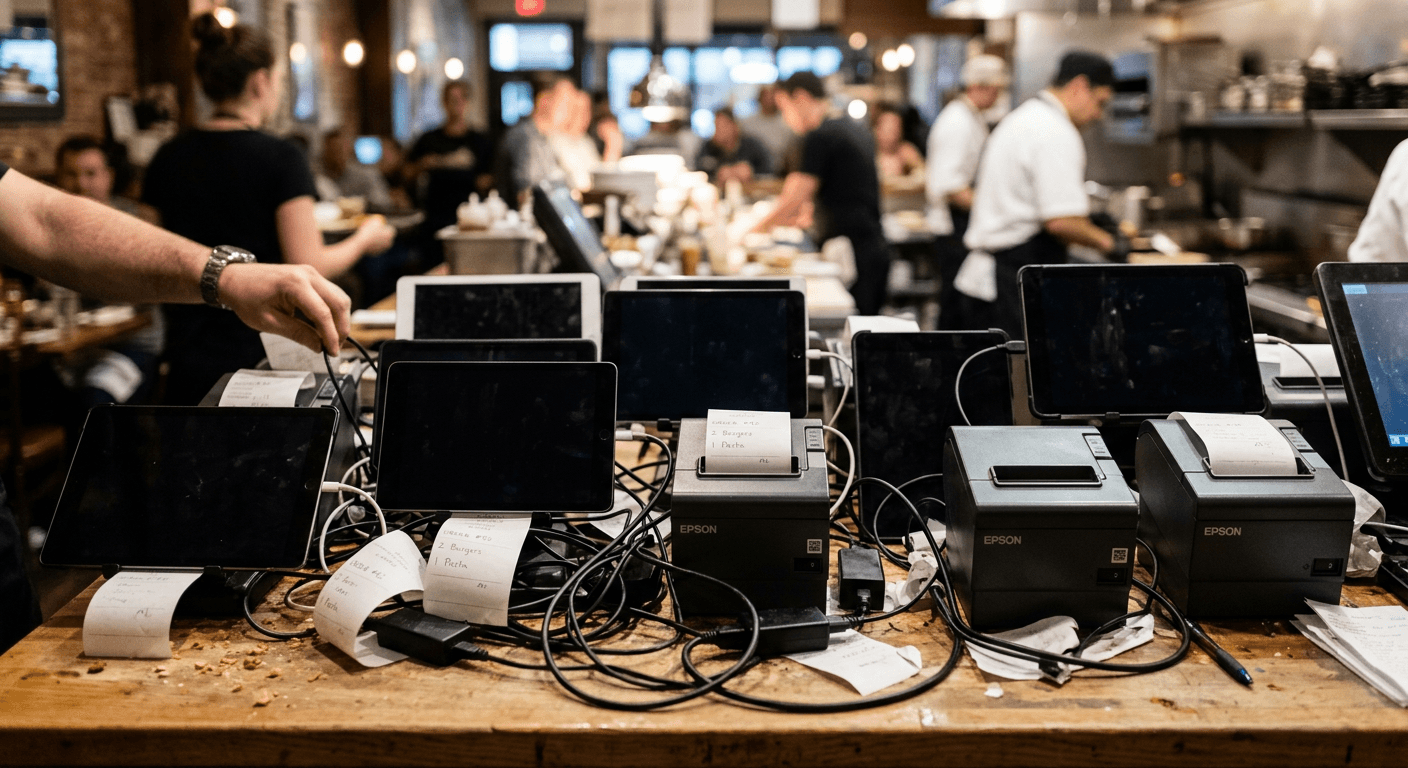
- Eroon tablettiviidakosta: Usean eri kotiinkuljetustabletin samanaikainen hallinta aiheuttaa jatkuvaa päänvaivaa ja sekaannuksia. Siirtyminen yhtenäiseen kassajärjestelmään (POS), joka on suoraan yhteydessä keittiönäyttöihin (KDS), poistaa tarpeen naputella tilauksia manuaalisesti järjestelmästä toiseen.
- Ota käyttöön itsepalvelutilaukset: Altametricsin keräämät toimialatiedot osoittavat, että itsepalveluratkaisut vapauttavat henkilökunnan keskittymään ruoan laatuun ja asiakkaiden kohtaamiseen rutiininomaisen rahastuksen sijaan. Kun asiakkaat tekevät ja vahvistavat tilauksensa itse, tilausvirheet ja väärinkäsitykset vähenevät huomattavasti.
- Mobiilikassat suoraan pöytään: Mobiilikassojen avulla tarjoilijat voivat ottaa tilaukset vastaan suoraan pöydässä. Tieto siirtyy välittömästi keittiöön, mikä poistaa kiireisten vuorojen juoksemisesta johtuvat unohdukset ja parantaa kommunikaatiota salin ja keittiön välillä.
- Automatisoi hallinnolliset rutiinit: Yhdistämällä integroidun kassajärjestelmän ja reaaliaikaisen analytiikan voit säästää jopa 12 tuntia esihenkilöiden työaikaa viikossa. Varastonhallinnan ja ostotilausten automatisointi vapauttaa johdon tukemaan tiimiä salissa ja keittiössä silloin, kun apua eniten tarvitaan.
Aloita työnkulkujen modernisointi jo tänään
Työntekijöiden stressin vähentämiseksi ei tarvitse uusia koko järjestelmäkokonaisuutta kerralla. Voit edetä vaiheittain ja hyvin käytännönläheisesti.
Aloita yhdistämällä AgenticPOS nykyiseen järjestelmääsi. Käyttöönotto on maksutonta, ja sen avulla esihenkilöt ja työntekijät voivat hallita taustatoimintoja – kuten ruokalistoja, hinnoittelua ja työvuoroja – suoraan Clauden, ChatGPT:n tai Slackin tekoälyavustajien kautta. Tämä säästää huomattavasti aikaa, jota muuten kuluisi loputtomien raporttien ja hallintapaneelien selaamiseen.
Kun olette valmiita luopumaan vanhasta laitteistostanne kokonaan, voitte siirtyä kattavaan Spindl-käyttöjärjestelmään. Spindl yhdistää tilausten vastaanoton, kolmannen osapuolen kuljetussovellukset, itsepalvelukioskit ja kanta-asiakasohjelmat yhteen selkeään laitteeseen. Työkalujen keskittäminen yhdellä ja yhtenäisellä ravintolan johtamiseen tarkoitetulla ohjelmistolla poistaa toiminnallisen kaaoksen ja antaa tiimillenne alustan, jota on aidosti mukava käyttää.