Fine dining marketing: How to increase covers and check size
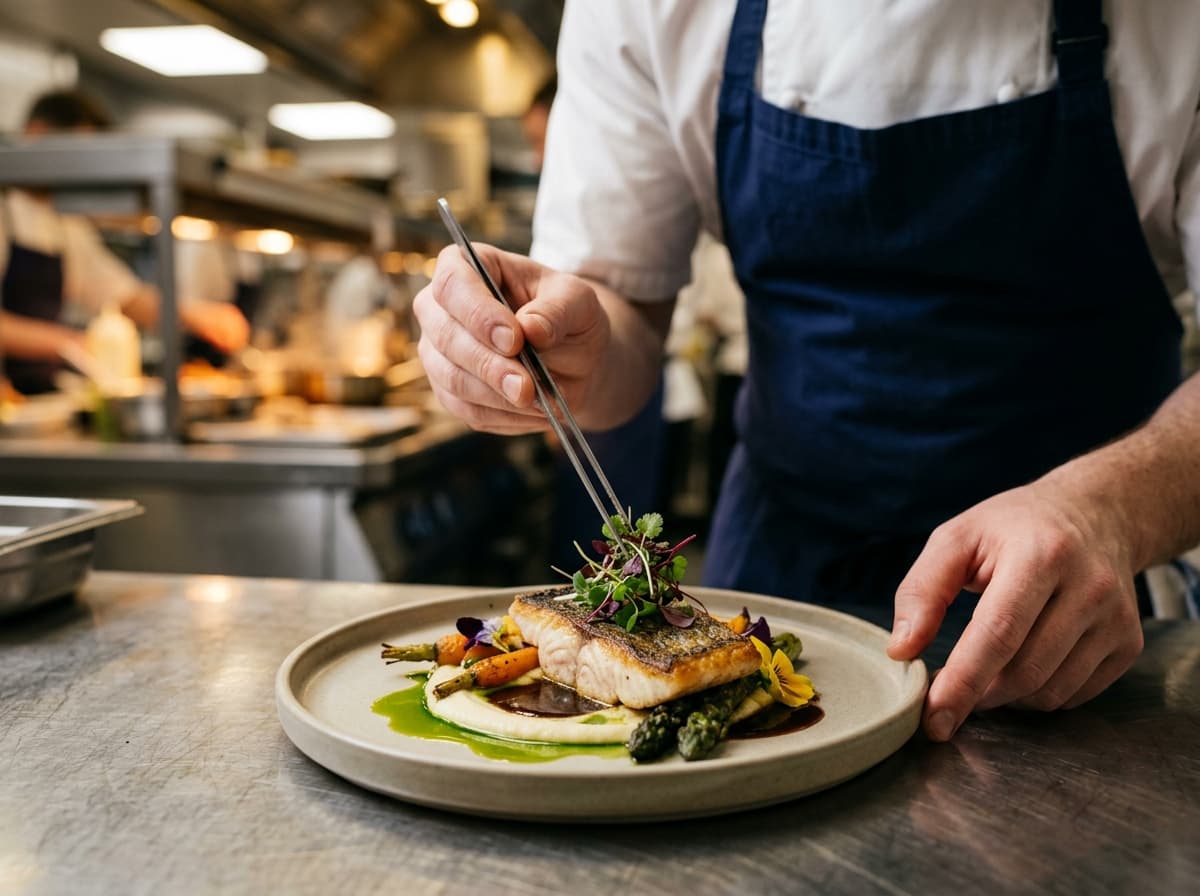
Why do fine dining restaurants face declining traffic despite record industry sales? If your tables are empty during shoulder hours, you need a high-performance marketing strategy that turns premium culinary artistry into predictable, high-margin revenue.
Understanding the real pressure on premium dining
According to industry data, eating and drinking places in the U.S. registered total sales of $101.0 billion in April 2026. While this represents a record high in nominal terms, it remains below several 2025 monthly readings on an inflation-adjusted basis. Furthermore, 49% of restaurant operators reported lower customer traffic in April 2026 compared to April 2025. This marked the 14th net decline in traffic over a 15-month span.
With the average profit margin for U.S. full-service restaurants sitting at a tight 9.8%, and target food costs strictly confined to 28% to 35% of total revenue, fine dining establishments cannot afford to wait for passive foot traffic. To thrive, operators must optimize their menus, deploy targeted promotions, and run a highly efficient digital operation.
Engineering your menu for maximum profitability
Your menu is your most valuable salesperson. Rather than looking at food cost percentages in isolation, successful fine dining operators rely on menu engineering to optimize profitability. This data-driven process evaluates every menu item by both its popularity (sales volume) and profitability (contribution margin).
A menu item’s contribution margin is defined as the menu selling price minus the raw portion cost. It represents the actual cash amount – in dollars, not percentages – that each dish contributes to covering your fixed overhead and generating profit.
By analyzing this data, you can classify every dish on your menu into one of four distinct quadrants:
- Stars: High popularity and high profitability. These are your champions. They deserve consistent quality and the most prominent placement on your page.
- Plowhorses: High popularity but low profitability. These items are loved by guests but carry tight margins. You may need to adjust portion sizes, swap ingredients, or subtly increase prices to improve their contribution margins.
- Puzzles: Low popularity but high profitability. These dishes generate great cash margins but do not sell in high volumes. They require better marketing, tableside suggestive selling, or visual highlighting.
- Dogs: Low popularity and low profitability. These items are prime candidates for removal or a complete culinary rework.
Applying best practices for using POS analytics lets you visualize this matrix easily. When making strategic restaurant menu changes, you can use this precise data to prune underperforming dishes and promote your highest-margin creations.
Activating psychological triggers in menu design
Once you have categorized your menu items, the next step is to design a layout that guides guest choices. Eye-tracking and consumer behavior studies reveal that guests do not read menus like a book; they scan in patterns. Their eyes naturally drift to a cognitive sweet spot known as the Golden Triangle – first focusing on the center of the page, then drifting to the top right, and finally scanning the top left.
To turn this visual pattern into actual revenue, implement these proven menu psychology tactics:
- Remove currency symbols: Omitting dollar signs and writing "45" instead of "$45" reduces the "pain of paying." It encourages guests to choose dishes based on visual appeal rather than cost comparisons.
- Limit options: Keep each menu section to roughly 5 to 7 items. This reduces the "paradox of choice," lowers guest anxiety, and accelerates table turnover.
- Position high-margin stars strategically: Place your "star" dishes at the very top or bottom of menu columns, or highlight them in visually distinct borders where they receive disproportionate attention.
- Use sensory, descriptive language: Rich descriptions detailing ingredient origins (such as "line-caught," "sustainably raised," or "locally sourced") increase the perceived value of a dish and elevate emotional connection.
To refine your layout further, learn how to write a restaurant menu that maximizes margins, and explore other physical restaurant upgrade ideas to elevate your overall guest experience.
Premium promotions that drive covers without cheapening your brand
High-end restaurants must drive guest covers and spend without resorting to brand-eroding discounts. Instead, focus on suggestive selling, staff training, and experiential loyalty.
Train your front-of-house staff to read guest cues and suggest pairings that genuinely enhance the meal. Small, consistent increases of just $1 or $2 per check add up dramatically across a service. Restaurants that successfully implement upselling techniques see average revenue increases of 10% to 30%. This raises the check average by recommending premium wine pairings, artisanal side dishes, or custom add-ons.
Read our comprehensive guide on how to increase your restaurant's average order value to master these staff behaviors.
For promotional campaigns, focus on exclusivity and high-end experiences:
- Host exclusive chef's tables, tasting menus, and premium wine-pairing dinners during slower weekdays.
- Offer experiential rewards within restaurant loyalty programs, such as private kitchen tours, early access to seasonal menus, or personal wine locker privileges.
- Design targeted, time-based specials – like early-bird seatings before 6:00 PM or custom late-night dessert pairings – to convert slow periods into profitable shifts.
For a broader list of actionable tactics, review our curated premium restaurant promotion ideas to fill tables during slow shoulder hours.
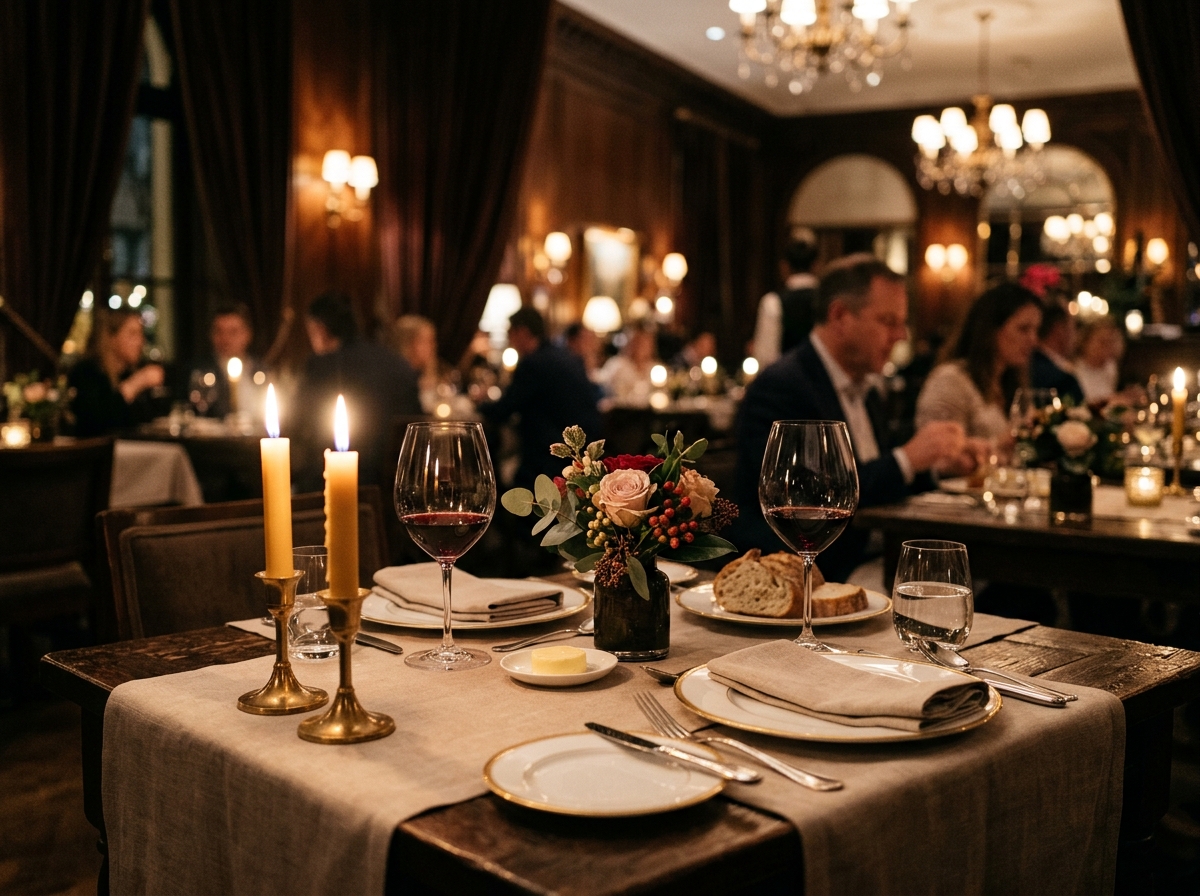
Social media and email tactics that fill tables
Your digital presence acts as your virtual storefront. To convert casual scrolls into booked reservations, fine dining marketing must feel as polished and intentional as the dining room itself. For broader inspiration on how to position your brand, you can explore creative marketing strategy examples for food businesses.
On highly visual platforms, implement a structured content mix:
- Maintain a balanced social feed of 40% behind-the-scenes footage (chef techniques, ingredient sourcing, staff prep work), 30% menu showcases, 20% interactive posts (polls, guest questions), and 10% direct promotions.
- Utilize short-form videos under 30 seconds that emphasize satisfying, sensory-rich service moments – such as the sizzle of a pan-seared wagyu steak or the precise pour of a cocktail.
- Link your social media profiles directly to your online reservation portal and loyalty program so that visual discovery leads seamlessly to booked tables.
Complement social media with an automated, segmented email marketing strategy. Build clean lists from reservation platforms and send tailored, high-end offers based on guest history. Sending automated, customized birthday rewards or anniversary experiences can see redemption rates as high as 47%, driving repeat business from your most valuable patrons.
Finally, do not overlook online reputation management. Online reviews directly dictate premium dining demand. A single-star increase in an independent restaurant's Yelp rating is associated with an estimated 5% to 9% increase in revenue. Managing your digital reputation is critical, and leveraging the best customer feedback tools for restaurants allows you to resolve issues before they hit public forums.
To integrate these channels, see how Instagram marketing strategies for restaurants drive direct bookings, and craft a comprehensive digital marketing strategy for restaurants to capture local high-intent searches. You can find more tips on building a social media marketing strategy for restaurants to elevate your brand storytelling, alongside building a premium restaurant branding strategy that commands higher prices.
Unifying operations with AgenticPOS and Spindl
Executing these high-touch marketing, menu, and loyalty strategies shouldn't burden your operational staff. This is where modern, intelligent restaurant technology becomes your competitive advantage.
You can start immediately with AgenticPOS, an MCP server that lets restaurant operators control their existing POS through chat. Instead of clicking through complex back-office dashboards, you or your managers can change menu items, run promotions, adjust pricing, and check real-time sales reports simply by chatting with Claude, ChatGPT, or a Slack bot. It is the easiest way to bring AI automation to your current system with zero friction.
When you are ready to retire your legacy stack, scale seamlessly into Spindl, the world's first agentic restaurant OS. Spindl unifies POS, kitchen display systems (KDS), online ordering, self-service kiosks, delivery, and experiential loyalty into a single device that your team can talk to. By centralizing operations, Spindl lets you automate smart, data-driven upselling at the exact moment of purchase, turning complex marketing analytics into direct profit.