Restaurant POS systems for delivery integrations compared
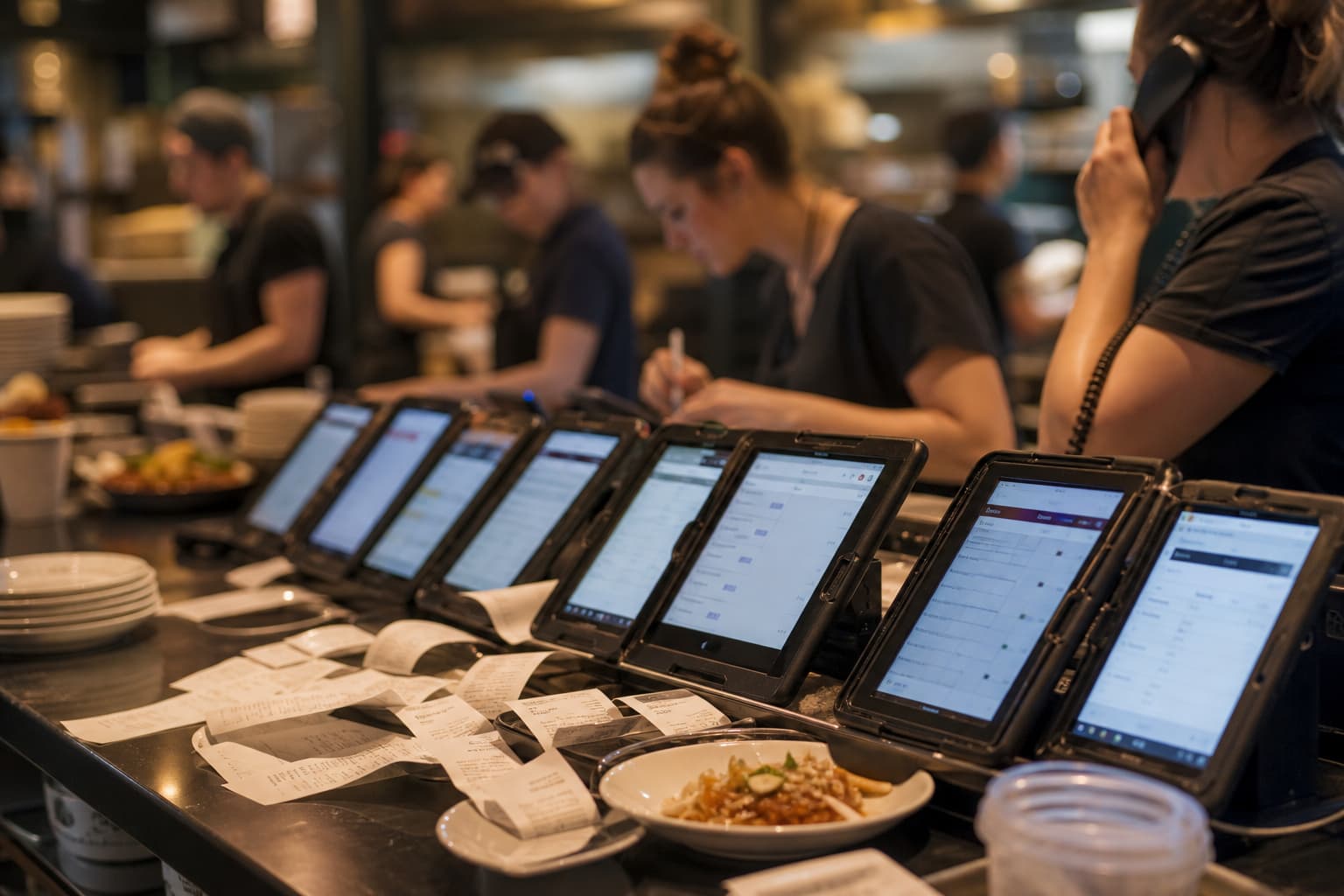
Are you still drowning in the chaos of five separate delivery tablets while commissions eat your margins? Juggling manual order entry leads to kitchen errors, cold food, and wasted revenue. You need a modern POS that handles your delivery integrations natively.
The true cost of the tablet farm
Juggling separate tablets for DoorDash, Uber Eats, and Grubhub is a recipe for operational disaster. Manually re-entering tickets leads to typo-ridden kitchen orders, missed modifiers, and delayed preparation. These errors drain 3% to 5% of your revenue in comps, waste, and refunds.
According to USDA research, third-party delivery spending at full-service restaurants tripled following the pandemic's onset, and delivery orders placed via third-party apps at quick-service venues more than tripled.
More importantly, it crushes your margins. A standard in-house order might yield a comfortable contribution margin, but high third-party commissions can shrivel that profit down to single digits. To survive, you must streamline your kitchen workflow and systematically drive customers toward your own higher-margin channels. This starts with finding the right advantages of a modern POS to centralize your operations.
Top restaurant POS systems compared
When evaluating the best restaurant POS systems in 2026, you need to look past basic transaction processing. You need deep, bi-directional integration that syncs menus, orders, and ingredient inventory in real time.
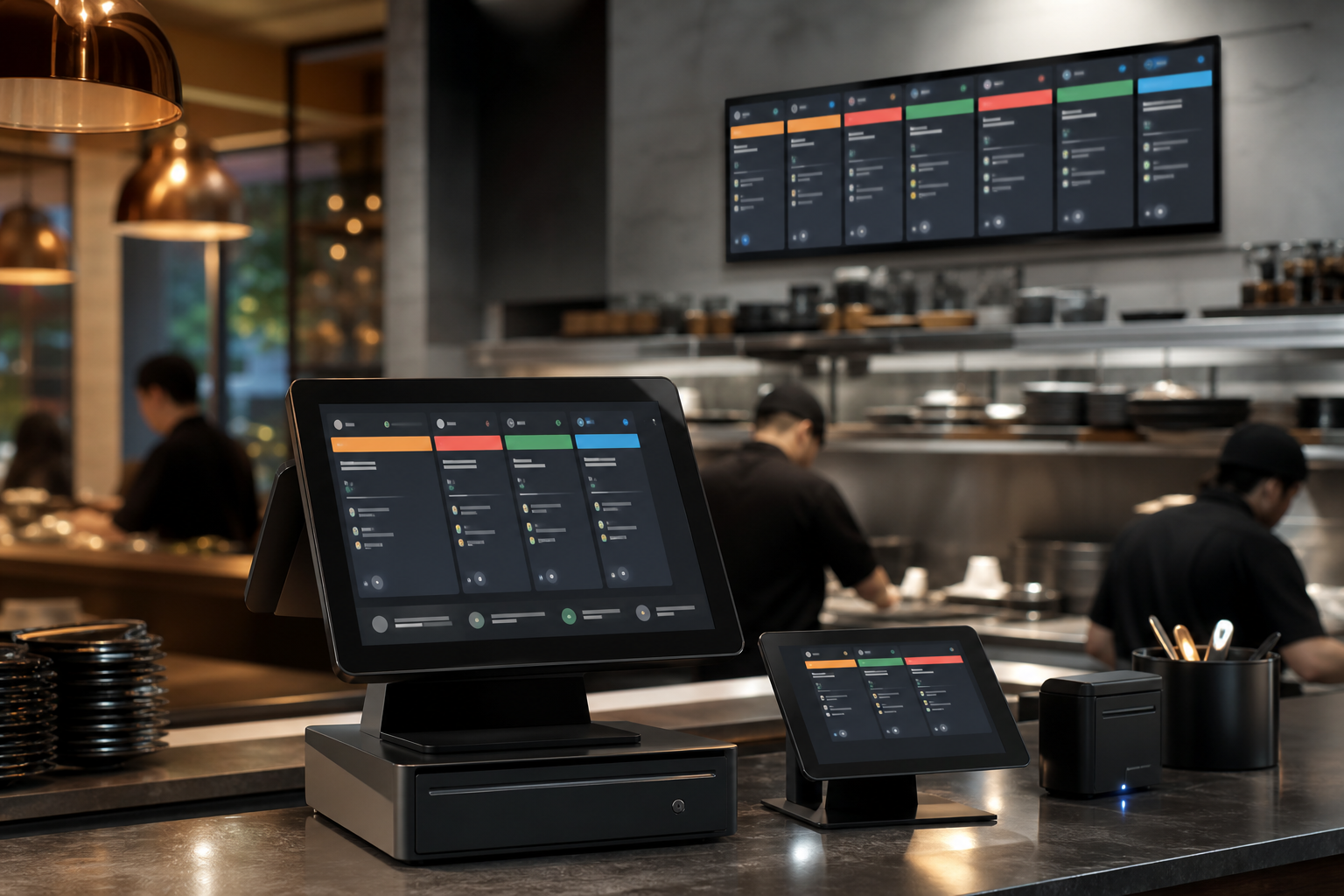
Here is how the top platforms stack up for delivery management.
Spindl OS
Most legacy POS systems treat delivery as an afterthought, forcing you to buy third-party middleware just to connect your apps. Spindl is different. Built from the ground up as a delivery-native operating system, it is the modern "iPhone" of restaurant tech, while legacy platforms feel like a Nokia 3310.
Spindl consolidates dine-in, drive-thru, online ordering, and delivery apps into a single screen.
- Native API integrations: Full direct API integrations with DoorDash, Uber Eats, and Grubhub send marketplace orders straight to your Kitchen Display System (KDS) with a 98.5% order accuracy rate. Learn more about the mechanics in our guide to restaurant delivery app integration.
- Single-source menu management: Change a price or 86 an item in Spindl Backstage, and it instantly updates your POS, your website, and all third-party apps simultaneously.
- Recipe-level inventory sync: As orders flow in from any delivery channel, Spindl automatically deducts specific recipe ingredients from your inventory, helping operators reduce food costs by up to 5% in 90 days. See our POS system integration guide for details.
- Direct ordering push: Spindl helps you launch your own branded online ordering site. This lets you transition repeat delivery app customers into first-party buyers, boosting your contribution margins from 6% to 38%. Use these delivery management tips to improve your bottom line.
Best for: Restaurants of all sizes wanting a unified, modern operating system that eliminates tablets, middleware, and high upfront hardware fees. Review Spindl pricing to see how it compares.
Toast
Toast holds a major share of the U.S. restaurant market, offering a robust suite of tools built for complex operations.
Its delivery features include:
- Direct marketplace integrations: Toast features direct integrations with both DoorDash and Uber Eats. Orders flow straight to the KDS without manual entry.
- Menu and hour syncing: You can update your delivery menus, prices, and operating hours directly from the Toast back-end based on your configured online ordering partners.
The downside is that Toast’s add-on fees can pile up quickly. Building out an integrated system with delivery, loyalty, and online ordering can result in hefty monthly software invoices.
Best for: Established full-service restaurant groups that require a highly customizable platform and do not mind paying extra for individual feature add-ons. Read our full restaurant POS system comparison for a deeper look.
Square for Restaurants
Square is famous for its fast onboarding and user-friendly iPad interface, making it a favorite for smaller venues, quick-service cafes, and mobile food trucks.
- Simple platform connections: Square offers built-in integrations for U.S. and Canadian sellers, including the Square DoorDash integration and Square Uber Eats integration.
- Automated syncing: When an item runs out on your Square POS, it is immediately updated as unavailable on your active delivery channels. Menus, prices, and item images sync automatically.
While Square offers an accessible entry point with its $0 software tier, it lacks the advanced menu analytics and granular, recipe-level inventory tracking required by scaling multi-unit operations.
Best for: Startups, cafes, and mobile food concepts that value simple setups and immediate usability.
Clover
Clover is a reliable, hardware-focused system popular among quick-service restaurants looking for highly competitive processing rates.
- DoorDash native sync: The Clover DoorDash integration lets you manage menus, pause incoming orders, and auto-sync inventory directly from your terminal.
- Uber Eats onboarding: Clover features an Uber Eats self-sign up integration, which retrieves your POS menus to rapidly configure your active delivery pages.
However, Clover's platform is less flexible for brands with complex, shifting floor plans or those looking to deploy custom first-party mobile apps for engaging customers through apps. It also typically requires long-term contract commitments.
Best for: Standard quick-service restaurants wanting dependable hardware and low transaction fees.
Lightspeed Restaurant
Lightspeed is a highly granular, inventory-heavy POS built to handle the complex reporting needs of fine dining and scaling restaurant chains.
- Uber Eats direct integration: Lightspeed offers a direct Lightspeed Uber Eats integration to manage menu syncs and orders directly in the POS.
- DoorDash via middleware: Unlike other competitors, Lightspeed does not support a native, direct DoorDash integration. Instead, you must use their Deliverect integration to build and publish DoorDash menus.
While Lightspeed excels at seat-level tracking and advanced forecasting, relying on third-party middleware like Deliverect introduces extra monthly software fees and potential points of failure.
Best for: High-end fine dining and upscale franchises that prioritize detailed inventory analytics over native delivery setups.
Keep your current POS and automate with AI
What if you aren't ready to rip out your existing legacy POS, but you still want to escape dashboard fatigue and simplify delivery management?
You can use AgenticPOS.
AgenticPOS connects directly to your existing POS (including Toast, Square, and Clover) and exposes your entire back-office – including menu management, pricing, delivery channels, and inventory – to secure AI agents.
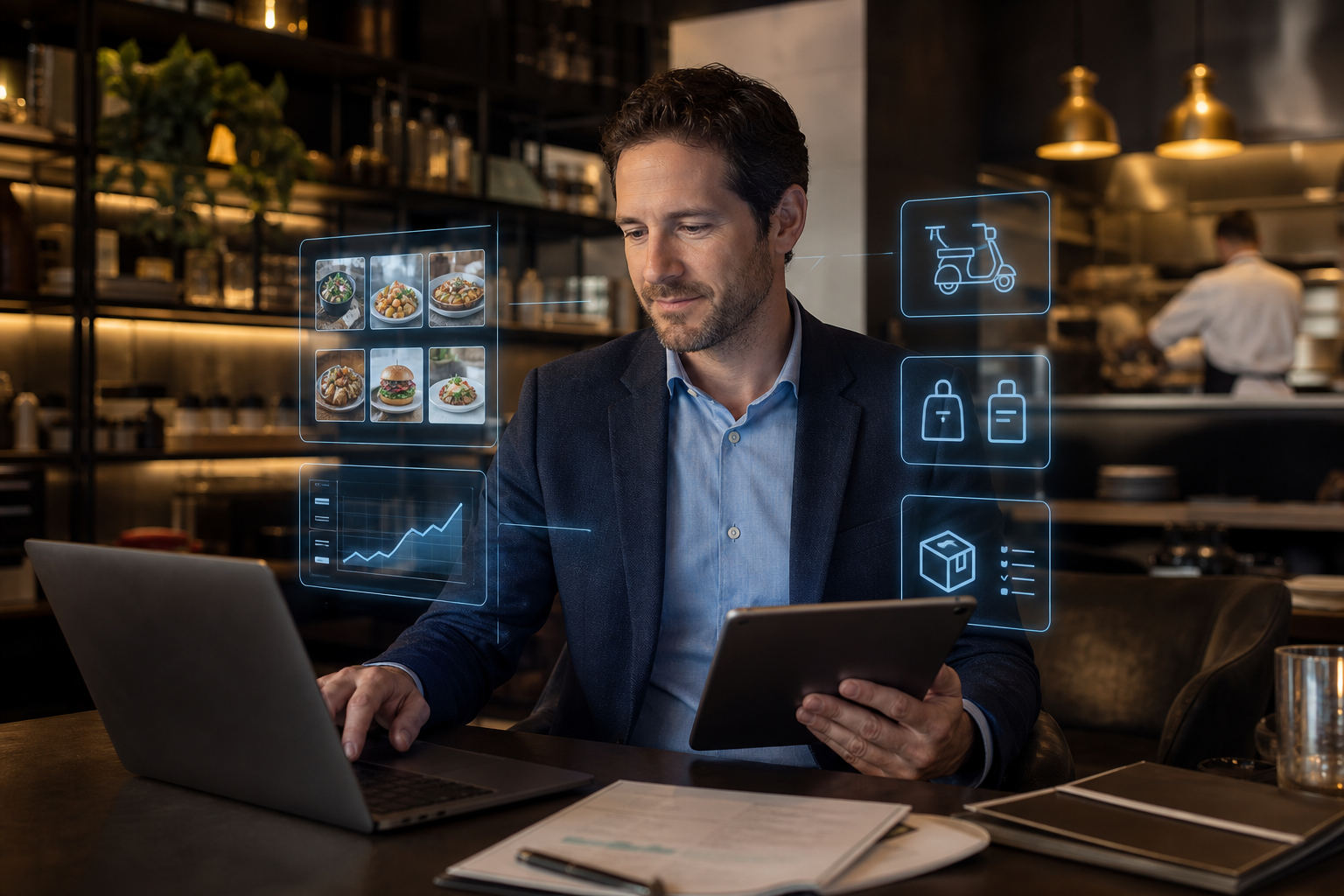
Instead of clicking through dozens of confusing nested menus across multiple dashboards, you can manage your operations through natural language via ChatGPT, Claude, or Slack:
- "Update the burger price to $15 across all locations and delivery apps."
- "86 the ribeye on DoorDash and Uber Eats immediately."
- "Run a sales report comparing our first-party site to third-party delivery channels for last weekend."
AgenticPOS gives you over 140 agent-callable tools, absolute multi-location control, and robust operator guardrails. You can start with AgenticPOS for free on your current system, scale up to Pro when managing multiple locations gets painful, and transition to the full Spindl OS when you're finally ready to retire your legacy POS stack.
Reclaim your kitchen margins
Juggling multiple tablets and manual data entry is a slow leak in your bottom line. To protect your margins, you need a system that acts as a single, unified source of truth.
Whether you want to completely upgrade your restaurant tech stack with the modern Spindl OS or automate your existing POS using AgenticPOS, it is time to throw away the tablet farm. Reach out to our team today to find the right delivery integration strategy for your restaurant.