Leading restaurant POS systems: 2025 comparison guide
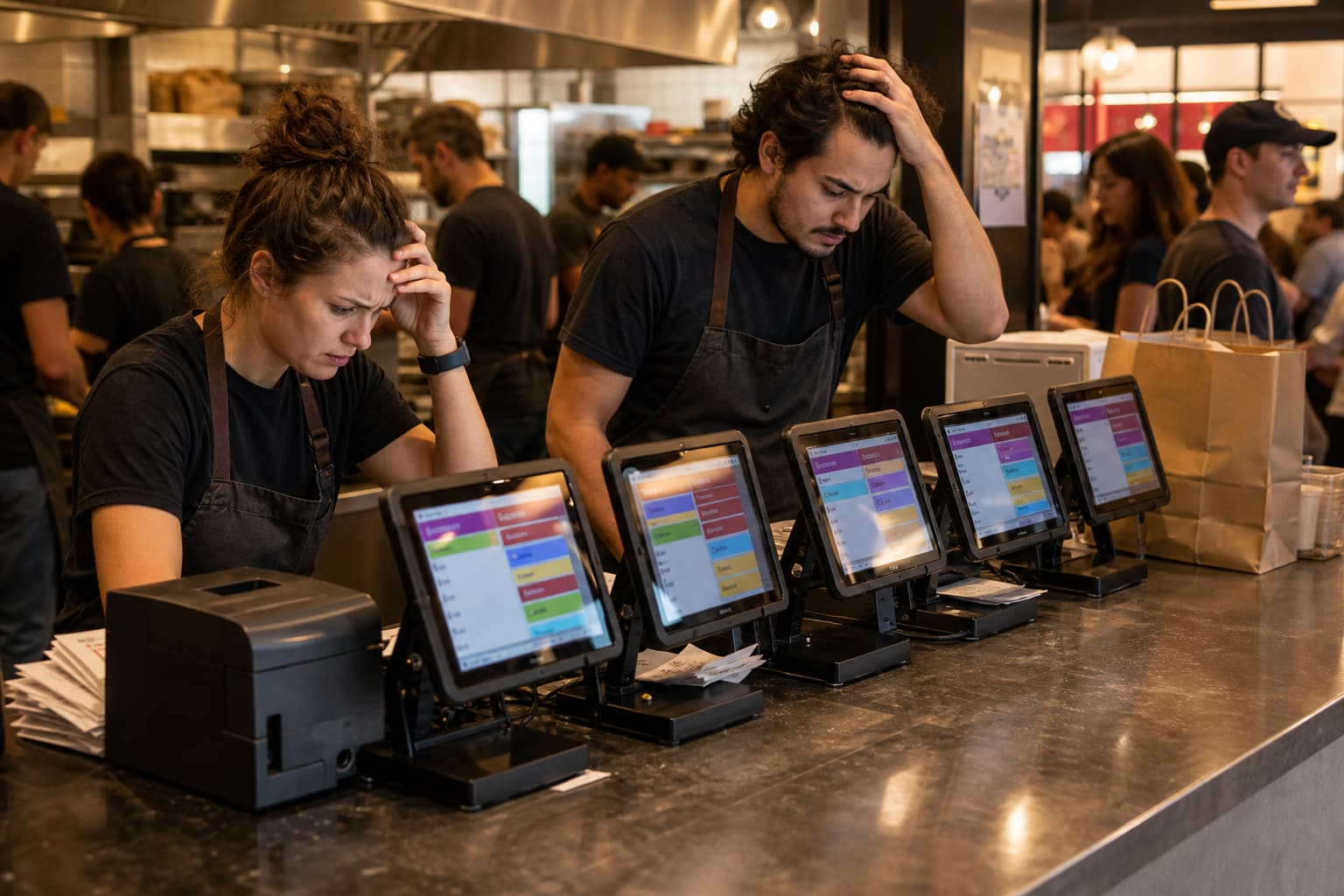
Are you still juggling five tablets while your staff drowns in manual order entry? Choosing a POS isn't just about taking payments – it's about reclaiming your margins and sanity. Here is how the top restaurant POS systems stack up for your operational roadmap.
Key features to compare before buying
Evaluating platforms requires looking beyond basic transaction processing. Compare systems against these essential operational benchmarks:
- Ordering and payment speed: Reliable card-present processing, offline contingency modes, and rapid table or counter entry.
- Delivery aggregation: Direct API connections that unify third-party marketplace orders without extra tablets.
- Inventory and reporting: Live, recipe-level stock deductions and real-time analytics to manage food and labor costs.
- Total cost of ownership: Upfront hardware expenses, recurring SaaS subscriptions, card processing fees, and onboarding effort.
Toast: The full-service heavyweight
Toast is a widely used Android-based platform tailored for full-service restaurants and multi-location operations.
- Pricing: Software plans include Starter ($0/month), Point of Sale ($69/month), and New Restaurant Basics ($110/month). Hardware and payment processing are required through Toast and priced via quote.
- Key capabilities: Tableside ordering, menu management, gift cards, loyalty programs, and integrated kitchen display systems (KDS).
- Trade-offs: Long-term contracts, required Toast payment processing, and proprietary hardware. Add-ons like payroll and marketing can increase monthly software costs.
Square for Restaurants: The entry-level standard
Square offers an intuitive platform for startups, cafes, and mobile vendors who need fast setup on flexible hardware like iPads.
- Pricing: Free ($0/month per location) and Plus ($60/month per location) plans. Processing rates sit at 2.6% plus 15¢ for in-person transactions, 2.9% plus 30¢ for online sales, and 3.5% plus 15¢ for manually keyed cards.
- Key capabilities: Table layouts, course management, auto-gratuity, and basic KDS support.
- Trade-offs: Advanced features require paid tiers, and managing third-party delivery orders often requires external tools, which can create delivery integration issues.
Spindl: The all-in-one modern challenger
While legacy systems create a cluttered "tablet farm," Spindl consolidates order-taking, delivery aggregation, inventory, and loyalty into a single device. Legacy setups are like Nokia flip phones – Spindl is the iPhone.
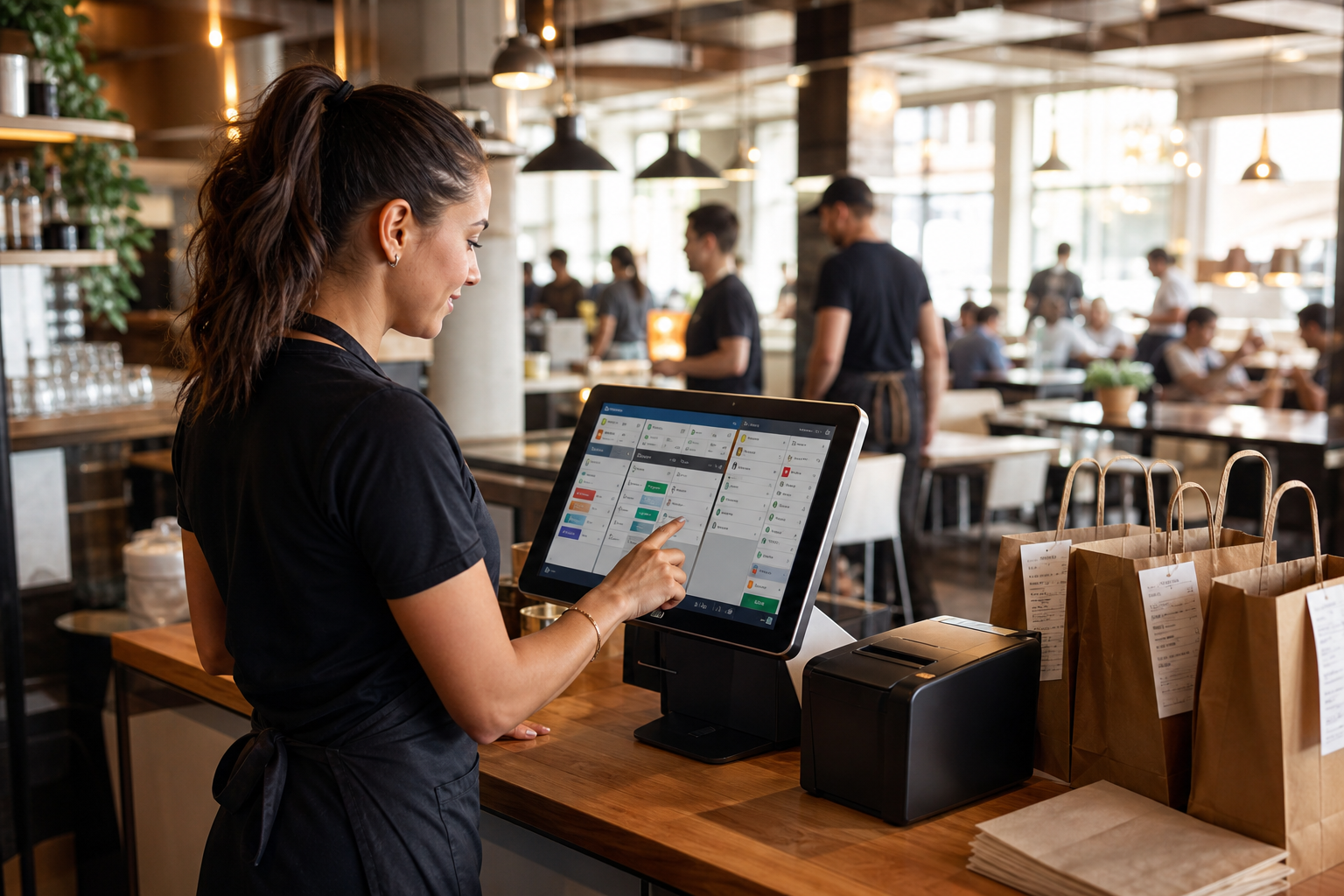
- Pricing: POS software is free for Pro users with transparent daily card-volume deductions that prevent month-end invoice shock. Review all options on the Spindl pricing page.
- Key capabilities: Direct API connections stream DoorDash, Uber Eats, and Grubhub orders straight to a unified queue and KDS, achieving up to 98.5% order accuracy. Features real-time stock tracking through integrated inventory software and an interface that lets new staff take orders within minutes.
- AI-powered control: Spindl works hand-in-hand with AgenticPOS, allowing operators to manage back-office tasks like menu updates, pricing, shifts, and reporting using AI chat agents across Claude, ChatGPT, or Slack.
- Best for: Operators seeking an all-in-one POS platform with native direct delivery integrations to eliminate extra hardware.
Lightspeed Restaurant: The data specialist
Lightspeed targets fine dining establishments and scaling multi-unit brands that require granular backend reporting and seat-level tracking.
- Pricing: Software plans start at $69/month for Starter, $189/month for Essential, and $399/month for Premium, with additional register licenses at $59/month each. Lightspeed Payments baseline card-present rates start at 2.6% plus 10¢.
- Key capabilities: Seat-level order routing, advanced floor plans, customizable menus, and detailed inventory analytics.
- Trade-offs: Steeper learning curve for frontline staff and higher monthly subscription expenses across multiple terminals.
Clover: The quick-service fee fighter
Clover is a solid option for quick-service restaurants (QSRs) and high-volume counter operations wanting sleek physical terminals with built-in printers.
- Pricing: Full-Service Restaurant software starts at $84.95/month alongside a $1,699 upfront hardware cost for Station Duo terminals. Card-present processing starts at 2.3% plus 10¢, while online or keyed transactions run 3.5% plus 10¢.
- Key capabilities: Elegant hardware design, table management, floor plans, and rapid checkout.
- Trade-offs: Higher upfront terminal costs and long-term contract commitments with reduced flexibility for complex floor layouts.
TouchBistro: The offline iPad specialist
TouchBistro is an iPad-based system designed for venues that want local network reliability during internet disruptions.
- Pricing: Software-only plans start at $69/month, while the Essentials Bundle (hardware plus processing) starts at $119/month. Processing fees are quoted case-by-case through TouchBistro Payments.
- Key capabilities: Strong offline functionality via a local iPad network, tableside ordering, floor plan customization, and menu management.
- Trade-offs: Custom card processing quotes introduce fee unpredictability, and advanced omnichannel tools require paid add-ons.
Calculating total cost of ownership
Upgrading your POS impacts overall profitability beyond payment fees. Modern integrated systems can boost table turnover by up to 20%, cut order error rates by 20% to 35%, and reduce labor hours by 5% to 12%.
Before making a final choice:
- Evaluate long-term ROI: Calculate hardware, software fees, and transaction rates across a multi-year horizon using a cost-benefit analysis of upgrading your POS.
- Audit your integrations: Connect your sales directly to ingredient stock by referencing a POS inventory integration guide and a full POS system integration guide.
- Streamline team onboarding: Reduce switchover friction by following proven staff POS training strategies that get staff productive in 1–2 shifts.
- Turn data into profit: Use sales and item mix reports to prune slow-moving menu items by applying POS analytics best practices.

Upgrading your restaurant tech stack
A point-of-sale platform should drive revenue and streamline service, not create extra admin work or tablet clutter. Consolidating your ordering channels, inventory, and payments into a single interface immediately protects your margins.
To stop juggling tablets and reclaim your restaurant's profit margins, explore Spindl's all-in-one features and wide range of integrations. You can also start free with AgenticPOS to manage your current POS using AI agents today.