Skab et træningsprogram, der reducerer personaleudskiftningen i din restaurant med 40 %

Føles din restaurant som en svingdør for medarbejdere? Med en gennemsnitlig personaleudskiftning på 75 % og omkostninger til genansættelse på op mod 5.000 dollars pr. stilling, er et struktureret træningsprogram ikke længere en luksus – det er en økonomisk nødvendighed for at beskytte din bundlinje.
De høje omkostninger ved ustruktureret sidemandsoplæring
Mange restauranter forlader sig stadig på metoden "følg efter en kollega i tre dage". Men denne mangel på struktur fører uundgåeligt til inkonsistent service, fejlbestillinger og i sidste ende udbrændthed. Når du ikke har en standardiseret onboarding-proces, overlader du reelt dit brands omdømme til tilfældighederne. Undersøgelser viser, at virksomheder med omfattende træningsprogrammer opnår en 218 % højere indtjening pr. medarbejder end de steder, der improviserer.
Udover de økonomiske gevinster gør en struktureret ramme nye medarbejdere selvkørende langt hurtigere. Du kan reducere oplæringsperioden for grundlæggende opgaver til blot 7-14 dage, hvilket er en markant forbedring i forhold til de måneder, det ofte tager i uorganiserede miljøer. Den hastighed er afgørende for at opretholde den operationelle effektivitet og sikre, at teamet kan præstere under spidsbelastning.
Den strukturerede 30/60/90-dages model for onboarding
Et succesfuldt program sikrer, at personalet ikke bliver overvældet på førstedagen, men samtidig holdes ansvarlige for deres udvikling over de første tre måneder.
De første 30 dage: Fundamentet Perioden starter med en introduktion i de første syv dage, hvor fokus er på kultur, sikkerhed og grundlæggende brug af POS-systemet. Det er essentielt at tildele en mentor i de første to uger for at bygge bro mellem teorien og det travle "fredagsryk". Mentorsystemer har vist sig at være et af de mest effektive værktøjer til at reducere personaleudskiftningen.
60 dage: Rollen mestres Når den nyansatte når til uge to til fire, skifter fokus til rollespecifik kompetenceudvikling. For front-of-house (FOH) betyder det teknikker til mersalg og en systematisk tilgang til håndtering af kundeklager. Back-of-house (BOH) skal her fokusere på konsistens i opskrifter og effektivitet ved de enkelte køkkenstationer.
90 dage: Selvstændighed og ledelse Den afsluttende fase lægger vægt på selvstændighed og lederudvikling. Her bør du opfordre til "cross-training" på tværs af roller for at skabe operationel fleksibilitet. Virksomheder, der prioriterer intern forfremmelse, oplever drastisk lavere personaleudskiftning. Et eksempel er Chipotle, hvor over 90 % af lederne startede som almindelige medarbejdere – et tydeligt bevis på, at klare karriereveje fremmer loyalitet.
Essentielle standarder for dit team
Dokumentation er rygraden i konsistent kvalitetskontrol. Hvis en procedure ikke er nedskrevet, eksisterer den i princippet ikke.
I front-of-house skal standarderne prioritere gæsteinteraktion og teknisk præcision. Det inkluderer f.eks. en velkomstprotokol, hvor gæster anerkendes inden for 30 sekunder, samt tidsstandarder for servering: drikkevarer inden for 3 minutter, forretter inden for 8 og hovedretter inden for 15. Personalet skal også være fuldt fortrolige med at håndtere digitale bestillinger og onboarde gæster til loyalitetsprogrammer.
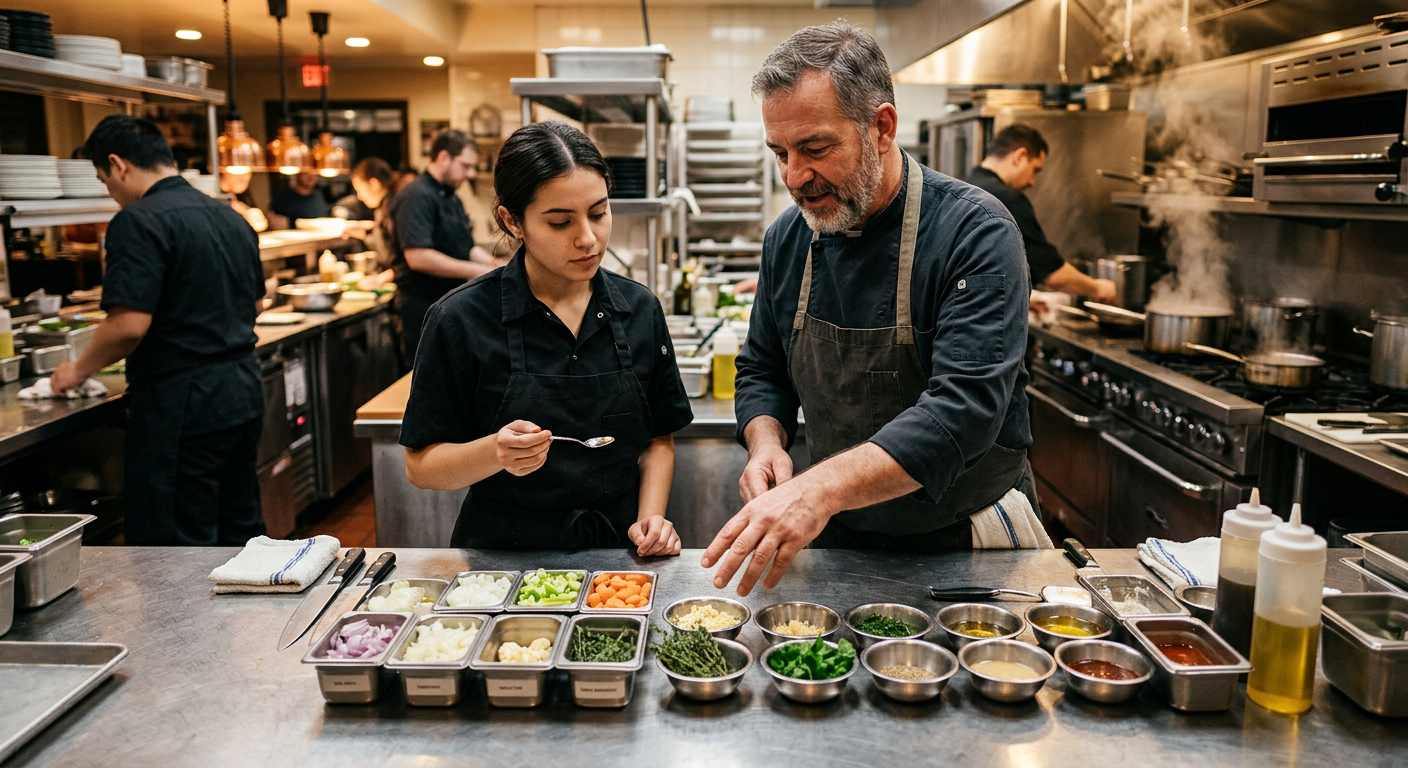
I køkkenet er teknisk mestring og sikkerhed de absolutte prioriteter. Alt personale bør gennemføre certificeringer i fødevaresikkerhed med topkarakter, før de arbejder selvstændigt. At mestre en station indebærer også at færdiggøre mise en place til tiden og opretholde en ordrepræcision på mindst 98 %. Høj præcision reducerer madspild og fejlleveringer, hvilket kan mærkes direkte på dækningsbidraget.
Overholdelse af juridiske og lovmæssige krav
Træning handler ikke kun om god service; det handler også om compliance og risikostyring. Særligt i USA er flere certificeringer lovpligtige for at beskytte virksomheden:
- Fødevaresikkerhed: De fleste stater kræver, at der altid er en certificeret fødevareansvarlig til stede.
- Alkoholservering: Programmer som ServSafe Alcohol forebygger overudskænkning og sikrer alkoholbevillingen.
- Forebyggelse af chikane: I stater som Californien og Illinois er årlig træning i forebyggelse af seksuel chikane lovpligtig for alle ansatte.
- Arbejdsmiljø og sikkerhed: Træning i OSHA-kompatible procedurer for maskinhåndtering og sikkerhed på gulvet forebygger skader og sænker forsikringspræmierne.
Teknologi som løftestang for din træning
En af de største udfordringer inden for restaurantledelse er at oplære personale i fragmenterede og komplekse systemer. Hvis dit POS-system føles som en forældet Nokia, mens dine medarbejdere er vant til en iPhone, bliver onboardingen en unødigt lang proces. Mange forskellige tablets og systemer skaber kognitiv overbelastning, hvilket fører til stress og udbrændthed.
Moderne platforme som Spindl er designet til at være intuitive fra første sekund. De er så brugervenlige, at nyansatte kan være produktive allerede efter deres første vagt. Ved at samle leveringsapps, loyalitetsprogrammer og bestillinger på én enhed, eliminerer du de tekniske barrierer, der ofte fører til fejl. Når teknologien er enkel, kan dit team fokusere på det vigtigste: gæsterne.

Måling af resultater: Virker din indsats?
For at sikre, at din investering bærer frugt, bør du spore specifikke nøgletal (KPI'er). Overvåg "tiden til fuld kompetence" for at se, hvor hurtigt nye ansatte kan varetage en station alene. Analysér også data om kundeadfærd for at vurdere, om træningen i mersalg rent faktisk øger den gennemsnitlige ordrestørrelse.
Hold desuden et skarpt øje med din personaleomsætning. Et fald i udskiftningen er det ultimative bevis på, at din strategi virker. Ved at implementere et struktureret og teknologidrevet træningsprogram transformerer du dit personale fra midlertidig hjælp til et højtydende team. Hvis du vil se, hvordan en samlet platform kan forenkle din onboarding og drift, kan du udforske funktionerne i Spindl her.