How online training scales multi-location restaurant teams
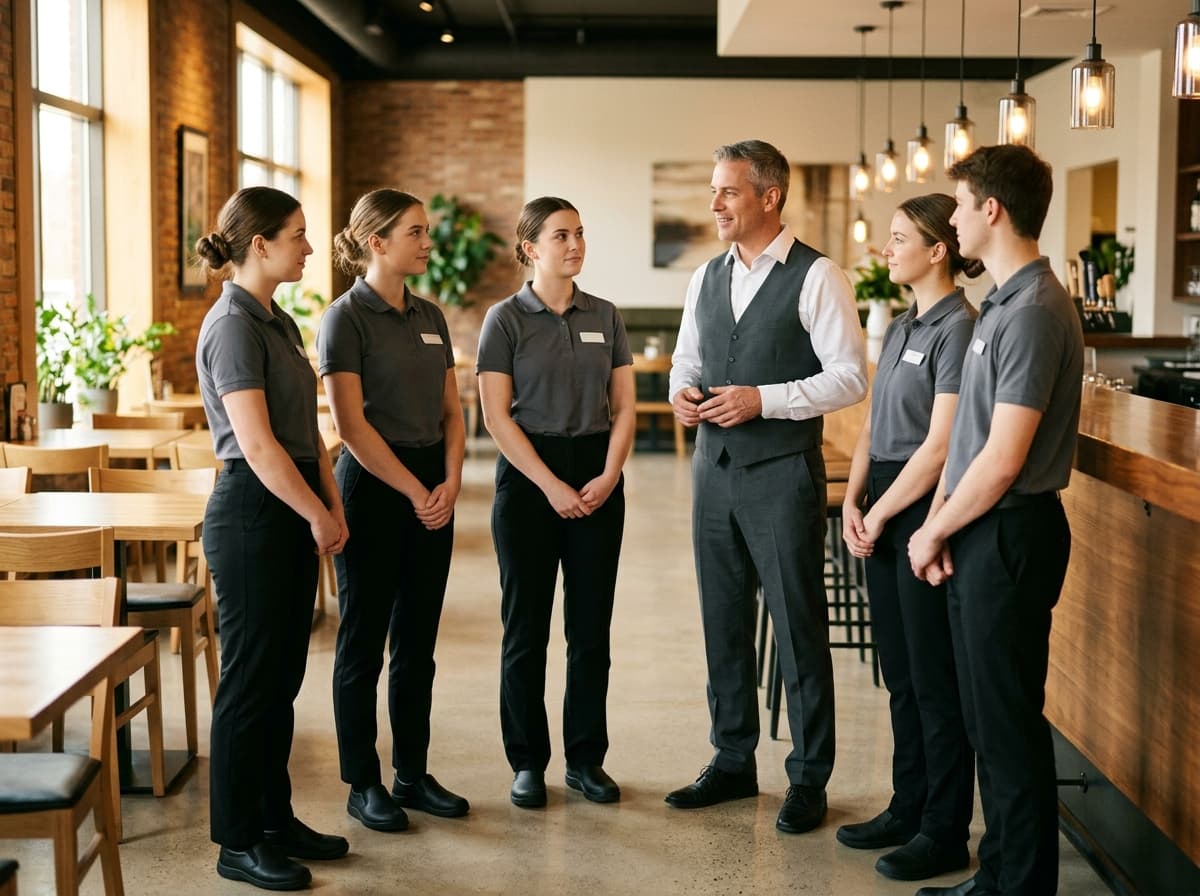
Your best server knows every menu modifier. Your worst just charged someone for extra ranch three times. With high industry turnover compounding training costs across locations, paper handbooks fail. Centralized online training standardizes compliance, service, and onboarding instantly across your entire footprint.
Why traditional training breaks down at scale
Walk into any growing multi-location group and you will find operational inconsistency. Location A onboards servers in three days. Location B takes two weeks. Location C wings it entirely. Relying on manual, location-specific training creates friction that hurts your bottom line.
Paper handbooks become outdated the moment corporate updates a policy or menu item. Peak-hour rush demands prevent managers from spending dedicated hours personally training each hire. Staff cramming hours of policy details on Day 1 forget most of it within a week. When training varies by site, maintaining high standards across locations becomes impossible. Implementing restaurant operational efficiency tactics requires a consistent foundation across every shift.
Core components of a restaurant online training framework
Digitizing your existing manual into a single repository is only the first step. Effective digital training requires a structured infrastructure.
Centralized onboarding workflows
A repeatable onboarding flow sets clear expectations from day one. Digital platforms let new hires complete administrative tasks and core orientation remotely before their first shift.
- Pre-hire orientation covering company culture, policies, and remote paperwork completion.
- Days 1–3 covering basic safety, uniform standards, and initial system orientation.
- Week 1 focusing on role-specific technical skills and baseline operations.
- Weeks 2–4 developing advanced guest recovery, upselling, and station speed.
- 30/60/90-day milestones for progressive skill verification and formal check-ins.
Structured onboarding with daily check-ins improves role clarity and long-term retention. Linking early milestones to clear evaluation metrics keeps new employees aligned with company goals.
Compliance, safety, and health regulations
Mandatory health and safety protocols cannot be left to chance. Staff must complete fundamental food safety modules before touching food or working stations independently.
- Handwashing protocols, proper glove usage, and illness reporting procedures.
- Temperature danger zone limits and cross-contamination prevention rules.
- Mandatory allergen awareness and clean-as-you-go line hygiene.
- Hazardous chemical communication mandated by OSHA standards.
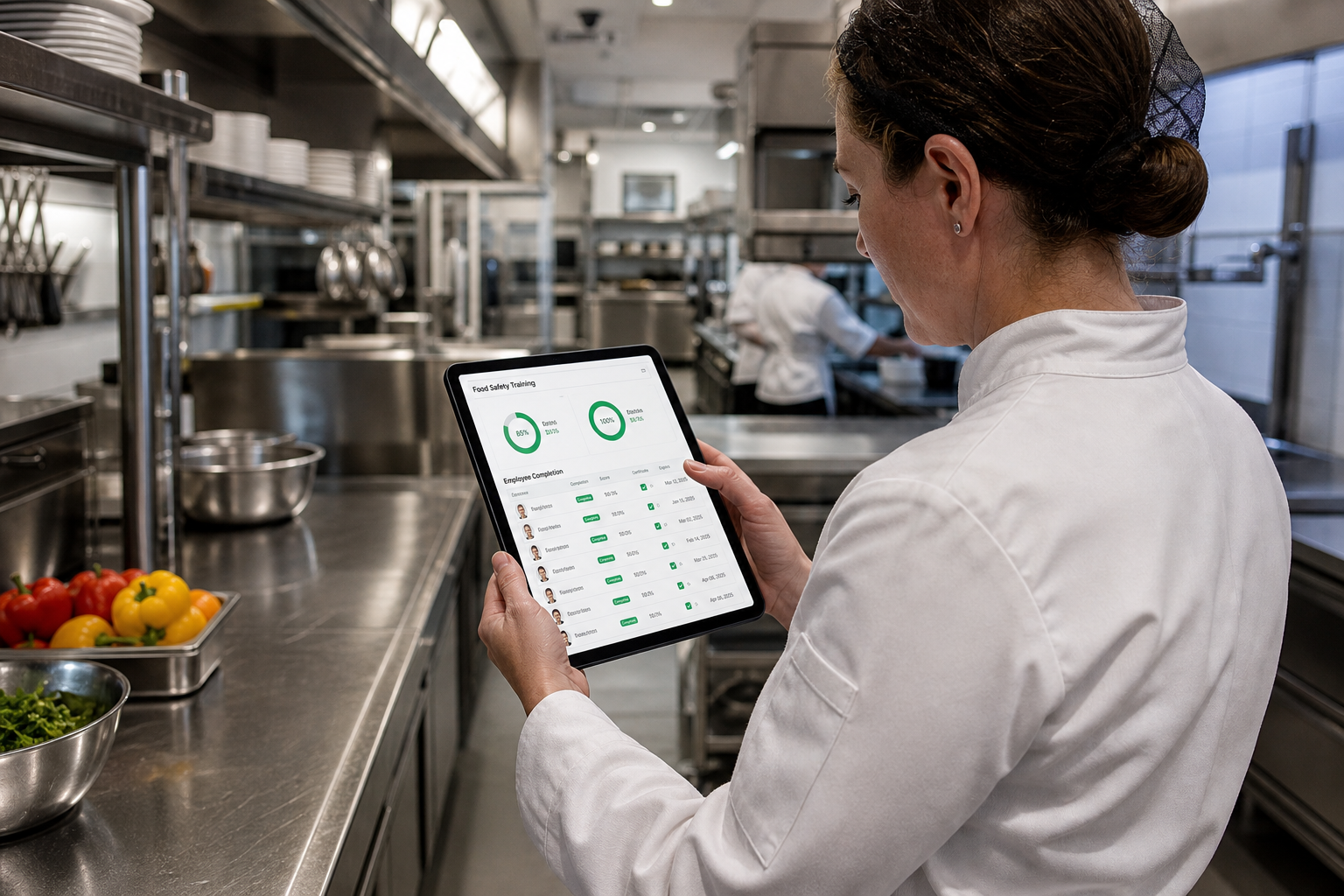
The CDC reports that certified kitchen managers correlate with fewer foodborne illness outbreaks and better food safety compliance. Digital systems track certification expiration dates automatically, giving multi-unit operators audit-ready reporting. For detailed regulatory guidance, review our breakdown on navigating food safety regulations.
Role-specific skill paths
Generic, one-size-fits-all training wastes employee time. Line cooks do not need front-of-house greeting protocols, and hosts do not need detailed line-prep guidelines.
- Back-of-house paths covering recipe execution, mise en place, and kitchen equipment safety.
- Front-of-house paths emphasizing menu knowledge, upselling techniques, and table management.
- Leadership paths focused on shift management, labor cost optimization, and employee coaching.
Tailoring instructional content by role accelerates time-to-competency. You can explore concrete station checklists in our guide to structured kitchen staff training.
Operational benefits of digital employee development
Centralized digital training drives measurable improvements across operational, financial, and retention metrics.
- Faster time-to-productivity: Micro-learning modules let staff learn core procedures independently, letting managers focus on hands-on skill verification.
- Perfect service consistency: Video demonstrations ensure every server delivers identical tableside hospitality across all branches, raising overall customer service strategies.
- Real-time updates: When corporate changes a recipe, updates allergens, or alters shift procedures, updated content deploys instantly across all locations.
- Data-driven accountability: Digital dashboards highlight knowledge gaps through embedded quizzes and track module completion across teams.
- Lower employee turnover: Structured development and active coaching build employee confidence, directly supporting strategies for reducing restaurant staff turnover.
Combining online learning with daily manager coaching and automated digital checklists ensures standards remain high on every shift. Learn more about maintaining daily standards in our guide to quality control measures.
Modern tech tools and AI-driven management
Training on your point-of-sale system is often where onboarding bottlenecks occur. Traditional POS systems require hours of practice to master complex modifier flows and split-check logic.
Using intuitive software drastically reduces this learning curve. Spindl consolidates ordering, delivery channels, and daily transactions into a clean, modern interface that staff can navigate with minimal instruction. Exploring our front-of-house POS system reveals how simplified interfaces eliminate ordering friction.
For operators managing legacy point-of-sale setups across locations, introducing new technology can feel daunting. That is where AgenticPOS transforms back-office administration. AgenticPOS provides an MCP server that enables AI agents to control your existing POS through natural chat interfaces. Managers can handle menu updates, pricing adjustments, inventory updates, shift schedules, and multi-location analytics directly through tools like Claude, ChatGPT, or Slack.
You can start free with AgenticPOS on your current POS system. As multi-location management expands, upgrade to Pro to streamline back-office tasks, and transition to the full Spindl ecosystem when you are ready to consolidate your hardware. For more actionable advice on system transitions, review our comprehensive POS system training plan.
Execution roadmap for multi-unit operators
Rolling out a digital learning platform across multiple locations requires a methodical approach.
- Audit existing processes: Inventory paper manuals, identify missing SOPs, and establish baseline performance metrics for each job role.
- Build core modules: Create short, role-specific content blocks (5–10 minutes each) combining video, text, and practical quizzes.
- Select your technology stack: Compare learning platforms and management tools using our guide to top HR software for restaurants.
- Pilot testing: Deploy the training system in two or three locations to collect manager feedback, refine modules, and optimize completion rates.
- Full organizational launch: Train general managers first, set clear completion deadlines, and track real-time adoption metrics across all sites.
- Continuous improvement: Review monthly analytics to identify low-scoring quiz modules and update training content as menu items or policies evolve.
Building a scalable online training platform turns staff development into a reliable competitive advantage across all your locations.
Ready to simplify restaurant operations and speed up team onboarding? Explore how Spindl unifies POS, ordering, and team management into one streamlined platform today.