how to control restaurant labor costs without hurting service

Is your payroll swallowing your profits? With industry net margins hovering around 3–5%, labor is your largest controllable expense. In 2024, median labor costs hit 36.5% of sales for full-service operators, demanding a more strategic approach to staffing.
Managing these costs effectively is not about cutting staff until service suffers; it is about aligning your human capital with actual guest demand.

how to calculate your restaurant labor cost percentage
Before you can fix the leakage, you need an accurate baseline. Your labor cost is more than just the hourly wages on a paycheck; it must encompass the total investment required to keep your team on the floor. To get a true number, ensure you include direct wages and salaries, payroll taxes like FICA and SUTA, employee benefits, insurance, bonuses, and the ongoing costs of training and onboarding.
The standard calculation is to divide your total labor costs by your total sales and multiply by 100 to find your percentage. For instance, if your weekly labor spend is $9,000 and your sales are $30,000, your labor cost is 30%. While this is a critical high-level metric, savvy operators also track Sales per Labor Hour (SPLH) to understand efficiency during specific dayparts. Using real-time analytics allows you to see these fluctuations as they happen, rather than reviewing a report weeks after the profit has already been lost.
benchmarking restaurant labor costs by segment
Target ranges vary significantly depending on your concept and service model. According to industry research, operators should generally aim for the following benchmarks:
- Quick Service (QSR): 25–30%
- Casual Dining: 30–35%
- Fine Dining: 35–45%
- Fast Casual: 28–32%
If you operate in high minimum wage markets like California or New York, expect your benchmarks to sit three to five percentage points higher than the national average. When your prime cost – the combination of food and labor – exceeds 65%, your business enters a danger zone that requires immediate attention to restaurant budgeting tips and operational adjustments.
strategies to reduce labor costs and improve efficiency
optimize scheduling with sales forecasting
Scheduling based on intuition is a recipe for overstaffing. AI-driven scheduling can deliver a 5–15% labor cost reduction by matching staff levels to historical sales data. If your Friday lunch rush consistently peaks at 12:30 PM but drops off by 1:45 PM, your schedule must reflect that reality. One 40-seat diner reduced labor costs by 9% in six months – saving roughly $13,500 – simply by using data to match staff to demand.
invest in retention to lower turnover costs
The revolving door of restaurant staffing is a silent profit killer. The cost of replacing a single line cook ranges between $1,800 and $3,500 when accounting for recruiting and training. High turnover leads to operational chaos, where inexperienced staff work slower and make more frequent mistakes. By improving employee morale through predictable scheduling and clear career paths, you reduce the constant financial drain of expensive onboarding.
cross-train for maximum flexibility
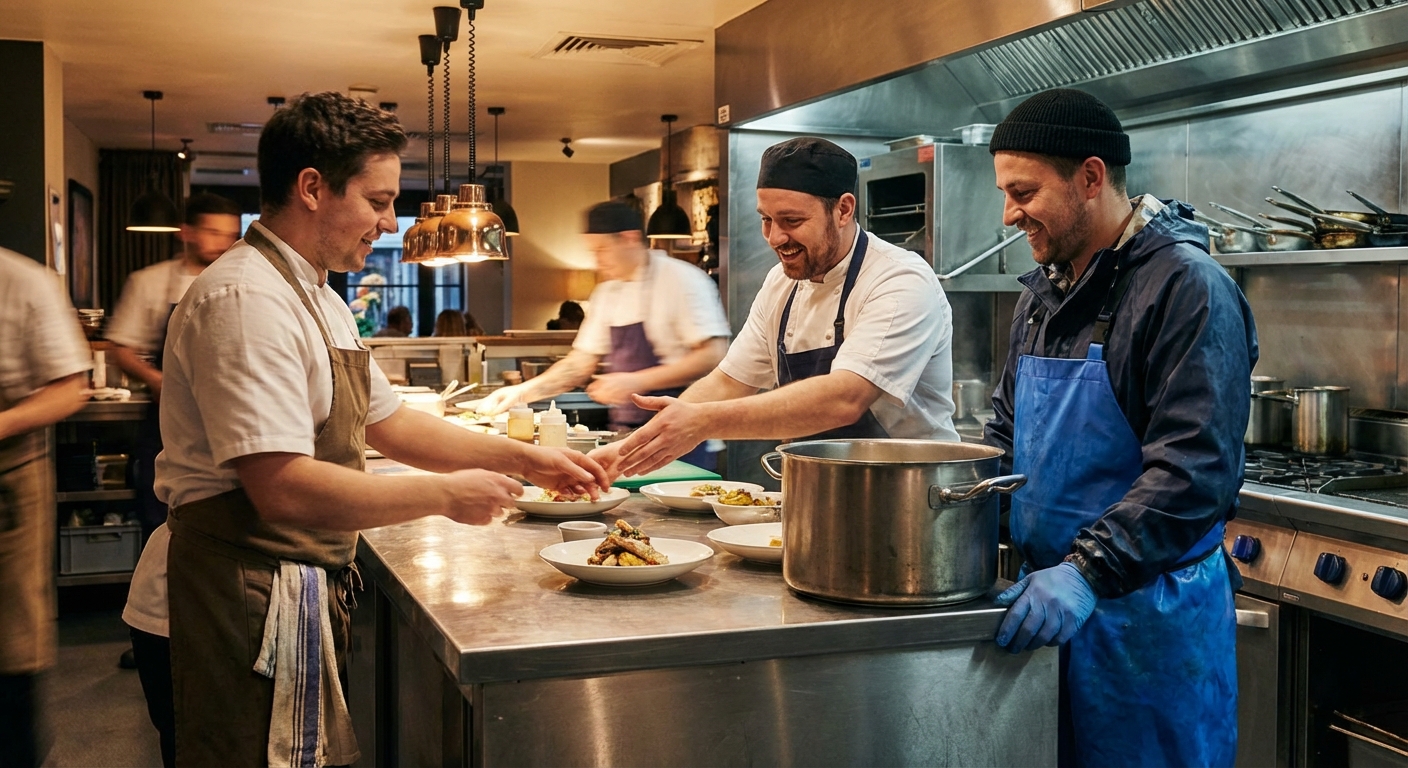
A float system allows you to operate with a leaner crew without sacrificing quality. When a server can also run the expo line or a dishwasher can handle basic prep, you can adjust to mid-shift rushes without calling in extra help. Comprehensive cross-training reduces the stress associated with call-outs and ensures that your existing labor is utilized effectively across the entire floor.
implement tableside and self-service technology
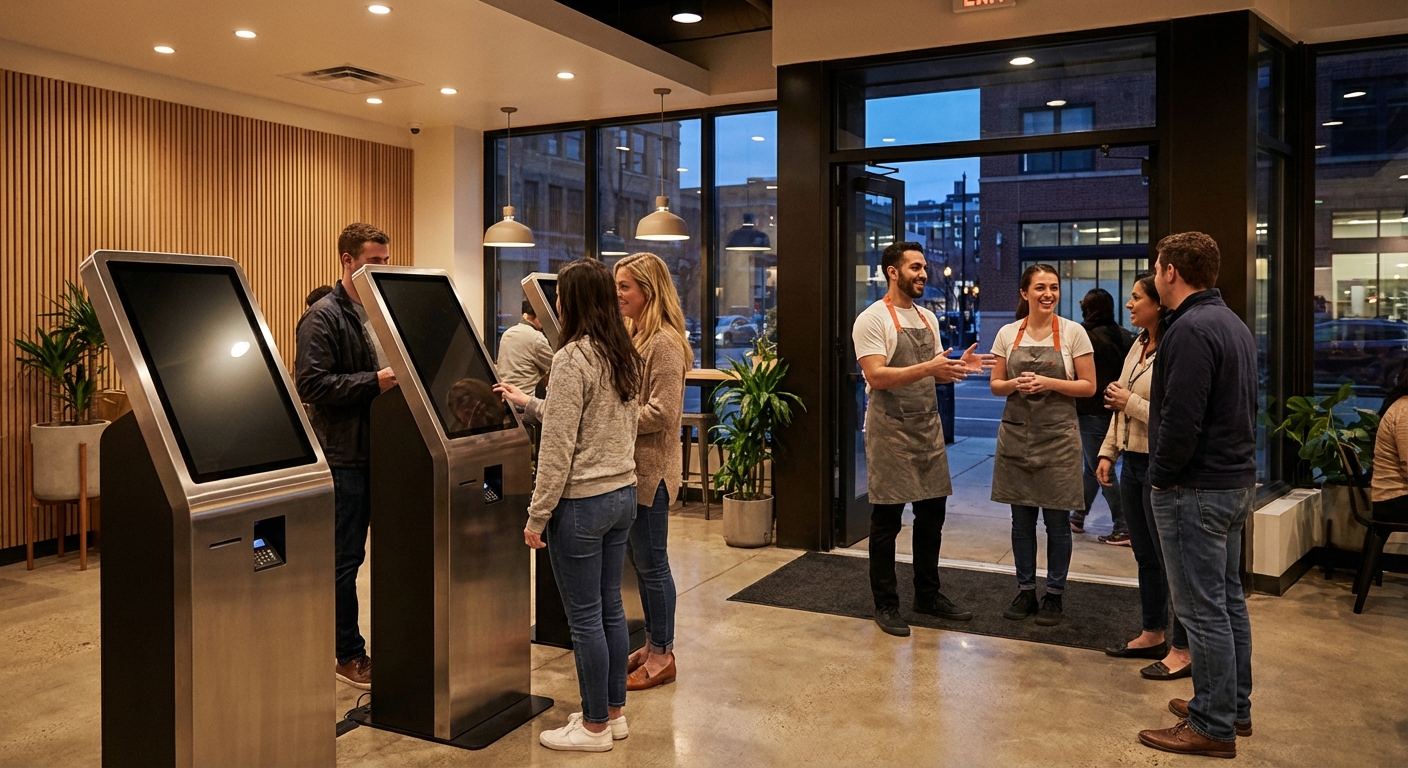
Technology acts as a force multiplier for your existing staff. Adopting tableside ordering can cut service time by 12%, allowing servers to handle 25% more tables without feeling overwhelmed. Furthermore, self-service kiosks can increase average ticket sizes by 15–30% while freeing up counter staff to focus on high-value hospitality tasks.
consolidate your technology stack
Managing multiple devices for different delivery apps is a labor-intensive nightmare that creates unnecessary friction. Every minute a staff member spends re-entering an UberEats order into your POS is a minute they are not serving a guest. Consolidating delivery platforms into a single interface can save between five and ten administrative hours per week, allowing you to redeploy that labor to the front of the house.
Controlling labor costs is a game of inches. A 2% improvement in labor efficiency on $1 million in annual sales puts $20,000 directly back into your pocket. The most effective way to gain this control is through data-driven decision-making.
Using an all-in-one platform like Spindl eliminates the need for manual reconciliation and provides real-time visibility into your labor versus sales. When you can see exactly when your labor cost is spiking mid-service, you can make the informed call to cut a shift or redeploy staff before the margin is eroded. Stop letting outdated systems turn your payroll into a liability and start using integrated management tools to ensure every hour worked contributes to your bottom line.