Future trends in restaurant POS and guest engagement technology
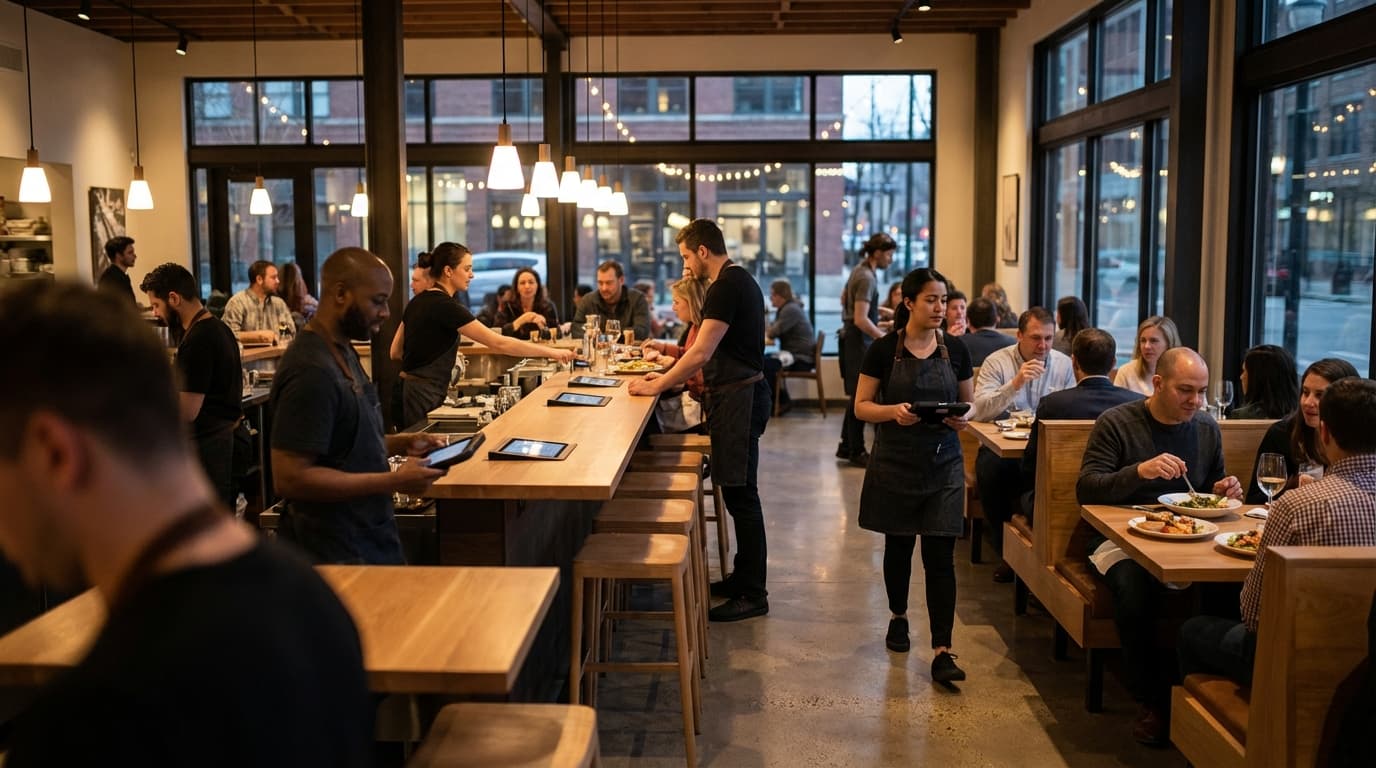
The restaurant technology market hit $59.3 billion in 2024 and will rocket to $314.85 billion by 2033 – a 16.39% compound annual growth rate that reflects operators voting with their dollars because their margins depend on it. If you're still treating your POS as a cash register, you're already behind.
Modern restaurant technology isn't about adding features. It's about orchestrating an entire operation from one platform. The chains pulling ahead aren't just automating; they're using integrated systems to personalize guest experiences, predict demand, and cut costs in real time. This isn't theory: 80% of restaurants plan POS upgrades in 2025 and 71% are increasing overall tech spending.
The question isn't whether to modernize. It's which trends to prioritize now and which to watch for 2026.
AI-powered POS moves from data collection to real-time decision making
The current wave of POS systems collects data. AI-powered POS makes decisions. 77% of restaurants with AI-integrated POS systems report increased efficiency, and early adopters are seeing 30% operational efficiency improvements. That's not vague productivity gains – it's AI surfacing which servers sell which items better, predicting when you'll run out of salmon based on weather forecasts, and automatically adjusting kitchen priorities during a rush.
Predictive analytics are replacing gut instinct. One steakhouse using integrated inventory analytics cut discarded ribeye from 15 pounds to zero weekly, saving $15,600 annually. Another operator discovered that carnitas bowls spiked 40% on rainy days and started prepping accordingly. These aren't outliers – they're examples of what happens when your POS anticipates problems instead of reporting them after the fact.
AI-powered personalization increases guest engagement rates by up to 20%. Your POS remembers a regular's "spicy tuna roll with no wasabi" and prompts servers to mention it. Or notices it's 95° with surplus watermelon inventory and suggests auto-generating a limited-time watermelon salad special. The system connects dots humans miss when they're in the weeds.
Voice recognition is arriving fast. 16% of operators plan to invest in AI voice integration in 2024, targeting drive-thrus and phone orders. The systems aren't perfect yet, but they're already faster than humans at peak times and they never forget to upsell fries. Implementation typically takes 3-4 months in phases: basic analytics first, then automated alerts, finally predictive recommendations.
Platforms like Spindl consolidate POS, analytics, and AI insights into a single interface so you're not juggling five dashboards to understand what's happening in your restaurant right now.
Unified platforms eliminate the margin-killing tech sprawl
Fragmentation kills margins. Restaurants using integrated POS systems report a 30% reduction in administrative task time – that's 12 hours per week freed up from redundant data entry and manual reconciliation. The old model demanded separate tablets for DoorDash, Grubhub, and UberEats, a different system for reservations, another for inventory, a bolt-on loyalty app, and a POS that doesn't talk to any of them. Every order gets rekeyed. Menu updates happen five times. Errors compound.
The new standard consolidates everything. 52% of enterprise restaurant businesses have adopted cloud-based POS platforms as of 2025, and independents are following suit. These systems unify order taking across dine-in, online, kiosk, and phone; aggregate all third-party delivery apps into one interface; track inventory with real-time deductions tied to recipes; forecast demand for labor scheduling; maintain unified guest profiles across all channels; and handle loyalty and CRM natively.
One Brooklyn restaurant saved $4,000 annually just by eliminating redundant delivery tablets and the error-driven comps that came with them. An eight-location pizza chain using a unified system added $42,000 in incremental revenue after analytics revealed peak ordering windows they'd been understaffing. The ROI shows up in both saved costs and captured revenue.
Integration depth matters more than feature count. 85% of restaurants now use POS data to reach diners via text, email, or browser – but only if your loyalty system actually syncs with your transaction data. Otherwise you're sending generic blasts instead of "You're 10 points from a free entrée."
Rollout typically happens over 2-3 months: POS first, then delivery integration, finally loyalty and advanced analytics. Staff training drops dramatically when everything uses the same interface. Spindl users report 25% faster onboarding and 15% higher retention because there's one system to learn instead of five.
Guest engagement evolves to personalization at scale
Generic promotions are dead. Segmented, behavior-triggered offers achieve 10-25% redemption rates compared to just 2-8% for untargeted promotions. Modern guest engagement isn't email blasts – it's real-time, cross-channel personalization powered by unified data. 59% of restaurant operators prioritize improving digital customer engagement, focusing on metrics like repeat visits and increased spend per customer.
Mobile dominates the engagement channel mix. Mobile app users have 45% higher customer lifetime value than web users, and 84% of Gen Z consumers prefer using apps to order food delivery. The app itself isn't the advantage – it's the data layer beneath it that enables meaningful personalization.
Behavioral triggers drive results. A guest who hasn't visited in 30 days gets a "we miss you" offer. Someone who orders takeout only gets invited to try a new dine-in experience. A regular who always orders on Fridays gets a Thursday reminder with a time-sensitive discount. Restaurants with personalized digital experiences see 20-35% higher repeat visit rates.
Cross-location guest tracking identifies multi-unit visitors for unified loyalty rewards – something impossible when each location runs standalone systems. One operator discovered a customer visited three different franchises in one week and made them a prime candidate for a subscription model.
Dynamic pricing and inventory-led promotions work in real time. It's 2 PM, your lunch rush died early, and you have 40 chicken breasts that need moving. Your POS auto-generates a happy hour chicken special, pushes it to your app, and texts your "afternoon regular" segment. One steakhouse's 4-6 PM happy hour increased bar revenue in that window by 35%.
AI-generated personalization takes this further. Imagine: "Based on your order history and the weather, you might like our new watermelon salad – first 50 customers get 20% off." Bank of America analysis shows personalization drives 25-95% profit increases. The key is unified guest data across every touchpoint – platforms like Spindl let you act on patterns in real time instead of discovering them three weeks later in a report.
First-party digital ordering reclaims margin from third-party apps
DoorDash takes 30%. Your own online ordering takes 3-5%. The math is brutal: a $30 order through DoorDash nets you about $21 after commission and fees. The same order through your own channel keeps $28-29. Restaurants with robust direct ordering systems see takeout profit improvements up to 30% higher than those relying solely on third-party delivery services.
40% of restaurant brands identify first-party digital ordering as their highest revenue growth driver for 2025. The shift is happening because 85% of all customers expect restaurants to offer digital ordering options, and KFC projects 54% of QSR sales will be digital by 2025.
Operators winning this race have deployed QR code ordering at tables – QR adoption surged 750% during the pandemic and 66% of restaurants now use QR codes. One cafe saw kiosk orders average 1.8 add-ons versus 0.9 with a cashier, purely because guests browse at their own pace without feeling rushed.
Branded mobile apps with integrated loyalty programs drive even stronger results. 85% of QSR brands now rely on mobile-friendly loyalty programs. Starbucks generates about 30% of U.S. transactions through its mobile app by tying ordering to personalized offers. One 400-store retailer grew direct sales from $12M to $17M in peak season after consolidating delivery platforms while keeping customer data and margin in-house.
Native delivery management that still uses third-party logistics offers the best of both worlds: you keep the customer data and margin while DoorDash handles the driver. Implementation takes 4-6 weeks for basic QR and online ordering, another 2-3 months to build an app with loyalty. One operator saved approximately $58,000 annually across three locations by migrating orders from third-party to first-party channels.
Strategic operators don't go to war with aggregators – they use third-party apps for discovery and first-party channels for retention. Your goal: convert a DoorDash first-timer into an app regular.
Self-service and contactless become table stakes
Self-service isn't a pandemic holdover – it's the new baseline. Self-service kiosks increase average order values by 15-30% because guests browse without pressure and see every upsell option. The technology has matured beyond fast food. Casual dining chains are rolling out tableside tablets, fine dining uses QR codes for wine lists, and quick-service operators report kiosks paying for themselves in under six weeks.
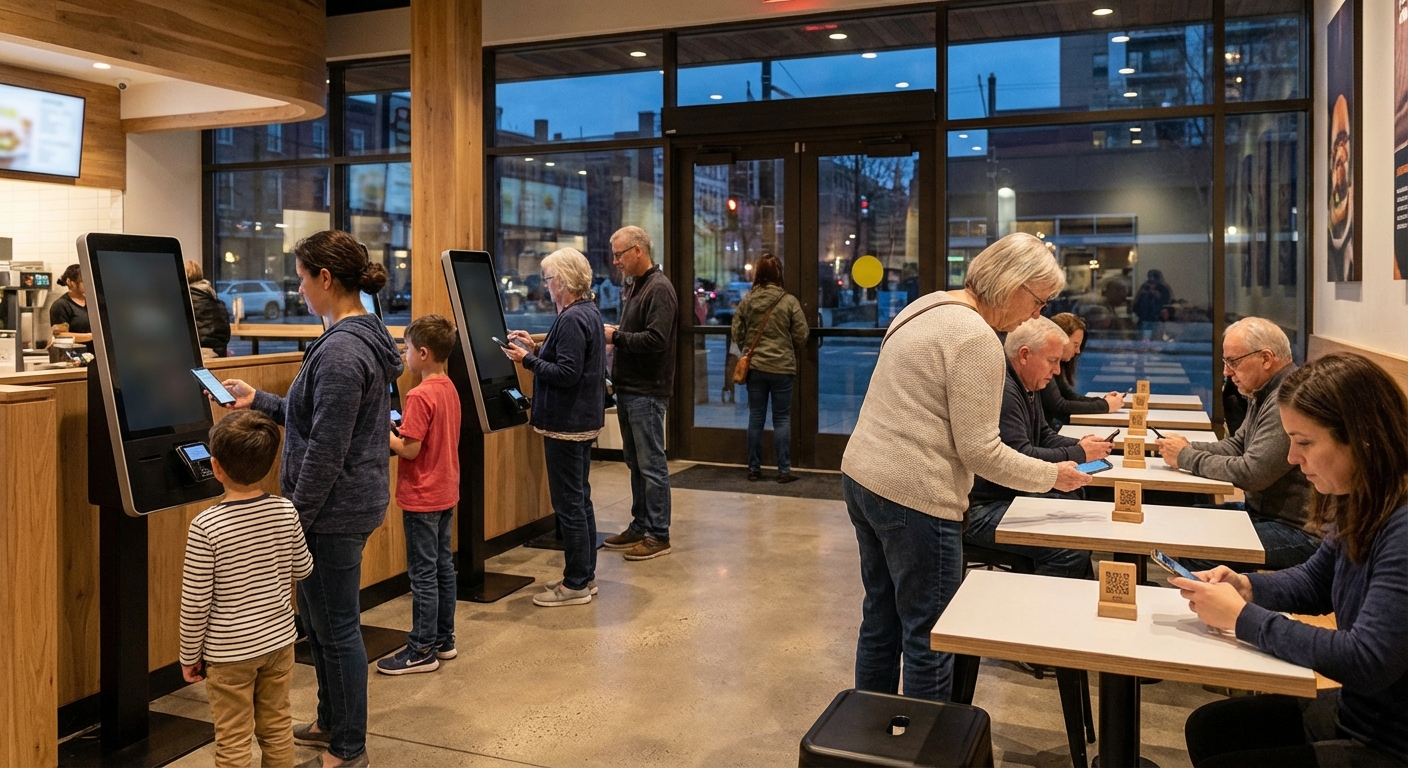
Contactless payment solutions shorten end-of-meal checkouts by 5-10 minutes per table, which translates to 10-15% higher revenue per service period during peak hours. Apple Pay, Google Wallet, and tap-to-pay have become baseline expectations, not differentiators. Faster checkouts mean higher table turnover during rush periods and fewer bottlenecks at the register.
Voice-enabled kiosks and AR menu visualization are arriving next. Some chains are testing kiosks that take spoken orders – early tests show they're faster for groups ("two cheeseburgers, one with no pickles, and three fries") but struggle with accents and background noise. AR menus showing 3D renderings of dishes are in pilot; diners can see exactly what the $22 seafood risotto looks like before ordering.
Start with QR ordering for the fastest ROI and minimal hardware investment, then add kiosks if you have order accuracy or speed issues. Train staff to guide first-time users through the first few taps – adoption spikes when someone shows a guest once. Spindl's self-service platform is fully customizable to match your brand and integrates directly with your POS and kitchen display so orders flow seamlessly whether a guest orders at a kiosk, from their table via QR, or with a server.
Loyalty programs shift from punch cards to predictive engagement
Generic loyalty is noise. Data-driven loyalty programs drive 15-25% redemption rates versus under 10% for bolt-on systems. 85% of QSR brands now rely on mobile-friendly loyalty programs, but the differentiator isn't the app – it's the intelligence layer. Cross-location guest tracking identifies multi-unit visitors for unified loyalty rewards, something impossible when each location runs standalone systems.
Tiered programs outperform points-only structures. Chipotle's loyalty members visit twice as often as non-members, and tiered programs boost engagement by 22% by offering experiential perks like early access to new items or exclusive menu items instead of just discounts. Guests care more about status and access than another free appetizer.
Subscription models are emerging as a powerful retention tool. Panera's Unlimited Sip Club ($11.99/month) and Taco Bell's Taco Lover's Pass ($10/month) are early experiments. The math works when your target break-even is 8-12 uses per month and your subscribers average 10 – they visit more, spend more per visit on add-ons, and lock in recurring revenue.
Predictive churn scoring represents the next evolution. AI flags guests trending toward lapsing – for example, visit frequency dropped from weekly to biweekly – and triggers automated win-back offers before they're fully gone. One casual-dining chain using predictive engagement saw service times drop 15% and customer satisfaction rise 22% after integrating loyalty with feedback tools to act on early warning signs.
Implementation starts with POS integration. If your loyalty system doesn't automatically accrue and redeem points at checkout, staff won't use it consistently and your data will be garbage. Consolidated platforms like Spindl handle loyalty natively – points accrue whether the guest orders in-store, online, via kiosk, or through delivery. One regional group saw loyalty transactions jump 56% and average checks rise 12% after moving from a standalone loyalty app to an integrated stack because seamless accrual and real-time redemption nudges work better than manual entry.
Real-time analytics replace backward-looking reports
Reporting what happened last week is useless. Your tech should tell you what's happening now so you can fix it mid-shift. Fewer than 50% of operators have real-time visibility even though 80% want it. That gap is the competitive opportunity.
Real-time dashboards surface live sales versus forecast – if you're 20% below projection at 7 PM, send a server home or push a flash promo. Kitchen ticket times by station let you expedite or shift labor before the dinner rush crashes. Top-performing and underperforming items today tell you what to 86 and what to promote. Server performance and upsell rates in real time identify coaching opportunities during the shift, not three days later.
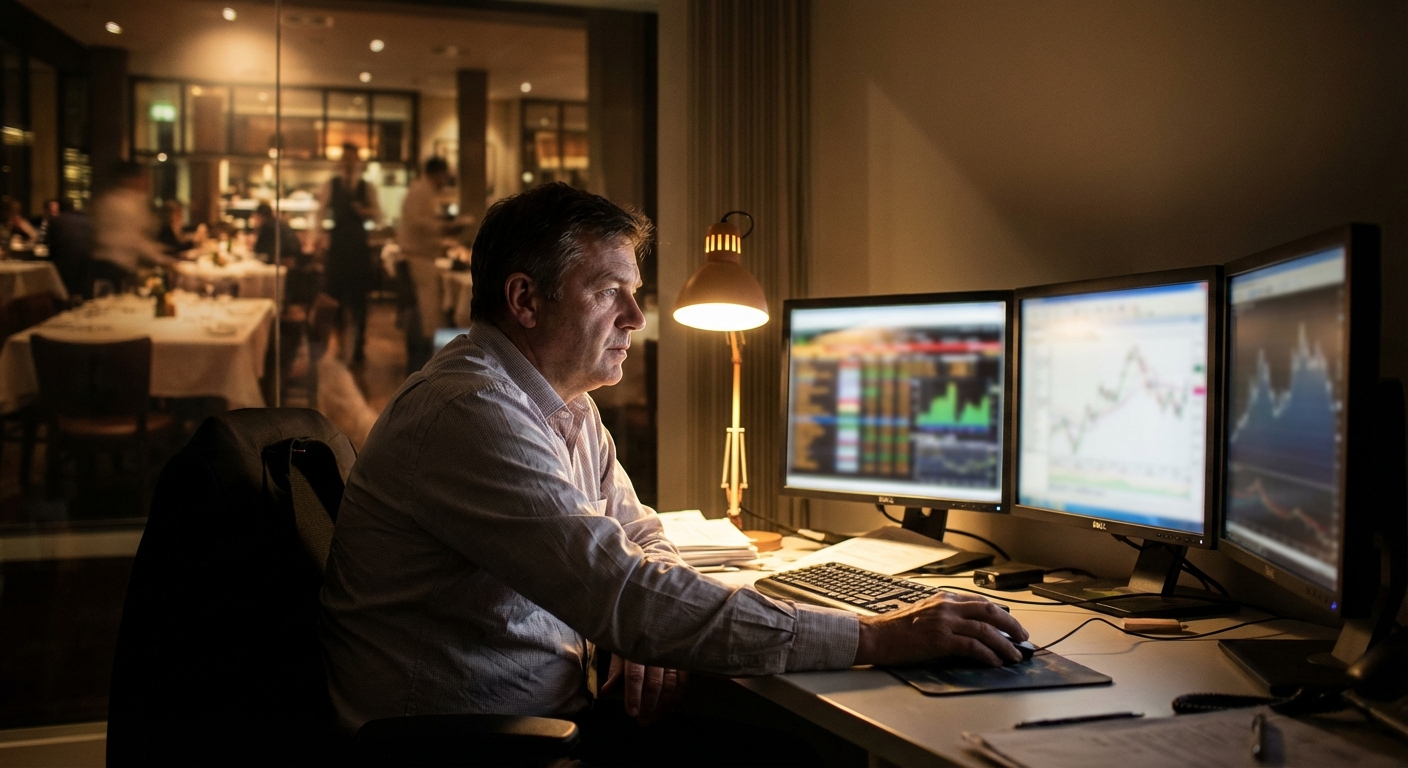
One Maine seafood restaurant discovered servers could handle 25% more tables when analytics revealed their tableside-to-KDS flow eliminated bottlenecks. They didn't hire more staff – they optimized the workflow using data they already had but couldn't access in real time.
Automated alerts beat manual monitoring. Set thresholds: order accuracy below 98%? Alert the manager. Mushroom inventory down to five portions at 5 PM on a Friday? Auto-suggest a special to move remaining stock before reordering. These triggers turn passive dashboards into active management tools.
Adoption hinges on simplicity. Managers won't check a complex dashboard during a rush. Platforms like Spindl surface 5-7 core KPIs on a single screen: sales per labor hour, top items, current average check, table turn time. The advanced stuff lives in a deeper menu for end-of-day review. You need actionable intelligence in three seconds, not after five minutes of digging through reports.
What's coming in 2026 and beyond
The technology roadmap is clear. Hyper-personalization powered by unified data will let AI auto-generate offers based on real-time context: weather, inventory, guest history, time of day. Example prompt: "It's raining, you have extra chicken, and this guest loves spicy food – suggest our new Nashville hot chicken sandwich." The infrastructure exists; the challenge is connecting the data streams.
Computer vision in kitchens will verify portion sizes, check plating consistency, and flag quality issues before food leaves the pass. Early pilots show promise for training and waste reduction, but privacy concerns and staff trust remain hurdles. Cameras watching every plate creates tension unless benefits are clearly communicated and shared.
Voice ordering will expand beyond drive-thrus to phone lines and even tableside voice commands. The tech needs another 12-18 months to handle noisy environments reliably, but the ROI is massive – McDonald's is already testing AI voice ordering nationwide. When it works, it's faster and more consistent than humans.
Dynamic pricing tied to demand and inventory is inevitable. Airlines and hotels do it; restaurants will too. Happy hour becomes "right now hour" when your 6 PM reservations are light. Surge pricing during peak times funds deeper discounts when you need to fill seats. Expect regulatory scrutiny and guest backlash initially – transparency will be key. Show guests why the price changed and most will accept it.
IoT-connected kitchen equipment is arriving. Your fryer tells your POS it needs cleaning before it fails. Your walk-in alerts you when the temperature spikes. Your oven adjusts cook times based on how loaded the kitchen is. These systems exist but remain enterprise-priced; they'll trickle down to mid-market by 2026 as costs drop and reliability improves.
Build your 2025 technology roadmap around your biggest pain point
Don't try to adopt everything at once. Start with your biggest operational pain point and work outward.
If order errors are killing you: Implement a kitchen display system and unified POS. Target 98% accuracy within 90 days. Budget 3-4 weeks for installation and training. The ROI shows up immediately in reduced waste and fewer comps.
If labor costs are out of control: Add AI-driven scheduling and real-time labor analytics. Expect 5-15% labor savings within six months. One 40-seat diner cut labor costs 9% in six months, saving roughly $13,500 on a $500K revenue base.
If third-party commissions are crushing margins: Launch first-party online ordering and a mobile app with loyalty. Migration takes 6-12 months, but restaurants reclaiming margin see 30% higher takeout profits long-term.
If guest retention is weak: Integrate loyalty with your POS and build automated marketing triggers. Well-designed programs boost retention by 23%, and loyalty members represent 39% of total restaurant visits, up from 19.5% in 2019.
Evaluate platforms on integration depth, not feature lists. A unified system that does seven things well beats ten disconnected tools. Ask vendors: Does your POS natively integrate with delivery apps, or is it a third-party plugin? Can I see real-time analytics during service, or only end-of-day reports? Does loyalty accrue automatically at checkout, or does staff need to ask? How long until my team is productive – days or weeks?
Spindl consolidates ordering, delivery, POS, self-service, loyalty, and analytics into one platform so operators don't juggle five systems. Onboarding typically takes 2-3 weeks instead of 2-3 months because there's one interface to learn, not five.
The competitive reality demands action now
Your competitors are already upgrading. With 80% of restaurants planning POS upgrades in 2025 and 71% increasing overall tech spending, standing still is falling behind. The operators winning in 2025 aren't just collecting data – they're using unified platforms to act on it in real time, personalizing every guest interaction, and reclaiming margin from third-party apps.
They've moved from fragmented systems to integrated stacks that let them run an entire operation from one device. Technology isn't replacing hospitality – it's removing friction so your team can focus on the guest instead of wrestling with five tablets and three login screens.
The question isn't whether to modernize your POS and engagement stack. It's whether you can afford to wait another quarter while your competitors pull further ahead. Start with one pain point. Fix it this month. Then layer in the next capability. The restaurants that will still be here in 2030 are treating technology as core infrastructure, not a nice-to-have.
Ready to see what a truly integrated restaurant platform looks like? Explore Spindl's features or dive deeper into how AI and analytics are transforming restaurant operations.