Frigjør 12 timer i uken: Slik lykkes du med digital transformasjon i restauranten
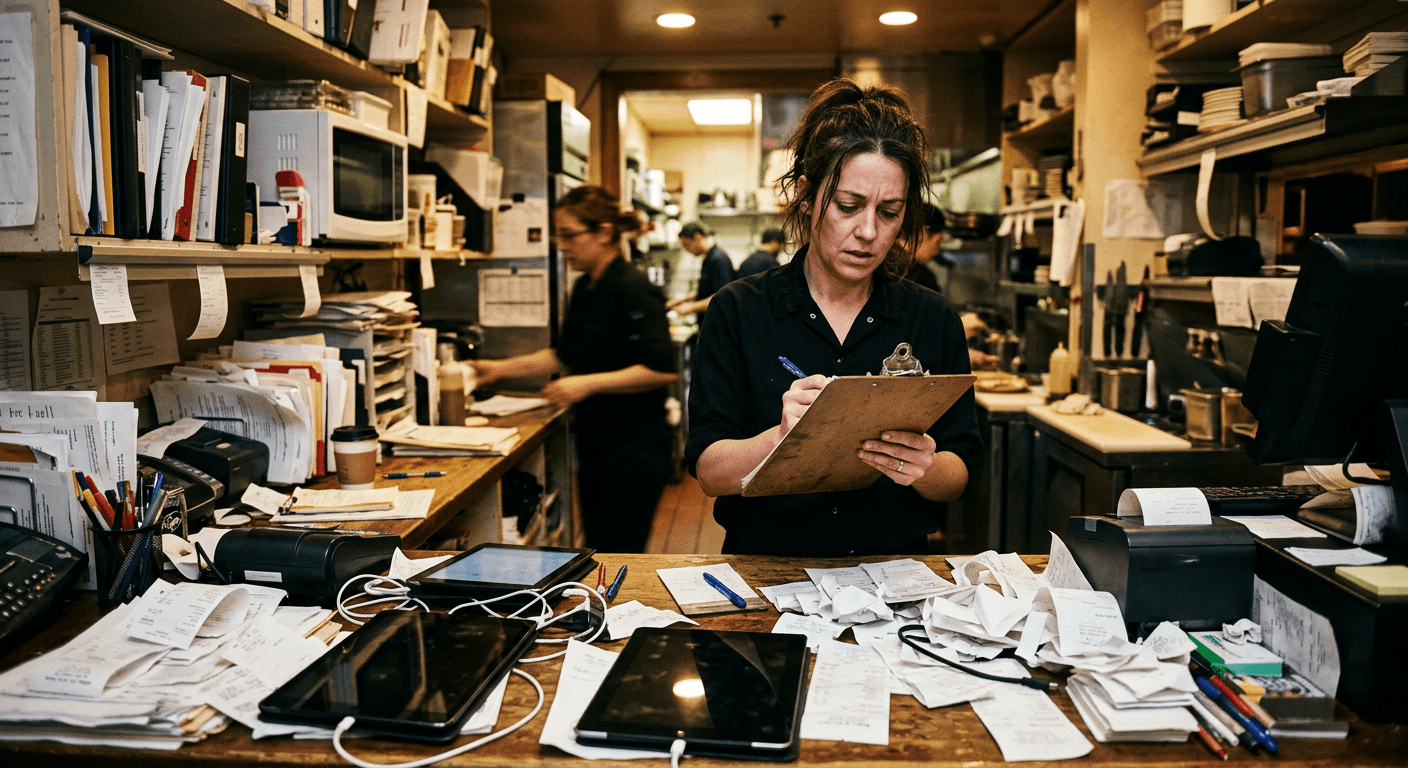
Bruker du fortsatt penn og papir til varetellingen mens du sjonglerer fire ulike nettbrett fra leveringstjenester? Da kaster du sannsynligvis bort 12 timer hver eneste uke på administrativt merarbeid og manuelt rot. Ved å modernisere teknologien kan du vinne tilbake dyrebar tid og samtidig sikre marginene dine i et krevende marked.
Fra "nettbrett-park" til en samlet driftsløsning
For mange restauranter har digitalisering i praksis betydd å stadig legge til nye skjermer og systemer. Resultatet er ofte en uoversiktlig "nettbrett-park" med enheter som ikke snakker sammen. Ekte digital transformasjon handler om det motsatte: å samle alle disse isolerte verktøyene i ett felles operativsystem for restauranten.
Ved å gå over til en enhetlig plattform slipper du manuelt etterarbeid og tidkrevende avstemming av ulike rapporter. Restauranter som tar i bruk integrerte kassasystemer (POS), rapporterer om en reduksjon i administrative oppgaver på hele 30 %. Forskjellen tilsvarer overgangen fra en utdatert mobiltelefon til en moderne smarttelefon; ved å sentralisere arbeidsflyten skaper du et digitalt "sentralnervesystem" som koordinerer hele driften fra bestilling til betaling.
Effektive strategier for en moderne restaurantdrift
For å få rask avkastning på investeringen bør du starte med flaskehalsene som skaper mest frustrasjon for både gjester og ansatte. På kjøkkenet er papirbonger ofte en kilde til feil – de forsvinner, blir uleselige i stresset eller havner i feil rekkefølge. Et kjøkkenskjerm-system (KDS) samler alle bestillinger fra lokalet, nettsiden og eksterne apper i én felles digital kø. Dette har hjulpet drivere med å redusere antall feilbestillinger fra 12 % til under 3 %, noe som gir et umiddelbart utslag på matsvinnet.
Lagerstyring er et annet område der automatisering gir store gevinster. Når kassasystemet er integrert med varelageret, trekkes ingredienser automatisk ved hvert salg. En slik sanntidsoversikt over lagerbeholdningen kan senke råvarekostnadene med 3–5 %. For en restaurant med 10 millioner i omsetning betyr dette at opptil 500 000 kroner går rett tilbake på bunnlinjen hvert år. Et konkret eksempel er et biffhus som ved hjelp av datadrevne målinger reduserte svinn på indrefilet fra sju kilo til null per uke – et bevis på at presise data slår intuisjon.
Gjestenes forventninger har også endret seg. Hele 85 % av kundene forventer nå digitale bestillingsløsninger som en selvfølge. Selvbetjente kiosker kan øke gjennomsnittlig ordreverdi med 15–30 % gjennom automatisk mersalg, mens QR-koder på bordene reduserer tiden det tar å betale med 5 til 10 minutter per bord. Denne effektiviseringen gjør at servitørene kan håndtere 25 % flere bord uten at det går på bekostning av gjesteopplevelsen.
Datadrevet markedsføring og lojalitet
Digital transformasjon gjør at du kan slutte å famle i blinde med markedsføringen. Ved å integrere lojalitetsprogrammet direkte i kassasystemet, får du innsikt i hvem dine mest verdifulle kunder er. Målrettede kampanjer via e-post og SMS kan gi 20–35 % flere gjenbesøk. I stedet for generelle rabatter kan du sende personlige tilbud på gjestens favorittrett basert på deres faktiske kjøpshistorikk.
Å prioritere egne bestillingskanaler er også avgjørende for å beskytte marginene. Tredjepartsapper tar ofte mellom 15 % og 30 % i kommisjon, noe som spiser opp mye av overskuddet. Ved å etablere ditt eget system for nettbestilling, endres regnestykket drastisk. En bestilling på 450 kroner gir typisk en dekningsgrad på 38 % ved direktebestilling, sammenlignet med bare 6 % via eksterne tjenester. Bruk de store markedsplassene til å bli oppdaget, men flytt stamkundene over til din egen plattform.
Slik gjennomfører du overgangen
Digitalisering trenger ikke å skje over natten. En etappevis utrulling sikrer at de ansatte rekker å mestre nye rutiner uten at det går utover serveringen.
- Identifiser flaskehalsene: Finn ut hvor skoen trykker mest, enten det er kaos med nettbrett, manuell varetelling eller treg bordrotasjon.
- Velg en helhetlig løsning: Se etter teknologi som er så intuitiv at de ansatte er produktive etter bare ett eller to skift.
- Opplæring og eierskap: Utnevn en "superbruker" som leder overgangen og viser teamet hvordan de nye verktøyene reduserer det daglige arbeidspresset.
- Analyser og juster: Bruk salgsdata i sanntid til å optimalisere menyen. Hvis en rett er populær, men har lav margin, kan du bruke den digitale menyen til å justere pris eller oppskrift umiddelbart.
Fra gjetting til kontrollert vekst
Gapet mellom teknologisk fremoverlente restauranter og de som henger etter, blir stadig større. Digital transformasjon handler ikke om å erstatte den menneskelige servicen, men om å automatisere de tidkrevende oppgavene slik at teamet ditt kan fokusere på gjestfrihet. Ved å samle kasse, levering og analyse i ett system, eliminerer du kostbare manuelle feil og vinner tilbake kontrollen over din egen tid.
Er du klar for å se hvordan et samlet operativsystem kan transformere din drift? Utforsk mulighetene i Spindl og ta det første steget i dag.