Real-time restaurant analytics: how to boost margins mid-shift
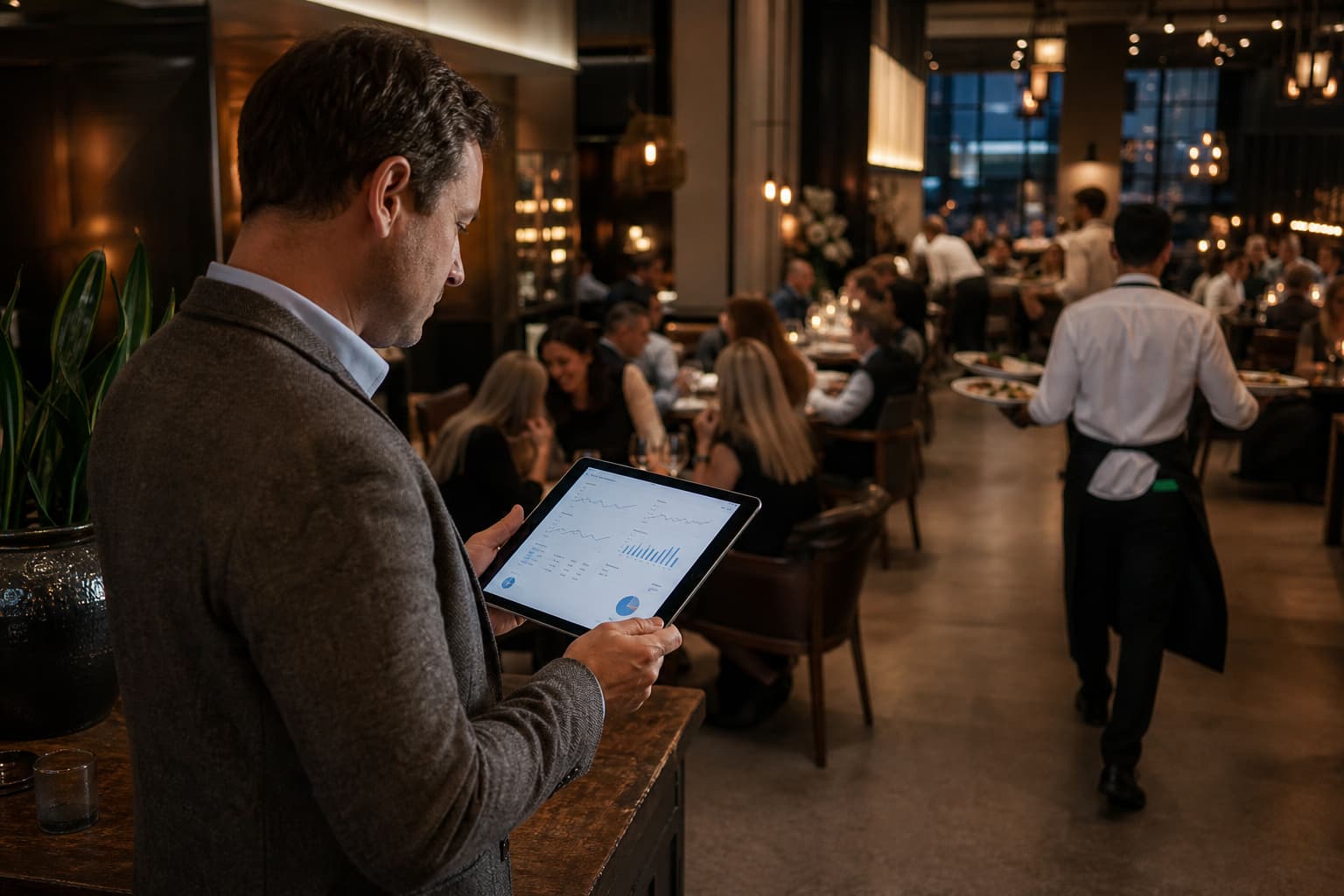
Are you tired of discovering yesterday's costly operational mistakes on tomorrow morning's spreadsheets? When a Friday night rush hits, waiting for end-of-week reports means you are already too late to fix leaking margins.
Real-time sales data analytics changes the game. Instead of reacting to yesterday's problems, you make decisions during service based on what is happening right now in your dining room, kitchen, and across every delivery channel.
Defining real-time restaurant analytics
Real-time analytics converts your POS transactions, delivery orders, inventory movements, and customer interactions into actionable insights within seconds. You see what is selling, where bottlenecks are forming, and which servers are driving revenue while service is still happening.
The difference is fundamental. Traditional reporting tells you what happened last week. Real-time analytics tells you what is happening right now so you can act before the night spirals out of control.
For a complete blueprint on leveraging live data, master real-time analytics for restaurant management to optimize your operations.
Why spreadsheets fail modern restaurant teams
Most restaurant managers still pull reports the morning after service. You discover your new appetizer bombed after you have already prepped another 40 portions for tonight. Or you realize lunch delivery orders spiked 35% on Tuesdays after you have been understaffing that shift for three weeks.
Real-time data eliminates this lag. Your point-of-sale system is the primary source of this live data, automatically capturing transactions from in-store payments, online ordering, and delivery apps. By streamlining operations with POS and analytics, you gain a central nervous system that replaces slow manual reporting with automated workflows.
When your systems share data instantly, you stop guessing and start knowing.
Key metrics to track in real-time
Not all data is equally useful during service. To make effective mid-shift decisions, focus on metrics that enable immediate action:
- Sales velocity by daypart: Track if you are trending ahead or behind your historical averages.
- Average check size: Monitor how effectively your floor team is upselling.
- Kitchen ticket times: Catch line backups before they impact guest satisfaction.
- Table turnover rates: Monitor front-of-house flow to optimize seating capacity.
- Stock levels: Track high-cost ingredients to prevent sudden 86s or food waste.
Learn how to interpret these data points effectively by using best practices for POS analytics. Keeping an eye on these numbers helps you maintain healthy prime costs and stay within the target food cost benchmark of 28% to 32% of revenue.
Controlling food costs and reducing waste
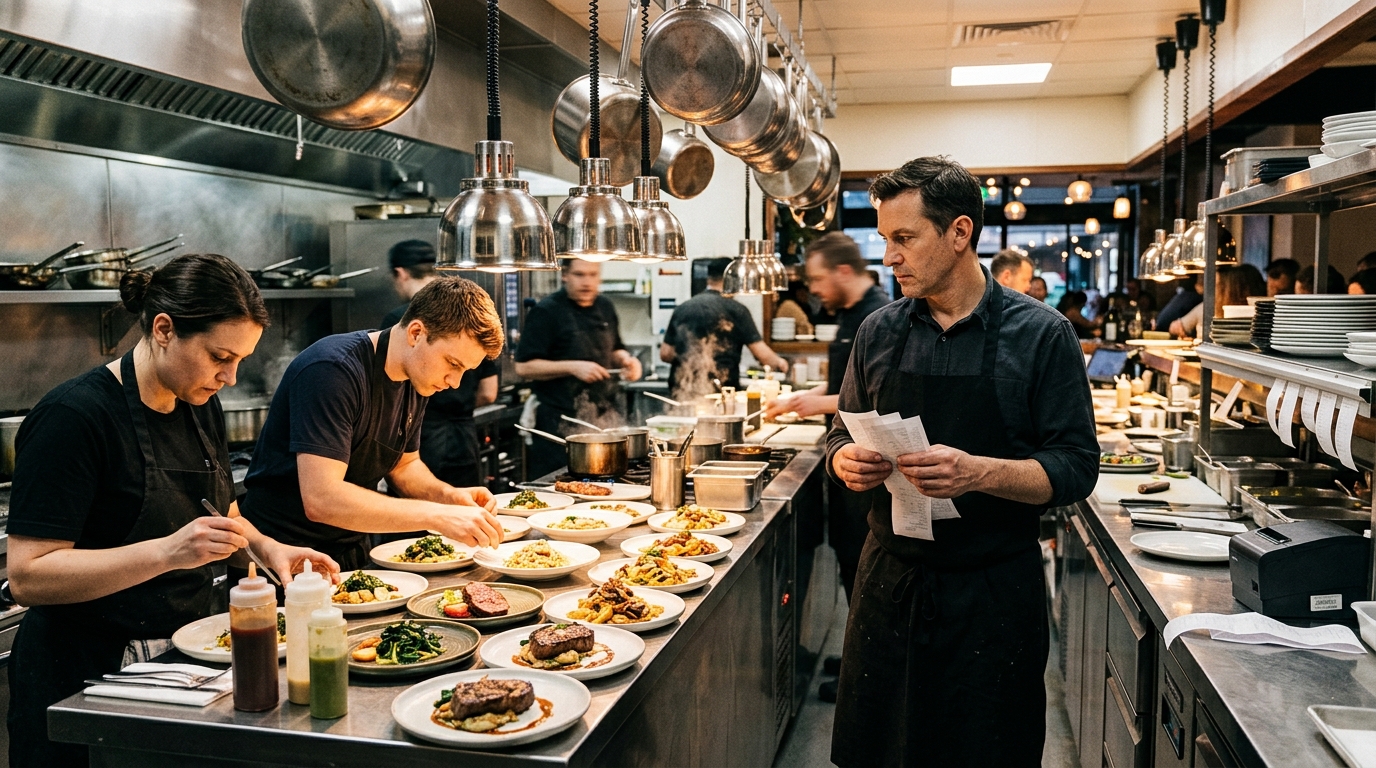
Food and labor represent your largest variable costs. Integrating your POS data directly with inventory systems allows you to optimize ingredient projections and slash waste:
- Prevent overstocking: Align stock levels with live demand instead of using static templates.
- Spot variance instantly: Compare theoretical usage with actual inventory to identify portioning errors or theft.
- Optimize prep sheets: Adjust batch prep sizes based on real-time order volume mid-shift.
For example, a busy steakhouse used data-driven tracking to drop discarded ribeye from 15 to 0 pounds weekly. If you want to stop guessing your ingredient needs, focus on integrating POS with inventory systems to keep your cost of goods sold tight.
Improving customer experience and retention
Operational speed means nothing if guests do not return. Real-time data lets you monitor customer behavior, loyalty engagement, and satisfaction signals as they happen.
- Personalize dining visits: Check guest preferences and allergies from previous transactions.
- Automate targeted engagement: Set triggers to send "We miss you" promotions to guests who have not visited in a month.
- Track quantitative loyalty metrics: Monitor customer retention rates, repeat purchase frequencies, and customer lifetime value.
Consolidating guest data across your physical and digital touchpoints is critical. If you want to build deep customer profiles, choose the best CRM software for restaurants to unify your loyalty, online ordering, and dine-in data. You can also study the broader digital transformation impact on customer experience to see how modern brands eliminate friction.
Building a dashboard that actually works
A great real-time dashboard is not the one with the most charts. It is the one your managers can actually use on the floor.
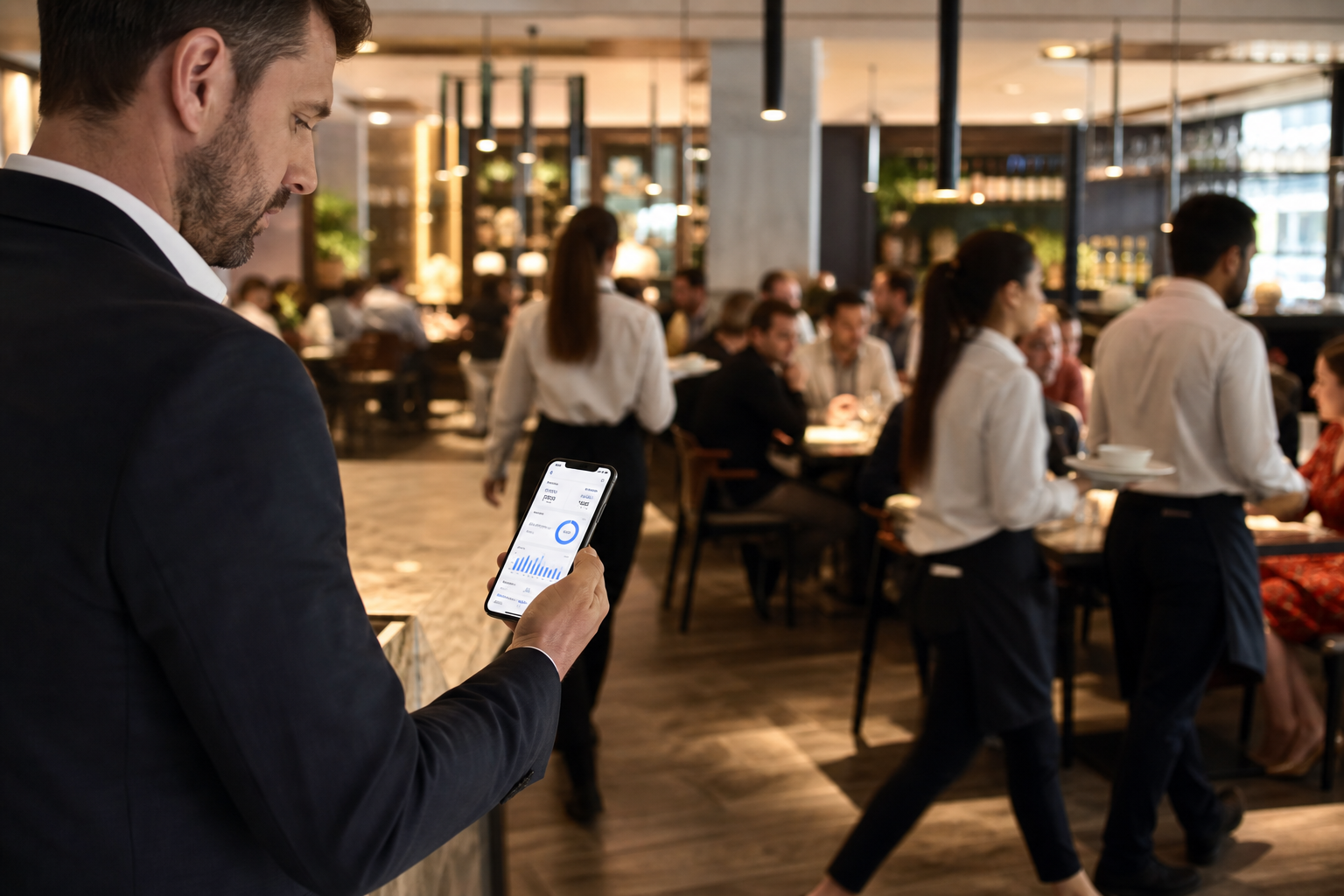
- Design for mobile-first access: Ensure managers can check metrics from the floor, not run to the back office.
- Create role-specific views: Your kitchen expo only needs ticket times and station loads, while your GM needs labor overlays.
- Set up visual alert thresholds: Build simple if-then rules, like turning ticket times red if they exceed targets for more than 15 minutes.
To manage all of this without juggling multiple systems, look into the best restaurant management software to unify your POS, delivery apps, and analytics.
If clicking through dashboards still feels too slow, you can use AgenticPOS to control your POS using AI. Connect AgenticPOS to your current system and manage menu items, pricing, shifts, and promotions directly through Claude, ChatGPT, or Slack. Start free with AgenticPOS on the system you already have, scale to Pro as your multi-location operations grow, and transition to the full Spindl OS when you are ready to retire your legacy stack.
Scaling analytics for multi-location groups
Managing one location is hard. Managing five without live data is nearly impossible. If you operate multiple units, real-time analytics helps you standardize performance:
- Standardize your tech stack: Ensure every location uses the same POS and inventory setup to compare apples to apples.
- Build real-time scorecards: Rank locations dynamically on key metrics to drive healthy competition.
- Centralize purchasing: Use system-wide real-time inventory levels to enable smarter, volume-based ordering.
When you build your restaurant financial projections, incorporate real-time data to construct accurate, bottom-up revenue models. You can also read through real-world analytics success stories to see how top brands use historical data to guide expansion.
Avoid common implementation pitfalls
Do not let these common hurdles derail your data-driven transition:
- Analysis paralysis: Avoid tracking dozens of vanity metrics. Stick to your core key performance indicators.
- No action protocols: Data is useless without an action plan. Define exactly what your team should do when a metric crosses a specific threshold.
- Ignoring staff input: Build dashboards based on what floor managers and kitchen staff actually need to make mid-shift decisions.
Maximize your operational efficiency
Restaurants operating without real-time analytics are making decisions based on outdated information. Your competitor down the street is already adjusting staffing on the fly, preventing waste in real-time, and optimizing their menu based on live sales data.
The technology exists. The ROI is proven. The only question is whether you will implement it before your competition does.
Ready to see what real-time visibility into your operations actually looks like? Explore Spindl's all-in-one restaurant management platform that unifies POS, delivery, analytics, and loyalty into a single device – so you can stop juggling systems and start making smarter decisions during service.