Spindl vs SumUp: Choosing the right POS for your restaurant
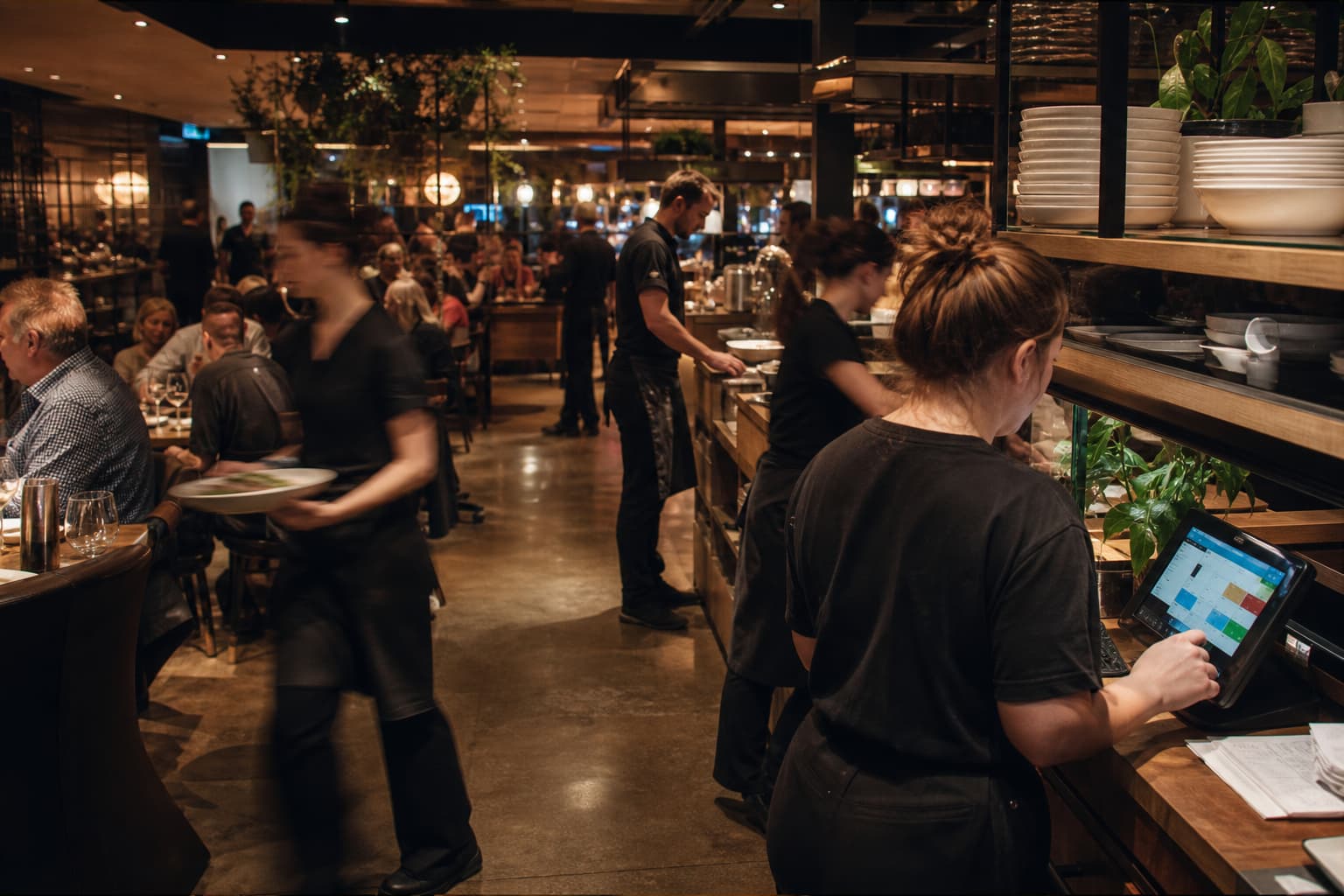
Juggling multiple tablets during a Friday night dinner rush is a recipe for cold food and stressed staff. If you are choosing between Spindl and SumUp, the decision comes down to one question: do you need a simple card reader, or a complete restaurant operating system?
The core architectural difference
Think of SumUp like a reliable, older-generation mobile phone. It does one or two things – like taking payments and running basic checkouts – exceptionally well. It is built primarily for mobile merchants, coffee carts, and small pop-ups that just need to swipe cards and print simple receipts.
Spindl, on the other hand, is built like a modern smartphone. It acts as a comprehensive, integrated restaurant operating system. Instead of forcing you to use separate hardware for online orders, third-party delivery services, and tableside ordering, Spindl consolidates your entire front-of-house and back-of-house workflow into a single device.
If you are running a fast-casual spot, a full-service dining room, or a delivery-heavy kitchen, running on disconnected hardware will eventually bottleneck your growth. To see how these compare with other major market players, check out our restaurant POS system comparison.
Spindl: Built for complete operational integration
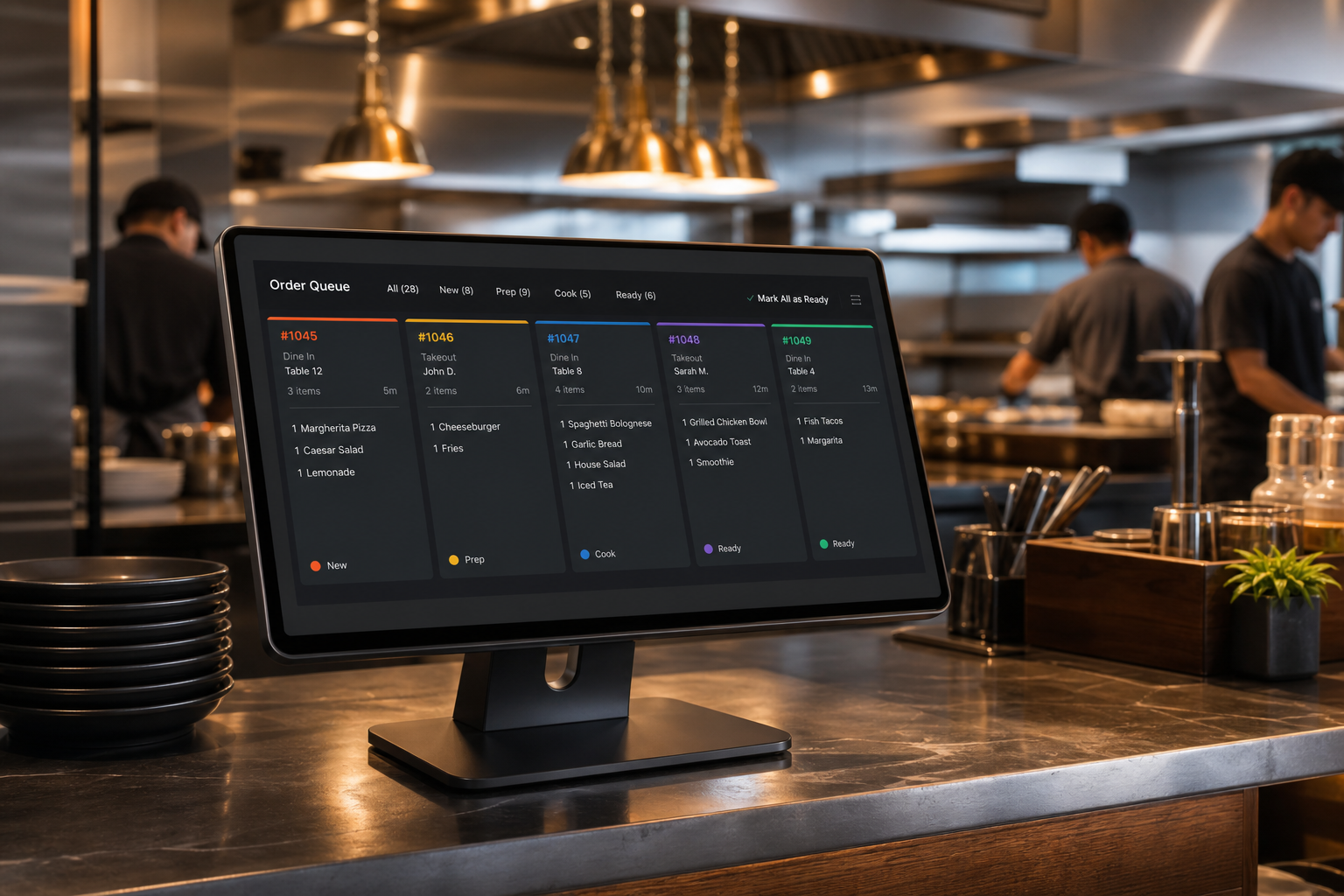
Spindl is engineered to eliminate "tablet chaos" by routing all your order channels – dine-in, delivery apps, self-service kiosks, and online orders – into one master queue. It serves as the digital backbone of your business, pairing robust hardware with deep back-office capabilities.
Key features
- Unified delivery management: Rather than maintaining separate tablets for DoorDash, Uber Eats, and Grubhub, Spindl pulls every marketplace order directly into your central point-of-sale system.
- Cohesive hardware ecosystem: Spindl supports a full suite of hardware, including Kitchen Display Systems (KDS) to replace paper tickets, integrated tableside payment terminals, and self-service kiosks designed to capture customer data and lift check sizes.
- Seamless table management: Easily open, close, move, and merge tables directly from your tablet to speed up service.
- Customer loyalty: Enroll guests and manage profiles right at the point of sale to drive repeat visits.
Spindl pricing
Spindl offers straightforward pricing with no long-term contracts:
- Lite Plan: Starting from €199/month for teams that only need the essential POS and Backstage features for one location.
- Pro Plan: Priced at 2.29% per card transaction. Under the Pro tier, the POS software itself is free. Spindl collects small daily deductions based on your actual transaction volume, eliminating massive monthly billing shocks. Check out the details on the Spindl pricing page.
SumUp: Simple, mobile-first payment processing
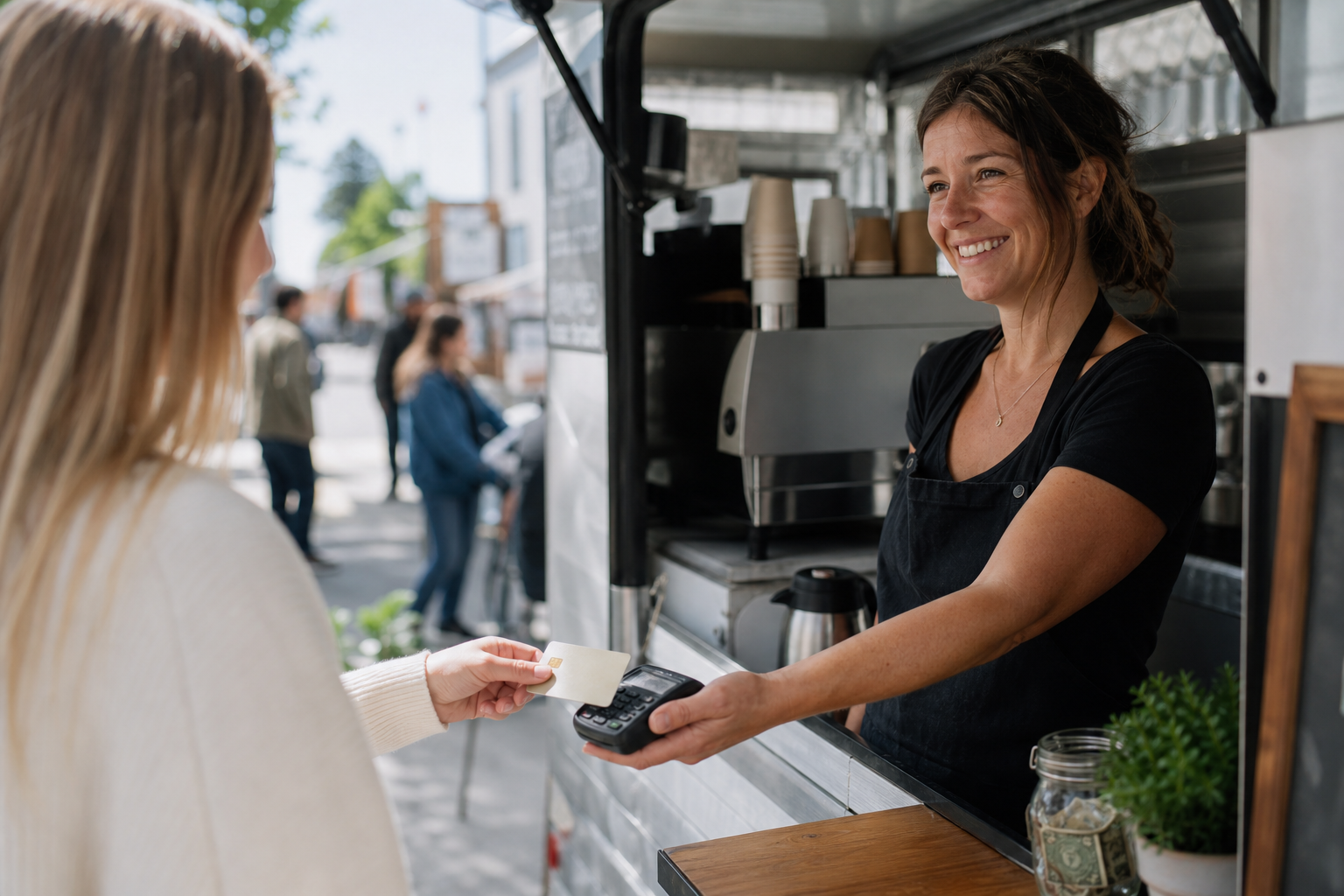
SumUp is a popular entry-level option for small businesses because of its low barrier to entry. If you run a seasonal food stand, a food truck, or a pop-up bar, its hardware is highly portable and incredibly easy to set up.
Key features
- Highly portable hardware: SumUp offers compact, handheld card readers with built-in SIM cards, touchscreens, and receipt printers.
- U.S. POS register configurations: Every standard SumUp POS purchase in the U.S. includes a Customer Touch Screen and an Employee Touch Screen Register, which connect to standard accessories like receipt printers, barcode scanners, and cash drawers.
- Essential restaurant features: The U.S. POS software includes a built-in loyalty program to support rewards and customer points, alongside basic menu customization, reservation management, and bill-splitting capabilities.
SumUp pricing
SumUp's U.S. pricing depends on your contract choices and software needs:
- POS Lite: A $499 one-time hardware purchase with a $0/month software fee.
- SumUp POS (Connect Plans): Ranges from $99/month (Connect Lite) up to $289/month (Connect Pro), typically requiring a 12-month contract.
- Payment processing: Standard in-person card transactions (tap, dip, or swipe) carry a flat fee of 2.6% + $0.10. Online or manually keyed transactions cost 3.5% + $0.15.
While SumUp is highly affordable for micro-merchants, independent reviews note that its simplified software lacks the operational depth required to manage complex restaurant workflows or high-volume multi-location brands.
Head-to-head comparison
To choose the right platform, you must weigh how each system handles the day-to-day pressure of restaurant operations.
| Feature | Spindl | SumUp |
|---|---|---|
| Primary Focus | Full-service, quick-service, and delivery-heavy restaurants | Mobile merchants, pop-ups, and micro-businesses |
| Delivery Integration | Native routing for DoorDash, Uber Eats, and Grubhub into one screen | Requires third-party middleware or separate tablets |
| Hardware Options | KDS, self-service kiosks, handheld terminals, and master registers | Compact card readers, portable receipt printers, and dual-screen registers |
| AI & Automation | Native integration with AgenticPOS for conversational control | None; manual dashboard navigation only |
| Inventory Depth | Real-time recipe-level depletion tracking | Basic ingredient and item tracking |
| Contracts | No lock-in options; pay-as-you-grow volume pricing | Up to 12-month commitments for advanced POS plans |
Delivery and order flow
If delivery represents a significant portion of your revenue, choosing the best restaurant management software is critical. Juggling multiple delivery tablets leads to input errors, kitchen delays, and cold food. Spindl’s native integration routes all third-party marketplace orders into your master queue automatically. SumUp does not offer native delivery aggregator consolidation, meaning your staff will still need to manually re-enter orders from external tablets during busy dinner rushes.
Inventory and analytics
Effective margin management requires knowing exactly how your food costs fluctuate. Spindl supports integrating POS with inventory at the ingredient level. When a customer orders a burger, Spindl automatically deducts the bun, the beef, and the toppings from your stock.
It also pairs with advanced digital tools for restaurants like predictive analytics to forecast demand based on historical patterns, weather, and events. SumUp tracks stock at a basic item level, which is sufficient for retail or pre-packaged goods, but lacks the granular recipe costing and wastage tracking that food-and-beverage operators need when streamlining operations with POS and analytics.
AgenticPOS: Automate your existing setup
You do not have to commit to a total system replacement overnight. The Spindl team also built AgenticPOS, a tool that lets AI agents control your POS through chat.
AgenticPOS connects to your existing POS via an MCP server. Instead of clicking through complex back-office dashboards, you can manage menus, adjust pricing, view real-time reporting, and update multi-location settings using natural language through Claude, ChatGPT, or Slack bots.
This creates a seamless path for growing businesses:
- Start using AgenticPOS for free on top of the POS hardware you already own.
- Scale into Spindl Pro daily volume pricing when multi-location coordination starts hurting your operations.
- Transition to the complete Spindl OS only when you are ready to retire your disconnected legacy stack.
Which POS system is superior for your business?
Choose SumUp if:
- You run a food truck, coffee cart, or a pop-up stand with simple menu needs and average transactions under $100.
- Your order volume is relatively low, and you do not handle heavy delivery platform orders.
- You want a straightforward, low-cost starter kit with basic register screens and flat-rate transaction pricing.
Choose Spindl if:
- You run a busy quick-service, fast-casual, or full-service restaurant and want to eliminate manual data entry.
- You manage high delivery volume and need to consolidate Uber Eats, Grubhub, and DoorDash onto a single screen.
- You need ingredient-level inventory tracking to control your margins and prevent stockouts.
- You want to leverage AI automation to update menus, check labor costs, and handle back-office tasks without clicking through dashboards.
Running a modern restaurant on disconnected hardware will eventually bottleneck your growth. Unifying your front-of-house, back-of-house, and delivery channels onto a single device saves hours of manual work and improves order accuracy. Ready to eliminate tablet chaos? Explore how Spindl can consolidate your operations into one device and book a demo today.