Five online POS alternatives to protect your margins
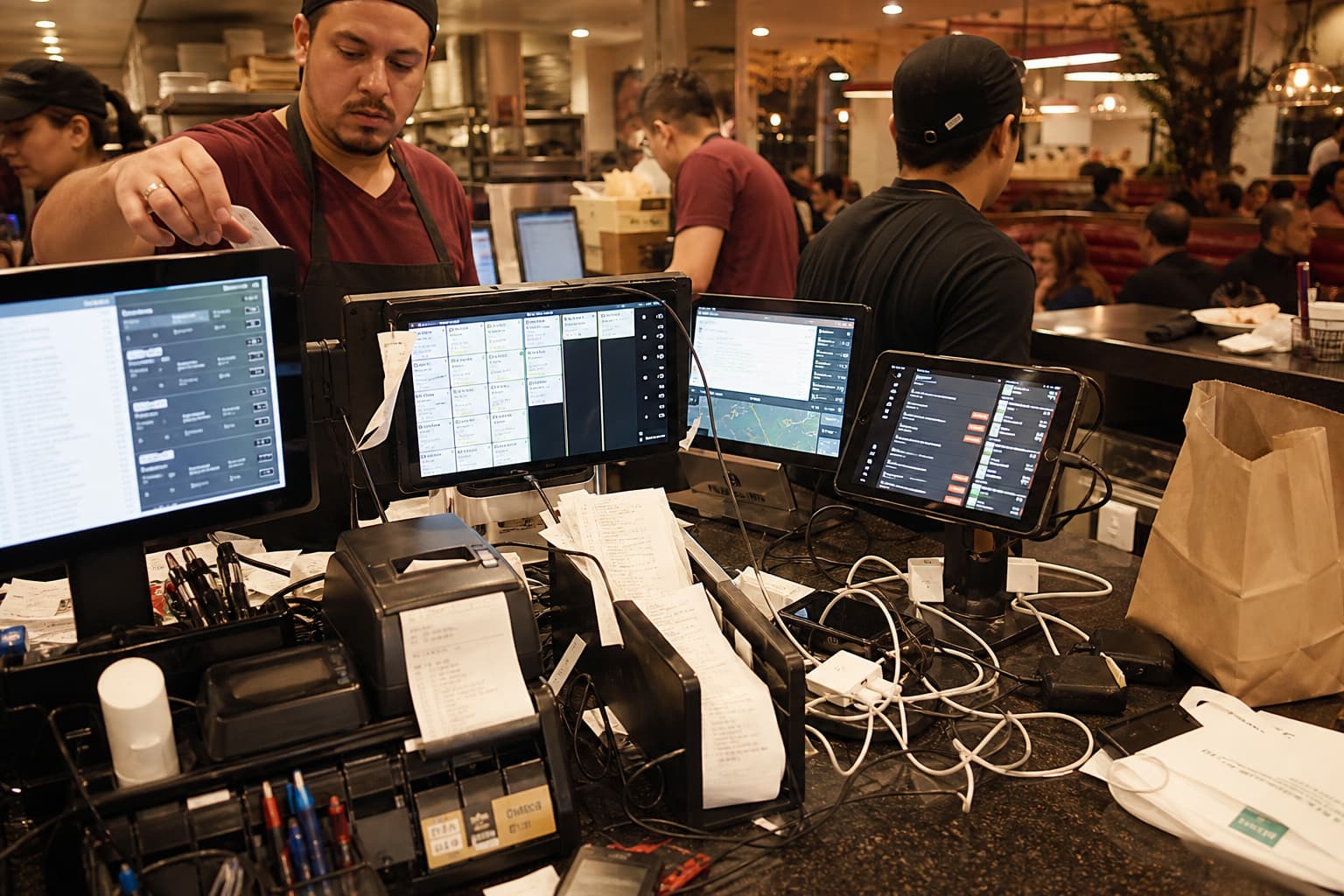
Are you still juggling five delivery tablets while third-party commissions eat 30% of your profits? If manual reconciliations and menu updates are draining your team, it is time to upgrade your tech stack.
Legacy web-based point-of-sale systems often function as simple digital cash registers. They lack the deep integrations required to run a high-volume, modern kitchen. In fact, industry data shows that digital channels are projected to drive 70% of restaurant sales by 2026, making a unified integrated digital command center absolute table stakes for survival.
If your current POS setup leaves you drowning in a "tablet farm" of delivery screens, manual re-keys, and inventory discrepancies, here is how the top alternatives stack up – and why a new class of AI-driven systems is leading the market.
The modern alternatives: Spindl and AgenticPOS
If traditional online POS platforms are the hospitality equivalent of a Nokia 3310, Spindl is the iPhone.
Spindl represents a fundamental shift toward total integration. It consolidates front-of-house ordering, delivery marketplaces, first-party online ordering, and real-time inventory onto a single sleek device.
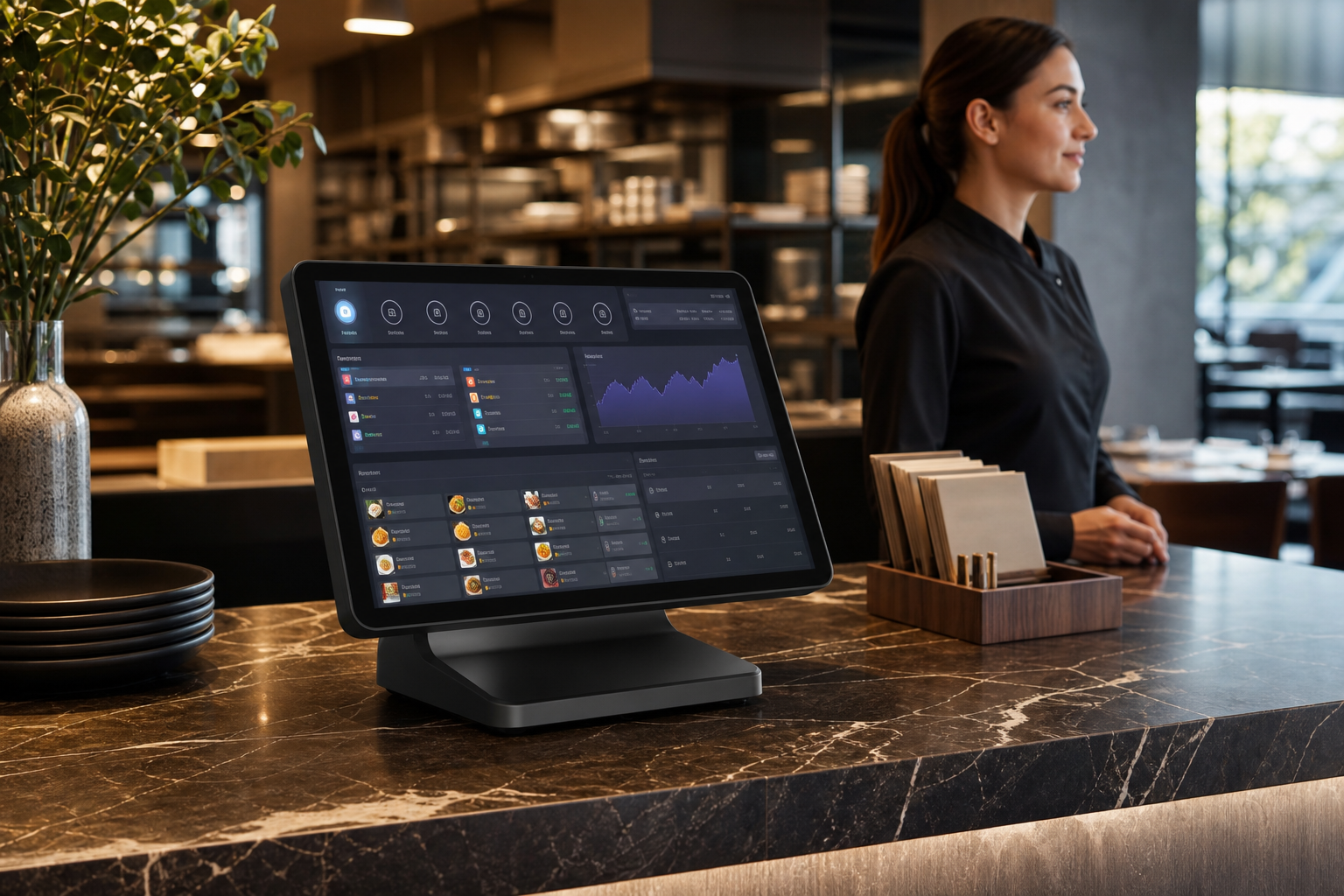
Instead of dealing with buggy middleware, Spindl's delivery-native build lets you construct a master menu in the back-office and instantly push it to all digital channels. Under Spindl's Pro pricing structure, POS software remains free for Pro users. Fees are deducted directly from real card volume, which eliminates monthly invoice shocks and protects your daily cash flow.
Not ready to throw away your current hardware?
You do not have to replace your entire physical setup overnight. The Spindl team also built AgenticPOS, an AI-driven Model Context Protocol (MCP) server that connects directly to your existing POS.
Instead of clicking through complex dashboards to change a price or update a shift, AgenticPOS allows you to manage daily operations through Claude, ChatGPT, or Slack bots. It exposes over 140 agent-callable tools to automate back-office workflows, complete with operator permissions, safety guardrails, and reversible actions.
The modern playbook is simple:
- Start free with AgenticPOS on the POS hardware you already have.
- Scale into Pro when multi-location menu updates and reporting start to pinch.
- Transition to the full Spindl OS when you are ready to retire your legacy stack entirely.
Comparing the top online POS alternatives
For operators looking at traditional hardware and software suites, five platforms dominate the U.S. landscape. Here is how they compare in features, pricing, and operational depth.
| Platform | Best For | Software Pricing | Core Processing Rates | Key Disadvantage |
|---|---|---|---|---|
| Spindl | Modern, all-in-one operations | Free for Pro (pay-from-volume) | Variable (interchange-plus) | Best suited for tech-forward operators |
| Toast | Full-service restaurants | $0 to $69+/month | 2.49% to 3.69% + 15¢ | Heavy add-on costs for delivery & loyalty |
| Square | Startups & mobile cafes | $0 to $49+/month | 2.6% + 10¢ (in-person) | Lacks deep multi-location inventory tools |
| Clover | Quick-service restaurants | $135 to $179+/month | 2.3% to 2.6% + 10¢ | Rigid 36-month contract terms |
| Lightspeed | Fine dining & upscale chains | $89 to $109+/month | 2.6% + 10¢ | High learning curve for staff onboarding |
| SpotOn | Cash-discount incentives | $0 to $55/month | 2.45% to 2.79% + 15¢–20¢ | 2-year minimum terms on zero-dollar software |
Toast
Toast currently holds a massive 68.42% market share among publicly traded U.S. restaurant technology companies. It is highly reliable, features a solid offline mode, and offers an extensive ecosystem. However, Toast’s base pricing can be deceptive. While the $0 Starter Kit looks appealing, it locks you into higher payment processing rates (up to 3.69% + 15¢). To access essential features like delivery integration and gift cards, you must pay for expensive monthly add-ons.
For a head-to-head comparison, read our full restaurant POS system comparison.
Square for Restaurants
Square is a lifesaver for small coffee shops and food trucks that need to get up and running within minutes. Its free software tier is incredibly accessible, and the hardware is highly portable. The trade-off is operational depth. Square lacks the robust recipe costing, real-time variance tracking, and advanced inventory controls required by scaling, high-volume restaurants.
Clover
Clover is highly popular among quick-service venues due to its low card-present transaction fees, which start at 2.3% + 10¢. However, Clover hardware must be purchased upfront or leased through restrictive 36-month contracts. The platform also offers less flexibility for dining rooms with complex, shifting floor plans or fast-evolving menus.
Lightspeed
Lightspeed is built for the analytical operator. It excels in fine dining and upscale franchises, offering seat-level order routing and highly detailed inventory tracking. This power comes with complexity; the system has a steeper learning curve, meaning staff training can take longer compared to more intuitive, modern interfaces.
SpotOn
SpotOn offers two primary tiers: an "All-In" plan with $0 upfront software and hardware costs, and a $55/month "Essentials" plan. The $0 plan is designed to preserve cash flow but requires a 2-year minimum term and carries higher processing fees (2.79% + 20¢). While SpotOn features great table layout options and front-of-house programming, it lacks the native, single-screen delivery aggregation built directly into Spindl.
What to look for in your next restaurant POS
When evaluating alternatives to a basic online POS, look beyond simple payment processing. Focus on the features that directly impact your prime costs and labor margins.
Native delivery integration
Relying on external middleware to sync third-party orders to your kitchen is a recipe for errors. Native delivery integration routes marketplace orders directly to your kitchen display system (KDS), which can improve order accuracy to rates as high as 98.5%.
Furthermore, while third-party delivery services charge up to 30% commission, managing your own online ordering channel through your POS keeps digital transaction costs closer to 3% to 5%. Transitioning orders to first-party channels is one of the fastest ways to reclaim your margins.
Real-time analytics and inventory
Waiting for end-of-month reports to calculate your cost of goods sold (COGS) is a legacy habit that kills cash flow. A comprehensive cost-benefit analysis of upgrading your restaurant POS reveals that unifying your sales data with real-time inventory can reduce labor hours by 5% to 12% and cut overordering by up to 15%.
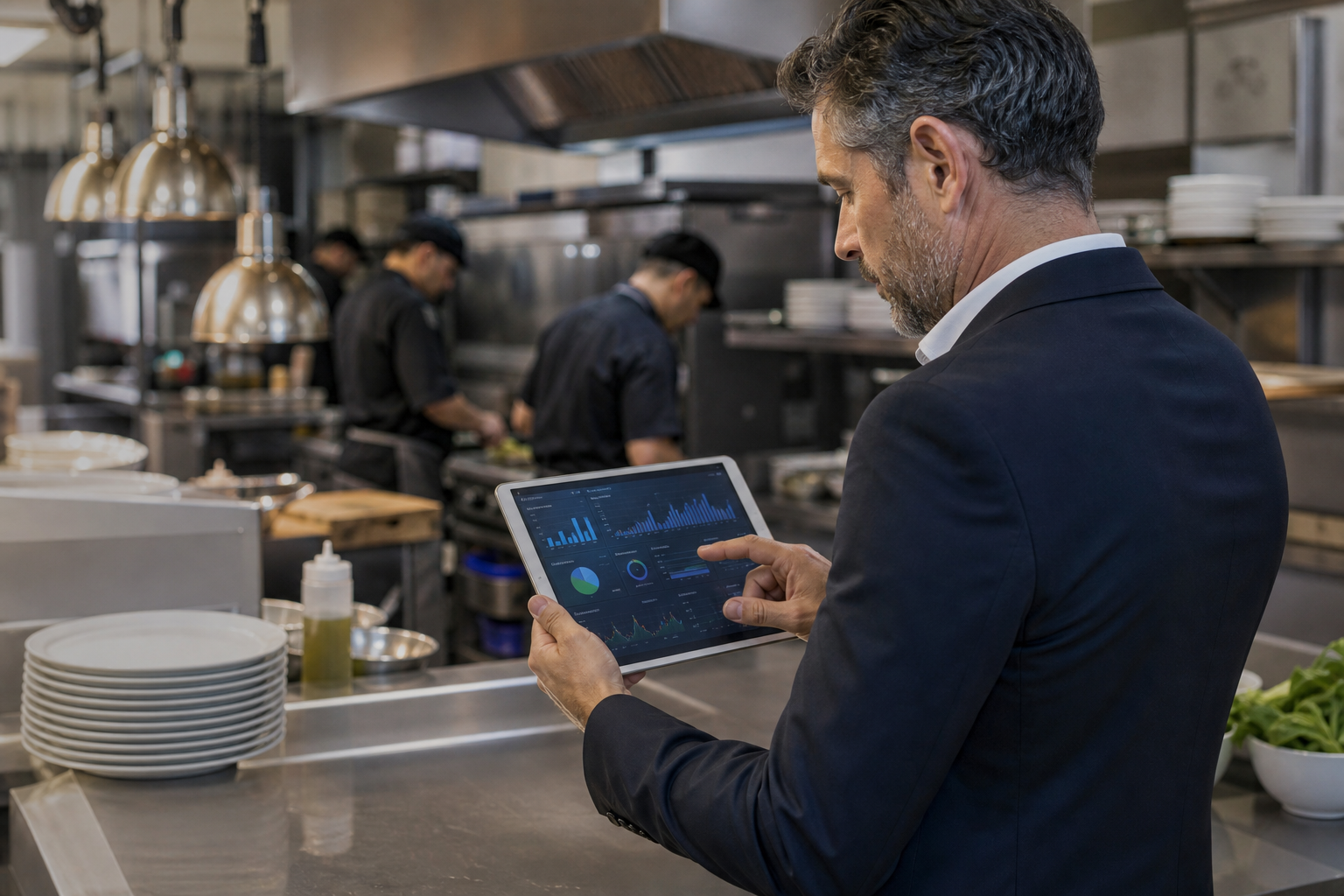
Our guide on streamlining operations with POS and analytics shows that live, mid-shift dashboards allow managers to make critical staffing and prep adjustments before labor and food waste eat into the day's profits. Keeping an eye on future trends in restaurant POS technology is also key to staying ahead of margins.
Stop juggling tablets and upgrade your workflow
Selecting a point-of-sale system is no longer just about choosing a card swiper; it is about choosing the operating system for your entire business.
If you want to compare the traditional players further, read our comprehensive guide to the best restaurant POS systems for 2026 to see how modern cloud architectures are reshaping the hospitality industry.
If you are ready to eliminate the tablet farm and automate your operations, explore a risk-free alternative. You can connect AgenticPOS to your existing system today to manage your menus and inventory via chat. When you are ready to retire your legacy hardware and run your entire restaurant from a single, unified device, transition smoothly over to Spindl.