Lightspeed alternatives to protect your restaurant margins
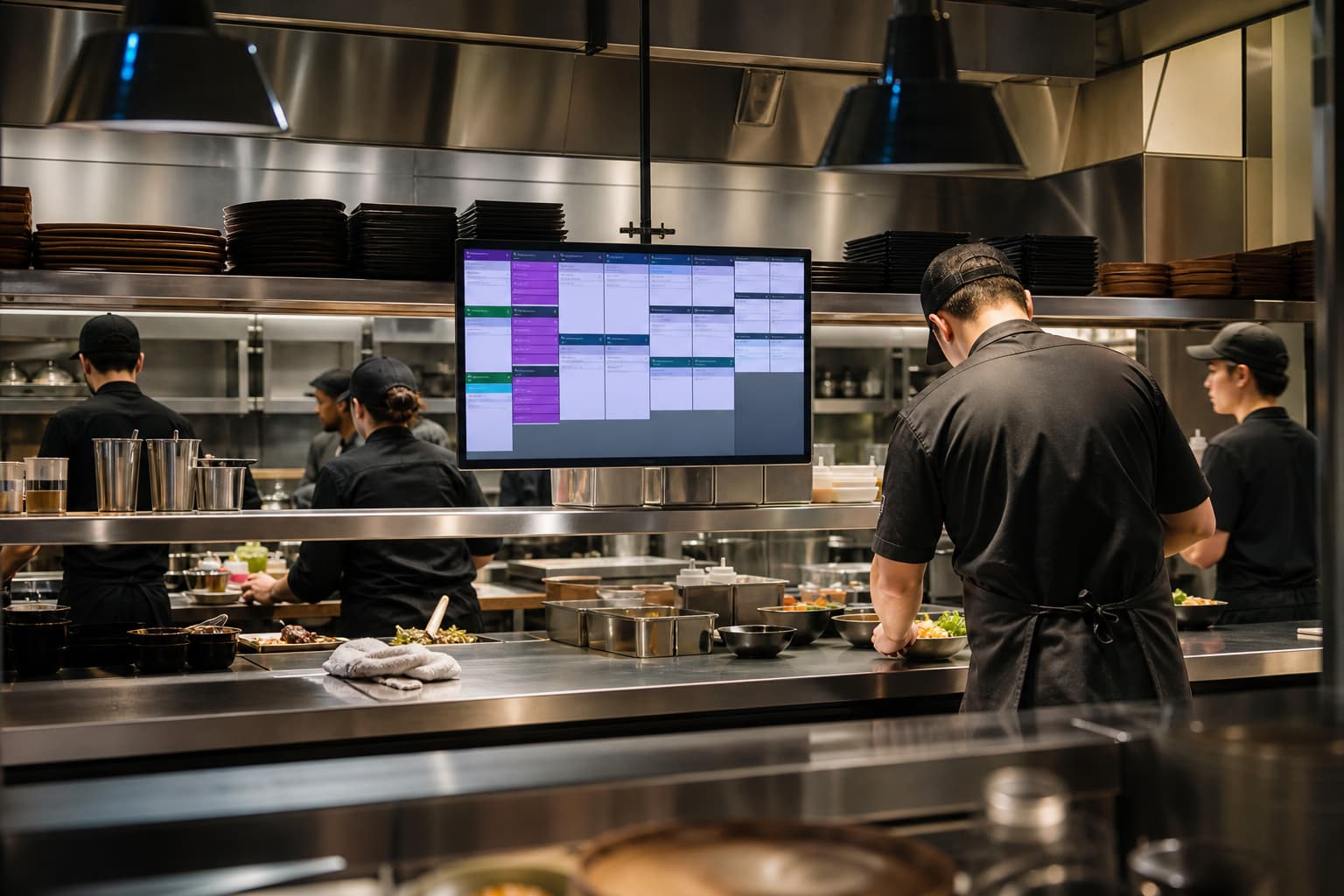
Are modular fees and processing costs eating away your restaurant margins? Lightspeed Restaurant offers solid table layout tools, but tiered subscriptions and add-on pricing quickly drain profits. Here are the top alternatives to streamline service and protect your bottom line.
Why operators switch from Lightspeed Restaurant
Lightspeed Restaurant serves upscale dining venues that require seat-level billing and complex menu structures. However, fast-casual, quick-service, and delivery-focused operators often encounter specific operational barriers:
- Escalating software tiers: Monthly fees jump from Starter ($69/month) to Essential ($189/month) and Premium ($399/month), while extra registers add roughly $59 per month each.
- Fixed processing rates: Standard card-present rates sit around 2.6% + $0.10, offering little opportunity to reduce transaction costs as order volume grows.
- Back-office complexity: Navigating deep menus and multi-layered options creates a steep learning curve for frontline staff.
If you are evaluating direct feature trade-offs, read our detailed Spindl vs Lightspeed Restaurant comparison.
Spindl OS: The unified restaurant operating system
Instead of stacking disconnected software subscriptions, Spindl OS consolidates order management, third-party delivery aggregation, commission-free online ordering, kitchen display systems, and live inventory tracking into one platform.
Consolidating your digital channels into a single screen helps kitchens achieve roughly 98.5% order accuracy while saving managers approximately 12 hours per week on manual reconciliation. Built-in card payments deduct fees directly from daily settlements, avoiding month-end invoice shocks.
Spindl pricing options
- Lite Plan: €99/month for single-location operators needing essential POS and back-office tools.
- Pro Plan: Free POS software license, charging 1.99% per card transaction with zero upfront terminal lock-ins or long-term contracts.
Review full details on our Spindl pricing page.
AgenticPOS: AI back-office control for your current POS
You do not need to replace your existing point-of-sale hardware to modernize administrative workflows.
AgenticPOS operates as an MCP server that connects directly to your current POS interface. Instead of clicking through complex management screens, operators manage daily administrative tasks through conversational chat prompts in Claude, ChatGPT, or Slack.

Key AgenticPOS capabilities:
- Bring your own AI agent to control operations without system lock-in.
- Access 140+ agent-callable tools to adjust menu items, update prices, manage shifts, and track inventory across multiple locations.
- Protect back-office integrity with administrative permissions, action logging, guardrails, and reversible changes.
Start free on your current POS hardware, scale into Pro as multi-location management expands, and upgrade to Spindl OS when you are ready to retire legacy hardware entirely.
Top Lightspeed alternatives compared
Toast: Built for high-volume full service
Toast is a widely used cloud POS for full-service dining rooms, offering dedicated handheld devices and offline payment processing during internet outages. For a broader market breakdown, review our guide to Toast POS alternatives.
- Core Strengths: Offline card processing mode, tableside handheld ordering, and integrated team management options.
- Trade-offs: Requires proprietary payment processing (typically 2.49%–2.99% + $0.15), with essential tools like online ordering and loyalty carrying extra monthly fees.
- Best For: Large full-service restaurant groups.
Square for Restaurants: Quick entry for small concepts
Square for Restaurants provides a baseline software tier at $0 per month per location, making it popular for pop-ups, cafes, and new startups. Read our Square POS alternative breakdown to compare operational depth.
- Core Strengths: Zero-dollar monthly software entry option, fast setup on standard tablets, and intuitive interface.
- Trade-offs: Flat processing fees (2.6% + $0.15 in-person on Free) can become expensive as volume grows, while KDS and floor plan tools require the Plus tier ($49/month).
- Best For: Small cafes, pop-ups, and counter-service concepts.
SpotOn: AI margin tracking for independent dining
SpotOn combines flexible POS terminals with built-in financial reporting tools like SpotOn Profit Assist.
- Core Strengths: Real-time profit-and-loss analytics, flexible terminal choices, and POS Essentials plans starting at $55 per station per month.
- Trade-offs: Requires integrated SpotOn payment processing, and core software packages add 20 basis points of gross volume (capped at $200) plus $50 monthly.
- Best For: Margin-conscious independent restaurants.
TouchBistro: Local iPad network reliability
TouchBistro is an iPad-based POS designed specifically for hospitality, with core software starting at $69 per month.
- Core Strengths: Hybrid local network layout that maintains floor performance during internet outages, visual table management, and tableside ordering.
- Trade-offs: Mandates annual service contracts, and add-ons such as online ordering ($50/mo) or kitchen display software ($19/mo) increase total monthly costs.
- Best For: Upscale table service and traditional dining rooms.
Clover: Quick-service counter performance
Clover delivers dedicated hardware terminals tailored for fast-casual and quick-service order counters, with plans starting between $54.95 and $89.95 per month.
- Core Strengths: Compact touchscreen devices, card pre-authorization, fast checkouts, and an extensive application marketplace.
- Trade-offs: Pricing structure and contract lengths vary depending on the merchant processing reseller channel, often requiring binding commitments.
- Best For: Quick-service restaurants and fast-casual concepts.
Revel Systems: Enterprise control for multi-unit chains
Revel Systems is a cloud-native iPad platform built for franchise groups, enterprise pizzerias, and multi-unit brands.
- Core Strengths: Complex menu management, open APIs, multi-site administrative control, and ingredient-level tracking.
- Trade-offs: Requires a multi-year contract, a minimum of two terminal licenses ($99/month per terminal), and an upfront installation fee starting around $649.
- Best For: Multi-unit franchise chains and enterprise groups.
Quick POS comparison matrix
| POS Platform | Software Starting Price | Payment Processing Model | Primary Strength | Ideal For |
|---|---|---|---|---|
| Spindl OS | Lite: €99/mo; Pro: Free software | 1.99% flat card rate (Pro) | 100% unified POS & delivery | Delivery-heavy, modern operations |
| Toast | $0–$69/mo | Required in-house (2.49%–2.99% + $0.15) | Offline reliability & handhelds | Large full-service groups |
| Square | $0/mo (Free tier) | Flat rate (2.6% + $0.15 in-person) | Fast setup, low initial cost | Small cafes & food trucks |
| SpotOn | $55/station/mo | Integrated SpotOn Payments | AI margin insights & analytics | Margin-conscious independents |
| TouchBistro | $69/mo | Integrated partner / Quote-based | Local iPad floor mapping | Upscale table service |
| Clover | $54.95–$89.95/mo | Integrated (2.3% + $0.10 in-person) | Counter hardware & fast checkout | Quick-service & fast casual |
| Revel Systems | $99/mo per terminal | Revel Advantage or quote | Enterprise customizability | Multi-unit franchise chains |
Evaluating the return on your POS investment
Upgrading your operating system is about protecting profit margins, not just lowering software invoices. Connecting your POS directly with online ordering and delivery channels removes manual entry errors and cuts administrative overhead.
When frontline staff re-key orders from third-party delivery tablets into a POS, kitchen errors increase. Transitioning to integrated third-party delivery integrations eliminates tablet farms and cuts order mistakes. Furthermore, proper POS inventory integration deducts ingredients in real time with every check, helping managers track food cost variances before they impact net margins.
Selecting an intuitive restaurant POS system also simplifies team onboarding. Clean, app-like interfaces allow new staff to take orders confidently within one or two shifts, minimizing costly errors during staff training on new POS software.
Protect your restaurant margins today
You do not have to accept modular price hikes, locked-in processors, or tablet chaos to run an efficient kitchen.
To streamline order routing, unify delivery apps, and protect your margins, explore Spindl OS today.
If you prefer to keep your existing POS hardware while automating back-office management via AI chat, start using AgenticPOS for free.