How an agentic restaurant OS streamlines operations
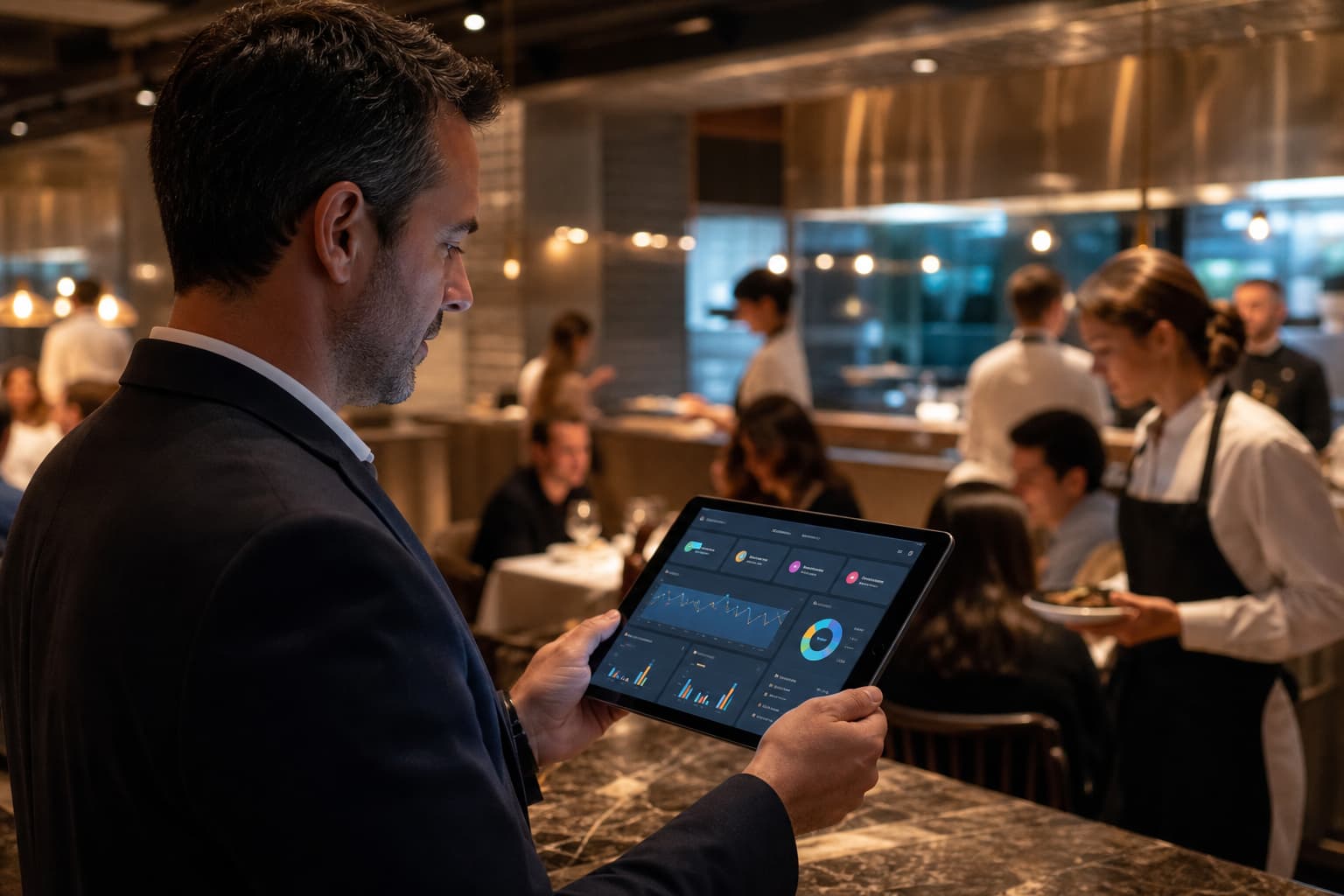
Are you still running your restaurants on passive software that waits for your staff to click buttons? The era of "click and wait" is ending. An agentic restaurant OS shifts technology from a static recording tool into an autonomous operations partner that acts on your behalf.
What makes an AI "agentic"?
Traditional restaurant software is purely passive. It waits for a human to run a report, manually adjust scheduling hours, or update menu items.
An "agentic" system represents a fundamental shift. In artificial intelligence, an agentic system has the ability to act autonomously toward a specific goal [EXT15]. Instead of just processing basic commands, these systems interpret context, plan multi-step workflows, and execute decisions with minimal human oversight [EXT15, EXT16].
For restaurant operators, this shifts your technology from a static database into an active operations assistant [EXT26]. Instead of you digging through sheets to find food waste patterns, an agentic system identifies the variance, traces it to a specific vendor invoice, and drafts an email to claim credit – all before you start your day.
The evolution to a true restaurant operating system (OS)
Historically, hospitality technology has been highly fragmented. Most brands suffer from a "Frankenstein" tech stack – a disjointed collection of separate applications for point-of-sale, inventory, scheduling, and third-party delivery [INT6]. This digital chaos typically leads to manual data entry errors, employee stress, and lost revenue [INT6].
A true restaurant operating system (OS) acts as a centralized digital environment [EXT22]. It coordinates all core operational functions – including order management, scheduling, inventory control, and live analytics – under one unified interface [EXT22].
When you layer agentic AI over an integrated OS, the system stops merely recording historical transactions and begins actively optimizing what is happening right now [EXT26]. This evolution represents a massive shift in how operators leverage AI in restaurant operations.
┌────────────────────────────────────────────────────────┐
│               Agentic Restaurant OS                    │
├──────────────────────────┬─────────────────────────────┤
│   Traditional POS        │    Autonomous Operations    │
│   • Transaction Logging  │    • Demand Forecasting     │
│   • Menu Management      │    • Dynamic Scheduling     │
│   • Payment Processing   │    • Real-Time Margin Alerts│
└──────────────────────────┴─────────────────────────────┘
Solving multi-unit scaling friction
Managing a single restaurant is challenging. Managing dozens across multiple regions introduces compounding operational hurdles.
- The labor crunch: Finding and retaining staff remains incredibly difficult, with over 80% of multi-unit operators still reporting acute labor shortages [EXT1].
- Compliance pressures: Operators face heavy administrative burdens keeping up with local labor regulations, tracking employee certifications, and building complex schedules around regional labor rules [EXT4].
- Administrative drag: Juggling multiple third-party delivery tablets and coordinating menu updates across different regions consumes hours of leadership time.
An agentic restaurant OS alleviates these bottlenecks through targeted restaurant automation tools and advanced restaurant management software.
By leveraging predictive demand forecasting, the OS automatically aligns staffing with expected sales, reducing labor costs by 5% to 15% [INT6]. It can scan live kitchen flow and delivery queue wait times, adjusting online ordering availability dynamically to prevent kitchen bottlenecks [EXT26].
Furthermore, centralized analytics pull cross-unit sales, inventory, and labor metrics into a single real-time dashboard [EXT30]. This gives management complete operational visibility without requiring manual end-of-month spreadsheets [EXT31]. Implementing these integrated capabilities is a critical step in the role of AI in restaurant digital operations.

Meet AgenticPOS: Operations managed through chat
You do not have to completely replace your existing hardware infrastructure to start utilizing agentic workflows. AgenticPOS is designed to act as an intelligent, conversational gateway for your current setup.
AgenticPOS operates as a Model Context Protocol (MCP) server. It connects directly to your existing POS and translates complex back-office functions – such as menu modifications, scheduling, pricing, inventory, and promotions – into tools that AI agents can understand.
This allows you to control multi-unit operations through simple chat interfaces like ChatGPT, Claude, or internal Slack bots. Instead of clicking through complex legacy portals, you can manage daily operations with simple prompts:
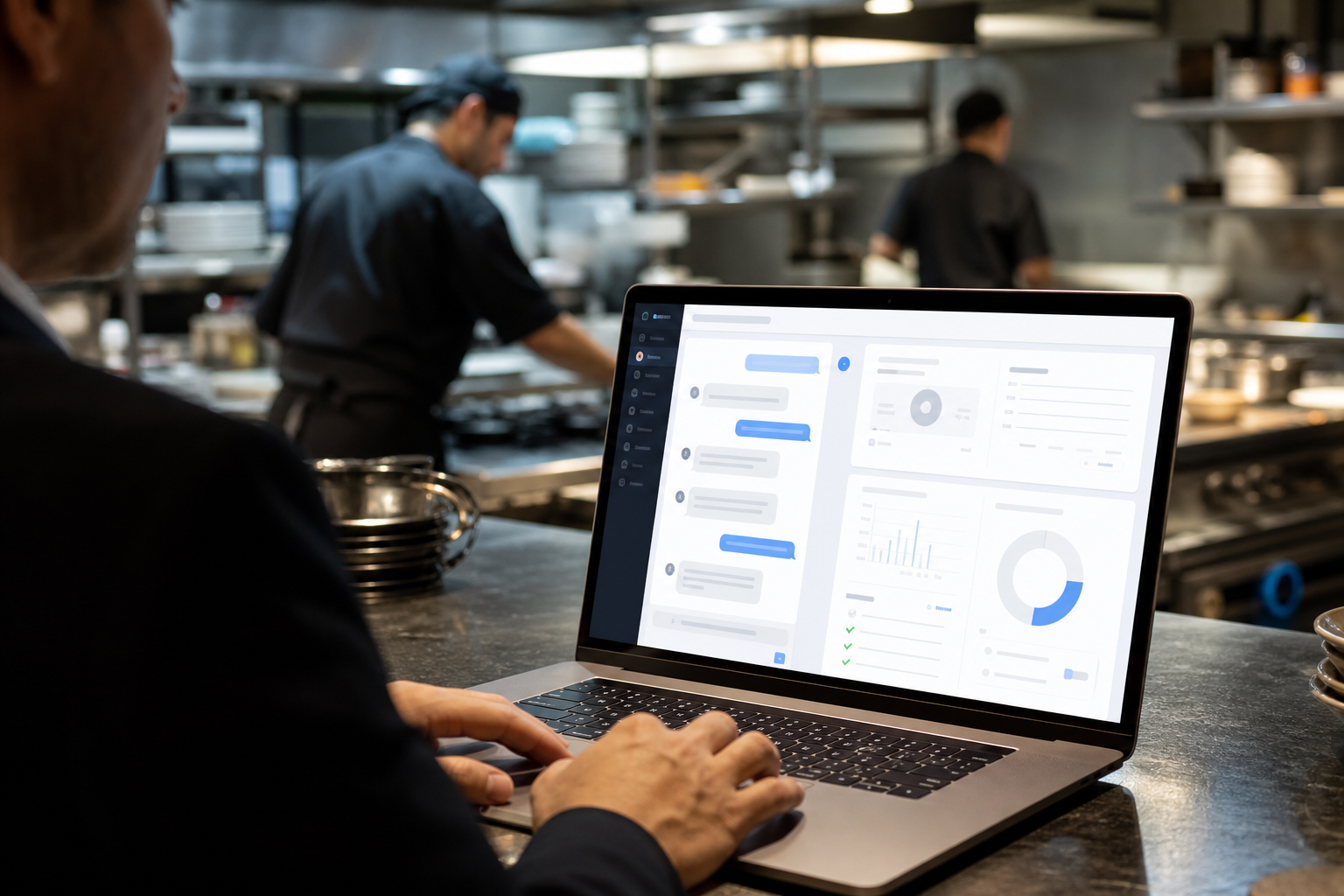
"Check our labor cost percentages across all Midwestern locations for yesterday. If any store exceeded 30%, draft an optimized schedule for next week based on their historical foot traffic and local weather."
With more than 140 agent-callable tools, the platform handles complex multi-location updates while keeping operators firmly in control with granular user permissions, action logging, and reversible steps.
Building your roadmap to automation
Transitioning to automated operations is most successful when done in structured, manageable phases. Using a modular approach ensures your staff adapts smoothly without disrupting daily operations.
- Leverage what you have: Start by connecting AgenticPOS to your existing POS system. This allows you to immediately automate routine administrative tasks, menu updates, and reporting without upfront hardware costs.
- Optimize with analytics: Use POS and real-time analytics to identify margin-draining inefficiencies, automate inventory tracking, and predict supply needs.
- Consolidate the stack: When your legacy system can no longer support your growth, move to a comprehensive agentic platform.
By bringing order-taking, delivery services, self-service kiosks, and loyalty programs under one unified restaurant ERP solution, you can reclaim up to 20 hours of administrative work per week [INT3], while driving a positive digital transformation on customer experience. This consolidation also drastically simplifies staff onboarding, reducing training times and hardware clutter [INT5].
Embracing the future of hospitality
Technology should work for you, not the other way around. Adopting an agentic restaurant OS ensures your managers spend less time looking at software screens and more time supporting their teams and guests on the floor [INT7].
This keeps your brand perfectly aligned with future trends in restaurant technology. If you are ready to see how intelligent automation can simplify your multi-unit footprint, explore Spindl to unify your store operations, or start for free with AgenticPOS to bring conversational AI to your existing POS today.