How to reduce restaurant food waste and boost your margins
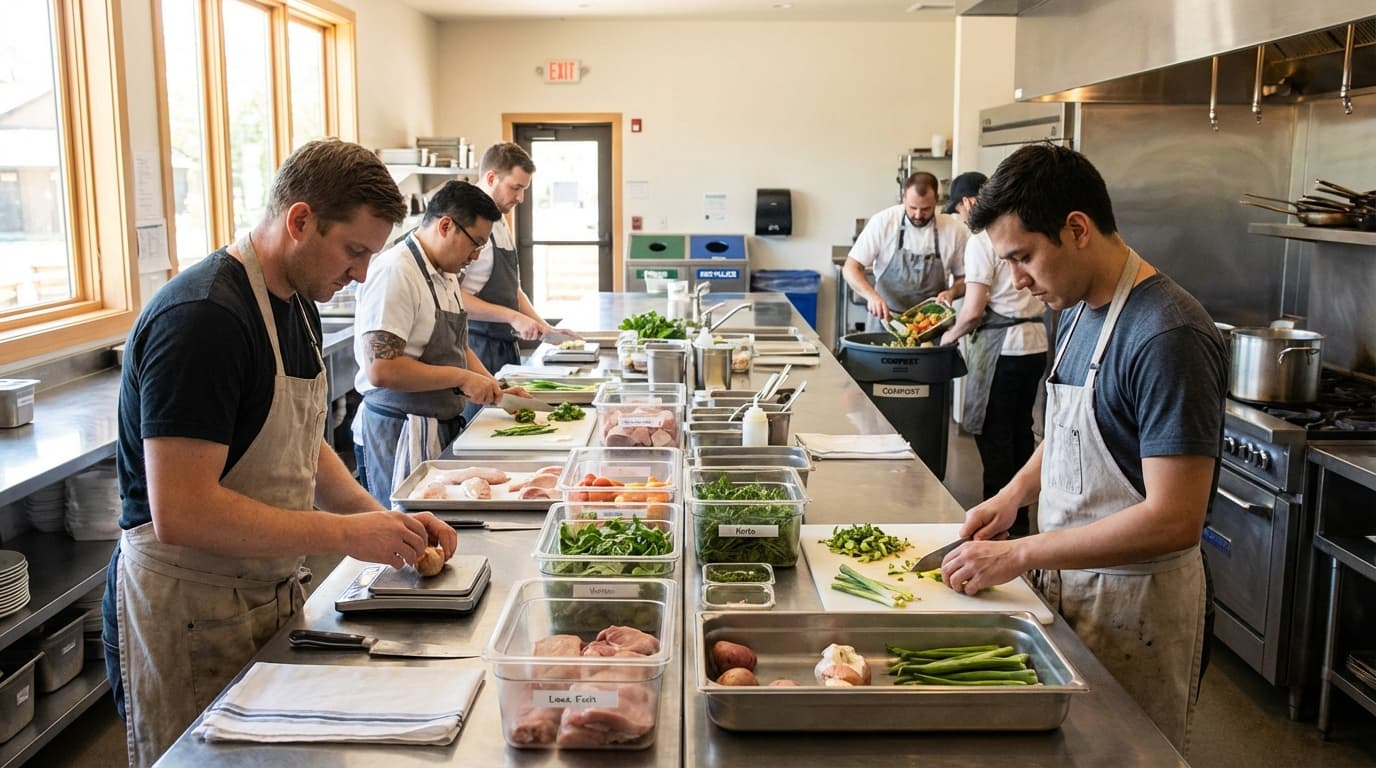
Are you throwing 10% of your profits directly into the dumpster? In the United States, restaurants waste between 22 and 33 billion pounds of food annually. Cutting this waste is a massive opportunity to reclaim shrinking margins and improve your operational efficiency.
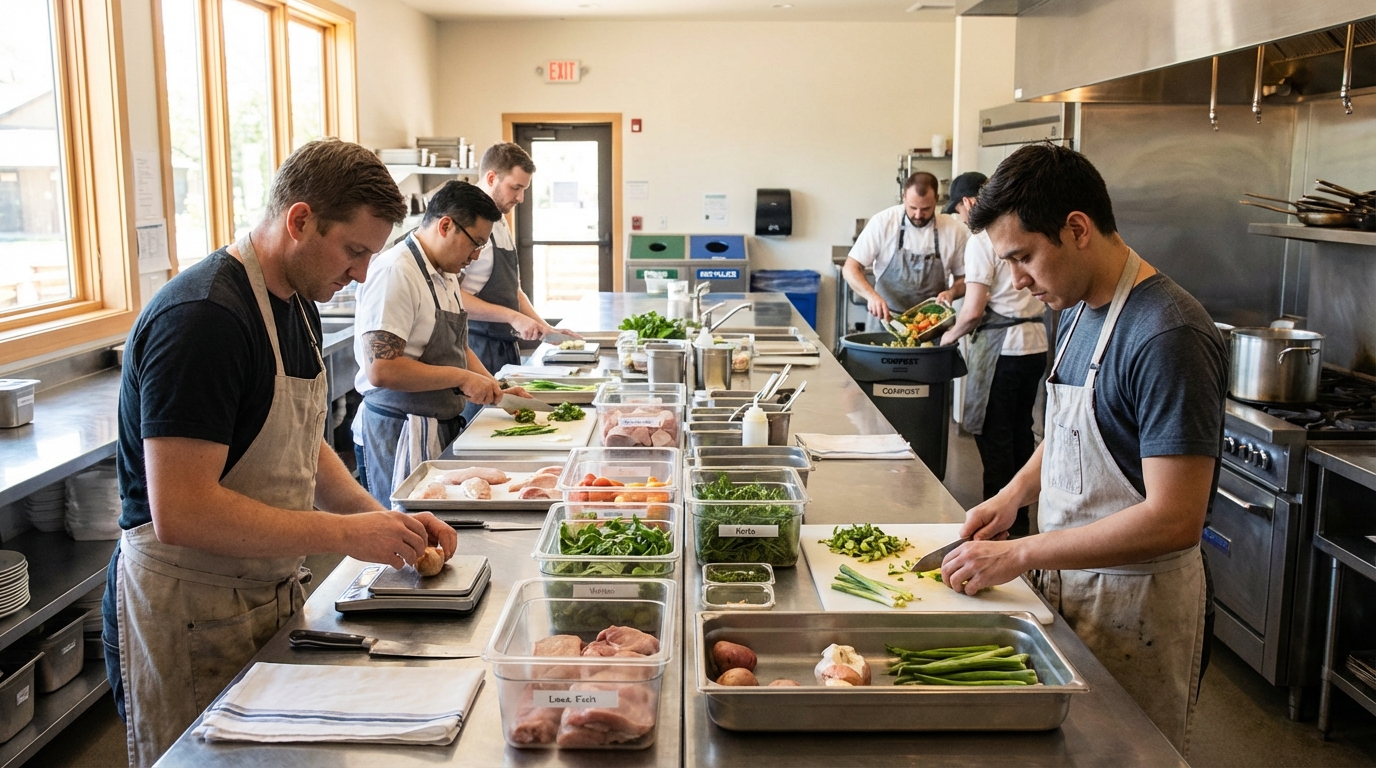
The $162 billion kitchen leak
The scale of food loss in the American food supply is staggering. According to the USDA, 31% of the U.S. food supply – 133 billion pounds worth $162 billion – goes to waste every year. For an individual operator, food waste typically accounts for 4–10% of all inventory purchased. This is a painful realization when you consider that nearly 75% of that waste is perfectly edible.
Waste usually stems from three sources: spoilage, prep-room errors, and plate waste. When you tighten these operational gaps, you do more than just save on ingredient costs; you reduce labor hours and lower your waste disposal fees. In fact, research into adapting restaurant management for sustainability suggests that implementing a dedicated food waste management program can lead to a 1,300% increase in financial viability. Precision isn't just about being green; it's about staying in business.
Audit your trash for maximum visibility
You cannot manage what you do not measure. Most operators know they have a waste problem, but they lack the granular data to pinpoint the "why." To fix this, you need to bring waste out of the shadows and into a visible, trackable format.
One of the most effective low-tech wins is the implementation of a visible waste tracking board. By requiring staff to log every discarded item along with the reason – whether it was burnt, dropped, or simply expired – you create immediate accountability. One restaurant using this method reduced meat waste by 18% in just one month. This data provides the foundation for restaurant inventory management best practices, moving you away from guesswork and toward data-driven ordering.
Furthermore, you must analyze plate waste. If your bus staff is consistently scraping large portions of uneaten sides or garnishes into the trash, your portion sizes are likely too large. Use these observations as a signal for optimizing your restaurant menu. Reducing a portion size by 10% is often invisible to the guest but can add thousands of dollars to your bottom line over the course of a year.
Mastering inventory with real-time data
The gap between your "theoretical" food cost and your "actual" food cost is where profit disappears. When your actual usage exceeds the theoretical amount by more than 2%, it is time to investigate. If that variance hits 5%, it usually indicates systemic issues like over-portioning, spoilage, or theft.
Modern POS analytics for restaurants can reduce food waste by up to 30% through automated tracking and improved order accuracy. Consider the case of a steakhouse that used integrated inventory tracking to eliminate ribeye waste entirely. By identifying exact usage patterns, they dropped discarded inventory from 15 pounds weekly to zero, saving $15,600 annually on a single high-value SKU.
To maintain this discipline, your kitchen must adhere to a strict First-In, First-Out (FIFO) protocol. Utilizing simple tools like color-coded day-of-the-week tape ensures that older stock is used before it spoils, preventing the "forgotten" ingredients at the back of the walk-in from becoming a total loss.
Smarter prep and menu engineering
Complexity is the primary driver of kitchen inefficiency. A bloated menu forces you to stock specialized ingredients that have a high probability of rotting before they are sold. To counter this, you should focus on several core strategies:
- Cross-utilize ingredients: Ensure that every ingredient appears in multiple dishes. If kale is only used for one specific salad, it is a liability. Move it into a soup, a juice, or a side dish to increase its sell-through rate.
- Standardize recipes and portioning: Every cook should use identical measurements. A steakhouse once discovered they were running 8% above theoretical usage on ribeyes; by enforcing stricter portioning guides, they saved $850 per month on $50,000 in spend.
- Adjust par levels dynamically: Your ordering should reflect actual demand, not habit. Seafood demand can spike by as much as 40% on sunny Fridays compared to rainy ones. Integrating weather and event data into your restaurant operational efficiency tips ensures you aren't over-ordering during slow shifts.
Building a culture of accountability
Technology is only as effective as the team operating it. The restaurant industry faces extreme stress and a 75% annual turnover rate, which often results in sloppy habits and increased waste. If your staff doesn't understand the financial impact of a burnt steak or a spilled bin of sauce, they won't prioritize waste reduction.
You must embed waste reduction into your training program for kitchen staff. Explain the "why" behind the protocols. When a line cook realizes that a wasted protein represents thirty minutes of their own labor and the restaurant's entire profit margin for that hour, their level of care increases. Consider rewarding the team when food cost percentages hit specific targets, turning waste reduction into a shared victory.
Leveraging technology to stop the bleed
Fragmented systems are a major source of operational friction. When your POS doesn't communicate with your inventory, you are flying blind. This "tablet chaos" leads to data silos and manual reconciliation errors that hide waste rather than solving it.
Spindl provides an all-in-one restaurant management platform that integrates order taking, delivery, and real-time analytics into a single device. By integrating your POS with inventory management, the system automatically deducts ingredients at the recipe level. For example, when a customer orders a buffalo chicken sandwich, the system instantly removes 6 oz of chicken and 1 oz of sauce from your digital stock in real time.
This precision enables predictive ordering and smarter demand forecasting. One fast-casual chain achieved a 4% reduction in food costs – saving $80,000 annualized – within just three months of integrating their sales and inventory systems.
Stop guessing your way through your inventory cycles. Explore how Spindl features can give you the visibility needed to reclaim your margins. You can see the system in action by learning how to use Spindl to cut your food costs by 5% in the next 90 days.