Onboard kitchen staff in 7 days using structured checklists
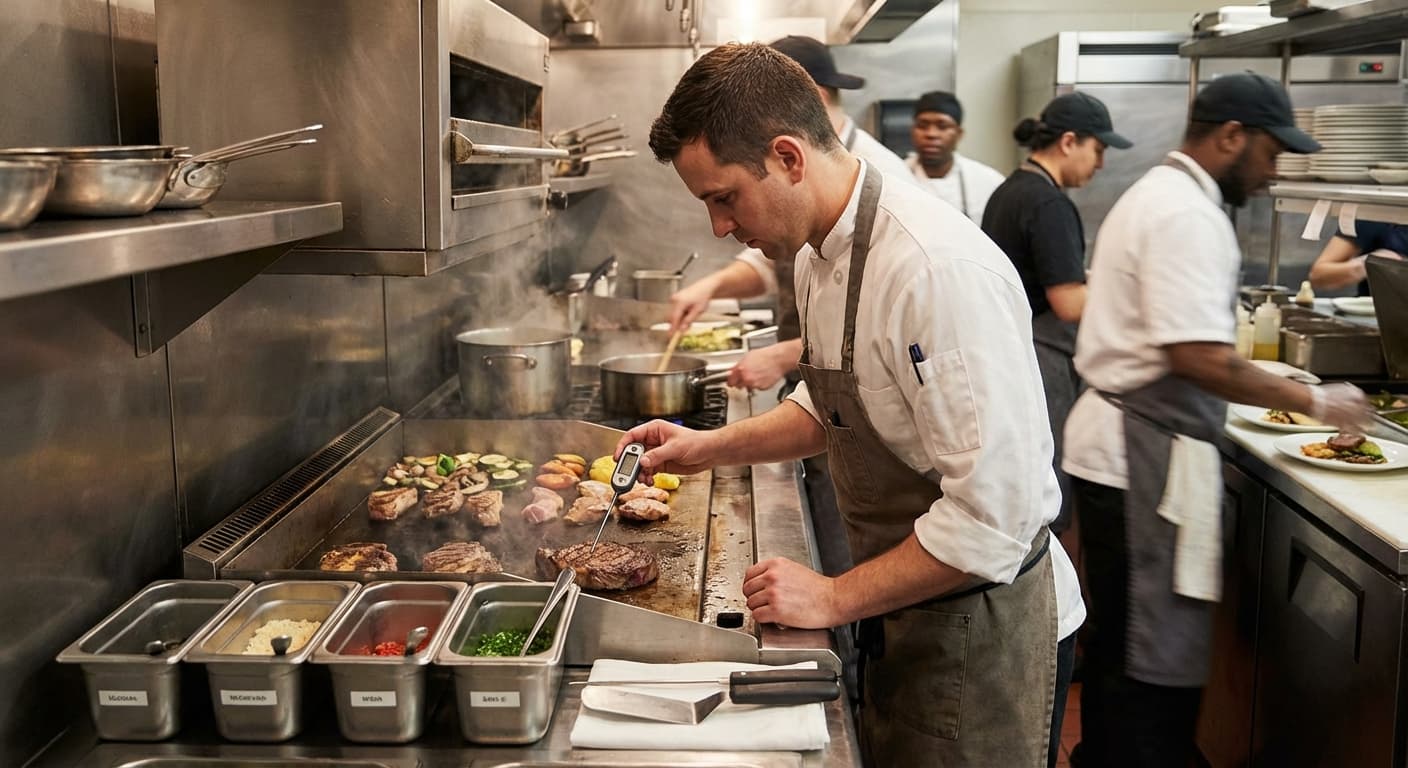
Did you know that annual turnover in the US accommodations and food services sector consistently tops 70%? A chaotic onboarding process leaves rookies lost, costing you thousands in wasted labor. A structured training plan turns new hires into high-performing cooks in days.
The true cost of kitchen turnover
According to data from the Bureau of Labor Statistics’ Job Openings and Labor Turnover (JOLTS) program, the overall turnover rate in the U.S. hospitality sector hit 74.9% in 2018. It was the fourth consecutive year where turnover topped 70%. In an industry where labor shortages are a constant challenge, losing staff is incredibly expensive.
Every hourly kitchen worker who walks out the door costs your business between $1,800 and $3,500 in recruiting, onboarding, and lost productivity. When you lack a clear operational structure, you are constantly rebuilding your team from zero.
A structured restaurant staff training program changes the math entirely. Standardized training builds confidence, shortens the learning curve, and reduces early-stage quit rates. In fact, operators who implement deliberate onboarding and career pathways can dramatically reduce their overall replacement costs. Read our guide on strategies to reduce staff turnover in restaurants for practical tips on boosting employee retention.
Kitchen staff roles and core competencies
Every station in your kitchen requires distinct technical skills and operational habits. To build an efficient kitchen, you must define the explicit expectations for each role.
- Line cooks: Responsible for direct food preparation, executing recipes according to spec, and maintaining exact station cleanliness. They must monitor cooking temperatures, manage ticket timing, and coordinate with the expo.
- Prep cooks: Responsible for executing daily mise en place, storing ingredients at correct temperatures, and applying safe knife techniques. They must follow strict First-In, First-Out (FIFO) rotation protocols, label containers accurately, and track waste.
- Sous chefs and kitchen managers: Responsible for menu engineering, inventory control, labor scheduling, and plate consistency. They act as mentors, leading shifts and training junior team members.
Compliance is also a major responsibility for your kitchen leadership. Under the FDA Food Code, a designated Person in Charge (PIC) must be present in the establishment during all hours of operation. The PIC is responsible for demonstrating food safety knowledge and active managerial control to prevent foodborne illness. Additionally, the FDA Food Code mandates that at least one employee with supervisory responsibility must be a Certified Food Protection Manager who has passed an accredited exam.
The 30/60/90-day onboarding timeline
Do not overwhelm your new hires on day one. A progressive timeline allows trainees to build muscle memory and master one station before moving to the next. You can customize this process using our sample training plan for restaurant staff.
- Days 1 to 30 (Foundation): Focus on safety, basic skills, and single-station setup. The trainee completes orientation, shadows a mentor, and learns core recipes. By the day 30 checkpoint, the cook must prepare all core recipes at 90% consistency with zero critical food safety violations. Basic safe tasks should be mastered within 7 to 14 days.
- Days 31 to 60 (Skill building): Transition to speed and multitasking. Trainees learn to manage moderate ticket rushes, cross-train on an adjacent station, and assist with daily prep planning.
- Days 61 to 90 (Mastery): Achieve total station independence. By the day 90 checkpoint, the cook must be capable of managing heavy ticket volume during peak rushes without intervention. They should also begin assisting with basic training tasks for newer team members.
Role-based skill matrices
To measure progress objectively, use a flat skill matrix that evaluates technical competencies across different phases.
- Line cook beginner stage (Days 1-30): Performs basic cuts under supervision, follows station setup checklists, requires recipe card references, and manages one ticket at a time.
- Line cook intermediate stage (Days 31-60): Executes consistent brunoise and julienne cuts, sets up stations from memory, manages 2 to 3 tickets simultaneously, and self-corrects basic plating mistakes.
- Line cook advanced stage (Days 61-90): Handles high-speed cuts and butchery, optimizes station layouts independently, manages full rush capacity, and mentors junior line cooks.
- Prep cook beginner stage: Follows written prep lists, cooks single batches, labels items with prompts, and achieves yield accuracy within 10%.
- Prep cook intermediate stage: Anticipates prep needs beyond the checklist, manages multiple concurrent batches, labels items without reminders, and achieves yield accuracy within 5%.
- Prep cook advanced stage: Writes daily prep lists, audits walk-in organization and FIFO compliance, optimizes batch timing across items, and achieves yield accuracy within 2%.
Food safety and OSHA compliance guidelines
A single food safety mistake can destroy your restaurant's reputation. Proper food safety training is essential to decrease foodborne illnesses and outbreaks in commercial kitchens.
A multi-phase study by the USDA found that employees who received both formal food safety training and targeted behavioral interventions – such as bilingual safety posters – showed the highest compliance with food safety practices. Providing visual cues in the kitchen reinforces what staff learn in the classroom.
Your food safety curriculum must cover these essential food hygiene topics:
- Personal hygiene: Maintaining clean clothing, keeping hair restrained, and covering cuts with waterproof dressings.
- Thorough handwashing: Washing hands before handling food, before starting work, after handling raw proteins or waste, and after using the restroom.
- Sickness reporting: Reporting infected wounds, gastrointestinal illness, or fever to the Person in Charge, and discontinuing work immediately.
- Sanitation: Cleaning and disinfecting equipment and surfaces constantly (the "clean as you go" rule).
- Cross-contamination prevention: Separating raw proteins from ready-to-eat foods, using color-coded cutting boards, and cooking foods to safe internal temperatures.
OSHA requirements also demand a safe physical working environment. According to OSHA's Young Worker Safety in Restaurants eTool, cooking tasks present significant physical hazards. Workers frequently experience strains and sprains from prolonged standing, as well as repetitive reaching while cooking and turning food. Train your staff on proper posture, safe lifting techniques, slip prevention, and immediate first-aid steps for burns and cuts.
Ready-to-use training checklists
New hire first-week checklist
- Day one: Complete all payroll and I-9 paperwork. Issue uniforms. Conduct a facility tour highlighting emergency exits, first aid kits, and fire extinguishers. Introduce the new hire to their mentor and allow them to shadow station operations without touching tickets.
- Days two and three: Complete food handler certification training. Observe station setup and breakdown. Practice basic knife cuts under direct supervision. Review the core menu and ingredient lists.
- Days four and five: Set up the station independently using the station checklist. Prepare 2 to 3 basic menu items during off-peak hours. Complete the knife skills assessment and work a half-shift with the mentor providing backup.
Grill station skill checklist
- Grill station setup: Clean and oil grill grates. Set up seasoning, oil, and garnishing stations. Calibrate probe thermometers and verify that proteins are tempered correctly.
- Grill cooking skills: Season proteins consistently by weight. Achieve clean grill marks with a 45-degree turn. Hit targeted internal temperatures accurately. Rest steaks and proteins for 5 to 7 minutes before plating.
- Grill quality standards: Zero plates returned for incorrect doneness. Consistent portion sizes within 10 grams. Safe internal temperatures monitored and logged. Station clean and organized throughout the rush.
Monthly safety audit checklist
- Verify all staff food handler certificates and manager food safety credentials are current.
- Confirm cooler and freezer temperature logs are complete with no missing dates.
- Audit walk-in coolers for FIFO organization and clear date labels on all containers.
- Verify that chemical storage is completely isolated from food prep areas.
- Check that safety data sheets (SDS) are accessible and first-aid kits are fully stocked.
- Inspect knife guards, cut-resistant gloves, and anti-slip mats to ensure they are functional.
Digital training and online platforms
Relying on paper binders and verbal instructions makes it incredibly difficult to scale. Implementing online training for restaurant staff allows you to deliver consistent training modules, track employee completion rates, and verify food-safety knowledge before a cook ever steps onto a busy line.
Technology also simplifies back-of-house coordination. Transitioning to a dedicated kitchen management software helps you automate production planning, manage recipe databases, and run real-time inventory checks. This reduces food waste and ensures that every station prepares items exactly the same way.
When you update your menu or operational tech, you must train your team to adapt. Read our comprehensive guide on training staff on new POS systems to keep your kitchen and front-of-house operations running in perfect harmony.
How Spindl and AgenticPOS simplify operations
The simpler your technology, the faster your team can learn it. Spindl is an all-in-one restaurant operating system that consolidates dine-in orders, online ordering, delivery app integrations, and point-of-sale operations into a single interface. Frontline staff can reach full productivity in just one or two shifts because they do not have to juggle multiple screens or a chaotic "tablet farm." Spindl lets managers spend less time troubleshooting tech and more time coaching their kitchen team.
To take your operations to the next level, Spindl works hand-in-hand with AgenticPOS. AgenticPOS provides an MCP server that lets managers and operators control their existing POS using natural language chat.
Instead of clicking through complex back-office dashboards, you can use AgenticPOS through Claude, ChatGPT, or Slack to:
- Update menu items and adjust pricing instantly across multiple locations.
- Manage shifts, employee scheduling, and staff permissions.
- Query real-time analytics and inventory counts using basic chat commands.
- Automate promotional updates and coordinate delivery channels.
You can start free with AgenticPOS on the POS you already have. Scale into Pro when multi-location coordination becomes too time-consuming. Then, move to the full Spindl OS when you are ready to retire your legacy POS stack entirely.
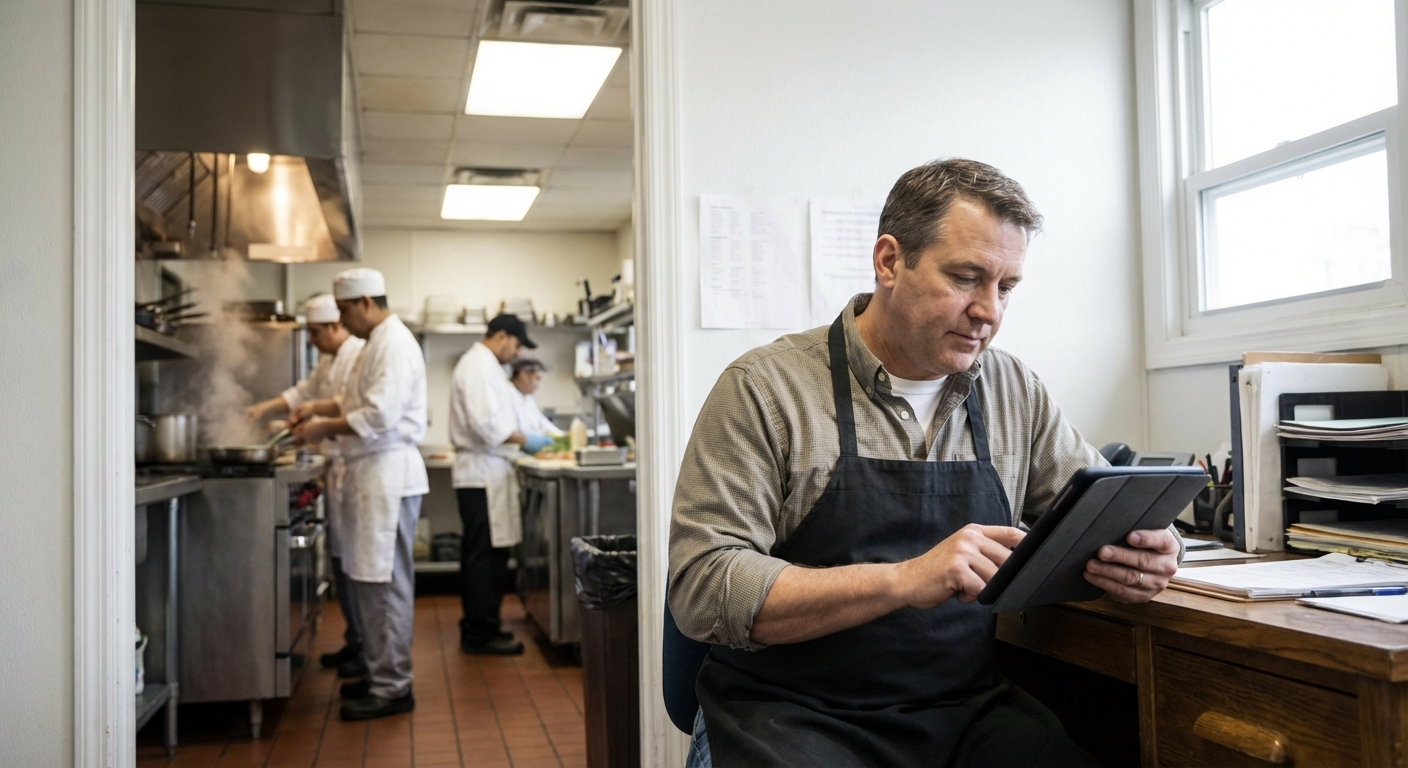
Ongoing training and culture
Training is not a one-time event during a worker's first week. Building a training-focused kitchen culture keeps your staff sharp and engaged over the long term.
- Cross-training: Cross-training your cooks across multiple stations makes your kitchen resilient against call-outs. It also creates clear advancement paths for employees who want to transition from line cook to sous chef.
- Promoting from within: Highlight successful internal career paths to motivate your staff. For example, Chipotle reports that over 90% of its restaurant managers started as entry-level crew members.
- Regular feedback: Host monthly safety briefings and quarterly hands-on culinary workshops. Engaged restaurant teams that feel supported by structured development reduce their overall turnover rates by 24%.
Measuring training effectiveness
To ensure your training program is actually delivering a return on investment, track these three core areas of performance:
- Time-to-competency: New hires should master basic safe tasks within 7 to 14 days and operate with total station independence by day 60 to 90.
- Operational accuracy: Monitor order error rates and plate waste. Your team should maintain an overall order accuracy rate of 98% or higher.
- Staff retention: Track your 30-day, 90-day, and one-year retention benchmarks. Successful training programs should keep your annual turnover rate well below the industry average.
By combining structured 30/60/90-day onboarding timelines with intuitive technology, you can build a highly capable back-of-house team. Introduce clear checklists to your kitchen today, and explore how Spindl and AgenticPOS can streamline your restaurant's daily operations.