Adapting restaurant operations for sustainability without sacrificing profit
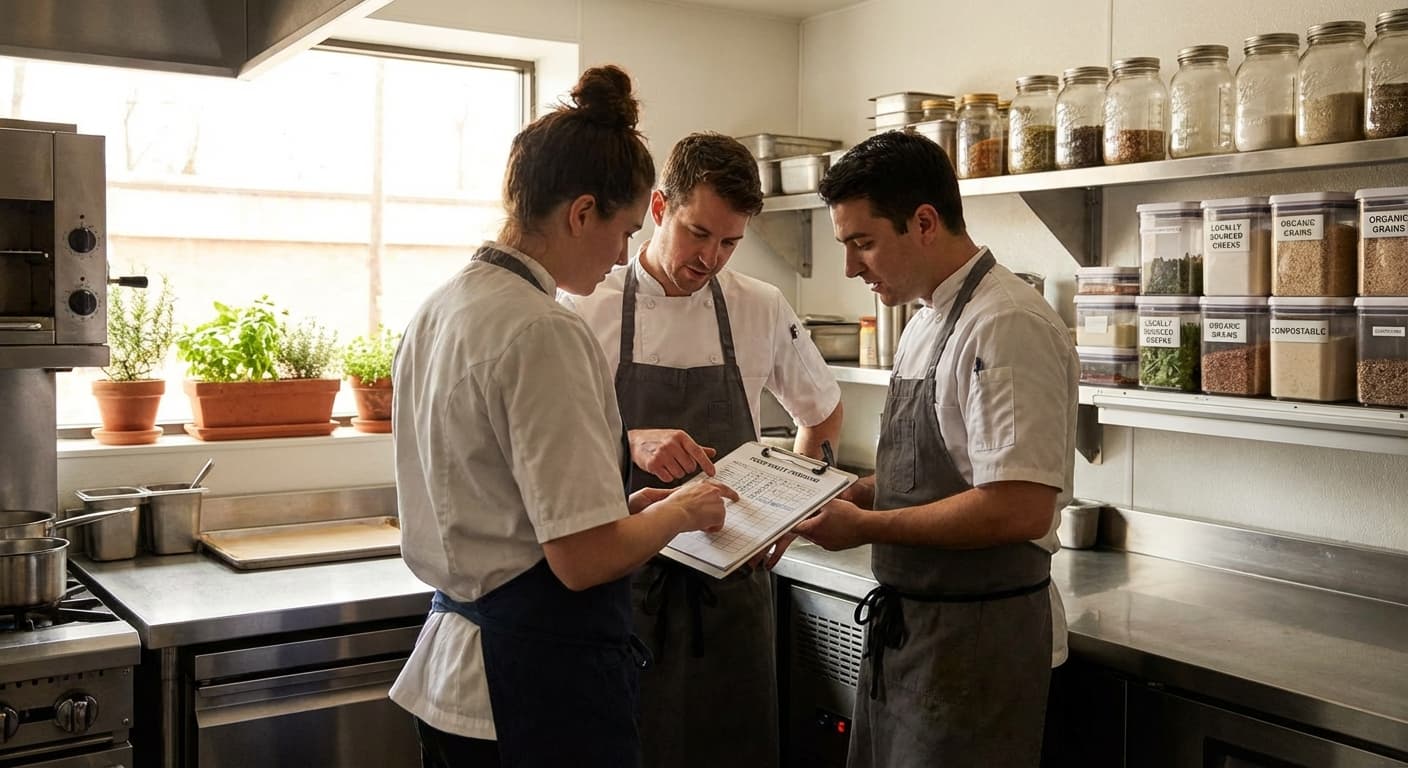
The U.S. restaurant industry will hit $1.5 trillion in sales in 2025, but average profit margins hover at just 3-5%. Sustainability isn't just good PR anymore – it's a competitive necessity that can actually improve your bottom line when implemented strategically.
Nearly half (47%) of hospitality owners report that environmentally friendly initiatives attract more customers, and 56% of businesses engaged in food waste initiatives cite cost reduction as the primary benefit. The math is simple: restaurants that treat sustainability as an operational priority, not just marketing spin, see measurable returns.
The business case for sustainable operations
Sustainability skeptics often assume eco-friendly practices mean higher costs. The data tells a different story.
Restaurants spend approximately $162 billion annually on waste-related costs including food and packaging. The USDA estimates 31% of the U.S. food supply – 133 billion pounds worth $162 billion – goes to waste annually. Two-thirds to 75% of food wasted in restaurants is edible, highlighting massive opportunities for improved prep and portion control.
More compelling: implementation of effective food waste management strategies shows a 1,300% increase in financial viability. ReFED estimates $382 billion in surplus food was generated in 2023 alone.
Gen Z, millennials, and higher-income consumers show the highest willingness to pay premium prices at sustainable restaurants, according to McKinsey research. This isn't a niche market – it's your growth demographic.
Waste reduction: The highest-impact sustainability lever
Start here. Food waste is both your biggest environmental footprint and your most controllable cost leak.
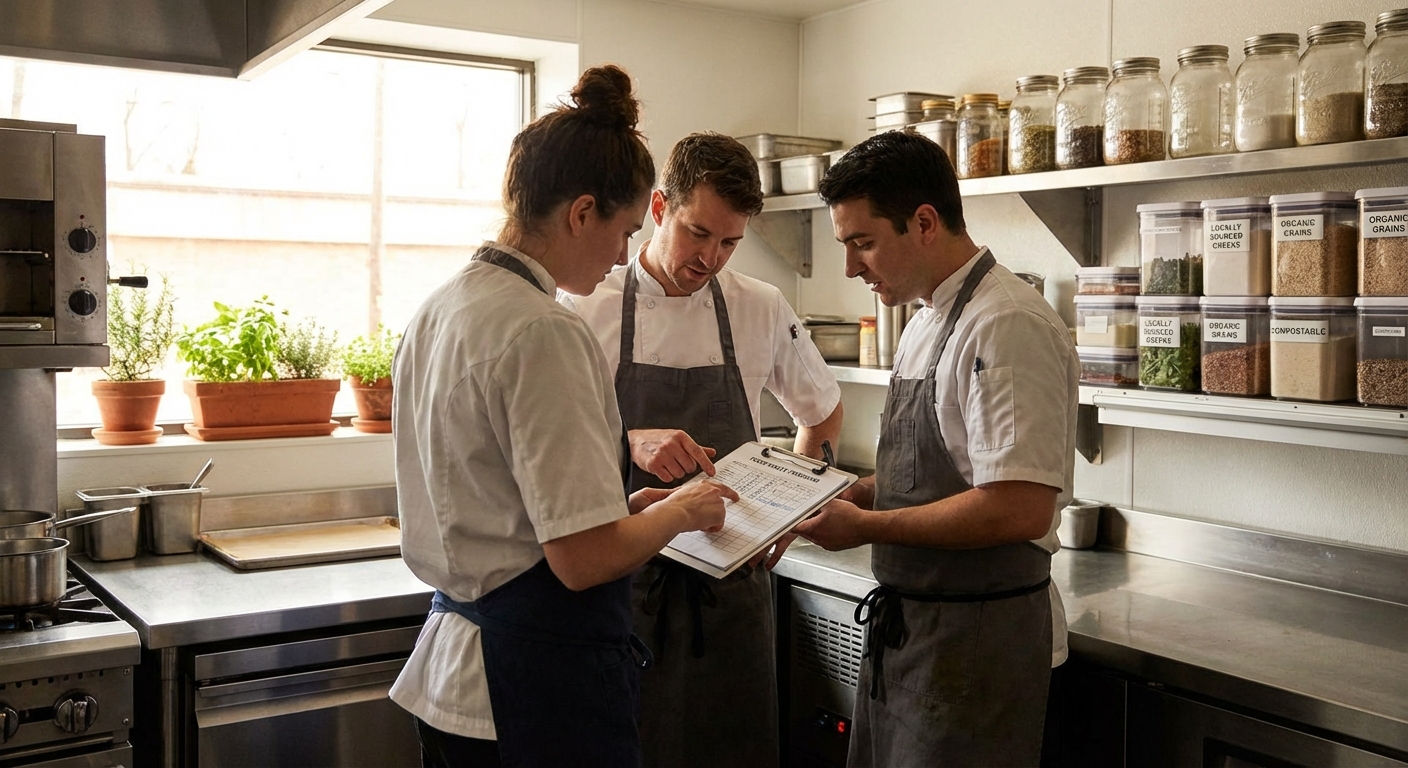
Track waste in real time
A Chicago fine-dining restaurant reduced food costs by 15% within three months using real-time inventory tracking while simultaneously reducing environmental footprint. The key was visibility: you can't manage what you don't measure.
Modern digital POS systems reduce food waste by 30% through automated inventory tracking and order accuracy improvements. When your system automatically deducts ingredients at the recipe level – tracking that a buffalo chicken sandwich removes 6 oz chicken, 1 tbsp buffalo sauce, 2 oz blue cheese, and a brioche bun – you gain precision that spreadsheets can't match.
Daily practices that prevent waste:
Weigh high-cost proteins to 0.1 lb daily to catch overuse patterns. One steakhouse discovered ribeye usage was running 8% above theoretical. After addressing portioning and cutting techniques, COGS dropped 1.7 percentage points in four weeks, saving $850 monthly on a $50,000 ribeye spend.
Implement FIFO (first in, first out) with color-coded labels showing receive dates. One chef's use of color-coded day-of-week tape reduced waste noticeably by making rotation visual and immediate.
Log waste in your POS by reason – spoilage, over-prep, customer return – to identify root causes. A visible waste tracking board can drive accountability; one restaurant reduced meat waste by 18% in a single month simply by making the problem visible and actionable.
Set par levels based on 30-day rolling sales data, adjusted for seasonality. A Chicago Mediterranean restaurant cut waste by 22% by implementing dynamic par levels that adjusted automatically based on sales patterns, weather, and local events.
Prep smarter, not harder
Standardize recipes with precise yields. That "pinch of salt" needs to become "0.25 tsp" if you want to control costs and waste. Missing garnishes and prep waste often don't show up in theoretical food costs, creating hidden variance.
Measure cooked yields, not raw weights. A raw pound of chicken breast may yield 10.5 oz cooked, not 16 oz. This distinction matters when calculating true recipe costs and sustainability impact.
Cross-utilize ingredients across multiple menu items to reduce spoilage. A Portland bistro cut its menu from 32 items to 18, strategically designing dishes to share core ingredients. The result: increased revenue and reduced training time while cutting waste.
Build "zero waste" specials featuring slow-moving inventory. This turns potential loss into profitable sales while demonstrating your commitment to sustainability in action.
Inventory optimization: From reactive to predictive
Traditional inventory management is reactive – you discover problems after money has already been wasted. Sustainable operations require predictive systems that align with restaurant inventory management best practices.
The power of integrated tracking
Integrated systems provide theoretical vs. actual variance reporting that pinpoints exactly where waste occurs. When actual usage exceeds theoretical by more than 2%, investigate immediately. Above 5% signals theft, over-portioning, or systematic waste.
Target inventory turnover of 4-8 times per month. Too slow means capital tied up and spoilage risk. Too fast means potential stockouts.
Inventory metrics that matter for sustainability:
Sell-through rate: Target >90% on perishables before they degrade. Monitor this weekly for your highest-value items.
Variance percentage: Keep under 2%; anything higher requires root-cause analysis. Variance >5% typically indicates 3–5% of food costs disappearing into waste.
Days on hand: Match to actual shelf life, not optimistic estimates. If produce spoils in 5 days, carrying 7 days of inventory guarantees waste.
Waste by category: Track which ingredient classes have the highest loss rates, then prioritize improvements there. Proteins and produce typically show the highest loss percentages.
One fast-casual chain achieved 4% lower food costs – roughly $80,000 annualized across locations – within three months by integrating sales, inventory, and ordering systems to eliminate blind spots. Their approach demonstrates how operational efficiency and sustainability reinforce each other.
Demand forecasting and smart ordering
AI-driven systems analyze historical sales, weather patterns, local events, and day-of-week trends to predict needs with remarkable accuracy. Research shows seafood demand can spike 40% on sunny Fridays compared to rainy ones in certain markets.
This matters because over-ordering leads to waste, while under-ordering drives expensive rush deliveries and menu 86s that frustrate customers.
Build forecasting into your workflow by reviewing 30-day sales trends before placing orders. Look for patterns: does mac and cheese sell 30% more when it's cold and rainy? Does your brunch crowd spike during local farmers' market days?
Adjust pars seasonally based on historical data, holidays, and your local event calendar. What works in summer won't work in winter.
Set automatic low-stock alerts at 125% of lead time usage. If your supplier delivers in 2 days and you use 10 lbs daily, alert at 25 lbs.
Schedule deliveries to match actual prep schedules, not just convenience. Moving mushroom order day cut spoilage by 60% for one multi-location pizza brand by ensuring product arrived when it would be used, not days before.
The ROI on waste reduction is extraordinary: industry research shows a $7 return for every $1 invested in waste management initiatives.
Responsible sourcing that makes financial sense
Sustainable sourcing doesn't require sourcing everything from small farms at triple the price. It requires strategic decisions about where premium sourcing matters most to your customers and concept.
Prioritize high-impact categories
Plant-based options resonate with a growing market. 63% of U.S. consumers believe a plant-based diet is better for the environment, and 80% would buy a plant-based burger described as "rich and tasty," according to Kerry research.
You don't need an entirely plant-based menu. Start with 2-3 compelling vegetarian or vegan options that stand on their own merits, not as compromises. Market them on flavor and satisfaction, not sustainability – the eco-conscious diners already know. A well-executed plant-based entree often carries better margins than proteins while meeting sustainability goals.
Local and seasonal sourcing reduces transportation emissions while often lowering costs through reduced supply chain intermediaries. Build relationships with 2-3 regional suppliers for your highest-volume categories.
Seasonal ingredients are at peak flavor and minimum price. A winter menu featuring root vegetables and hearty proteins costs less and delivers better taste than trying to source tomatoes in January. This approach naturally aligns with how the food industry has changed toward "glocal" flavors – global inspiration with local execution.
Sustainable proteins and seafood
Choose suppliers that offer transparency on farming and fishing practices. 77% of consumers consider recyclability the most critical factor in sustainable packaging – they care about how products arrive, not just the product itself.
Feature one sustainably sourced protein as a signature item and market the story. This creates differentiation without overwhelming your menu or budget.
Partner with suppliers who provide traceability data – where, how, when. This transparency builds trust and gives your servers concrete stories to tell customers who ask.
Rotate seafood options based on seasonal availability rather than forcing year-round consistency. This reduces cost pressure and environmental impact while keeping your menu dynamic.
Consider "trash fish" and underutilized species that are abundant but undermarketed. These often deliver excellent flavor at lower cost while supporting more sustainable fishing practices.
The key is authenticity. Customers can tell when sustainability is genuine versus greenwashing. 56% of consumers would switch to sustainable products if provided comprehensive environmental impact information. Don't claim what you can't back up.
Energy and water efficiency: The invisible savings
Utility costs are a silent profit drain. Restaurants use five times more energy per square foot than most commercial buildings, and water usage in commercial kitchens is notoriously high.

Energy efficiency quick wins
HVAC optimization delivers immediate returns. Install programmable thermostats that adjust during non-operating hours – why cool an empty dining room to 68°F at 3 AM? Maintain equipment quarterly; dirty coils reduce efficiency by 15-20%. Use Energy Star equipment for all new purchases, and consider demand-based ventilation that adjusts fan speed to cooking activity rather than running full-blast all service.
Kitchen equipment upgrades compound savings over time. Switch to induction cooktops where possible (90% energy efficiency vs. 40% for gas). Install low-flow pre-rinse spray valves that save 150,000 gallons annually per unit while maintaining cleaning power. Use convection ovens that cook faster at lower temperatures. Most importantly: turn off equipment during slow periods rather than leaving everything on all shift. The habit change costs nothing.
Lighting offers the easiest wins. LED lighting reduces energy use by 75% compared to incandescent with immediate payback. Add motion sensors in walk-ins, storage areas, and restrooms. Consider daylight harvesting systems that dim lights when natural light is sufficient.
Water conservation strategies
Kitchen operations waste more water than most operators realize. Pre-scrape dishes instead of extensive rinsing – this saves 5-7 gallons per dish with no impact on cleanliness. Use high-efficiency dishwashers that use <1 gallon per rack. Fix leaks immediately; a dripping faucet wastes 3,000 gallons annually. Install aerators on all faucets for 40-60% water reduction with no performance loss.
Ice machines and dishwashers are high-consumption categories. Air-cooled equipment uses less water than water-cooled alternatives. Schedule dishwasher loads to run full rather than throughout service. Ensure proper water pressure – excessive pressure wastes water and damages equipment.
These investments typically pay for themselves in 12-24 months through reduced utility bills while simultaneously reducing your environmental footprint.
Aligning with eco-conscious consumer trends
Sustainability can't just be operational – it needs to be visible and authentic in your brand positioning.
Marketing sustainability without greenwashing
What works:
Specific, verifiable claims beat vague statements. "30% of our produce is sourced within 50 miles" tells a story. "We believe in local sourcing" says nothing.
Behind-the-scenes content showing actual practices builds trust. Post photos of your farmers' market shopping or your composting system in action.
Staff education is critical. Servers need to answer specific questions about sourcing and practices confidently. A well-informed team makes sustainability part of the dining experience.
Partnerships with local nonprofits that align with your values demonstrate genuine commitment. Partnering with local nonprofits (donating 15-20% of sales on specific nights) expands reach into new communities at lower customer acquisition cost than paid channels while showing community investment.
What to avoid:
Generic eco-badges without certification are meaningless. Overstating impact – "saving the planet" is not measurable. Sustainability claims that contradict visible practices, like promoting local food while using Styrofoam containers. Making it the only dimension of your brand; the food still has to be excellent.
Packaging and takeout considerations
Third-party delivery and takeout now drive significant revenue for most restaurants. 82% of U.S. restaurants use social media as primary marketing, and 45% of diners have ordered food directly through restaurant social media pages. This shift means packaging is now part of your customer experience and environmental impact.
Sustainable packaging framework:
Compostable vs. recyclable: Choose based on local waste infrastructure. Compostables require commercial composting facilities most cities lack – recyclables may be the more practical "sustainable" choice in your market.
Right-sizing: Oversized packaging wastes materials and looks sloppy. Match container size to portion.
Multi-item containers: Reduce plastic use while improving presentation and keeping food organized.
Minimize single-use items: Only include utensils, napkins, condiments by request, not by default.
Balance sustainability with functionality. A beautiful eco-friendly container that leaks or allows food to arrive cold defeats the purpose. Test extensively before rolling out.
Building a sustainability framework that scales
One-off initiatives don't create lasting change. You need systems and culture that make sustainability the default, not the exception.
The 30/30/30/10 sustainability framework
Adapt the data-driven 30/30/30/10 rule for sustainability focus:
30% waste reduction: Inventory tracking, prep optimization, waste logging. This delivers the highest ROI and builds the foundation for everything else.
30% sourcing: Supplier relationships, seasonal menus, packaging decisions. This connects your sustainability story to customer experience.
30% energy/water: Equipment upgrades, operational changes, staff training. These are the invisible savings that compound over time.
10% innovation: Testing new practices, staying current on trends, long-term improvements. This keeps you ahead of regulatory changes and consumer expectations.
Staff engagement and training
Your team executes sustainability practices daily. Without buy-in, even the best systems fail.
Explain the why. Show how waste reduction improves profitability and job security. When staff understand that cutting food costs by 2 percentage points could fund raises or prevent layoffs, they engage differently.
Make it competitive. Display waste metrics by station and celebrate improvements. Humans respond to visible scoreboards.
Reward good practices. Recognize staff who consistently execute protocols. This doesn't require cash bonuses – public acknowledgment at pre-shift meetings works.
Involve staff in solutions. The line cook who preps broccoli knows where stem waste happens. Ask for input and implement good ideas quickly.
Building this culture addresses one of the industry's most persistent challenges. The restaurant industry has a 75% annual turnover rate for hourly workers, costing thousands per employee in recruitment and training. Operations that run well and engage staff reduce this churn significantly.
Technology that enables sustainability
Modern restaurant management platforms provide the data infrastructure sustainability requires. Platforms like Spindl consolidate order taking, delivery, POS, inventory, and analytics into one system – eliminating the fragmentation that causes waste and inefficiency.
Critical tech capabilities for sustainability:
Real-time inventory with ingredient-level tracking ensures you know exactly what's on hand and what's aging out. Automated variance reporting catches waste immediately, not during month-end reconciliation. Predictive ordering based on sales patterns and external factors prevents both over-ordering and stockouts. Customer preference tracking lets you personalize sustainable options to diners who care most.
Digital systems enable precision that manual approaches can't match. When every ingredient is tracked automatically, when waste is logged at the moment it happens, when ordering is optimized by AI – sustainability becomes easier than the unsustainable alternative. This aligns with broader trends in restaurant digital transformation.
Implementation roadmap: 90-day sustainability sprint
Start with high-impact, low-resistance changes that build momentum.
Month 1: Baseline and quick wins
Audit current waste by category for one week. You can't improve what you don't measure. Implement daily waste logging by reason – spoilage, over-prep, customer return. Standardize 5-10 highest-cost recipes with precise yields. Fix obvious leaks like dripping faucets and equipment left running overnight. Measure baseline metrics: food cost %, waste %, utility costs.
Month 2: Systems and training
Roll out integrated inventory tracking that connects POS to actual ingredient usage. Train staff on new protocols with emphasis on why these changes matter. Implement FIFO labeling system with color-coded tape or digital tracking. Set up supplier conversations about sustainable options and pricing. Review first month of waste data and identify top 3 sources for focused improvement.
Month 3: Optimization and expansion
Adjust pars based on actual usage data from months 1-2. Launch 2-3 seasonal menu items using sustainable sourcing to test customer response. Implement demand-based scheduling for equipment – no more running everything at full power during slow periods. Set up energy monitoring and identify improvement opportunities. Measure results and calculate ROI to justify continued investment.
Target: 5% food cost reduction in 90 days. On a restaurant doing $1 million in food sales, that's $50,000 annually – enough to fund further sustainability investments while improving margins. This level of improvement is achievable with the right approach to data-driven decision making.
Measuring success: KPIs that matter
Track metrics that tie sustainability to profitability:
Financial metrics keep you honest about ROI. Food cost % should target 28-32%, with 2-5% improvement from waste reduction realistic within 90 days. Waste as % of purchases should stay under 4%. Track utility cost per cover over time to measure energy and water improvements. Calculate ROI on sustainability investments – equipment, packaging, sourcing – to guide future decisions.
Operational metrics show where systems work and where they don't. Inventory variance should stay under 2%; above 5% indicates systematic problems. Inventory turns should hit 4-8 per month – the sweet spot between freshness and efficiency. Track waste by category and reason to focus improvement efforts. Monitor sell-through rate on perishables, targeting >90% before degradation.
Customer metrics connect sustainability to revenue. Track repeat rate among eco-conscious segments. Monitor average ticket size on sustainable menu items, which often runs 15-30% higher than standard items. Measure social media engagement on sustainability content. Collect direct feedback on sustainable practices through comment cards and digital surveys.
Only 51.4% of restaurants survive past their fifth year. Those that build operational efficiency and align with consumer values have the best chance of beating those odds. Understanding why restaurants struggle with profitability helps you avoid common pitfalls.
Moving forward without sacrificing what matters
Sustainability skeptics often frame it as a zero-sum tradeoff: environment or profit, quality or ethics. The most successful restaurants prove this is a false choice.
The real question isn't whether your restaurant can afford to implement sustainable practices. With restaurant industry competition intensifying across 700,000+ U.S. foodservice outlets, the question is whether you can afford not to. Monthly traffic growth occurred in only 1 of 12 months through May 2025, making operational excellence and customer alignment critical for survival.
Start with waste reduction – it delivers the fastest ROI and builds the foundation for broader changes. Get your inventory systems right by implementing POS and inventory integration. Train your team with clear expectations and visible accountability. Make decisions based on real data through restaurant analytics about what's working.
The restaurants winning in 2025 and beyond are those that treat sustainability as an operational discipline, not a marketing department initiative. They use technology to gain visibility, they empower staff with clear systems, and they measure results relentlessly.
Ready to turn sustainability from aspiration into operational reality? Explore how restaurant management strategies create the foundation for profitable, sustainable operations. Or see how integrated platforms eliminate the complexity of managing multiple systems while providing the real-time visibility sustainability requires.