How to consolidate your restaurant tech stack
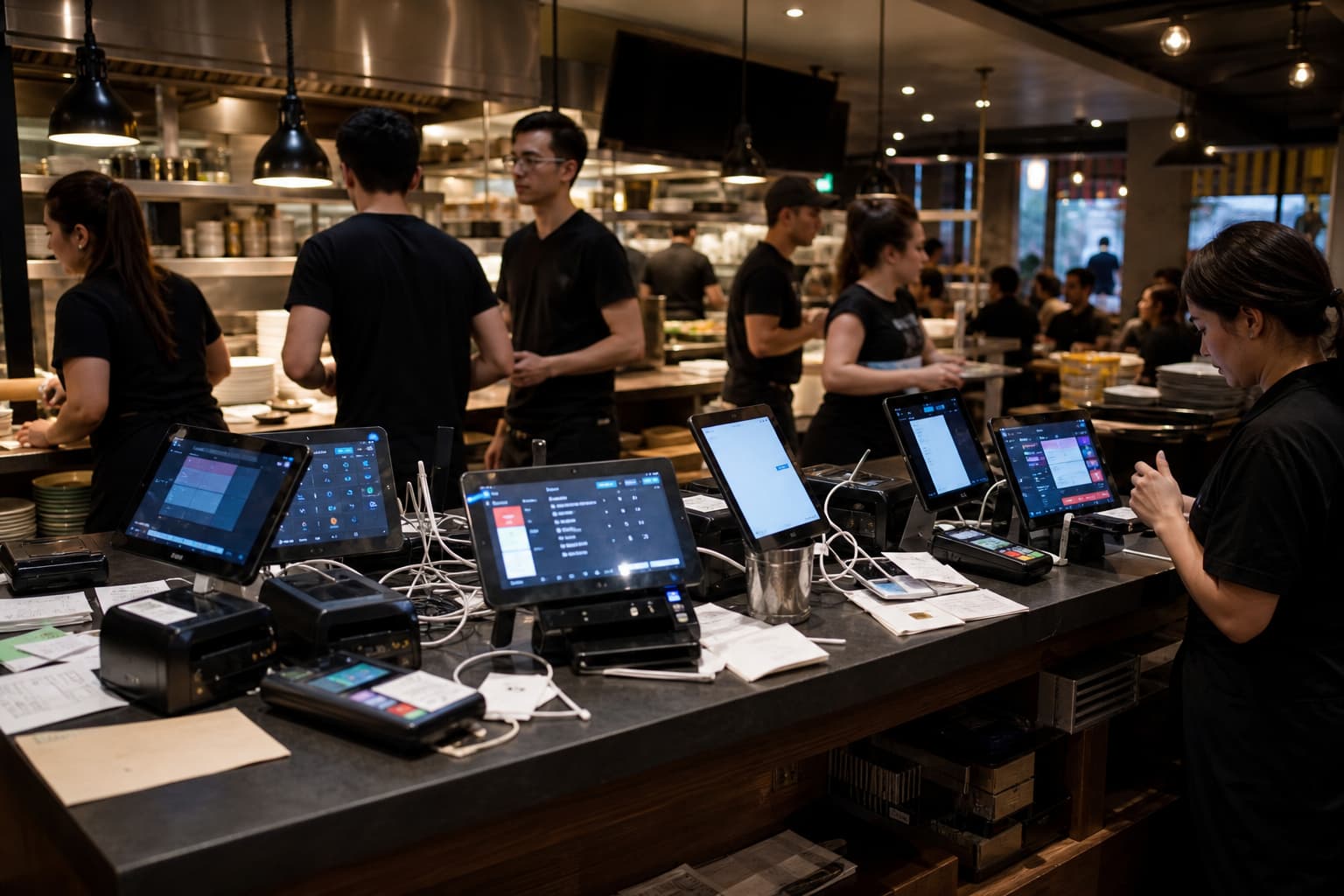
Are you running a restaurant or a consumer electronics store? Juggling five tablets, separate software subscriptions, and manual order re-entry eats your margins alive. Here is how restaurant tech stack consolidation eliminates tool sprawl and lowers operating costs.
What is restaurant tech stack consolidation?
Restaurant tech stack consolidation is the strategic reduction of software tools by replacing disconnected point solutions with a single operating system or deeply integrated ecosystem.
Over the past decade, software companies sold restaurants standalone tools for every operational task. Operators ended up with separate vendors for online ordering, kitchen display systems, inventory tracking, guest loyalty, shift scheduling, and third-party delivery aggregation. The result is a fragmented "tablet farm" where managers spend hours syncing sales numbers across separate portals.
Consolidation replaces these fragmented digital tools for restaurants with an end-to-end management system. Instead of paying multiple software fees to move data manually from one screen to another, operators run order taking, kitchen workflows, inventory, and customer reporting through a single source of truth.
Why operators are ditching point solutions
Industry consolidation is driven by severe margin compression and operational friction. Disconnected point solutions create structural weaknesses across four major operational areas.
Eliminate software subscription bloat
Point solutions carry hidden financial drag. A base POS charge combined with separate monthly fees for delivery management, digital menus, gift cards, and reporting adds up quickly. Software vendors frequently mask true costs behind add-on fees and processing markups. Swapping half a dozen software invoices for one consolidated platform cuts monthly overhead immediately.
Stop manual data re-entry and order errors
When software systems do not communicate directly, staff members become human middleware. Servers re-key third-party delivery orders into the POS terminal. Managers manually copy daily sales totals into inventory spreadsheets. Every manual keystroke introduces human error, delays kitchen preparation, and inflates food costs.
Gain real-time menu and inventory control
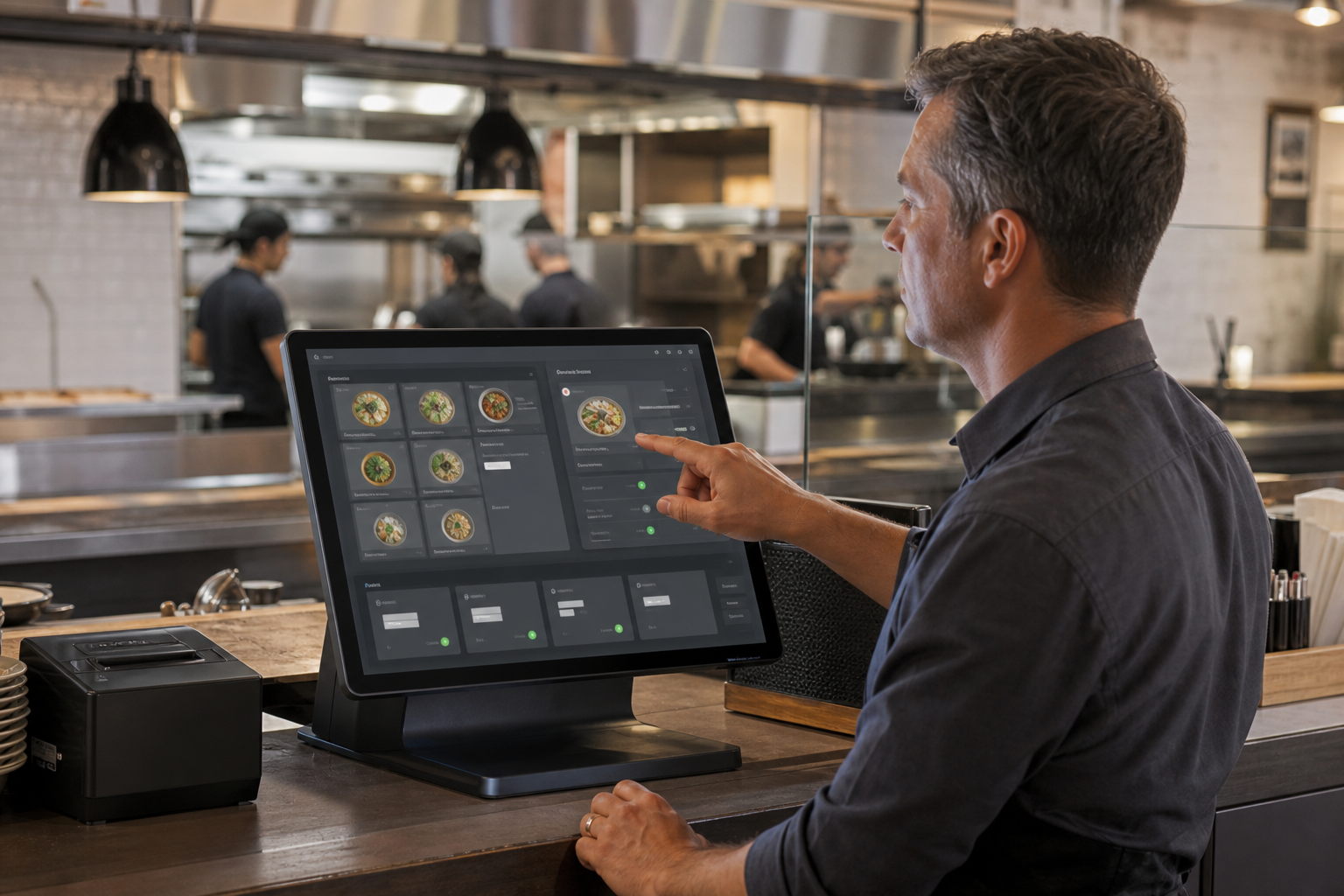
With disparate tools, 86'ing an out-of-stock ingredient requires logging into three different delivery portals and updating your POS manually. If a server misses one portal, guests order items you cannot prepare. That leads to canceled orders and lost revenue. In a consolidated setup, 86'ing an item on your POS automatically removes it across your website, kiosks, and delivery apps simultaneously. Pair your sales terminal with live inventory management to keep stock counts aligned with every check closed.
Reduce compliance and vendor risk
Every software vendor touching cardholder data introduces security overhead. PCI DSS third-party risk guidelines require operators to maintain documented inventories, execute formal vendor agreements, and conduct annual security monitoring for every external service provider connected to payment streams. Managing dozens of vendors increases your vulnerability to security breaches and non-compliance penalties.
How to evaluate and simplify your software systems
Simplifying your tech stack requires a systematic audit of your operations before canceling subscriptions or migrating to new hardware.
Audit your current stack and data flows
Map every software application currently in use across four core functional areas:
- Sales and revenue: Point of sale, online ordering, delivery marketplaces, gift cards, loyalty.
- Back-of-house operations: Kitchen display systems (KDS), inventory management systems, recipe costing, supplier ordering.
- Labor and scheduling: Time clocks, shift planning, payroll processing, tip pooling.
- Financials: Accounting software, sales reporting, daily reconciliation tools.
For every tool, document the monthly fee, payment processing terms, contract expiration date, and who is responsible for transferring data between platforms.
Test integration quality
Not all integrations are built equal. Distinguish between direct API integrations and third-party middleware. Direct APIs transfer granular transaction data – such as item modifications, taxes, and payment breakdowns – instantly without human intervention. Middleware adds extra recurring costs and creates a single point of failure during busy meal services. Review our POS system integration guide to identify structural weaknesses in your current setup.
Calculate true total cost of ownership
When reviewing replacement software platforms, evaluate vendor quotes under three distinct operational scenarios:
- Base scenario: Quoted subscription fee plus expected payment processing volume.
- Expanded scope (+25%): Base costs plus necessary add-ons likely needed within 12 months, such as additional licenses or extra menu channels.
- Implementation buffer (+50% time): Financial impact if hardware setup and team onboarding take longer than scheduled.
Compare these figures against your current stack to establish a realistic break-even timeline. Learn how to structure these calculations in our guide on evaluating restaurant tech ROI.
Simplify operations without breaking existing systems
Replacing an entire restaurant operating system overnight can feel daunting, especially for multi-unit operators. Fortunately, tech consolidation can happen in logical phases:
- Phase 1: Connect an AI agent layer to your legacy POS using AgenticPOS.
- Phase 2: Centralize multi-location reporting, shift scheduling, and menu management.
- Phase 3: Migrate hardware to a native consolidated OS like Spindl.
If you are not ready to replace your existing hardware, start consolidating controls immediately using open protocols. Through AgenticPOS, operators attach an MCP server directly to their current POS system. This lets managers control core back-office functions – updating menus across channels, running sales analytics, adjusting shift schedules, and checking stock counts – via plain-language AI chat in Claude, ChatGPT, or Slack.
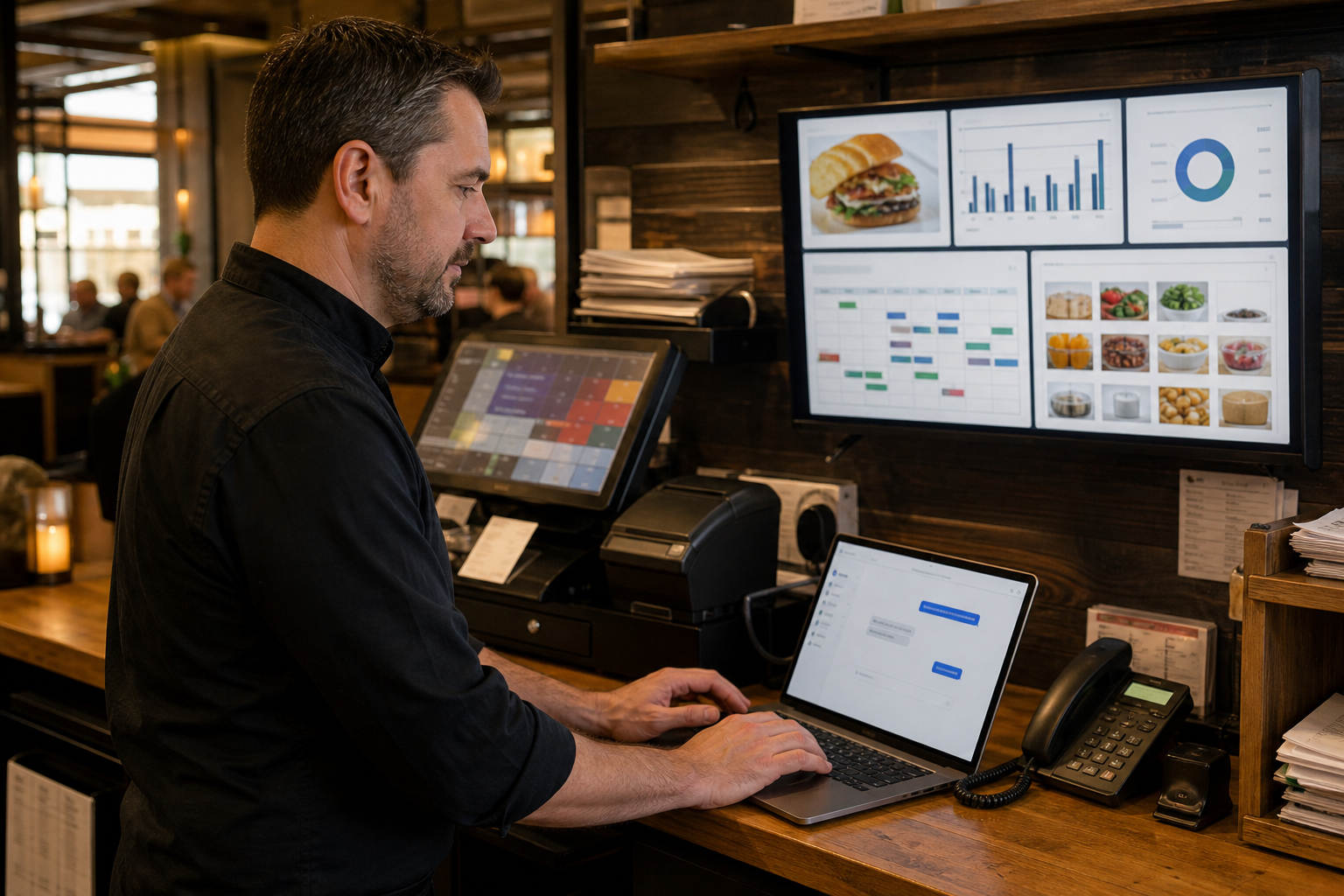
Starting with an agentic layer automates daily administrative tasks on existing hardware today. Once you are ready to remove legacy hardware, extra tablets, and middleware completely, transition smoothly to a single platform like Spindl.
Uniting point of sale software, direct delivery app management, and integrations inside one native platform simplifies daily operations and eliminates redundant software subscriptions.
Take control of your operational overhead
Tool sprawl degrades service speed, frustrates restaurant staff, and quietly erodes profit margins through layered subscription fees. Consolidating your systems restores operational clarity to your front and back of house.
Audit your current software contracts today to highlight duplicate feature fees. Start streamlining daily operations using AgenticPOS on your current system, or review Spindl pricing to see how an all-in-one platform cuts overhead and streamlines service.