Restaurant health inspection checklist to pass your next audit
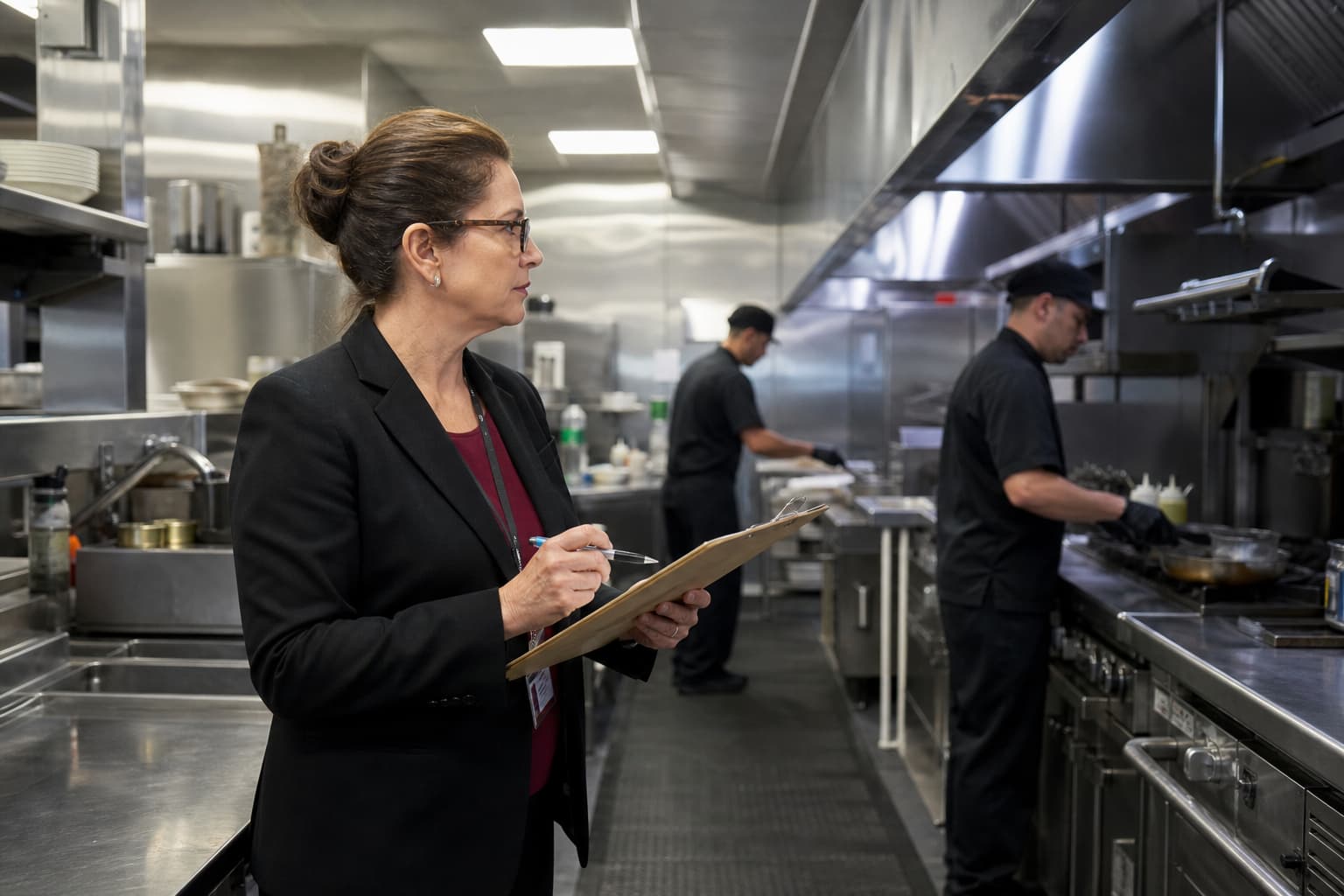
Will an unannounced health inspection shut your kitchen down today? A single unmonitored cooler or missing temperature log can trigger critical violations and close your doors. Use this practical health inspection checklist to run internal audits and keep your operations compliant.
Maintain manager credentials and employee health policies
Inspectors verify leadership oversight and staff health protocols before they ever check line temperatures. Establishing formal policies and credentialed management protects both your customers and your operational license.
- Designate a Person in Charge (PIC): Keep a designated PIC present during all operational hours. Your PIC must demonstrate food safety knowledge or hold a Certified Food Protection Manager credential.
- Verify kitchen manager certification: Managers with formal food safety training reduce critical violations. According to CDC research on kitchen manager certification, 80% of norovirus outbreaks and 100% of Clostridium perfringens outbreaks occurred in facilities lacking a certified kitchen manager.
- Enforce ill employee exclusions: Exclude staff experiencing vomiting, diarrhea, or jaundice immediately. CDC studies reveal that ill food workers contribute to 58.6% of retail foodborne illness outbreaks.
- Standardize hygiene onboarding: Require all new hires to review core handwashing, glove use, and safety rules. You can structure team onboarding with a dedicated kitchen staff training program.
Enforce strict cooking, cooling, and temperature holding zones
Temperature abuse is a primary driver of pathogen growth in commercial kitchens. Monitoring cold lines, steam tables, and internal cook temperatures prevents dangerous bacterial proliferation.
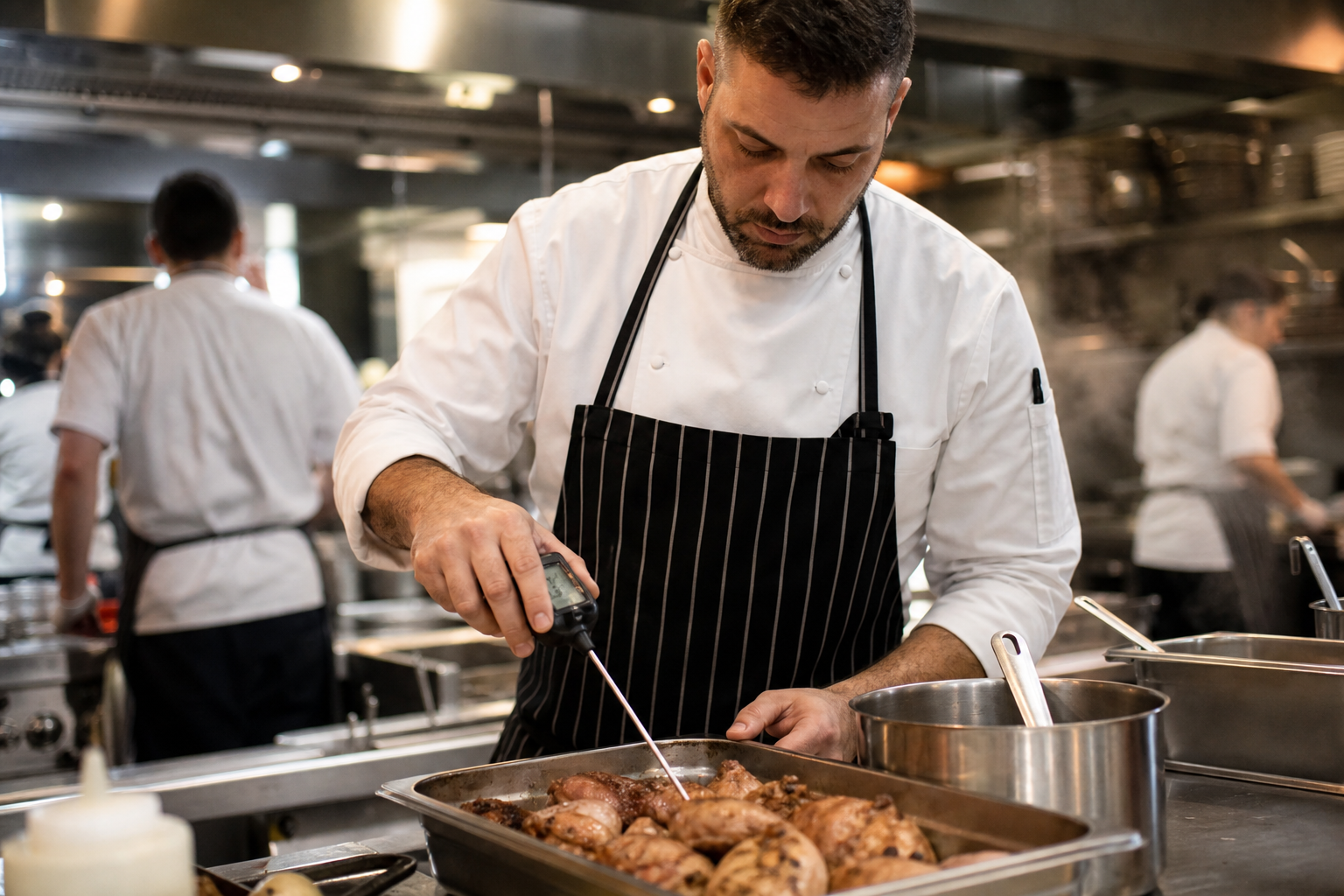
- Cold holding standards: Keep all refrigerated time/temperature control for safety (TCS) foods at 41°F (5°C) or below.
- Hot holding requirements: Maintain hot TCS foods at 135°F (57°C) or above during service.
- Internal cooking temperatures: Cook poultry, stuffed meats, and microwave dishes to 165°F (74°C) instantaneously. Cook ground meats, comminuted fish, and raw eggs not for immediate service to 155°F (68°C) for 17 seconds. Cook pork, fish, and immediate-service raw eggs to 145°F (63°C) for 15 seconds.
- Two-stage cooling timeline: Cool hot TCS items from 135°F to 70°F within 2 hours, and from 70°F down to 41°F within 6 hours total.
- Reheating standards: Reheat previously cooked TCS foods intended for hot holding to an internal temperature of 165°F within 2 hours.
- Corrective action logging: Record line temperatures mid-shift and document immediate corrective actions if temperatures drift, following established practices for navigating food safety regulations in restaurants.
Audit handwashing stations and hygiene controls
Proper handwashing infrastructure must remain accessible, fully stocked, and operational across every shift.
- Dedicated sinks only: Ensure staff wash hands exclusively in dedicated handwashing sinks, never in food preparation, warewashing, or mop sinks.
- Water temperature compliance: Confirm that handwashing sinks deliver running water of at least 85°F (29.4°C) under current FDA Food Code standards.
- Stock essential supplies: Equip every hand sink with liquid or bar soap, disposable paper towels or an approved air dryer, a trash receptacle, and visible handwashing signage.
- Prohibit bare-hand contact: Force the use of single-use gloves, tongs, or deli paper when handling ready-to-eat foods. CDC data shows that bare-hand contact by infectious workers is the single most common contributing factor in retail foodborne illness outbreaks at 27.9%.
Sanitize food-contact surfaces and monitor chemical levels
Sanitization kills remaining pathogens after cleaning, preventing cross-contamination during active food production.
- Follow the 4-hour rule: Clean and sanitize food-contact surfaces and utensils used with TCS foods at least every 4 hours during active service.
- Test chemical concentrations: Test sanitizing solutions regularly with dedicated test kits. Chlorine solutions require 25–100 mg/L depending on pH and water temperature, while iodine requires 12.5–25 mg/L at pH 5.0 or lower.
- Store wiping cloths properly: Keep wet wiping cloths completely submerged in sanitizer solution buckets between uses.
- Maintain non-food-contact surfaces: Keep line exteriors, shelving, and door handles free from accumulated grease, dust, and food debris.
Standardize date marking, storage, and thawing
Improper food handling during storage or thawing creates immediate priority violations during health inspections.
- Apply the 7-day date marking rule: Label ready-to-eat TCS foods prepared and held for more than 24 hours. Hold items for a maximum of 7 days at 41°F or below, counting the day of preparation or opening as Day 1.
- Elevate food storage: Store food containers at least 6 inches off the floor in clean, dry locations protected from splash and plumbing leaks.
- Follow approved thawing methods: Thaw TCS food under refrigeration at 41°F or below, submerged under running water at 70°F or lower, as part of a continuous cooking process, or in a microwave with immediate transfer to conventional cooking units.
- Automate stock control: Connect recipe usage to live inventory management tools to flag expired stock automatically and enforce First-In, First-Out (FIFO) rotation.
Store toxic chemicals safely and manage pest barriers
Chemical contamination and pest presence represent major safety hazards that can halt kitchen operations instantly.
- Label working containers: Mark all working bottles containing cleaners or sanitizers with the common product name of the chemical inside.
- Isolate chemical storage: Store toxic materials below and away from food, clean equipment, utensils, and single-service items.
- Maintain exterior pest barriers: Seal wall or floor gaps and ensure outer doors fit tightly. Use 16-mesh-to-1-inch screens or functional air curtains on open service doors.
- Position insect devices correctly: Ensure insect electrocutors retain dead insects inside and are never installed directly above open food preparation or dishwashing zones.
Streamline compliance and back-of-house operations with tech
Paper logs get misplaced or forgotten during peak service rushes. Moving to digital operational tools transforms food safety compliance from a stressful routine into a continuous background habit.
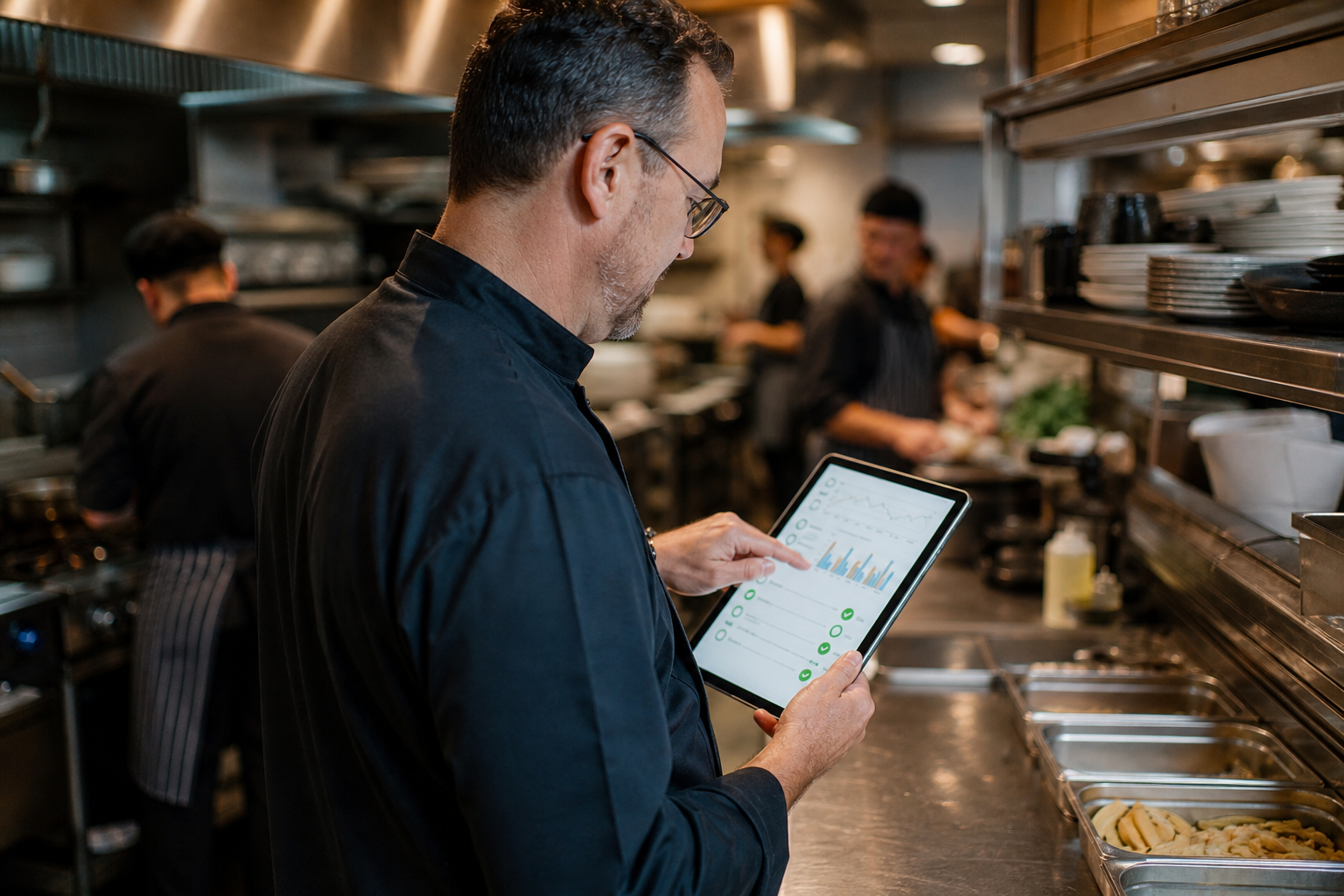
By integrating POS with inventory management systems, kitchen teams gain real-time visibility over stock turns, lot numbers, and cost variances that signal improper holding or excessive waste.
To simplify daily management without navigating complex dashboards, operators can leverage AgenticPOS. AgenticPOS provides an MCP server that lets AI agents control back-office POS operations via simple chat interfaces like Claude, ChatGPT, or Slack. You can pull inventory reports, review shift updates, or audit operational metrics conversationally. Start free with AgenticPOS on your existing POS system, scale into Pro for multi-location updates, and transition to Spindl’s full operating system when you are ready to modernize your entire restaurant tech stack.
Passing health inspections consistently requires building repeatable daily habits across every shift. Audit your kitchen against this checklist today, automate your temperature logs, and protect your margins and reputation.