How a restaurant works: systems behind smooth operations
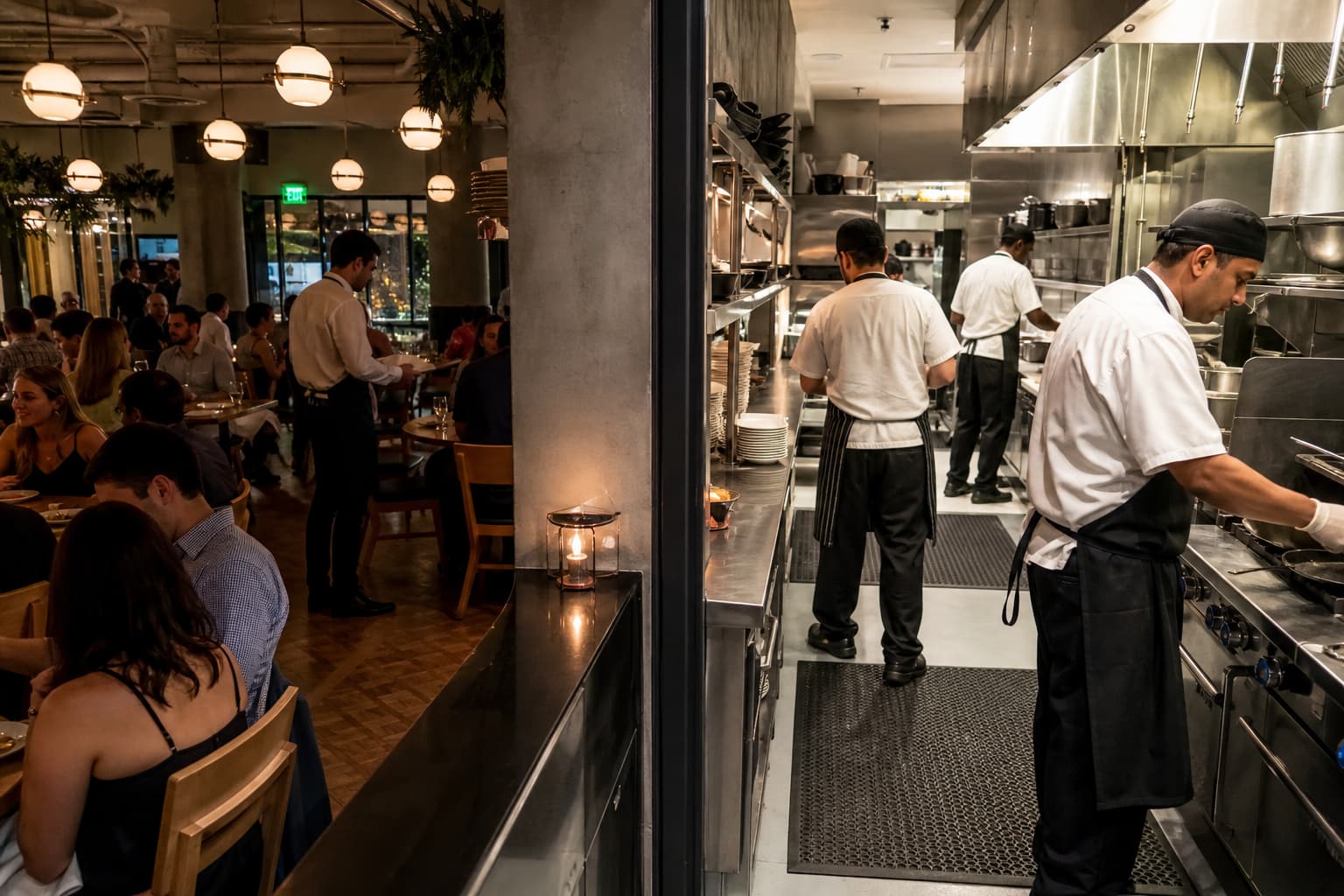
Why do some restaurants run seamlessly during Friday night rushes while others collapse? Menus matter, but operational systems dictate success. Understanding how roles, workflows, and communication connect across front and back of house is essential for building a profitable, well-managed restaurant.
The blueprint of a restaurant: FOH vs. BOH
A restaurant operates as two interconnected halves: the Front of House (FOH) and the Back of House (BOH). FOH is your dining environment, where guests experience your hospitality. BOH is your production engine, where kitchen staff transform raw ingredients into finished culinary orders.
When communication between FOH and BOH fails, ticket times surge, orders get miscommunicated, and guest retention drops. Keeping both sides synchronized requires clear role definitions, strict standard operating procedures, and shared service targets.
Front of House roles and responsibilities
Front-of-house staff manage guest touchpoints from arrival to payment. Their primary goals are hospitality, quick service, and order precision, directly shaping customer service in restaurant management.
- Hosts and hostesses: Greet patrons, manage floor seating charts, balance server rotation, and control guest flow to keep the kitchen from getting overwhelmed.
- Servers and waitstaff: Take orders, explain menu items, upsell specials, and enter orders accurately into a fast restaurant POS system.
- Bartenders and barbacks: Mix beverages for bar patrons and table orders, maintain bar inventory, and manage glassware rotation.
- Food runners and expeditors: Inspect finished plates at the kitchen pass for presentation and order accuracy before delivering them hot to tables.
- Bussers and support staff: Clear dirty dishes, sanitize tables, and reset dining areas to speed up table turnover.
Maintaining these service steps requires structured restaurant quality control measures so every guest experiences consistent standards across every shift.
Back of House roles and responsibilities
Back-of-house operations run on strict timing, heat, and high-volume production line mechanics.
- Executive chefs: Design menus, set ingredient specs, manage food costs, source vendors, and enforce culinary quality standards across the kitchen.
- Sous chefs: Assist the executive chef as second-in-command, direct line operations during peak service, coach kitchen staff, and step in wherever bottlenecks occur.
- Line and prep cooks: Prepare mise en place, portion ingredients according to standardized recipes, and fire hot food to match order ticket times.
- Food preparation workers: Execute preliminary ingredient preparation, slice proteins, chop produce, and organize cold storage under strict First-In, First-Out (FIFO) standards.
Controlling raw food costs requires immediate visibility into ingredient usage. Connecting kitchen production directly to your sales using live inventory management software stops portion creep and prevents costly mid-shift stockouts.
Leadership, safety, and compliance
Sustaining operational efficiency across both FOH and BOH requires administrative leadership and strict safety oversight.
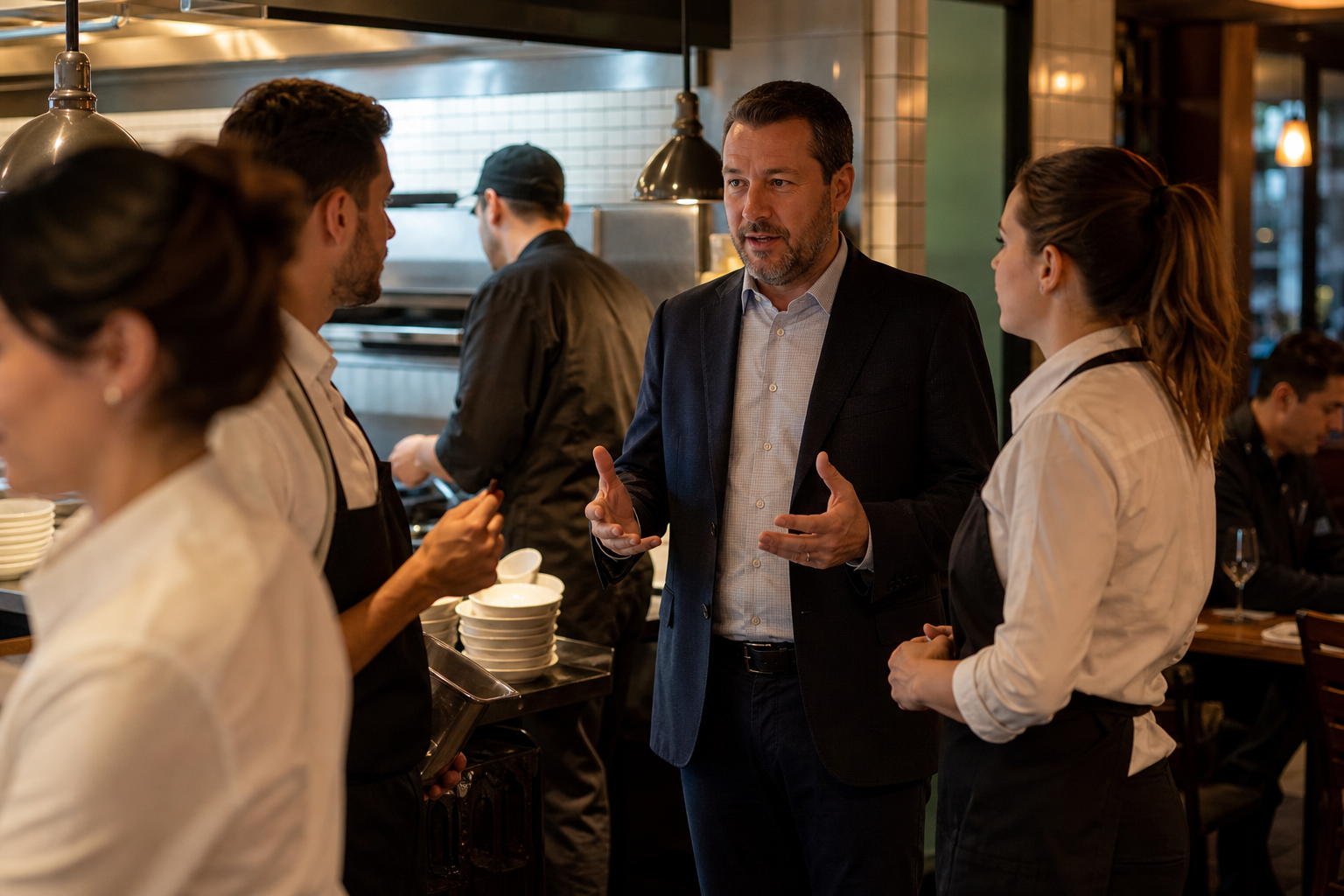
Food service managers
Food service managers direct daily operations, schedule shifts, handle guest feedback, monitor labor expenses, and track financial performance. Effective managers focus heavily on prime cost – the combined total of food and labor expenses – keeping it near the industry benchmark of 60% of total revenue.
The Person in Charge (PIC) and safety compliance
Under the FDA Food Code, a designated Person in Charge must be physically present during all operating hours. The PIC enforces handwashing routines, eliminates bare-hand contact with ready-to-eat foods, verifies approved vendor sourcing, and ensures team members follow food safety procedures.
Kitchens use active managerial control through HACCP frameworks to monitor time and temperature critical control points. This relies on four foundational food safety practices: clean, separate, cook, and chill.
The daily operational workflow
A smooth restaurant shift follows a structured sequence from pre-opening preparation through post-service closing:
- Opening and setup: Kitchen staff log refrigeration temperatures and execute morning prep. FOH staff initialize POS terminals, verify cash drawers, and sanitize dining tables.
- Pre-shift briefing: Managers lead a brief shift huddle with servers and kitchen leads to review daily specials, 86'd items, expected guest counts, and service goals.
- Order entry and pacing: Hosts greet and seat guests at a steady pace. Servers record dietary needs and input orders into the POS, sending ticket orders instantly to kitchen stations.
- Production and pass control: Line cooks fire items while expeditors verify order accuracy, plating aesthetics, and ticket timing before plates leave the kitchen.
- Handover and shift audit: Shift leads complete logbook entries, record high-value inventory counts, and pass key shift operational notes to the incoming management team.
- Closing and reconciliation: BOH staff clean equipment, properly store, label, and date remaining food, and empty waste stations. FOH staff reconcile POS end-of-day reports, count cash totals, lock windows and doors, and arm security systems.
Preventing shift chaos relies on matching labor coverage with actual guest volume. Using strategic restaurant shift scheduling tips ensures your floor is fully staffed during peak rushes without inflating labor costs on slow days.
Modernizing workflows with technology and AI
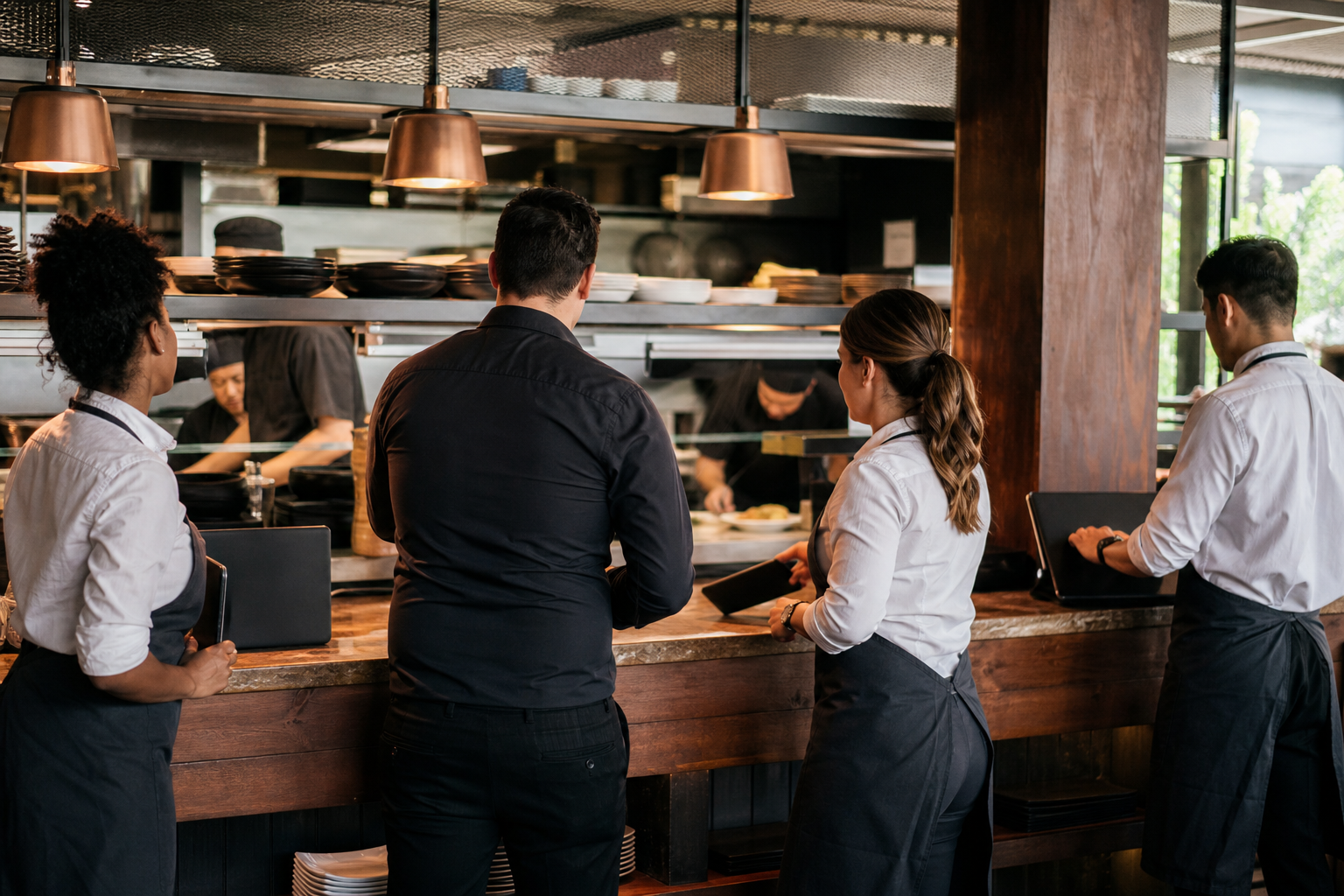
Managing complex daily workflows using paper clipboards or disjointed software introduces manual errors and slows down service. Modern operations thrive by unifying POS transactions, delivery channels, and inventory metrics into a single streamlined system.
Pairing your system with a standardized training program for restaurant staff allows new team members to gain speed quickly and cut onboarding time. To discover practical ways to eliminate operational friction and save manager hours, read our operational guide on restaurant operational efficiency tips.
Operators can also harness AI automation through AgenticPOS. AgenticPOS provides an MCP server that lets restaurant managers manage POS tools, shift schedules, pricing, and inventory updates directly through conversational platforms like Claude, ChatGPT, or Slack. You can start free with AgenticPOS on your current POS setup, scale seamlessly across multiple locations, and upgrade to Spindl's comprehensive platform whenever you are ready to modernize your entire operational technology.
Build a smoother restaurant operation
Mastering restaurant operations comes down to clear role assignments, repeatable daily workflows, and intelligent software integration. When your FOH and BOH teams work together with full visibility into sales and stock, service flows smoothly and profitability grows. Explore how Spindl can simplify your POS, inventory, and order management into one intuitive platform today.