How POS system integration stops revenue leaks and streamlines service
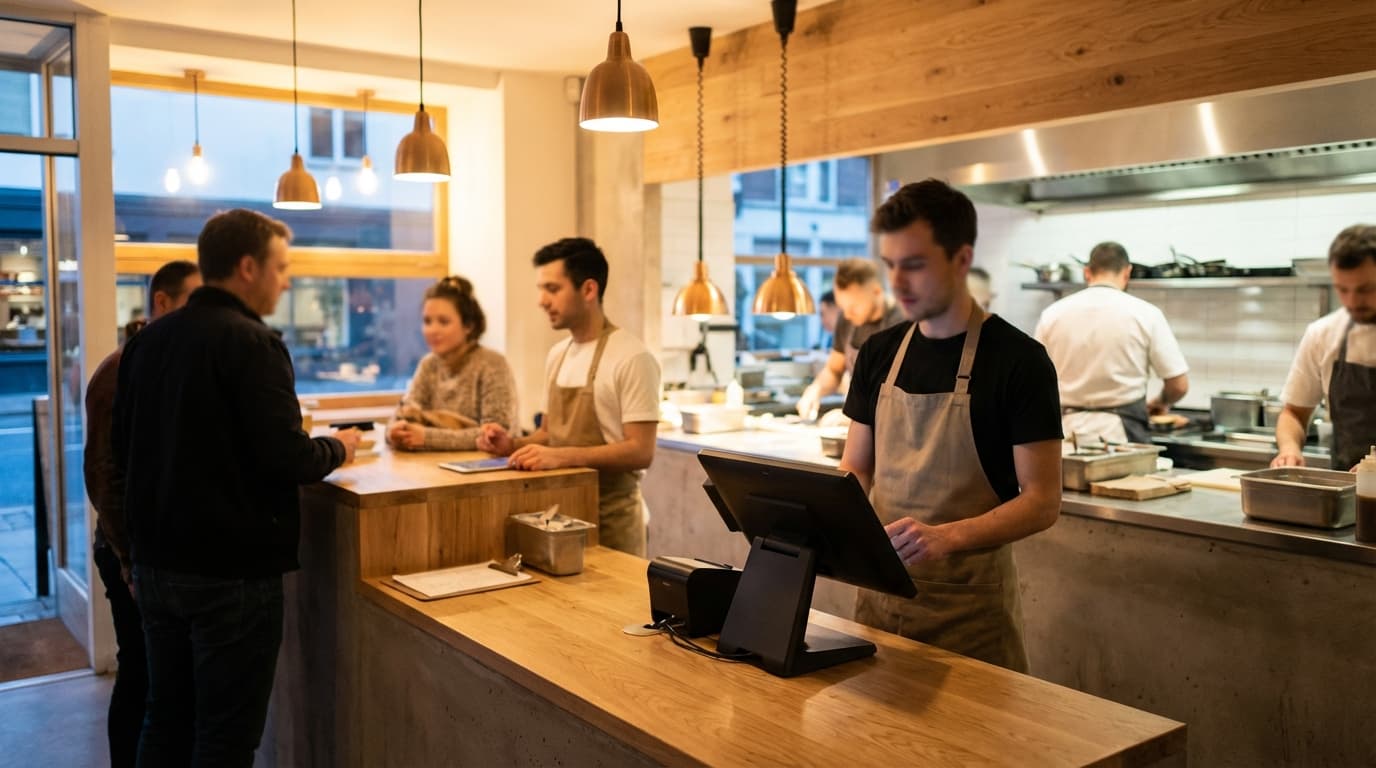
Is your restaurant running on a "tablet farm"? If you are manually re-keying third-party delivery orders into a legacy terminal, you are likely leaking up to 5% of your revenue through human error and operational friction.
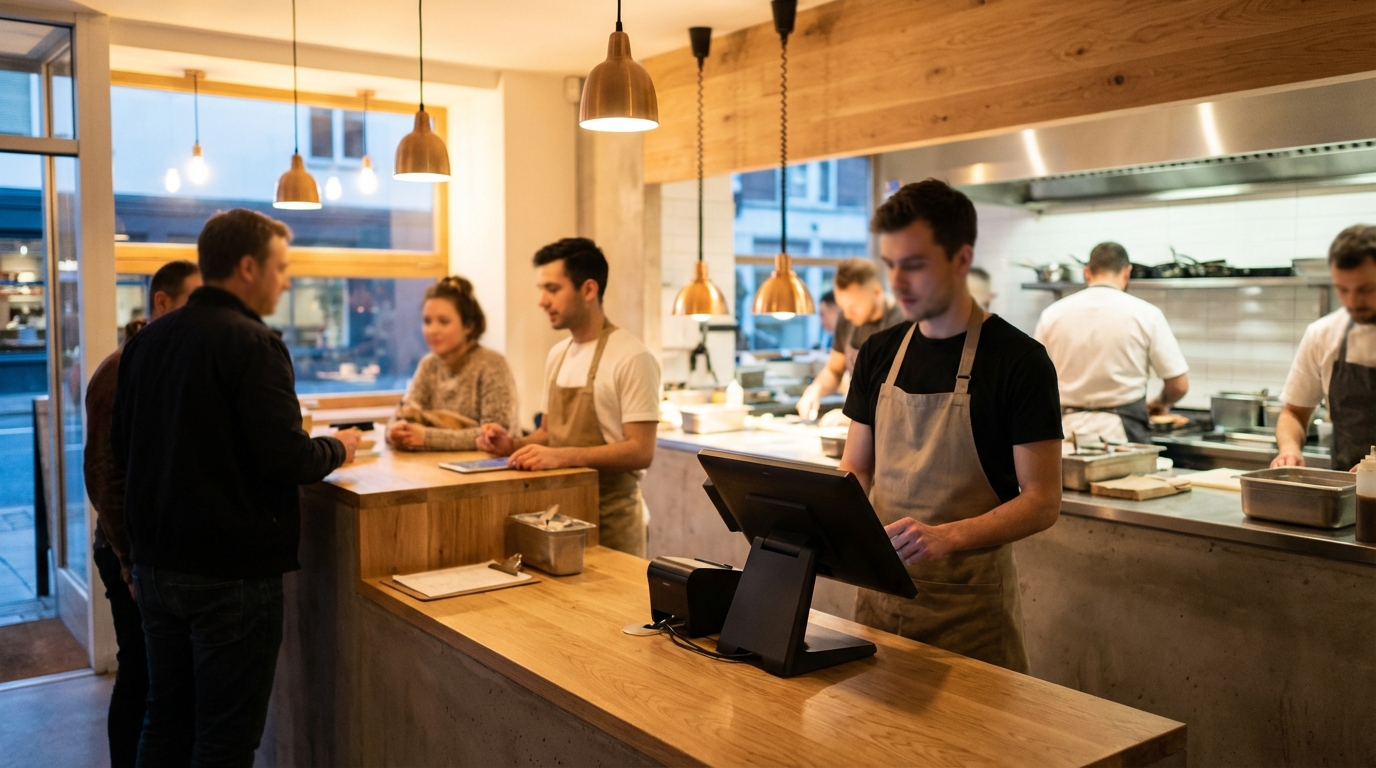
What is POS system integration?
In modern hospitality, a restaurant POS system is no longer just a digital cash register; it is the central nervous system of your business. Integration is the technical process of connecting this hub to your other essential tools – delivery apps, inventory software, accounting platforms, and loyalty programs – allowing them to communicate in real time.
When systems are disconnected, your data lives in silos. You might see high sales on your delivery tablet but find empty shelves in your walk-in because the two systems do not share information. Integration creates a single source of truth, ensuring that a sale on Uber Eats instantly deducts ingredients from your inventory and records the tax in your accounting software.
How POS integration works
The connection between software is typically built using Application Programming Interfaces (APIs), which act as digital bridges. While some operators rely on middleware – a third-party "translator" that sits between uncooperative systems – this often adds extra costs and creates a potential point of failure. The most stable approach involves direct API connections that sync the kitchen display system (KDS) with external order sources.
When integrated properly, the data flow is remarkably granular. A $14.99 buffalo chicken sandwich sale does more than just record a transaction; it instantly deducts specific recipe components like 6 oz of chicken, 1 tbsp of sauce, and a brioche bun from your stock levels. This level of detail allows for automated reordering and precise food cost tracking without manual counting.
Key benefits of a unified system
The return on investment for integration is reflected directly in your profit and loss statement. According to comprehensive cost-benefit research, operators moving from fragmented to integrated systems frequently see revenue increases between 3% and 8%. This growth is driven by faster throughput and a significant reduction in missed orders that often plague manual workflows.
Efficiency gains also extend to your workforce. By eliminating manual data entry, a typical operation can achieve labor savings of 5% to 12%, effectively freeing up to 12 hours per week in administrative tasks. This automation supports a 98.5% order accuracy rate by removing the transcription stage where most human mistakes occur. Furthermore, integration allows for the kind of data-driven personalization seen in major chains. While giants like Starbucks generate 30% of their U.S. transactions via digital loyalty, any size restaurant can achieve 15% to 25% redemption rates using POS-native loyalty programs that recognize guest preferences automatically.
Common pitfalls to avoid
Integration projects often fail due to poor execution rather than faulty software. One of the most common errors is the "Big-Bang" rollout, where an operator attempts to flip the switch on inventory, payroll, and delivery all on the same day. Following a phased implementation schedule makes a project 40% more likely to stay on its original timeline.
Under-training is another significant hurdle, as 65% of failed tech rollouts cite training gaps as the primary cause of failure. To mitigate this, choose intuitive systems where staff can reach full proficiency within two shifts. Operators should also be wary of hidden SaaS escalation. Many vendors offer low entry prices but increase fees by over 5% annually after the first year. It is always safer to request 3-year quotes that utilize interchange-plus pricing to ensure long-term cost stability.
Step-by-step implementation best practices
To ensure your digital transformation actually improves your margins, start by auditing your current stack. Identify where your staff spends the most time on manual tasks; if they are juggling five different tablets, that is your primary pain point.

Once identified, you must standardize your data. Ensure item names and modifiers are identical across your POS, website, and delivery apps to prevent synchronization errors that confuse both the kitchen and the guest.
Prioritize high-ROI integrations such as delivery aggregation and real-time sales analytics. These tools provide the fastest payback, typically within 8 to 14 months. To maintain the integrity of this data, use role-based permissions to restrict complex functions like voids and comps to management, which protects your security and data quality. Finally, set a 30-minute weekly meeting to review your POS performance reports. If the data shows a specific menu item accounts for 40% of your remakes, you can fix the recipe before your food costs spike.
Stop juggling, start winning
Legacy POS systems are the "Nokia 3310" of the restaurant world – they worked for a different era, but they cannot handle the demands of a delivery-first economy. Spindl OS is the modern alternative, consolidating order taking, delivery management, self-service kiosks, and loyalty into a single device.
Our platform passed the "Grandma Test" for ease of use, meaning your team can master it in minutes, not days. By eliminating the need for separate tablets and fragile middleware, Spindl helps you reduce food costs by 5% in 90 days while providing the real-time AI insights needed to dominate your market. Stop losing revenue to disconnected systems and book a Spindl demo today to see how an all-in-one platform can transform your operations.