How digitizing restaurant operations adds 12 hours to your week
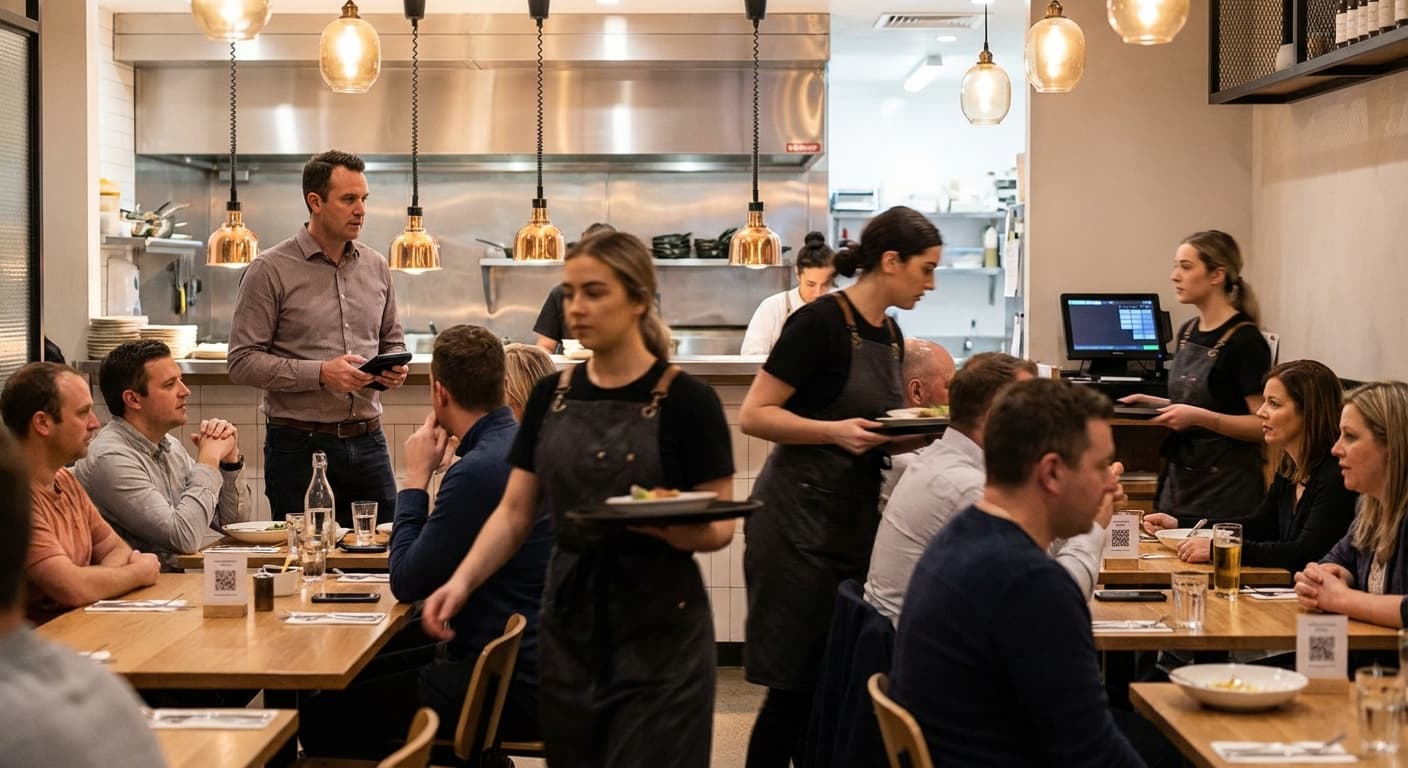
85% of your customers now expect digital ordering as a standard. If your tech stack is still a chaotic pile of tablets, you’re bleeding margin. Transitioning to a digital workflow can reduce administrative tasks by 30%, giving you back roughly 12 hours every week.
The restaurant technology market hit $59.3 billion in 2024 for a reason: digitization is now a requirement for survival. Modernizing your workflow allows you to reclaim time and protect your bottom line without stopping service.
Move to a dynamic digital menu
Static board menus and paper inserts are expensive to update and impossible to track. Moving to a digital menu allows for real-time pricing and instant "86-ing" of out-of-stock items across all platforms simultaneously. This ensures a customer never orders a dish your kitchen can't actually fulfill.
QR code adoption surged 750% during the pandemic, and today 66% of restaurants now use QR codes to facilitate faster ordering and payment. Digital menus also allow you to utilize menu engineering strategies like highlighting "Star" dishes with high margins or testing price elasticity without the overhead of reprinting costs.
Implement self-service ordering channels
Labor remains one of the most significant operational hurdles in the US market. Self-service tools like kiosks and tableside ordering allow your staff to focus on hospitality rather than data entry. Kiosks increase average order values by 15–30% because the interface never forgets to offer an upsell.
Tableside ordering offers similar efficiency gains. When servers send orders directly to the kitchen from the table, it eliminates the traditional walk-to-terminal bottleneck. In one documented case, a Maine seafood restaurant found that servers could handle 25% more tables simply by removing the manual order-entry step.
Replace paper tickets with a kitchen display system
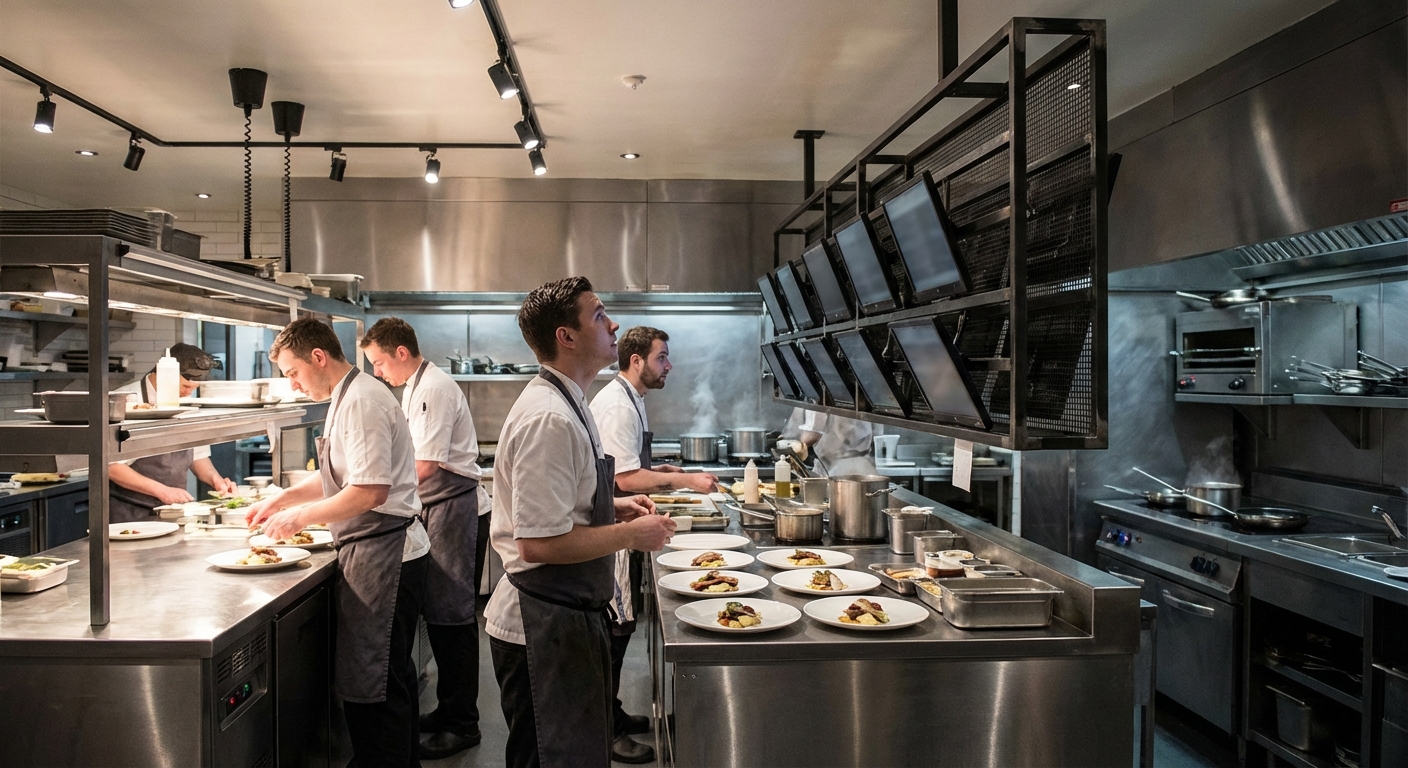
Manual tickets are prone to human error, getting lost or misread during the rush. A digital kitchen display system (KDS) routes orders to the correct station instantly and tracks prep times down to the second. This visibility allows managers to identify bottlenecks before they lead to cold food or long wait times.
By unifying orders from your POS and delivery apps into one screen, you eliminate the "tablet farm" and drastically reduce mistakes. For many operators, digital ordering has helped drop their remake rate from 12% to under 3%, saving thousands in wasted ingredients and labor.
Integrate POS with real-time inventory management
If your inventory does not communicate with your point-of-sale system, you lack true visibility into your food costs. Integrated systems automatically deduct ingredients from your stock levels the moment a sale is made. This creates a loop of real-time data that helps prevent surprise stockouts.
Implementing this level of digitization can lead to 3–5% lower food costs by identifying waste early. This allows you to spot if ribeye usage is 8% above your theoretical target during a shift, enabling you to fix portioning issues immediately rather than waiting for next month’s P&L statement to show the loss.
Transition to contactless and mobile payments
The final friction point of any guest experience is waiting for the check. Contactless payments – including QR codes, mobile wallets, and handheld terminals – can shorten end-of-meal times by 5 to 10 minutes per table.
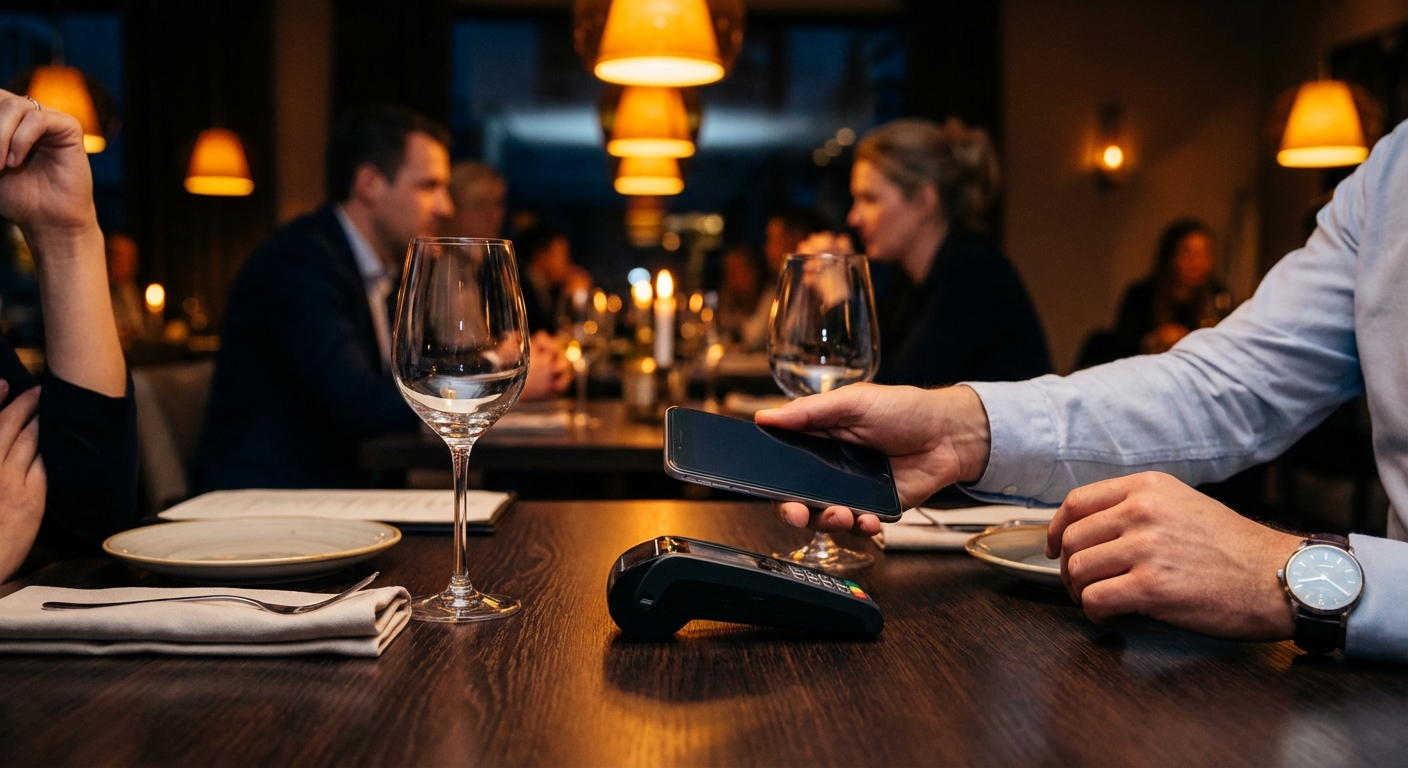
Faster checkout directly impacts your bottom line by increasing table turnover rates during peak hours. When guests can pay and leave on their own schedule, your staff is freed up to greet new arrivals or reset tables, keeping the flow of the dining room consistent.
Overcome digital chaos with a unified platform
The biggest mistake managers make is adopting a different app for every operational problem. This creates "digital chaos" where your loyalty program doesn't recognize your delivery customers, and your inventory doesn't reflect your kiosk sales. Fragmented systems increase administrative work rather than reducing it.
Spindl solves this by centralizing your entire operation into a single device. By combining POS, delivery apps, kiosks, and analytics, you remove the need for redundant hardware. One Brooklyn restaurant saved over $4,000 annually just by consolidating their tools and eliminating unnecessary hardware fees.
Digital transformation is a journey that should begin at your biggest bottleneck. Whether it is order accuracy, high labor costs, or slow table turns, implementing the right digital tool provides the data needed to make smarter business decisions. You can explore Spindl’s all-in-one features today to see how a unified system can replace your tablet farm and protect your margins.