Navigating food safety regulations in restaurants
In January 2026, one regulatory change will fundamentally shift how restaurants document their supply chain. Most operators don't realize the Food Safety Modernization Act (FSMA) now extends into their kitchens – not just their suppliers' warehouses.
Food safety in restaurants isn't optional. It's legal, financial, and reputational survival. A single contamination event can trigger inspection failures, legal liability, and permanent brand damage. This guide provides the practical frameworks restaurant owners and managers need to comply with evolving food safety regulations while reducing contamination risk across every operational touchpoint.
Understanding the regulatory landscape
Food safety regulations in the United States operate on multiple levels. The FDA Food Code serves as the foundation – a detailed set of guidelines designed to promote food safety across food manufacturers, restaurants, and various food establishments. States and municipalities adopt and adapt these recommendations, creating a patchwork of requirements that vary by jurisdiction.
The FSMA shift you need to know about: The Food Traceability Rule under FSMA Rule 204 represents a fundamental change. Previously focused on suppliers, the rule now requires restaurants to maintain specific traceability records. Starting January 20, 2026, restaurants must track Key Data Elements (KDEs) for foods on the Food Traceability List (FTL) – which includes items like ready-to-eat deli salads, leafy greens, and fresh-cut fruit.
Here's what actually applies to most restaurants:
Restaurants with average annual food sales of $250,000 or less (adjusted for inflation from a 2020 baseline) are exempt from the traceability rule. If you're above that threshold, you must maintain receiving KDEs for FTL foods you receive from suppliers. You're not required to maintain transformation KDEs for food sold directly to consumers. If receiving directly from farms, you only need the farm's name and address, kept for 180 days.
The compliance deadline is July 20, 2028, giving operators time to build documentation systems. The intent: faster identification and rapid removal of contaminated food, resulting in fewer illnesses and deaths.
Core food safety protocols every restaurant needs
Effective compliance starts with standardized protocols across receiving, storage, preparation, and service.
Receiving and supplier verification
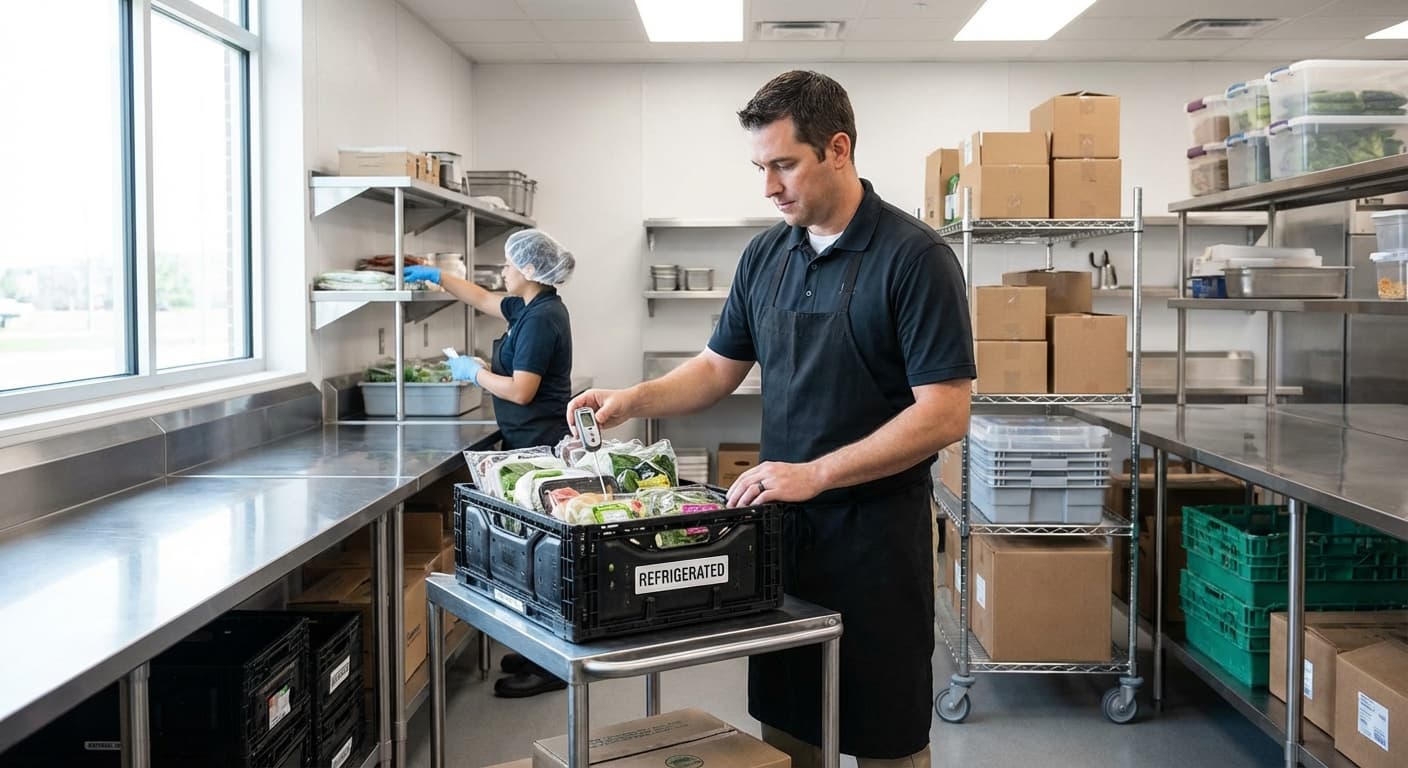
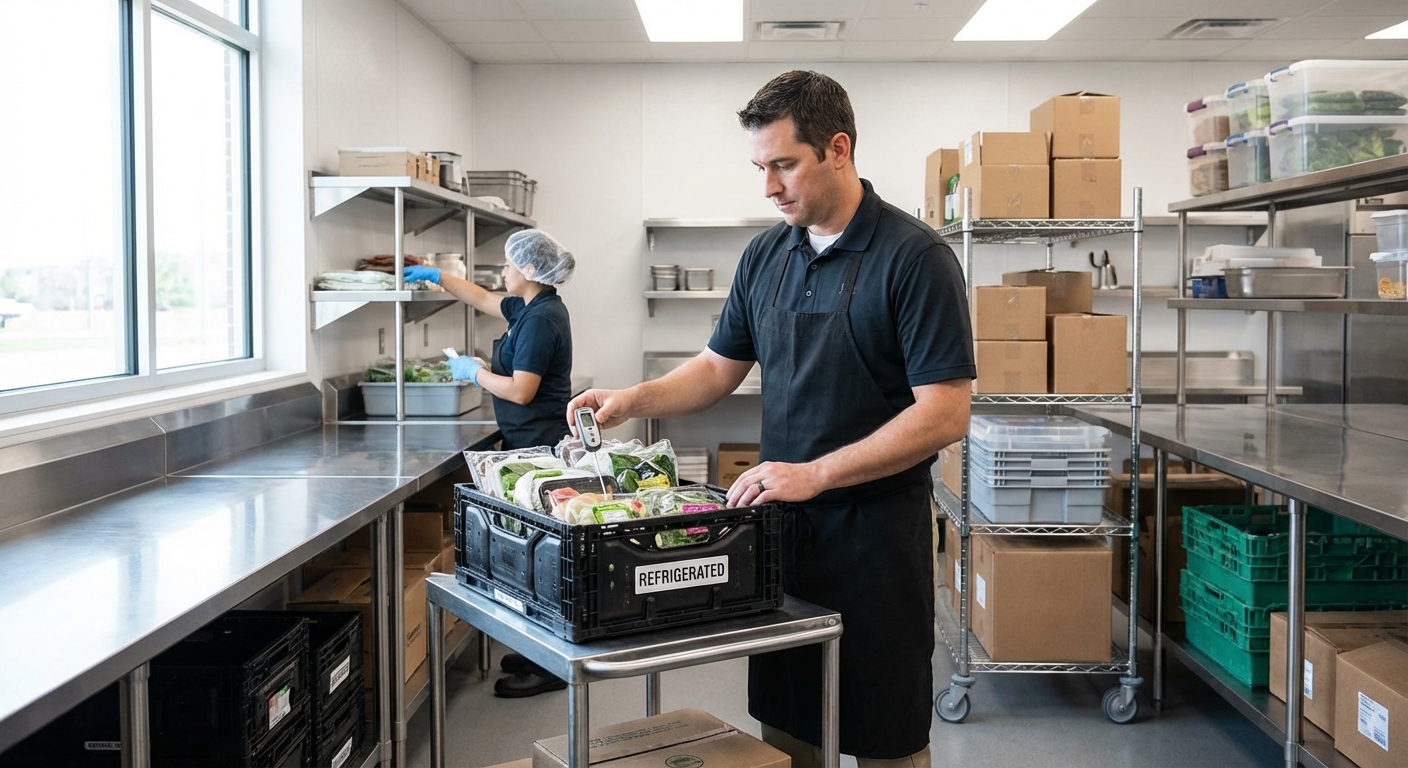
Every delivery is a risk checkpoint. Your receiving protocol should include temperature verification at delivery – reject any refrigerated item above 41°F or frozen item above 0°F. Conduct visual inspection for damaged packaging, pest evidence, or off odors. Match supplier documentation on invoices to actual delivery quantities and item codes. For FTL items, log traceability data including lot numbers, harvest dates, and supplier contact information.
Use a receiving checklist that staff initial at each step. Digital systems reduce errors – manual clipboards see about 15–20% more logging failures in high-volume operations.
Temperature control and monitoring
Temperature abuse causes the majority of foodborne illness outbreaks. Refrigeration must stay at 41°F or below. Hot holding requires 135°F or above. The danger zone between 41°F and 135°F allows bacteria to multiply rapidly. Follow the cooling protocol: 135°F to 70°F within two hours, then 70°F to 41°F within four additional hours.
Place calibrated thermometers in all coolers and hot-holding equipment. Log temperatures at least twice per shift – morning and evening minimums, more frequently during peak service. When equipment fails, you need documentation showing you caught it immediately and transferred product, not hours later.
One Dallas steakhouse averted thousands in loss when their walk-in failed overnight because they had backup supplier relationships and immediate-response protocols already documented, preserving inventory and avoiding a Saturday night without product.
Cross-contamination prevention
Separate raw from ready-to-eat at every stage. Use color-coded cutting boards: red for raw meat, yellow for poultry, green for produce, white for dairy and ready-to-eat items. Designate dedicated prep areas – never prep raw chicken where you'll plate salads an hour later.
Install handwashing stations that are accessible and stocked with soap and single-use towels. Require handwashing after handling raw proteins, touching face or hair, using the restroom, or switching tasks. Test sanitizer concentration in three-compartment sinks and wiping-cloth buckets every four hours, targeting 50–200 ppm chlorine or manufacturer specifications for quaternary ammonium-based sanitizers.
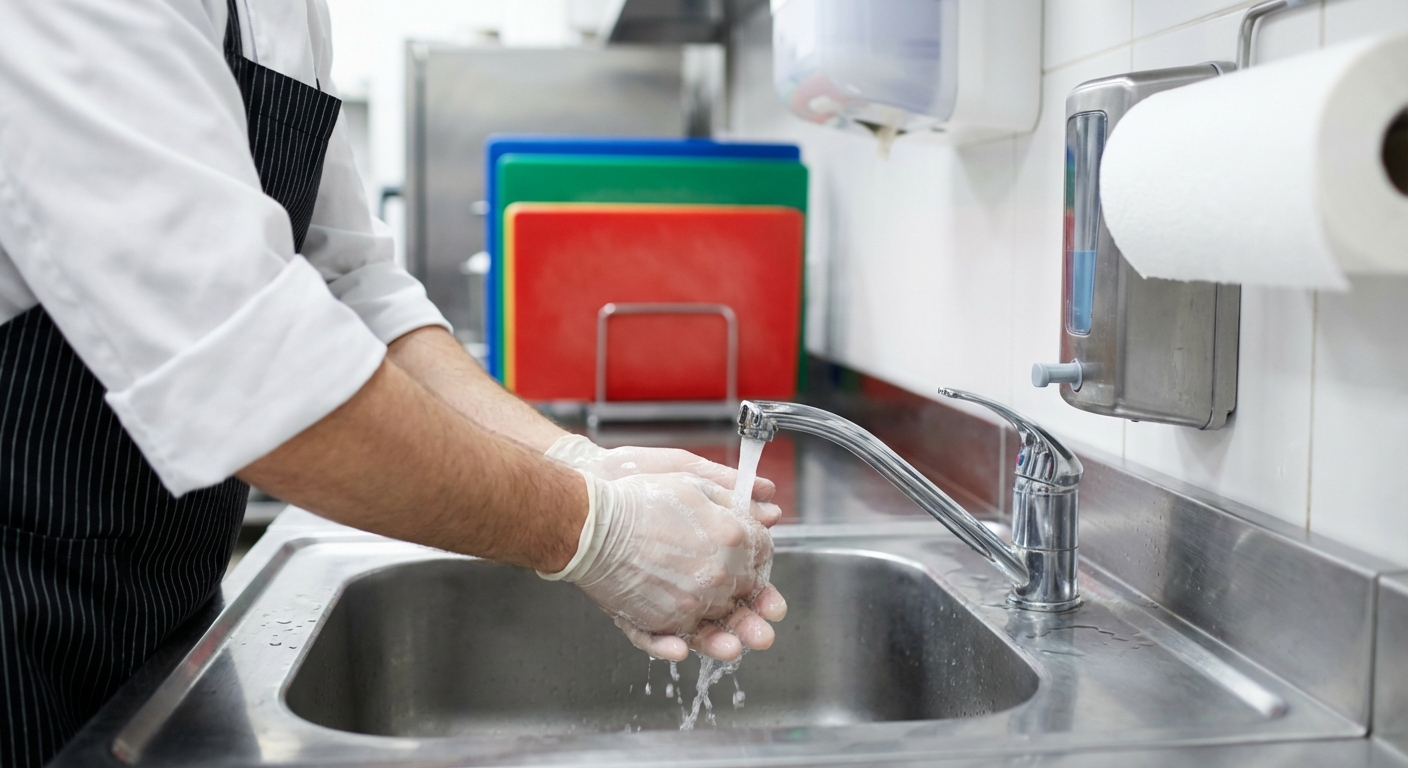
Make it physically difficult to cross-contaminate. If a line cook has to walk fifteen feet to reach the hand sink, they won't wash as often as they should.
Employee health and hygiene
Staff are your biggest contamination vector – and your best defense. Require immediate illness reporting for vomiting, diarrhea, jaundice, sore throat with fever, or infected cuts and burns. Implement exclusion policies: staff with norovirus, hepatitis A, Shigella, E. coli, or Salmonella cannot work until cleared by a physician.
Prohibit bare-hand contact with ready-to-eat foods. Staff must use gloves, tongs, or deli paper. Train proper glove use: change gloves between tasks, after touching face or hair, and every four hours minimum during continuous use.
Gloves are not a substitute for handwashing – they're a supplement. Dirty gloves spread bacteria just like dirty hands.
Building documentation frameworks that work
Compliance lives in your documentation. When inspectors arrive or a customer falls ill, you need to reconstruct exactly what happened, when, and who was responsible.
Daily food safety logs
Create simple, repeatable logs. Your opening checklist should capture walk-in cooler temps with target, actual, and staff initials. Log line cooler temps, hot-holding equipment temps, sanitizer concentration test results, and handwashing station supplies.
The closing checklist covers final temp checks, a cooling log documenting item, start temp, time placed in cooler, and temps at two and six hours. Include a waste log tracking item, quantity, and reason. Record final sanitizer checks.
Mid-shift, log any corrective actions. If a cooler climbs to 44°F, document the time you noticed, the action you took, and confirmation temps after correction.
HACCP principles in practice
Hazard Analysis and Critical Control Points (HACCP) sounds bureaucratic but is fundamentally practical. Identify where contamination can occur, set limits, monitor those points, and document corrective actions.
For chicken breast preparation, the hazard is bacterial contamination from Salmonella or Campylobacter. The critical control point is cooking temperature with a critical limit of internal temp 165°F for 15 seconds. Monitor with a calibrated thermometer check on the thickest part of each batch. If the corrective action is needed and temp reads under 165°F, return to heat and re-temp; if held in danger zone over four hours, discard. Verify thermometer calibration weekly using an ice-water test targeting 32°F ±2°. Keep cooking logs with date, time, item, temp, and staff initials.
Focus HACCP on high-risk items: raw proteins, pooled eggs, TCS foods (time/temperature control for safety), and anything served to high-risk populations including children, elderly, or immunocompromised guests.
Traceability records for FSMA compliance
For restaurants above the $250,000 threshold, build traceability into your receiving workflow. Required data for FTL foods includes supplier name, address, and phone; item description including brand name if applicable; quantity and unit of measure; lot or batch number; date received; and location where product came from, such as farm name and location if applicable.
Store records for two years in electronic or paper format. When an item on the FTL arrives, scan or photograph the label showing lot codes and harvest information. This fifteen-second step at receiving prevents hours of scrambling during a recall.
An integrated inventory management system can automate traceability logging, linking lot codes to specific menu items and sale dates – critical during outbreak investigations.
Training staff on food safety protocols
Your written protocols mean nothing if staff don't follow them. Turnover in restaurants averages 75% annually, meaning constant retraining.
Onboarding food safety training
New hires should complete food safety basics before touching food: personal hygiene and handwashing technique, temperature danger zone and time limits, cross-contamination prevention, proper glove use, illness reporting requirements, and allergen awareness.
Use a combination of online training modules and hands-on demonstration. Staff should pass a knowledge assessment before working independently – target scores above 90%.
Effective training programs for restaurant staff establish clear competencies, break content into digestible segments, and provide ongoing coaching. Consider a buddy system where experienced staff shadow new hires through their first week, modeling correct procedures in real-time.
Ongoing reinforcement
Food safety isn't a one-time training – it's a daily culture. Conduct three-minute pre-shift reminders on specific food safety topics, such as handwashing frequency. Hold fifteen-minute monthly deep-dives on topics like cooling procedures, allergen protocols, or cleaning schedules. When you see unsafe behavior, correct it on the spot – don't wait for a formal review. Recognize staff who consistently follow protocols and make food safety a point of pride.
Manager training is equally critical. Your kitchen managers and shift leaders need to understand not just what the rules are, but why they exist and how to coach staff through compliance. This falls under broader restaurant management strategies that balance operational efficiency with regulatory requirements.
Technology tools that improve compliance
Manual logs and paper checklists work until they don't – illegible handwriting, missing entries, and lost forms undermine your documentation. Modern technology closes these gaps.
Integrated POS and inventory systems
A restaurant management platform that unifies POS, inventory, and traceability creates automatic documentation. When staff ring up a chicken dish, the system deducts ingredients in real-time and links the sale to specific lot numbers received that week.

This matters during recalls. Instead of manually sifting through invoices and sales records, you can instantly identify which guests purchased product from the affected lot, enabling targeted outreach.
Integrating POS with inventory management also surfaces food cost variance – when actual usage exceeds theoretical, you may have portioning issues, waste, or undocumented comps. Variance above 5% often signals underlying food safety issues like improper storage leading to spoilage.
Digital temperature monitoring
Wireless temperature sensors send real-time alerts when equipment falls out of range. You receive a text at 2 AM when the walk-in climbs to 45°F – not when you open the next morning to spoiled product.
These systems create automatic logs, eliminating the "Did someone actually check temps?" question. They integrate with food safety management software to compile HACCP records and pre-fill inspection reports.
Kitchen display systems and order accuracy
Kitchen management software with digital kitchen display systems (KDS) reduces errors that lead to food safety risks. When tickets are color-coded by cook time and allergen flags are prominent, cooks are less likely to undercook proteins or cross-contaminate allergen-sensitive orders.
KDS also timestamps every step – order fired, items prepared, expo checked – creating an auditable record of food flow through your kitchen.
Mobile training and compliance tracking
Scalable training platforms let staff complete food safety modules on their phones before shifts. Managers track completion rates and quiz scores in real-time, ensuring 100% of active staff hold current certifications.
These platforms auto-assign renewal training when certifications expire and can push urgent updates – like new allergen protocols or temporary cooling-equipment procedures – instantly across all locations.
Common violations and how to prevent them
Health inspections focus on high-risk violations that statistically correlate with outbreaks.
Temperature abuse occurs when TCS foods are held in the danger zone (41°F–135°F) for extended periods. Prevent this by installing wireless monitoring, conducting mid-shift temp checks, and enforcing two-hour cooling protocols. If your kitchen can't cool stock from 135°F to 70°F in two hours, divide it into shallow pans no more than two inches deep or use an ice bath with frequent stirring.
Inadequate handwashing happens when staff skip washing after handling raw meat, touching face, or using the restroom. Position hand sinks strategically within easy reach of every prep station. Stock with soap, paper towels, and signage. Require managers to model perfect handwashing: 20 seconds, scrubbing between fingers and under nails. Make handwashing part of pre-shift announcements.
Cross-contamination risks arise from using the same cutting board for raw chicken and ready-to-eat salad, or storing raw meat above produce in the cooler. Implement color-coded equipment and enforce "raw below, ready above" storage. Raw meat goes on the bottom shelf, cooked and ready-to-eat on the top. Train staff that color-coding isn't optional – it's non-negotiable.
Improper cooling results when staff place a large stockpot of soup directly into the cooler assuming it will cool safely. Use the two-stage cooling method and document temps. Shallow pans, ice baths, or blast chillers accelerate cooling. Never stack hot pans in the cooler – it raises the ambient temp and endangers everything else stored there.
Lack of documentation means you can't prove you monitored critical control points or took corrective action when equipment failed. Make logging a non-negotiable part of opening, mid-shift, and closing duties. Assign specific staff to each log and have managers verify completion. Digital systems that require timestamps and photos make it harder to backfill fake data.
Managing inspections with confidence
Health inspections test whether your systems actually work. Inspectors don't want to shut you down – they want to see that you're preventing contamination.
Pre-inspection readiness
Conduct self-inspections using your jurisdiction's checklist. Many health departments publish their forms online. Walk your operation as if you're the inspector: check all cooler and freezer temps, verify hand sinks are stocked and unobstructed, confirm food is labeled and dated, inspect food storage ensuring raw is below ready-to-eat and items are six inches off the floor and covered, review logs for gaps, and test sanitizer concentrations.
Monthly self-inspections catch issues before an inspector does. Assign a manager who wasn't involved in daily operations to gain fresh eyes on potential violations.
During the inspection
Stay calm, cooperative, and transparent. Greet the inspector and provide a brief tour. Assign a knowledgeable manager to accompany them. Answer questions truthfully – lying or hiding issues makes violations worse. Take notes on what the inspector flags. If you disagree with a finding, respectfully ask for clarification of the specific code section.
Inspectors appreciate operators who clearly understand food safety principles. When you can explain why you cool food a certain way – not just that "it's the rule" – it demonstrates genuine commitment.
Post-inspection corrective action
If you receive violations, correct them immediately on the same day if possible. Document the correction with photos, receipts, and updated logs. Submit proof to the health department within the specified timeline. Train staff on what went wrong and how to prevent recurrence. Update your self-inspection checklist to catch similar issues in the future.
Treat violations as free consulting. The inspector just told you exactly where your system has weaknesses – fix them before they cause an outbreak.
Allergen management protocols
Food allergies are medical emergencies, not customer preferences. The FDA recognizes nine major allergens: milk, eggs, fish, shellfish, tree nuts, peanuts, wheat, soybeans, and sesame. Cross-contact with any of these can trigger life-threatening reactions.
Menu transparency and labeling
List allergens clearly on menus – not just in fine print. Train front-of-house staff to never guess or downplay allergen content. Check with the kitchen for every allergen inquiry. Communicate special prep requirements to back-of-house using distinct signals like "Allergy order – no cross-contact."
Some restaurants use separate colored tickets or digital flags for allergen orders, ensuring cooks treat them differently.
Allergen-free preparation
When preparing an allergen-free dish, wash hands and change gloves. Use clean, sanitized cutting boards and utensils, or dedicated allergen-free equipment. Wipe down surfaces with sanitizer. Use fresh ingredients from sealed containers, not items that may have cross-contact in bulk containers. Prepare the allergen order first, before other items on the same ticket. Clearly label the finished dish and deliver it separately.
One Miami café trained all staff that when a customer says "allergy," the entire kitchen shifts into heightened mode – no multitasking, deliberate movements, and verification at every step.
Scaling food safety across multiple locations
Multi-location operators face an additional challenge: consistent execution across geographically dispersed teams.
Centralized standards, local accountability
Establish brand-wide standard operating procedures for food safety. Every location follows the same receiving protocols, temp-logging requirements, and cleaning schedules.
Centralize training materials and competency assessments, supplier-approved lists, recipe specs with critical control points, inspection checklists and corrective-action templates, and digital dashboards showing compliance metrics across all sites.
Decentralize day-to-day execution and staff accountability, local vendor relationships within approved lists, immediate corrective actions during service, and manager-led team training reinforcement.
One regional taco chain reduced food safety variance across locations by implementing a unified system that pushed recipe updates and compliance alerts in real time. When a new cooling protocol rolled out, every location received the same video, quiz, and manager talking points on the same day.
Real-time visibility across locations
Operators managing multiple sites need to spot compliance gaps before they become violations. Real-time analytics help identify which locations log temps late or miss logs entirely, where food cost variances suggest waste or spoilage issues, which sites have the highest staff turnover indicating potential training gaps, and whether any locations are consistently flagged during internal audits.
POS analytics platforms that integrate food safety metrics into operational dashboards let you address issues proactively. If Location C hasn't logged a single temp all week, you know before the health inspector shows up.
Platforms like Spindl consolidate order taking, delivery management, POS, inventory, and analytics into one device, giving operators a unified view of food safety compliance alongside sales performance. Instead of juggling separate systems for each function, managers access real-time data on what's actually happening from a single dashboard.
Reducing operational stress while maintaining compliance
Food safety protocols can feel like bureaucratic overhead – until they prevent an outbreak. The goal isn't to add complexity; it's to systematize safety so it becomes automatic.
Streamlined workflows
Integrate food safety into existing workflows rather than treating it as a separate checklist. When receiving becomes part of your inventory management routine, logging traceability data takes fifteen seconds instead of fifteen minutes of retrofitting at month-end.
Use technology that consolidates multiple functions. When your POS, inventory, and delivery management live in one integrated platform, staff aren't switching between five systems to complete basic tasks – reducing errors and training time.
Focus on high-impact controls
Not every detail deserves equal attention. Prioritize temperature control, which affects every dish in every shift. Focus on handwashing – the cheapest, most effective intervention. Enforce raw and ready separation to prevent cross-contamination at scale. Strengthen supplier verification to stop contamination before it enters your building.
These four controls prevent the vast majority of foodborne illness. Get them right, and you've solved 80% of your risk.
Building a food safety culture
Compliance isn't a manager's job – it's everyone's responsibility. When staff understand why protocols exist – protecting guests, protecting the business, protecting their own jobs – they're more likely to follow them even when no one is watching.
Share stories. When a national chain issues a recall, discuss it in pre-shift: "This is why we check temps. This is why we log lot numbers. That could have been us."
Recognize and reward compliance. Make "Food Safety Champion" a real title with real perks. Highlight staff who consistently follow protocols in team meetings.
Your next step
Food safety regulations will continue to evolve – traceability today, predictive recalls tomorrow. Restaurants that build adaptable systems now will navigate future changes with less disruption.
Start with your biggest risk area. If temperature control is inconsistent, implement wireless monitoring this month. If traceability logging doesn't exist, build a simple receiving form this week. If staff training is ad hoc, standardize onboarding materials by quarter-end.
Compliance doesn't require perfection on day one – it requires consistent improvement and documentation of that improvement. Inspectors want to see that you know what good looks like and are actively working toward it.
For restaurants looking to streamline compliance alongside operational efficiency, Spindl's integrated platform consolidates the tools you need to manage food safety documentation, inventory traceability, and staff training in one system – reducing administrative burden while improving visibility across every location. See how real-time analytics and unified operations can transform your approach to both compliance and profitability with the best digital tools for restaurants.