Distribution strategy for restaurants: building a profitable channel mix
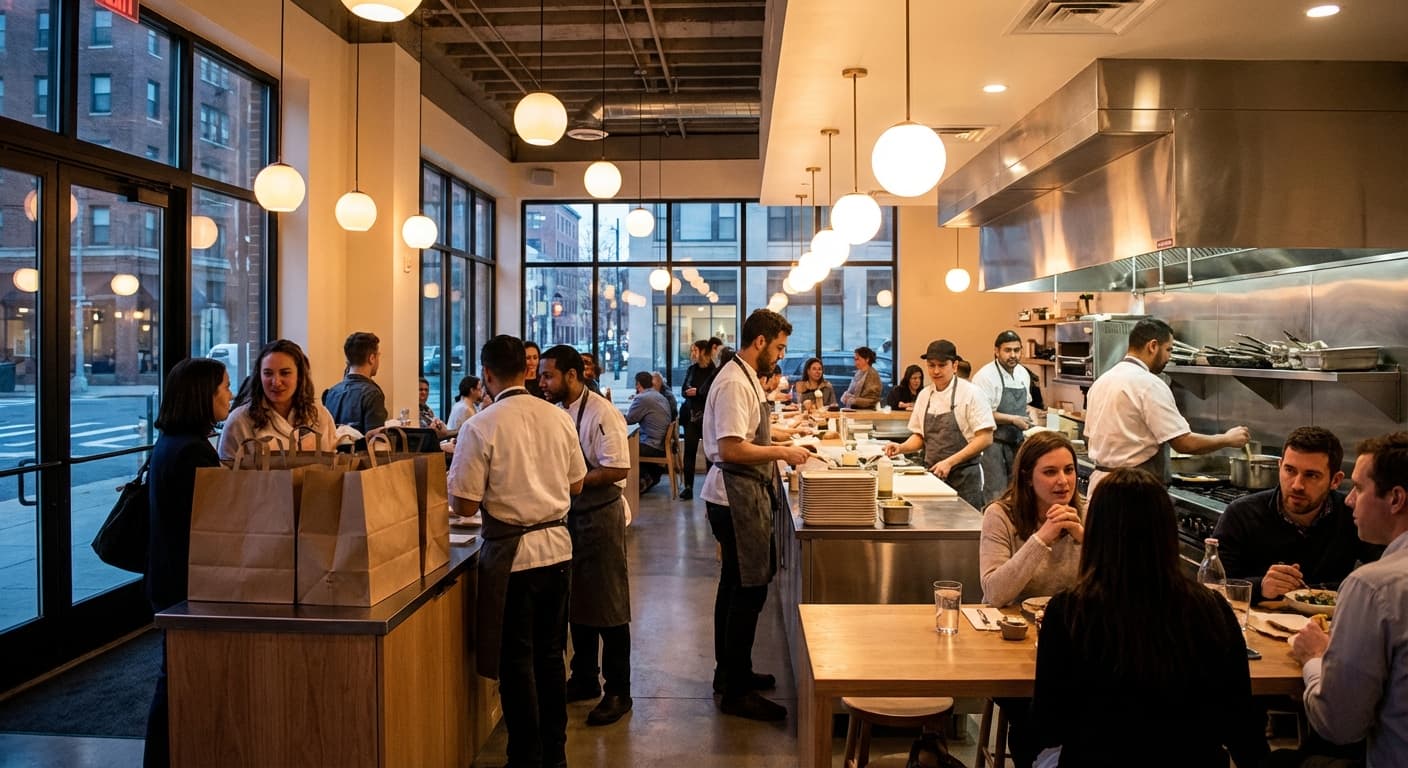
Over 700,000 US restaurants compete for $1.5 trillion in annual sales, yet most still rely on a single distribution channel. That leaves serious money on the table.
Your distribution strategy determines how food reaches customers – and directly impacts margins, growth potential, and operational complexity. Get it right, and you unlock new revenue streams without compromising kitchen efficiency. Get it wrong, and you're juggling five tablets while watching profits evaporate to commission fees.
What is restaurant distribution strategy?
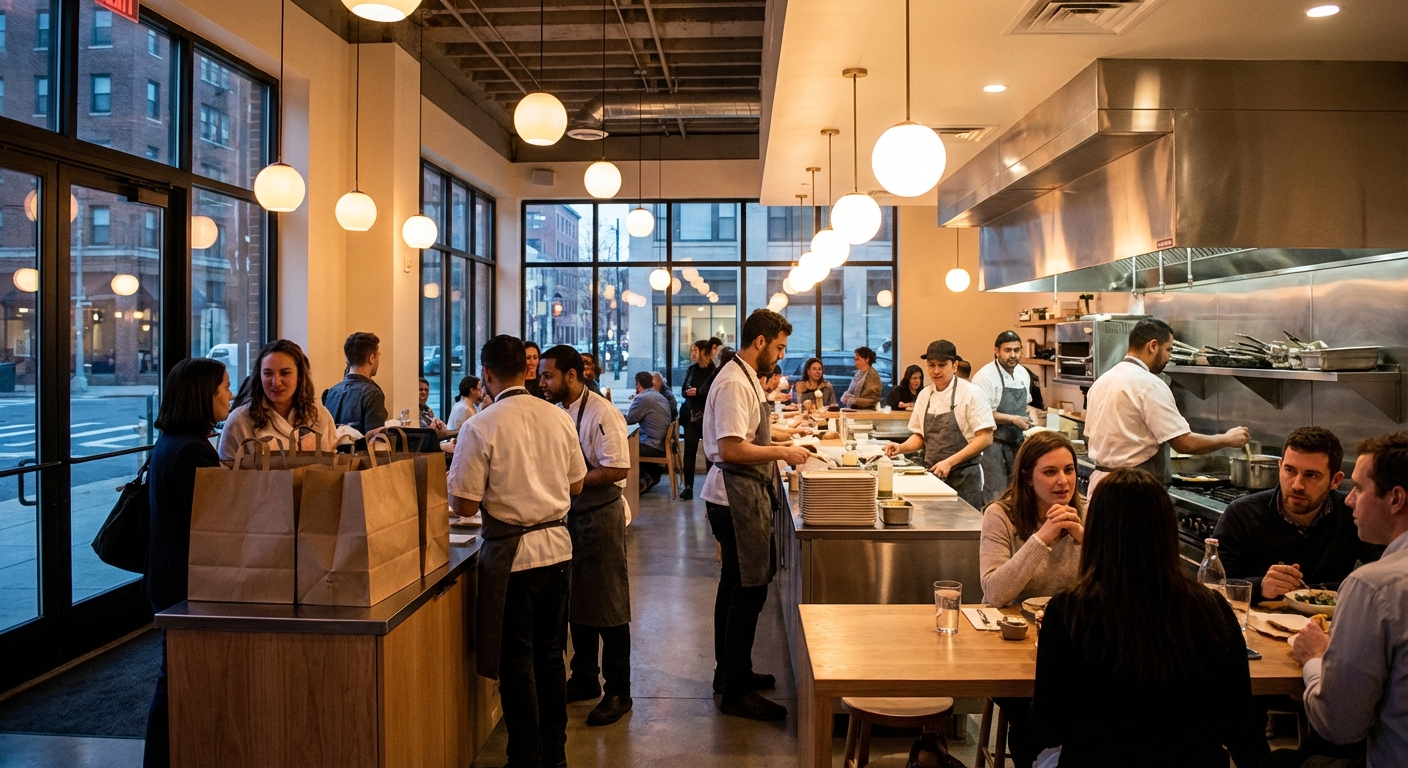
Distribution strategy is your systematic approach to getting food from kitchen to customer through various channels: dine-in, delivery apps, direct online ordering, wholesale accounts, retail partnerships, and catering operations.
The goal isn't to be everywhere – it's to be in the right places with the right economics.
Most restaurants stumble into distribution channels reactively. DoorDash calls, so you sign up. A corporate client asks about catering, so you say yes. A grocery buyer wants to stock your sauce, so you scramble to figure out bottling. Strategic operators flip this script. They design their channel mix based on unit economics, operational capacity, and customer acquisition costs. They understand that a $15 burrito sold through your website delivers completely different margin than the same item sold through a third-party app.
The five primary distribution channels for restaurants
Direct channels (dine-in and owned delivery)
Customers order directly through your website, app, phone, or walk-in – no intermediary taking a cut.
Unit economics: Highest margins. Food cost typically runs 28-32%, labor 25-35%, leaving room for profit after rent and overhead. No commission fees means you keep 100% of the transaction value.
Best for: Established restaurants with loyal customer bases, QSR concepts with delivery infrastructure, brands with strong local recognition.
A neighborhood Italian restaurant builds its own online ordering through their website. A $45 order costs them $14 in food, $9 in labor, $2 in packaging, and $3 in credit card fees – leaving $17 in contribution margin (38%). The same order through a third-party app would pay 25-30% commission, dropping contribution margin to $6-9.
Third-party delivery platforms (DoorDash, Uber Eats, Grubhub)
Aggregator apps handle order capture, payment processing, and delivery logistics in exchange for 15-30% commission.
Unit economics: Lower margins due to commission structure, but higher customer reach. Commission varies by agreement: marketplace (25-30%), self-delivery (15-18%), or pickup-only (6-10%).
Best for: New restaurants building awareness, concepts without delivery infrastructure, operators prioritizing volume over margin, locations in high-density areas where delivery demand is consistent.
A fast-casual concept uses delivery apps for customer acquisition and brand exposure in its first year. They price delivery menus 10-12% higher to partially offset commissions and track which platforms deliver the best customer lifetime value, doubling down on those channels. Digital channels are projected to generate 70% of restaurant sales by 2025, according to industry research. You need a third-party presence – but you also need a plan to convert those customers to direct channels over time.
Wholesale distribution (B2B accounts)
Selling prepared foods, ingredients, or menu items in bulk to other businesses – corporate cafeterias, hospitals, schools, hotels, other restaurants, or event venues.
Unit economics: Lower per-unit margin but higher volume and predictability. Wholesale pricing typically runs 40-50% below retail, but orders are larger, payments are reliable, and production can be optimized for scale.
Best for: Concepts with excess kitchen capacity during off-peak hours, signature items that travel well, operations with standardized recipes and consistent output.
A BBQ restaurant starts supplying pulled pork and brisket to three local corporate cafeterias. They prep wholesale orders during slow morning hours (10am-2pm when the dining room is quiet), selling 60 pounds weekly at $12/lb wholesale ($720). Food cost is $5/lb, labor is minimal since they're already staffed, and the predictable orders help them negotiate better meat pricing from their primary vendor.
Retail distribution (CPG products)
Packaging your signature items – sauces, marinades, spice blends, meal kits, frozen entrees – for sale through grocery stores, specialty shops, or online retail.
Unit economics: Lowest per-unit margin but potential for massive scale. Retail requires different packaging, labeling, food safety protocols, and distribution logistics. Expect to net 30-40% of wholesale price after production, packaging, and distribution costs.
Best for: Restaurants with cult-following products, strong brand recognition, and capital to invest in packaging and compliance (nutrition labels, UPC codes, liability insurance).
A hot chicken restaurant bottles three signature sauces and places them in 15 local grocery stores. Each 12oz bottle wholesales for $4.50, retails for $8.99. After $1.80 in ingredients, $0.70 in packaging, and $0.50 in logistics, they net $1.50 per bottle. At 200 bottles weekly across all stores, that's $300/week in margin – not huge, but it's passive revenue and free marketing every time someone walks past the shelf.
Catering and events
Large-format orders for corporate events, weddings, private parties, and recurring meal programs.
Unit economics: High margin potential with advanced notice, but labor-intensive and inconsistent. Catering typically carries 10-15% higher markup than regular menu pricing, and large orders improve food cost efficiency.
Best for: Full-service restaurants with banquet space, concepts with menu items that hold well in chafers, operations that can handle production surges without disrupting regular service.
A Mediterranean restaurant adds corporate lunch catering. A 40-person order for $650 includes hummus platters, falafel, kebabs, and sides. Food cost runs 26% ($169), dedicated catering labor is $80, delivery and setup is $40 – leaving $361 in contribution margin (55%). The average table in their dining room generates $18 in margin; this single catering order equals 20 tables.
Designing your distribution mix: the decision framework
Start with your operational capacity and kitchen utilization. Map your current kitchen output by daypart. If you're running at 40% capacity Monday through Thursday from 2-5pm, wholesale or meal-prep channels that use those slack hours are essentially free money. If you're slammed every service and already turning tables, adding delivery volume without additional capacity just degrades the dine-in experience.
Calculate true unit economics for each channel. Don't just look at top-line revenue. Break down food cost, labor, packaging, delivery, commission fees, and customer acquisition cost for every channel.
Here's a real example:
- Dine-in burger, $14: $4.20 food cost (30%), $3.50 labor (25%), $1.40 overhead = $5 contribution margin (36%)
- Direct online burger, $14: $4.20 food, $3.50 labor, $0.60 packaging, $0.42 credit card fee, $1.40 overhead = $3.88 contribution (28%)
- Third-party delivery burger, $14: $4.20 food, $3.50 labor, $0.60 packaging, $3.50 commission (25%), $1.40 overhead = $0.80 contribution (6%)
That third-party order generates 94% less margin than dine-in. Unless it's filling otherwise-empty capacity or acquiring customers you'll convert to direct channels, it's barely worth the trouble.
Prioritize channels by strategic value, not just margin. Sometimes low-margin channels make sense:
- Market entry: A new ghost kitchen uses third-party apps to build brand awareness in its first six months, accepting thin margins to get the phone ringing
- Customer acquisition: You track first-order source and know that 35% of third-party customers reorder direct within 90 days. That changes the economics dramatically
- Slack capacity monetization: Your kitchen sits idle for 15 hours a week. A wholesale account that uses those hours is nearly pure margin
- Brand extension: Retail products in grocery stores are marketing that pays you, not vice versa
Set clear thresholds and guard rails. Operators who successfully manage multi-channel distribution set strict rules: maximum commission exposure (third-party sales capped at 30% of total revenue), minimum order economics (wholesale orders must exceed $200 and deliver >$50 contribution margin), capacity limits (delivery orders throttled during peak dine-in hours to protect service quality), and channel-specific menus (high-margin items available on direct channels; streamlined menu for third-party to improve kitchen efficiency).
Common distribution strategy mistakes (and how to avoid them)
Treating all revenue equally
A $10,000 sales week sounds great until you realize $7,000 came through delivery apps at 28% commission. You just paid $1,960 in fees.
Fix it: Track contribution margin by channel weekly. If third-party delivery is delivering <10% margin, you need to either raise menu prices on those platforms, shift customers to direct ordering, or cut the channel entirely. Real-time sales data analysis lets you spot this during service, not three weeks later when you're wondering why your bank account is empty.
No capacity planning before adding channels
You launch catering, add two more delivery apps, and start a meal-prep program – all in the same month. Your kitchen implodes. Ticket times spike. Dine-in guests wait 45 minutes for entrees. Your team burns out.
Fix it: Add one channel at a time and prove you can handle the volume before expanding further. Map kitchen capacity by hour and daypart. Use slower periods for wholesale production or meal-prep fulfillment. Understanding restaurant operational efficiency starts with knowing your throughput limits and respecting them.
Ignoring channel-specific economics
You run a 20% off promotion across all channels. Great for customer acquisition on your owned website where you keep full margin. Terrible on third-party apps where you're already paying 25% commission – now you're operating at a loss.
Fix it: Segment promotions by channel and economics. Run aggressive discounts on direct channels to drive loyalty and first-party data capture. Use third-party platforms at full menu price or with strategic markups. Track ROI by channel weekly and adjust your marketing strategy for online food business accordingly.
Operational chaos from fragmented systems
You're managing five delivery tablets, three wholesale accounts with separate order emails, a catering calendar in a Google sheet, and retail inventory in a different system. Orders get missed. Inventory counts are wrong. Your managers spend 15 hours a week on manual reconciliation.
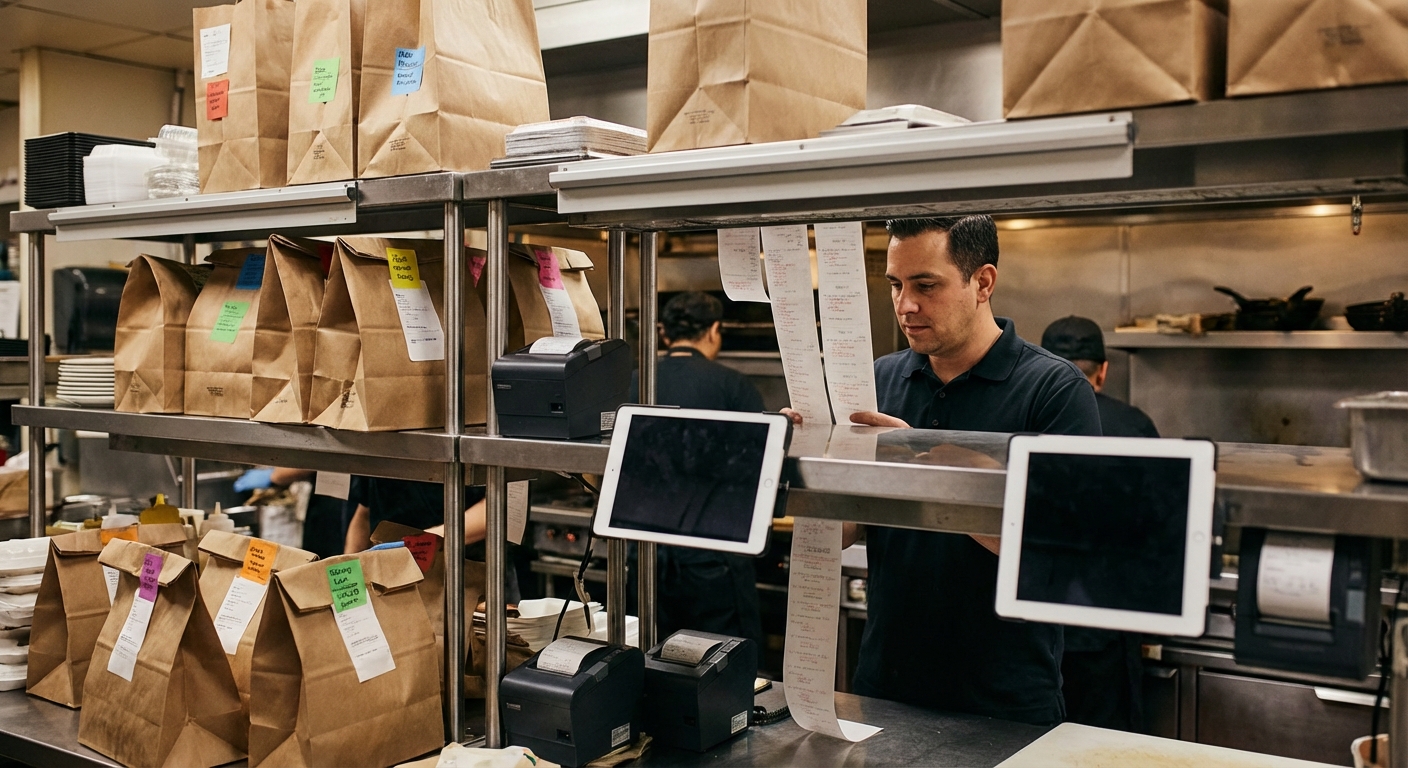
Fix it: Consolidate technology. Platforms that unify order capture, inventory management, and fulfillment across channels eliminate the tablet chaos. When an order comes in – regardless of source – it hits the same kitchen display, deducts from the same inventory system, and flows into the same reporting. That's how you scale multi-channel distribution without hiring three more managers.
Building a profitable multi-channel operation
Phase 1: Master your core channel (months 1-6)
Get your primary revenue stream dialed in. For most restaurants, that's dine-in or direct online ordering. Nail your unit economics, document your processes, build your customer base. Don't add complexity until your foundation is rock-solid.
Track: Average check, table turnover (or order volume for QSR), food cost variance, labor as percentage of sales, customer satisfaction scores.
Phase 2: Add your first secondary channel (months 7-12)
Choose based on your specific operation:
- Under-utilized kitchen capacity? Add wholesale or meal-prep during slow hours
- Strong local brand but limited seating? Launch direct online ordering and owned delivery
- New concept building awareness? Strategic use of one or two third-party platforms
- Signature product with cult following? Test retail with limited distribution
Measure everything. Track contribution margin by channel weekly. Adjust pricing and operations based on data, not assumptions. Data-driven decision making separates profitable multi-channel operations from chaotic ones.
Phase 3: Optimize and expand (month 13+)
Now you have data. You know which channels deliver the best returns, which strain operations, and which customer segments are most valuable. Double down on what works. Cut what doesn't.
Add additional channels only when: (1) You've proven operational capacity to handle the volume, (2) Unit economics meet your minimum thresholds, (3) The channel solves a specific strategic goal (customer acquisition, slack capacity, brand building).
Technology that enables multi-channel success
Manual order management breaks down fast when you're juggling multiple channels. You need systems that consolidate order capture, route fulfillment, track inventory in real-time, and provide visibility into channel performance.

Operators using integrated restaurant management platforms report 30% less time spent on administrative tasks – that's 12+ hours weekly that can go toward cooking, customer service, or strategic planning instead of reconciling orders from five different systems.
Key capabilities to look for: unified order management (all orders flow into one system and kitchen display), real-time inventory integration (ingredient deductions happen automatically regardless of channel, preventing over-promising and stockouts), channel-specific pricing and menus, performance analytics by channel, and automated fulfillment routing.
Spindl consolidates ordering, delivery management, POS, and analytics into a single system – eliminating the fragmentation that kills multi-channel operations. When everything speaks to everything else, you can actually manage complexity instead of drowning in it. The platform's built-in delivery app integration means all third-party orders, direct orders, and dine-in transactions flow through one interface with unified inventory tracking and reporting.
Strategic distribution drives sustainable growth
U.S. restaurant industry sales are projected to reach $1.5 trillion in 2025, with full-service establishments contributing $522 billion and limited-service restaurants adding $532 billion. Households earning $100,000+ drive nearly 60% of spending. Those customers expect choice – they'll order delivery Monday, pick up Tuesday, dine in Friday, and grab your retail sauce at Whole Foods on Saturday.
You need to meet them across channels. But you need to do it profitably.
The restaurants winning in 2025 aren't the ones on every platform. They're the ones with clear distribution strategies, disciplined unit economics, and integrated systems that make multi-channel operations manageable instead of chaotic.
Start with your core channel. Prove your model. Add channels strategically based on capacity, economics, and customer behavior – not because a sales rep called or a competitor launched something new. Consolidate your tech stack so you're managing your business from one system instead of juggling five.
Distribution strategy isn't about being everywhere. It's about being in the right places with the right economics and the operational capacity to deliver excellence across every channel.